
Capital projects drive city budget increase, but no increase planned for tax payers
HEIDI DESCH | Hagadone News Network | UPDATED 5 years, 7 months AGO
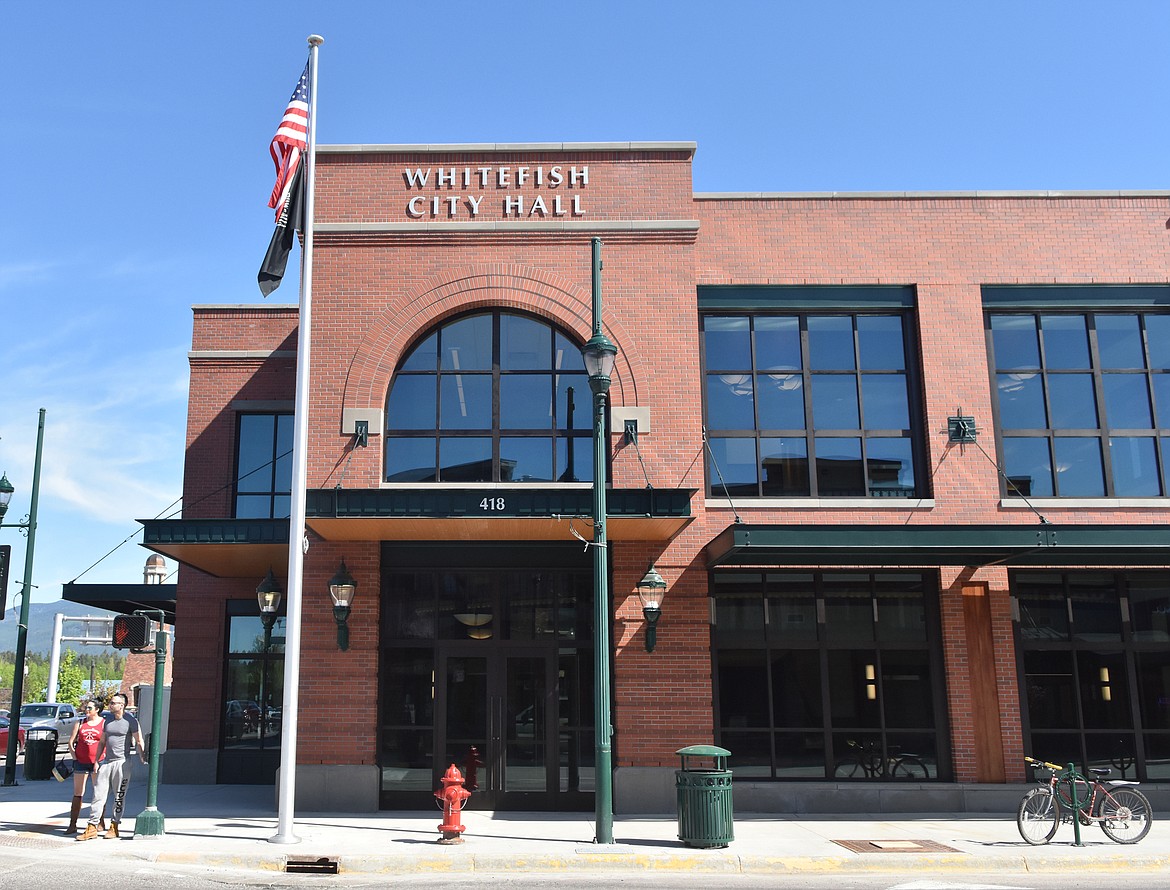
Whitefish City Hall at the corner of East Second Street and Baker Avenue. (Heidi Desch/Whitefish Pilot)
(Heidi Desch/Whitefish Pilot)
Heidi Desch is features editor and covers Flathead County for the Daily Inter Lake. She previously served as managing editor of the Whitefish Pilot, spending 10 years at the newspaper and earning honors as best weekly newspaper in Montana. She was a reporter for the Hungry Horse News and has served as interim editor for The Western News and Bigfork Eagle. She is a graduate of the University of Montana. She can be reached at [email protected] or 406-758-4421. | June 2, 2020 1:07 PM
Whitefish’s proposed budget shows an increase to the total budget figure as a result of large capital projects, but no increase for tax payers.
The fiscal year 2021 draft budget total is $65 million compared to the fiscal year 2020 budget of $55.7 million.
City Manager Dana Smith said the increase in expenses is mostly due to an increase in capital project spending of about $10.5 million and also an increase in personnel costs.
“The takeaway is that we’re keeping tax assessments the same,” she said. “The economics of the COVID-19 pandemic have yet to be learned, but we know many are facing financial hardships so it was important to not have any increases.”
The budget proposes spending $10.5 million more on capital projects compared to the previous fiscal year. The significant increase is expected as construction continues on the city’s wastewater treatment plant upgrade project — an increase of $5.6 million — and the city is set to soon begin construction on the water treatment plant expansion project — an increase of $8.6 million.
“It seems like it would be easy to halt capital projects, but these are really important projects to the city and we need to keep going on them,” Smith said. “The budget is looking larger than last year because of the capital projects.”
Also, the Parks and Recreation Department is budgeting $250,000 for capital improvements to Armory Park that is funded by a Land and Water Conservation Fund grant along with matching city funds.
Total revenue is budgeted at $52 million, which is 25% higher than FY20, but comes as a result of loan proceeds to fund the wastewater treatment and water plant projects.
The proposed budget calls for levying 117 mills, the same as in fiscal year 2020 and down from the 120 mills levied in both fiscal year 2019 and 2018.
This is a non-reappraisal year, so the growth of the property taxes revenue is limited to half the rate of inflation and newly taxable property. Normally, the city sees a roughly 2% to 3% increase in newly taxable property, but because the city’s tax increment finance district sunsets in July its mill value is increasing from about $27,000 to an estimated $39,000 per mill. Without an increase in taxes, certain city funds will still see an increase in revenue of 46% as a result of the TIF ending.
When the TIF district sunsets the city will realize a $1.4 million increase in collections in its general fund. However, it will also no longer collect $7.55 million in TIF funds that were restricted for certain purposes and have been used for a number of major urban renewal projects in the city including construction of a new City Hall.
The city has three remaining projects on the list that will use TIF funds — a library remodel at $30,000, the Baker Avenue pedestrian underpass at $1.6 million and a contribution $459,000 to be used for affordable housing on the snow lot.
In a typical year, the city would consider increasing assessments based on the Consumer Price Index for its street maintenance, lighting, parks and greenway and stormwater to account for the increased costs to provide maintenance, but in anticipating that finances are tight for many right now, Smith notes, the budget does not factor in an increase for those.
“We are feeling the impacts of COVID-19, but we’re in a good position because of the TIF sunsetting,” Smith said.
The resort tax is an area of the city budget that has already adversely been impacted by the COVID-19 pandemic, and could into the future. It’s an issue the city has been monitoring since spring, but when the final budget is adopted in August, officials expect to have more concrete projections after seeing how the typically high collection summer months are impacted.
The draft budget is projecting a decrease in resort tax collections of about $230,000 in FY21 over the previous year. Typically, the city budgets what it expects to collect in resort tax at the same amount it collected the prior year.
The city in FY19 collected $4.2 million in resort tax, and through March this year had collected $3.59 million, but it won’t know until the fiscal year ends in June where collections will end up.
Whitefish’s resort tax is 3% collected on retail sales, lodging, at restaurants and for prepared food and alcoholic beverages. Funds from the resort tax go to three main areas — property tax reduction for taxpayers in the city, repair for streets, storm sewers and sidewalks and bicycle paths and other park capital improvements. Revenue from the tax is also used to pay for the purchase of the Haskill Basin Conservation Easement to protect the city’s drinking water source.
“We worked really hard to create a budget that keeps levies flat,” she said. “The resort tax is going to be a challenge because a decrease in collections there will mean a decrease in the property tax relief that comes as a result.”
The city does have enough resort tax funds currently to complete the State Park Road construction project at a cost of $1.7 million for the second phase of the project set to take place this summer, but upcoming projects will be placed on hold until the city can ensure it has enough funds.
Smith noted that while a decrease in resort tax is concerning, the city primarily uses the funds for capital projects so the situation could be worse. She noted the city will also be closely watching collection amounts for the summer months as those bring in the highest amount of revenue from the tax.
The decrease in collections, however, will impact how the city pays for its loan that funded the Haskill Basin Conservation Easement. Up until now, the resort tax has generated enough funds to pay for that loan but the decrease in collections is large enough that the city needs to budget using its water fund to cover a portion of the debt payment.
The city budget proposes a 4% salary increase for employees. This increase would be for union and non-union employees. In addition, the city is planning to cover 5% of the 8% increase in medical insurance premiums.
Staffing increases are included in the budget.
A full-time police officer was budgeted for six months last year, but is now included for the full year. The position will cost about $39,300 more than last year.
A part-time customer service clerk position will be increased to full-time. The position assists in covering the front desk at City Hall, but with the increase in hours will now assist in monitoring the enforcement of short-term rentals.
Previously, the city had been using a software program for monitoring, but increased costs for the software made continuing with it cost prohibitive. The city will implement a different software program along with the work of the clerk position and is expecting the net increased cost for the position of $20,000.
The Fire Department’s part-time office manager will be increased to a full-time position at a cost of $31,000 to assist will ambulance billing, grant writing and other tasks as a result of the Assistant Fire Chief mostly working on fire inspections.
The Whitefish Community Library budget includes an additional 10 hours per week to be allocated to the current part-time staff at a cost of about $9,000. The library every year sees an increase in patronage.
“In times of uncertainty it’s not common to increase personnel, but these have been well thought out,” Smith said.
The budget calls for an increase in cash reserves to $1.8 million. That’s an increase from 15% in FY20 to 17% for FY21 for cash as a percentage of the budget. Smith said it’s always important to the city to budget with cash reserves in case of an emergency, but this year it’s particularly important.
“We can’t predict if there’s going to be a second wave related to COVID-19 and the economic impact that might have or create a recession,” she said. “Increasing cash reserves right now is important.”
During the last recession, she noted, the city saw a delay in collections of property taxes and other charges for services, so cash reserves help the city manage any cash flow issues that arise.
“It’s good to have a rainy day fund when we’re in the middle of a storm,” she said.
City Council is set to hold a public hearing and adopt the final budget in August.
It will hold a work session on the budget at 5:30 p.m. on June 8 at City Hall.
ARTICLES BY HEIDI DESCH

Children’s book about world’s largest steam tractor aims to inspire
Smoke billows from the stack of the steam-powered tractor as it chugs along, sounding like a train locomotive. At a top speed of just under 6 mph, the 150 Case Road Locomotive moves methodically but is mighty in strength as it’s able to pull 50 plows, carving a large swath in the brown field.
Children’s book about world’s largest steam tractor aims to inspire
Smoke billows from the stack of the steam-powered tractor as it chugs along, sounding like a train locomotive. At a top speed of just under 6 mph, the 150 Case Road Locomotive moves methodically but is mighty in strength as it’s able to pull 50 plows, carving a large swath in the brown field.

Whitefish Council looks at cell tower contract
Whitefish City Council on Monday will consider a new agreement for a cell tower located at Memorial Park.