
Pet pantry helps critters during crisis
JOEL MARTIN | Hagadone News Network | UPDATED 6 years, 4 months AGO
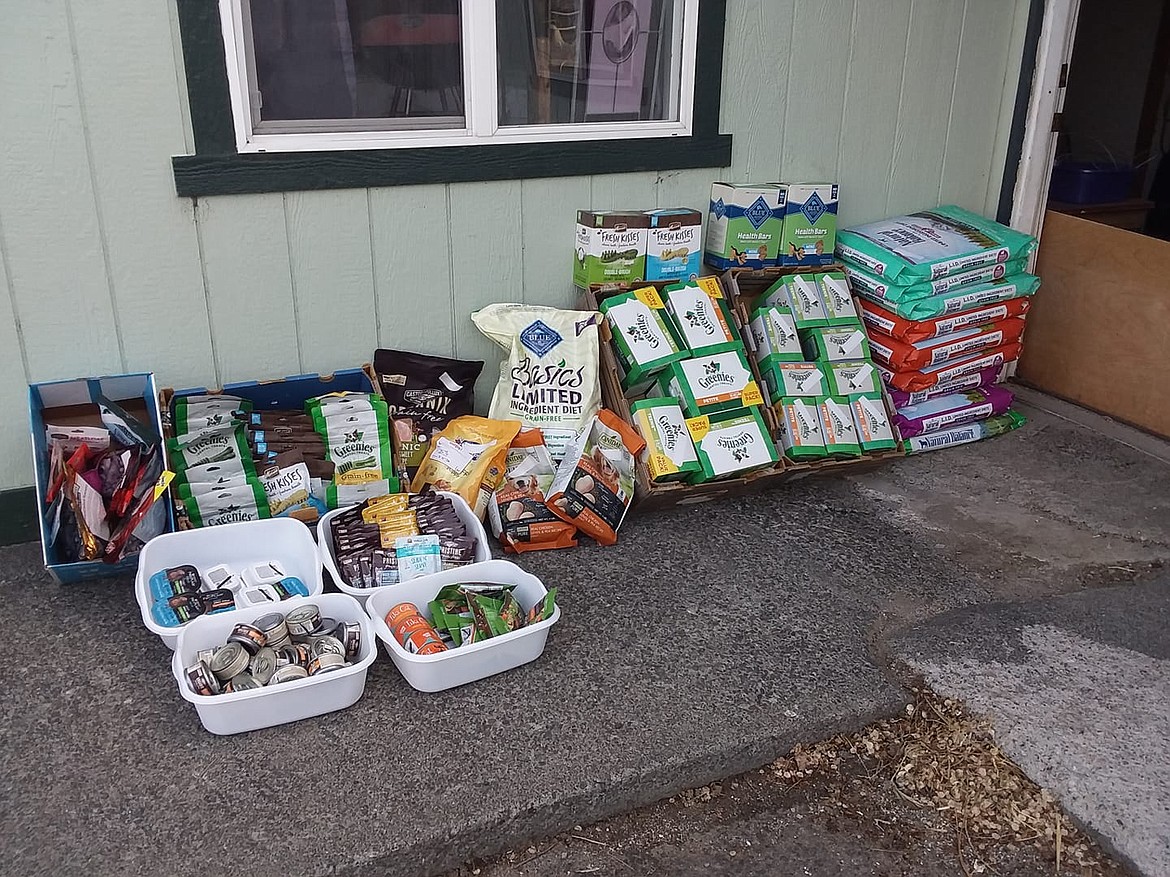
Shawna Kluge’s pet pantry started out as a single purchase of pet food and has grown into a resource for pet owners in the community.
Courtesy photo
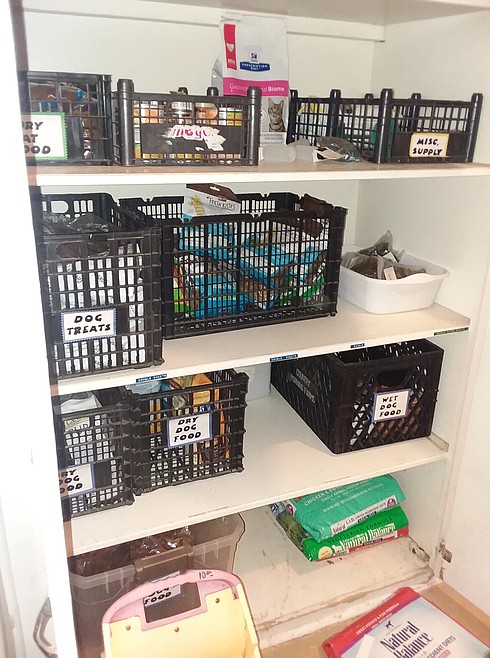
Shawna Kluge’s pet pantry started out as a single purchase of pet food and has grown into a resource for pet owners in the community.
Courtesy photo
Joel Martin has been with the Columbia Basin Herald for more than 25 years in a variety of roles and is the most-tenured employee in the building. Martin is a married father of eight and enjoys spending time with his children and his wife, Christina. He is passionate about the paper’s mission of informing the people of the Columbia Basin because he knows it is important to record the history of the communities the publication serves. | June 5, 2020 12:22 AM
SOAP LAKE — Times have been hard lately for a lot of people, what with the state closing businesses due to the coronavirus and some consumer goods unavailable. Food banks and farmers have stepped up to fill some gaps. But there’s another population that’s struggling too, and it doesn’t walk on two legs.
That’s who Shawna Kluge, of Soap Lake, set out to help with her pet pantry. Kluge, who moved to Grant County three years ago, has a history of doing animal rescue, particularly through lost-and-found pet pages on social media. When her stimulus check arrived for COVID-19 relief, Kluge decided to put it to use by buying 100 pounds of cat food and dog food to try to help some folks in the community with pets get through the pinch, she said in an email. The Rock Bottom Rocker Pet Pantry, as Kluge named it, was born.
Kluge shared information about having pet food available on her personal profile and “too many” social media pages, she said.
Kaila Palmen, manager of the Moses Lake Petco pet supply store, happened to be up late one night scrolling through social media posts.
“I came across one of her posts asking for donations because there were a lot of pet parents that needed help,” Palmen said. “I commented that I am the manager of Petco, get hold of me tomorrow and I can help. And since then I have given her, I believe, two carfuls of food.”
The team at Petco regularly donates expired food and clearance items to the local animal shelters, Palmen explained, and this was another way to contribute.
From there the community support snowballed. Donations came in from not only Petco but non-profit organizations and private individuals.
“My one little decision to help community members in need kind of blew up,” she said. “Not only because of those in need but because of those willing to help.”
Kluge’s pantry is a one-woman affair currently, operated out of her home.
“The building that I live in is owned by my family and used to be a motel,” she said. “I have the storeroom that was at one time the linen closet. It is currently where I have all of the pet supplies.”
A community member has stepped up to offer the use of a shed, she added, if the supplies outgrow their present home.
Kluge is hoping to make the Rock Bottom Rocker Pet Pantry a permanent fixture and possibly acquire non-profit status. Her next step, she said, will be to contact feed stores and see if they have expired items they can donate. She’s also hoping to hold a large garage sale to raise funds. Meanwhile, she said, “it’s basically operating because of Petco and community members.”
The pet pantry is open to any pet owner in the area who needs it, Kluge said.
“It is my overall goal to be able to keep families and pets together,” she said. “The only request that I have from individuals receiving help is that they are in need, and that they will do what is best for their pets.”
The pantry is in need of food, collars and other supplies. Anybody wishing to donate, or who needs information or supplies, can contact Kluge through the Rock Bottom Rocker Pet Pantry Facebook page at www.facebook.com/The-Rock-Bottom-Rocker-Pet-Pantry-101870001560430.
“It is truly a blessing to be able to do this for our community and families,” she said.
“It gives me chills talking about it,” Palmen said. “I’m really passionate for it and I will continue helping her until she doesn’t need help, whether I work for Petco or not.”
ARTICLES BY JOEL MARTIN

Endless battle
Noxious Weed Control Board works to keep invasive plants under control
MOSES LAKE — Some of the nastiest plants in Grant County were the topic of a class led by Jay Johnson, a consultant with the Grant County Noxious Weed Control Board, Tuesday. The Noxious Weed Control Board, as its name would suggest, is tasked with keeping weeds under control in Grant County. That’s not a small job; the board’s website lists 129 species of noxious weeds that are found around Grant County. A noxious weed is defined as an invasive, non-native plant that threatens agricultural crops, local ecosystems or fish and wildlife habitat, according to the Noxious Weed Control Board. Washington state law requires that these weeds be identified and their spread kept to a minimum, if not completely eradicated. “We’re one of those agencies a lot of people don’t really understand,” Johnson said. “We’re a county office and … our funding is tax-based assessment. When you get your tax bill and you look down at all the expenses that you pay for, there we are.”

BASIN EVENTS: Oct. 16-24
COLUMBIA BASIN — Whether you feel like shopping, crafting, learning or seeing a show, there’s something happening for you this week in the Basin. Oct. 16 ‘My Family (Mi Familia)’ screening Spanning three generations, “My Family (Mi Familia)” is a heartfelt drama that follows the Sánchez family as they build their lives in East Los Angeles. Through love, hardship, triumph, and sacrifice, the film explores the immigrant experience, the strength of family bonds, and the traditions that connect one generation to the next. Lowrider show and taco truck before the screening. Sponsored by Columbia Basin Allied Arts, EDUBS C/S and the Moses Lake Creative District. $12 per person. Doors open at 6 p.m., film begins at 7 p.m. at the Moses Lake Civic Center Auditorium, 401 S. Balsam St. Tickets and info: www.cba-arts.org.

Moses Lake author encourages women to look beyond church culture norms
MOSES LAKE — A Moses Lake author’s book, “A Christian Woman Striving to Live Her Faith in a Man-Controlled World,” takes aim at the role to which many churches relegate the female half of their congregations. “It’s to encourage women in the faith,” Linda Curran said. “A lot of churches say, ‘Teach Sunday school, do this, do that, but don’t (evangelize.)’" In her book, Curran recounts a time when she moved to a new community and joined a church there. She was surprised to learn that, as a new female member, she had been automatically assigned church cleaning duties. When she questioned it, she wrote, she was met with condescension and her objections were brushed aside. In other churches, she said, women who were capable of teaching were relegated to “women’s ministry.”