
Critters of North Idaho: Red Fox
Christian Ryan | Hagadone News Network | UPDATED 5 years, 6 months AGO
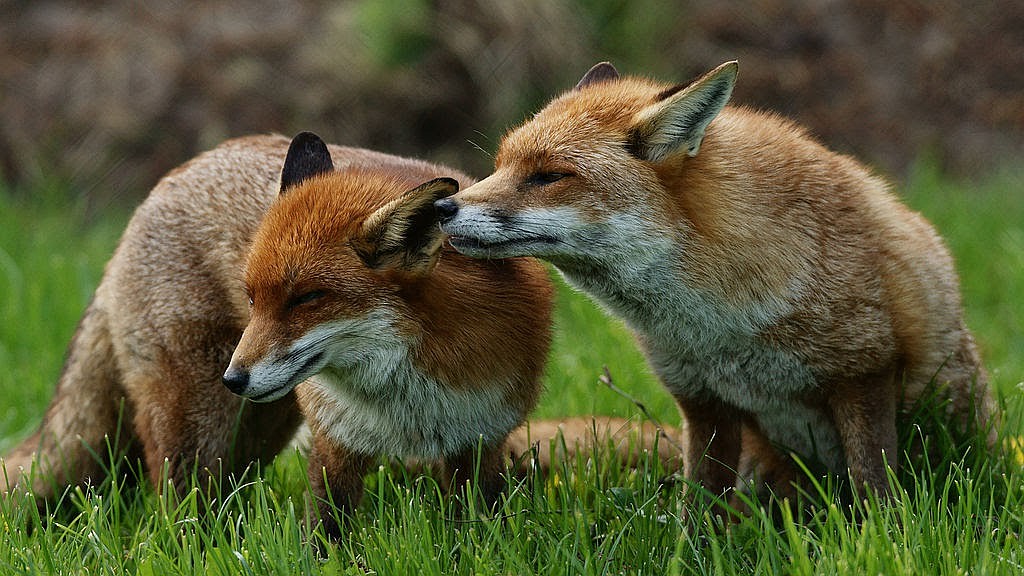
PHOTO/Peter Trimming
Red Fox
When most people hear the word “canine,” a cute pomeranian, a mighty german shepherd, or perhaps even their wild ancestor, the gray wolf, are likely brought to mind. But the canine family (canidae) is quite varied and also includes species like the maned wolf (which isn’t actually a wolf) and the bush dog, both from South America, the raccoon dog from southeast Asia, and of course, the foxes. Of all foxes in North America, the red fox is the most common and widespread, having adapted to virtually every habitat, from forests and grasslands to tundra and urban locales.
The red fox (Vulpes vulpes) is distributed across most of North America and Eurasia, and they have been introduced into Australia as an invasive species. The most characteristic trait of this species is its colorful coat. It’s most well-known for being red with a pale underbelly, a white tip on the end of the tail and black feet and ear tips. That being said, red foxes are not always red and there are many variations of this archetype. Some foxes come with a coat of black, gray, silver, or on rare occasions, even almost white! They’ve also been known to be a mixture of all these colors. Red foxes are just over a foot or two in height and measure three feet long or so. They typically weigh 30 pounds or less.
Despite being members of the canine family, they are only distantly related to your pet pooch. In many ways, they actually act more like cats than dogs! How so?
Well, foxes are the only members of the canine family that can climb trees, sometimes even choosing to sleep on the branches. They are mostly active after dark, when their vertical cat-like pupils aid their eyesight.
If you’ve ever watched your cat hunt, then you’ve already got a good idea of how red foxes capture prey. They stalk the trails of their prey before pouncing upon unsuspecting small mammals, like rodents and rabbits, birds, fish and frogs. Their fluffy tail acts as a balance while pouncing or running, again, like a cat. Foxes are not particularly fussy eaters though and will also scrounge up worms, insects and fruit.
Except for when raising their young, red foxes are solitary (another cat-like behavior!). But this does not mean they lack ways of talking to other members of their own species. Red foxes have a great sense of smell, and this is reflected in the “smelly” messages they use to tell other foxes they are in the area. It is common for them to leave scent markings in the form of special glands around their face and foot pads, urine and droppings. Foxes also can make up to 28 different vocalizations and use tail, ear and body movements to say whether they are feeling territorial, playful or curious.
After all this, you might be thinking that you wish you could have your own red fox as a pet. It turns out that your wish is grantable...given that you live in a state where this is legal and have $9,000 to spare.
Since 1959, scientists at the Russian Institute of Cytology and Genetics have been attempting to domesticate foxes in order to understand how we might have domesticated dogs thousands of years ago. Decades of selectively breeding the most docile and people-friendly foxes have resulted in much success.
As a side effect of gradually becoming domesticated, the foxes have developed behavioral traits that we see in domestic dogs, like tail-wagging and whining.
While owning a red fox as a pet is not an option for most of us, everyone should have the opportunity to go out into nature and watch these beautiful and adaptable creatures (from a sufficient distance!) living happy and healthy in their natural habitat.
• • •
ARTICLES BY CHRISTIAN RYAN

Lady Beetle
I was homeschooled through much of my childhood. During one such session (math, I think?) in autumn, my sister, mom, and I looked up at our ceiling to find hundreds — literally hundreds — of tiny red and black-spotted “aliens” invading our house through an almost invisible space between the edge of a window and the ceiling. Our house was under siege from insects commonly known as ladybugs! They were looking for a safe, warm place to hibernate over the long, cold winter, and our house apparently fit the bill. We were well into the winter vacuuming up the remnants of our autumn invasion. Scientific results are inconclusive as of yet, but I suspect our insect invasion may be part of the reason my mother hates the red and black-spotted insects now.

Slimy sculpin: Camouflaged predator
If you happen to find yourself wading through one of the many clear, cool, freshwater streams meandering their way across North Idaho, you’re likely to spot some fish. Some, like trout, are skittish (for good reason!), and are likely to dart away before you get real close. Others prefer to rely on their camouflage to protect them, and will lie very still until anything they perceive as a threat has passed. One of these fish is the slimy sculpin.

Snowshoe hare: A combination of stealth, speed
Cats, bears, birds of prey, foxes, wolves and even weasels stalk the forests of North America on the lookout for prey. If you’re a small fluffy critter with no teeth, claws, or noxious scent to keep such predators at bay, you’ve always got to be on the alert. One option is to be really fast and simply outrun attacking predators. Another is to be well-hidden so the predators don’t spot you. Or you can be like the snowshoe hare and be prepared for either scenario!