
Grocery Guru to give keynote at horticulture conference
CHARLES H. FEATHERSTONE | Hagadone News Network | UPDATED 5 years, 9 months AGO

Phil Lempert, the Supermarket Guru, is giving the keynote address at this year's online NW Horticultural Expo and Washington Tree Fruit Association Annual Meeting on Dec. 7-9.
Courtesy Photo
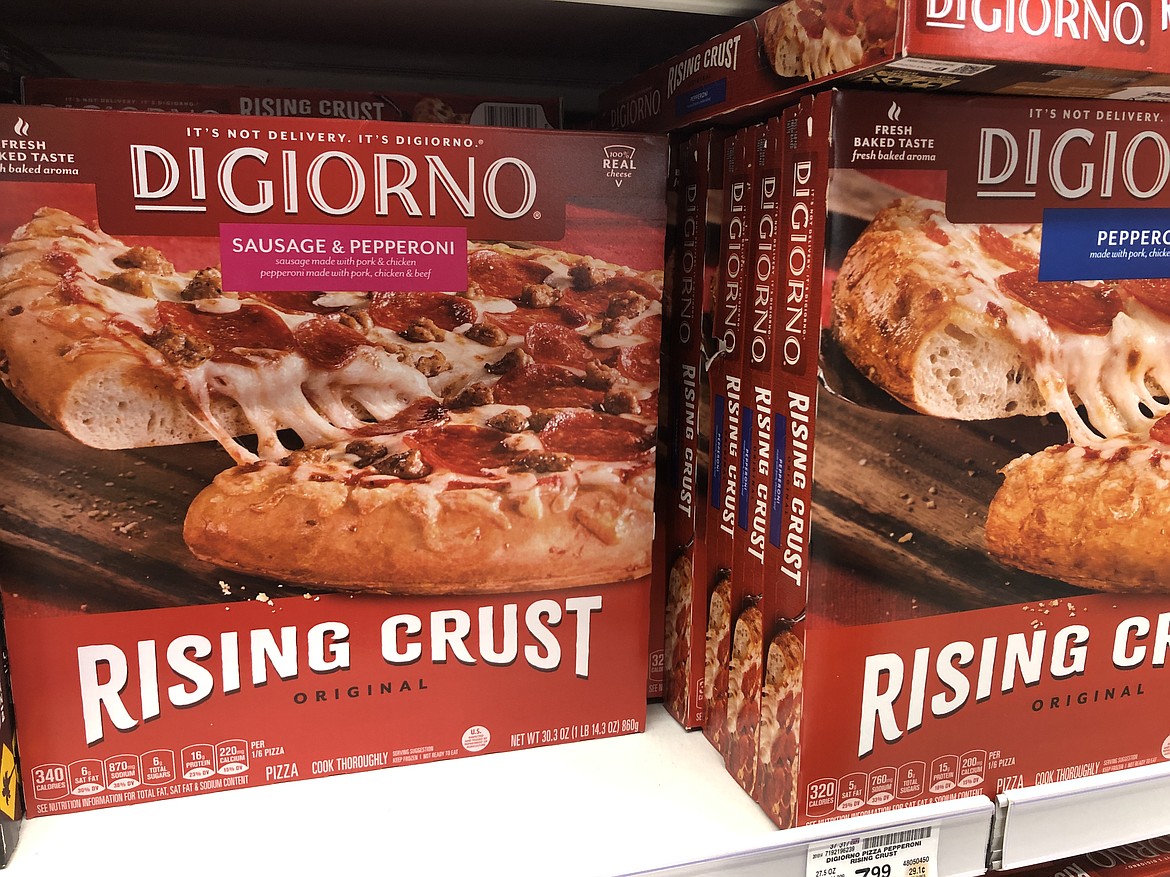
Some grocery stores have limited purchases of frozen pizzas, according to Supermarket Guru Phil Lempert.
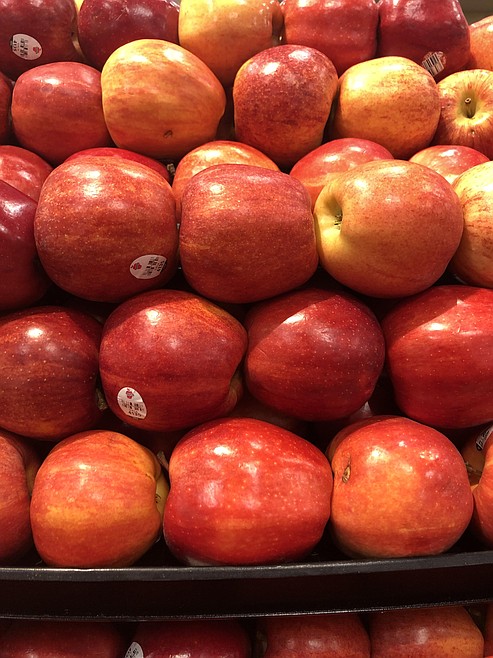
Apples on display.
SANTA MONICA, Calif. — There’s no reason 95% of the country’s lettuce should be grown in California and shipped hither and yon across the United States.
“It’s absurd,” said writer and marketing expert Phil Lempert, the “Supermarket Guru.”
Especially given all the food safety problems that arise with packaged lettuce picked in questionably hygienic conditions in fields across California’s expansive Salinas and Imperial valleys.
Rather, Lempert said that in places where California’s lettuce is eventually shipped to, like New York City, parts of office buildings emptied of workers laboring from home because of the COVID-19 pandemic should be converted to indoor farms full of greens like lettuce, growing under bright lights in carefully controlled climates.
“It would grow faster, and you wouldn’t have to worry about insects,” Lempert said. “And it would be fresher than if you trucked it.”
Lempert, who has observed and written about consumer behavior, marketing trends, new products and the changing retail landscape for over 25 years, is set to deliver the first day keynote address at this year’s NW Hort Conference and Tree Fruit Association Annual Meeting being held online on Dec. 7-9.
He’s bringing a lifetime of observations and wisdom about how we grow and market food in the United States. And there are a few things he wants apple, pear and cherry growers, as well as wine grape producers, to know.
“The most important thing is the consumer is getting smarter about the food supply,” he said.
Lempert said more consumers want to know who grows their food, how that food is processed, handled and packaged, and where the packaging for that food comes from and what happens to it when it’s discarded. They find it unsettling knowing that the apples they are buying have likely sat in a climate-controlled warehouse for a year. As a result of the pandemic, they aren’t sure they want giant stacks of fresh produce sitting in grocery stores to be handled by just anyone, and aren’t entirely sure what to make of all the varieties stacked so beautifully in produce departments.
“We have a lot of choices and varieties of apples. Do we need them?” Lempert asked. “We need to educate consumers on the difference between Fujis and Galas.”
And in an era in which people want to buy fewer things wrapped in plastic, Lempert said the pandemic is pushing fruit and vegetables sales in the opposite direction, with demands for produce that can’t be handled.
Lempert said he gets a lot of his “data,” at least before the pandemic, walking “up and down the aisles” of grocery stores tapping shoppers on the shoulder and asking, “Why are you buying this?”
Lempert expects something of a return to the way grocery stores used to do things, because just-in-time delivery hasn’t been working during the COVID-19 pandemic.
“With just-in-time delivery, new shipment comes in five minutes before a retailer runs out. That doesn’t work in the pandemic,” he said.
Lempert cited the shortages of flour and yeast at the beginning of the pandemic lockdowns, with people thinking they would spend more time baking.
“That didn’t last long,” he said. “Today our shortage is frozen pizza, with some retailers setting limits on how many people can buy. Because people want food that is convenient and the whole family likes.”
The changes are both “evolutionary and shocking,” Lempert said, and they’ve forced many retailers to rethink how they do business. In fact, Lempert sees many grocery retailers becoming “mini-fulfillment centers” for busy people who are, especially in cities and more affluent suburbs, increasingly ordering their groceries online and having them delivered to their homes.
He also said that if social distancing is going to persist, major food retailers are going to have to make a profit operating at 50% of capacity.
“How will a store built to sell 42,000 products survive if we have to social distance?” he asked. “The average person has 25 products on their shopping list.”
Lempert also said that it’s also remarkable how little has changed in some parts of our food processing system, and that for things to change, Americans may have to rethink the entire reason we produce food from farm and ranch to shelf and display case.
“Look at meat packing. It’s not that much different from 100 years ago, when Upton Sinclair wrote ‘The Jungle,’” he said. “We need to think of new ways to do it.
“Our food system is built to produce the cheapest food supply, and maybe that’s not the way we should do it. Maybe we should focus on producing the healthiest food.”
Charles H. Featherstone can be reached at [email protected].

ARTICLES BY CHARLES H. FEATHERSTONE

Potato prices up, sales down for first quarter 2023
DENVER — The value of grocery store potato sales rose 16% during the first three months of 2023 as the total volume of sales fell by 4.4%, according to a press release from PotatoesUSA, the national marketing board representing U.S. potato growers. The dollar value of all categories of U.S. potato products for the first quarter of 2023 was $4.2 billion, up from $3.6 billion for the first three months of 2022. However, the total volume of potato sales fell to 1.77 billion pounds in the first quarter of 2023 compared with 1.85 billion pounds during the same period of 2022, the press release noted. However, total grocery store potato sales for the first quarter of 2023 are still above the 1.74 billion pounds sold during the first three months of 2019 – a year before the outbreak of the COVID-19 pandemic, the press release said.

WSU Lind Dryland Research Station welcomes new director
LIND — Washington State University soil scientist and wheat breeder Mike Pumphrey was a bit dejected as he stood in front of some thin test squares of stunted, somewhat scraggly spring wheat at the university’s Lind Dryland Research Station. “As you can see, the spring wheat is having a pretty tough go of it this year,” he said. “It’s a little discouraging to stand in front of plots that are going to yield maybe about seven bushels per acre. Or something like that.” Barely two inches of rain have fallen at the station since the beginning of March, according to station records. Pumphrey, speaking to a crowd of wheat farmers, researchers, seed company representatives and students during the Lind Dryland Research Station’s annual field day on Thursday, June 15, said years like 2023 are a reminder that dryland farming is a gamble.

Wilson Creek hosts bluegrass gathering
WILSON CREEK — Bluegrass in the Park is set to start today at Wilson Creek City Park. The inaugural event is set to bring music and visitors to one of Grant County’s smallest towns. “I've been listening to bluegrass my whole life,” said the event’s organizer Shirley Billings, whose family band plays on their porch every year for the crowd at the Little Big Show. “My whole family plays bluegrass. And I just wanted to kind of get something for the community going. So I just invited all the people that I know and they’ll come and camp and jam.” ...