
Teachers at Sandpoint High School receive suicide prevention training
RACHEL SUN | Hagadone News Network | UPDATED 5 years, 6 months AGO
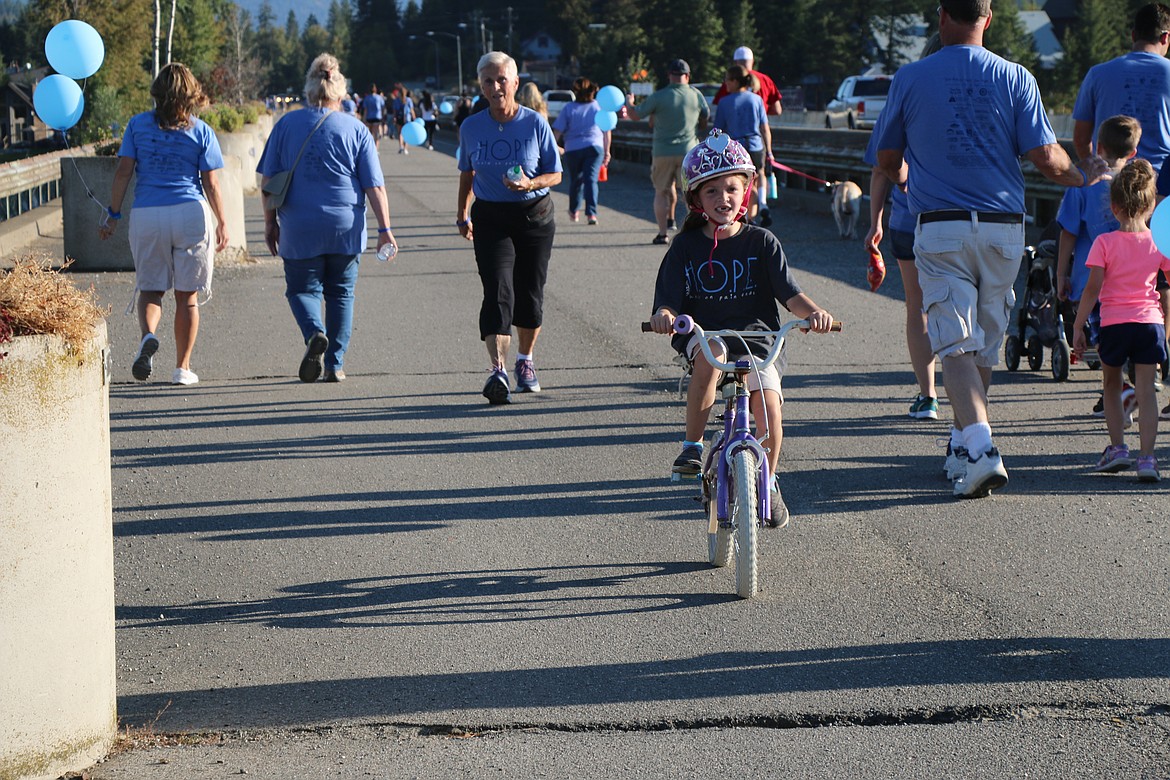
Residents participate in the 2018 HOPE (Hold On Pain Ends) memorial walk to remember Madison Wyman, one of the three Sandpoint teenagers lost to suicide in 2015.
CAROLINE LOBSINGER
Early Friday afternoon, teachers at Sandpoint High School gathered in small groups to learn about one health crisis that’s affecting teenagers across the country: Suicide.
The suicide prevention training, run by the Idaho Lives Project, hits close to home for many of the staff at Sandpoint High School.
“Everybody in this room, we’ve had students who committed suicide,” said Erica Heynes, a history teacher at Sandpoint High School.
In 2015, three Sandpoint teenagers died by suicide. For roughly the past five years, schools have worked hard to improve mental health resources for students said Wendy Auld, a math teacher at SHS.
Much of the school’s suicide prevention has focused on the “Sources of Strength” approach -- a method to reduce suicide risk factors proactively through building support structures with friends and family, providing care for both physical and mental health, and mentorship.
Usually, there are monthly meetings for students to provide this proactive resource, said Erin Roos, one of the teachers at SHS.
Normally, Roos said, she teaches a group of students who are peer leaders. A big part of that is making students feel like they belong, she said. However, because of COVID-19, that group has been unable to meet.
That provides an extra challenge, Auld said, because even though students are excited to be back, there is also a lot of anxiety.
“They were so happy to be here I didn’t realize how stressed they were,” she said. “The stress level among these kids is unnervingly high.”
At the training Friday, teachers learned about strategies for intervention, and common misconceptions about suicide.
The teachers, gathered in several socially distanced classrooms, listened to speakers Kim Kane and Nancy Schmidt present over a live video feed.
It is worth noting, Schmidt said, that while it is important to pay attention to suicide warning signs, suicide is not common, and just because a person contemplates suicide does necessarily not mean they will go through with it.
One common misconception about suicide, Kane said, is that talking about suicide or asking someone if they are thinking about suicide will “plant a seed” in their mind.
“People are either thinking about it or they’re not,” she said.
Most people who are suicidal show some type of warning sign, Kane said, often including verbal warnings. Because of this, she said, many people who are suicidal experience relief at being asked, because they have often been trying to express their struggles.
Shannon Kerrigan, one of the school’s counselors, said although there is often discomfort with discussing suicidal ideation, mental health problems should be approached more like physical ailments.
Most people, she said, would not hesitate to ask questions or try to help if their friend had a broken bone or had a flesh wound. The same concept should be applied to mental health, she said.
“It’s like a CPR class,” Kerrigan said. “We don’t want to focus on all the horrible things that can happen, but it’s important to know how to respond.”
Another crucial element to suicide prevention, Kane said, is checking in with people regularly -- especially right after they’ve come out of inpatient care and are feeling “a little bit better,” but are not “out of the woods” yet.
In school settings, this can include things like checking in with students who have missed time at school, Kane said. Teachers are not always privy to why a student may have missed days, and in some cases even when the students haven’t missed days, they could have attempted suicide on a weekend and be back in school Monday.
“I would go so far as to as to say lack of follow-up kills every day, and good follow-up saves lives every day,” Kane said.
Suicide is not something that happens on a whim, Kane said, but something people keep in the back of their mind and bring to the forefront during an emotional crisis.
However, Kane said, “That doesn’t mean impulsivity doesn’t play a role.”
For people who are already suicidal, and especially teenagers whose brains have not fully developed, an emotional crisis can be the tipping point. About 30% of teenagers who commit suicide die the same day as an emotional crisis, she said.
Idaho is also among the highest in the nation for suicide deaths with the fifth-most in the country according to the data from the Center for Disease Control. Overall, suicide deaths are higher in Idaho and other Mountain West states including Wyoming, Montana and Colorado.
One reason Idaho and other Mountain West states have higher suicide rates is due to a lack of access to adequate mental health resources, Kane said. Another is that people in these states often have more access to guns when they are in crisis, which are more lethal than other means of suicide.
Temporarily removing access to lethal means is crucial, Kane said. Even something as simple as a gun lock can help prevent suicide. If a person needs an extra minute to get the key for the lock, Kane said, it can be enough time for them to think about the long-term consequences.
Kane, who said she is a gun owner herself, said it is not a gun rights issue but a safety issue.
“I know a lot of parents who wish they had moved the guns out of the house temporarily,” she said. “I don’t want to know more.”
Another problem in states like Idaho is in part caused by a “rugged” individualist mentality that is popular in these regions, Kane said, making it harder for those in need to seek help.
Sometimes, Kerrigan said, teenagers are dismissed as being “overly dramatic” or “sensitive.” However, suicide rates among teenagers are on the rise, and young people need to be taken seriously, she said.
“We need to meet students where they’re at on an emotional level,” she said.
Editor's note: This story was ammended to correct Erin Roos's title.
ARTICLES BY RACHEL SUN

Housing top priority for local businesses looking to hire
Over 60% of employers who took the survey said current housing conditions detract from the success of their business

Local group working to provide produce, meals to community throughout the year
A local group of at-home gardeners is working to make sure all their neighbors have enough to eat.

Local families invited to backpack, school supplies giveaway Sunday
Families with students are invited to TCC’s annual backpack giveaway this Sunday from 1-4 p.m. at their Sandpoint location,201 E. Superior St.