
Fire Department begins study to look at satellite stations
HEIDI DESCH | Hagadone News Network | UPDATED 6 years AGO
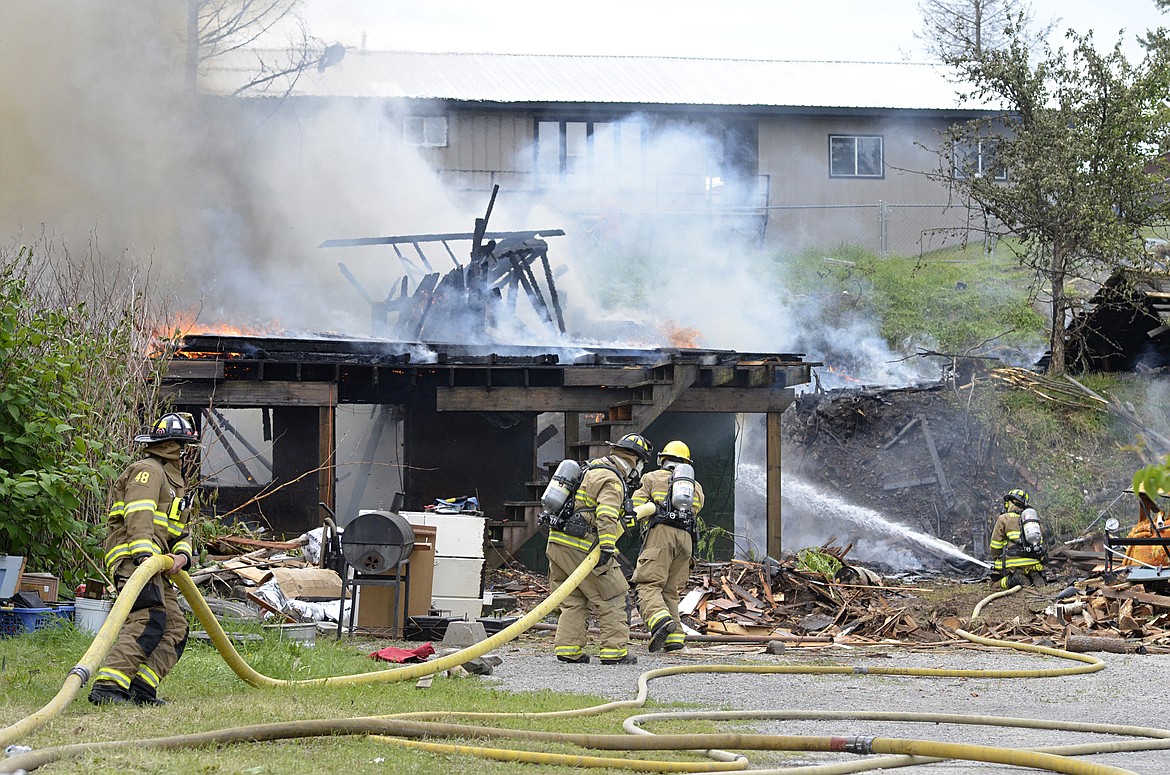
Firefighters spray a flare up at a Ramsey Avenue house that was destroyed by an electrical fire in 2018. The house was in the process of being demolished. (Heidi Desch/Whitefish Pilot file)
DEPUTY EDITOR, FEATURES Heidi Desch is the Deputy Editor at the Daily Inter Lake, overseeing coverage of arts, culture, lifestyle, community, and business. Desch leads reporters in developing stories that highlight the people, traditions, and events shaping Northwest Montana, guiding content across print and digital platforms. With more than 20 years of journalism experience, including serving as managing editor of the Whitefish Pilot, Desch is a graduate of the University of Montana School of Journalism. She has received multiple Montana Newspaper Association awards, including part of the team leading the Daily Inter Lake to Best Daily Newspaper in Montana Award and the General Excellence Award in 2024 and 2025. IMPACT: Heidi’s work connects readers with stories that deepen the understanding of the community beyond daily news. | October 14, 2020 1:00 AM
The Whitefish Fire Department is embarking on a study that aims to identify potential locations for future satellite fire stations in and around the city.
The fire department currently serves the city and the Whitefish Fire Service Area, the rural area immediately outside the city limits, and a portion of the Flathead County Fire Service Area that is not covered by another fire district. In an effort to improve emergency services, the Whitefish Fire Department is conducting a study on the issue, with the assistance of the Kearney’s Student Lab program at Carnegie Mellon University.
Graduate students in the Student Lab program will be analyzing data to provide a design perspective on where to best locate potential new fire stations. Students have been provided GIS data on road networks and structure locations, but need additional information that the fire department is asking homeowners to provide in an online survey.
Whitefish Fire Chief Joe Page says being located near a fire station not only offers better response time, but can also provide a more favorable property insurance rate.
Typically, he notes, the insurance industry uses five road miles from a fire station as the distance when determining adequate fire protection.
“I’ve heard from some homeowners who have a hard time getting insurance, maybe only one company will insure them or their insurance is canceled,” he said.
The study will look at where both inside and outside the city limits would be good locations for new fire stations. From experience, Page knows some vast areas north and west of Whitefish are lacking coverage, but placing stations without analyzing the data doesn’t make sense.
“They’re going to look at what areas are covered now and what would be the next best place to go,” he said. “They’ll look at what are the best locations for the stations based on the number of houses that could be covered.”
Page says he’s run the figures on a higher value home located farther than five miles from the city station and the savings could add up to thousands of dollars if a satellite station were constructed within the distance.
“We want them to look at is it unreasonable that homeowners could save a substantial amount of money,” he said. “If they can save money on insurance then it would be worth creating a rural improvement district that would raise enough money to construct a station.”
Additional fire stations are also important in an emergency situation because having equipment and first responders close by improves the chances of a favorable outcome, Page notes.
“It places the equipment closer to the need and staff can get out the door quicker,” he said. “I’d even look at locating a water cistern at the stations to allow for refilling of the tender truck. Especially in those areas in the wildland urban interface it makes it critical for a rapid response because when it comes to those types of fires it makes it easier to extinguish or at least control the sooner we get there.”
Whitefish Fire applied and was accepted by the Student Lab program, which is conducting the analysis for free.
The Whitefish team who provided assistance for the study consists of Joe Raudabaugh (Lazy Bay), Dave Mangold (Whitefish Hills), Ed Lieser (Lion Mountain), Matt Trebesch (Star Meadows), Greg Knuffke (Tamarack Insurance), and Fire Chief Joe Page (Twin Lakes). The Carnegie Mellon team consists of Erin Gibson (Kearney Coach) and five students, Jaece Stokes, Richard Ibsen, Julia Penkal, Rakshanda Rakput and Jay Park.
Homeowners protected by Whitefish Fire are being asked to take a survey regarding their home and fire insurance. The survey is open until Oct. 21 and can be found at https://forms.gle/wdj2j5v9pd59YUhu7
ARTICLES BY HEIDI DESCH

Whitefish wildfire protection plan up for City Council review
Fourteen areas of concern that are primed for mitigating wildlife risk are at the center of a draft Whitefish Community Wildfire Protection Plan.

Kalispell resident advocates for more women in the trades after being crowned Mrs. America
Standing on the stage in Las Vegas, wearing a white formal gown accented with feathers on one shoulder, Qadra Evans gripped hands with a fellow competitor.

Whitefish mulls updates to community growth plan
Whitefish City Council on Monday will consider updates to its community plan including language that looks to protect the historic character of its downtown amid state requirements allowing buildings up to 60 feet in height in certain zoning districts.