
Where are Montana's porcupines?
MONTE TURNER | Hagadone News Network | UPDATED 4 years, 9 months AGO
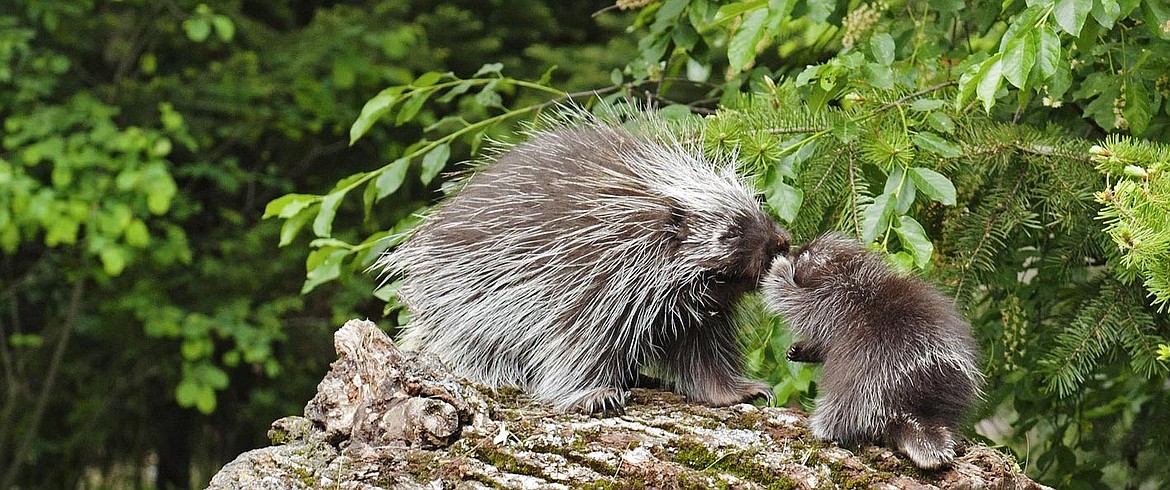
Porcupines are native to Montana, but their population seems to be on the decrease in some areas. (Photo courtesy Montana Fish, Wildlife & Parks)
Can you remember the last time you saw a porcupine in western Montana?
Even one on the side of the road that had been hit by a vehicle. What’s happened to them?
“Unfortunately, the decline in porcupines is a bit of a mystery and we are hoping to start working on it soon within the FWP Nongame Program,” explained Torrey Ritter, non-game Wildlife Biologist with Montana Fish, Wildlife and Parks, Region 2. “It seems that porcupines are still pretty abundant in eastern Montana but are really only found in the valley bottoms in western Montana anymore except for a very rare sighting in the conifer forests of the mountains.”
North American porcupines live up to 18 years and average 30 inches long and 20 pounds in weight. They are the second-largest rodent on the continent, after beavers, and each one can have upwards of 30,000 quills on its back.
Ritter shares the top three theories they have in its disappearance:
- Porcupines were killed in huge numbers in forested area due to the perceived threat they posed to timber resources. I have heard tales from several retired U.S. Forest Service employees that foresters used to take pistols with them into the woods for the sole purpose of shooting porcupines. Because they reproduce very slowly, one porcupette per year, maybe two on very rare occasions, removing a large number of adults in a fairly short amount of time can be devastating to the population and
may take decades to recover. People still shoot porcupines frequently because of persistent beliefs that they are a nuisance and because people don't want them around places where they take their dogs. I find shot ones at Fishing Access Sites along the Bitterroot River at least once per year.
- Mountain lions seem to have figured out how to kill porcupines and they have been implicated in high rates of predation on other species like elk calves in the Bitterroots. However, there is no good evidence to suggest mountain lions are better at killing porcupines than they used to be, or that mountain lions have increased in numbers across the entirety of western Montana, so I don't think too much of this theory.
- There may be a disease that knocked them back in the mountains that for some reason does not affect the valley-bottom porcupines as much. This potentially suggests there may be a carrier of the disease in the mountains that does not exist in the valley bottoms.
“The problems we face now is a low abundance of porcupines overall, meaning that traditional methods of trapping and tagging and following them are unlikely to give us a big enough sample size to figure out what is going on. Fortunately, we just hired Jessy Coltrane as the Region 1 non-game biologist and she did her PhD research on porcupines,” said Ritter.
Sadly, none of the explanations really address why they still are found in the valley bottoms but not in the mountains.
Coltrane has another possible route to research.
“The only other confounding factor is most likely the heavy historic use of rodenticides in both the National Forests and on private timber company lands. While this practice was banded on USFS lands in the mid 1970s, it did continue on private timber lands. However, I do not believe it is a general practice,” she said.
Though its Latin name means “quill pig,’ this mostly nocturnal, short-legged slow waddling gnawer is a native to the Big Sky Country and is on the radar of the FWP over the next five years to find out what has happened and how to reverse the decline.
ARTICLES BY MONTE TURNER

West End Fire to turn up the heat with chili cookoff fundraiser
What better place to enjoy a bowl of full-blown, mega-scorching-hot chili than at a fire station stocked with wildfire equipment, fire extinguishers and a building full of professionally trained firefighters, EMTs and Quick Response personnel?

Senior center cooks up hot dishes with a side social fun
There’s something about a good home-cooked meal that can bring people through the door, and at the Superior Senior Citizens Center, head cook Jessica Williams seems to have figured out the recipe.

Montana-Idaho border reconfigured after survey retraces original state lines
The Bureau of Land Management has completed its official resurvey of the Montana-Idaho boundary near Lookout Pass, going back to the original survey monuments and retracing the line that was established more than 120 years ago.