
Moses Lake Industries: A commitment to hard work and community
CHARLES H. FEATHERSTONE | Hagadone News Network | UPDATED 4 years, 9 months AGO
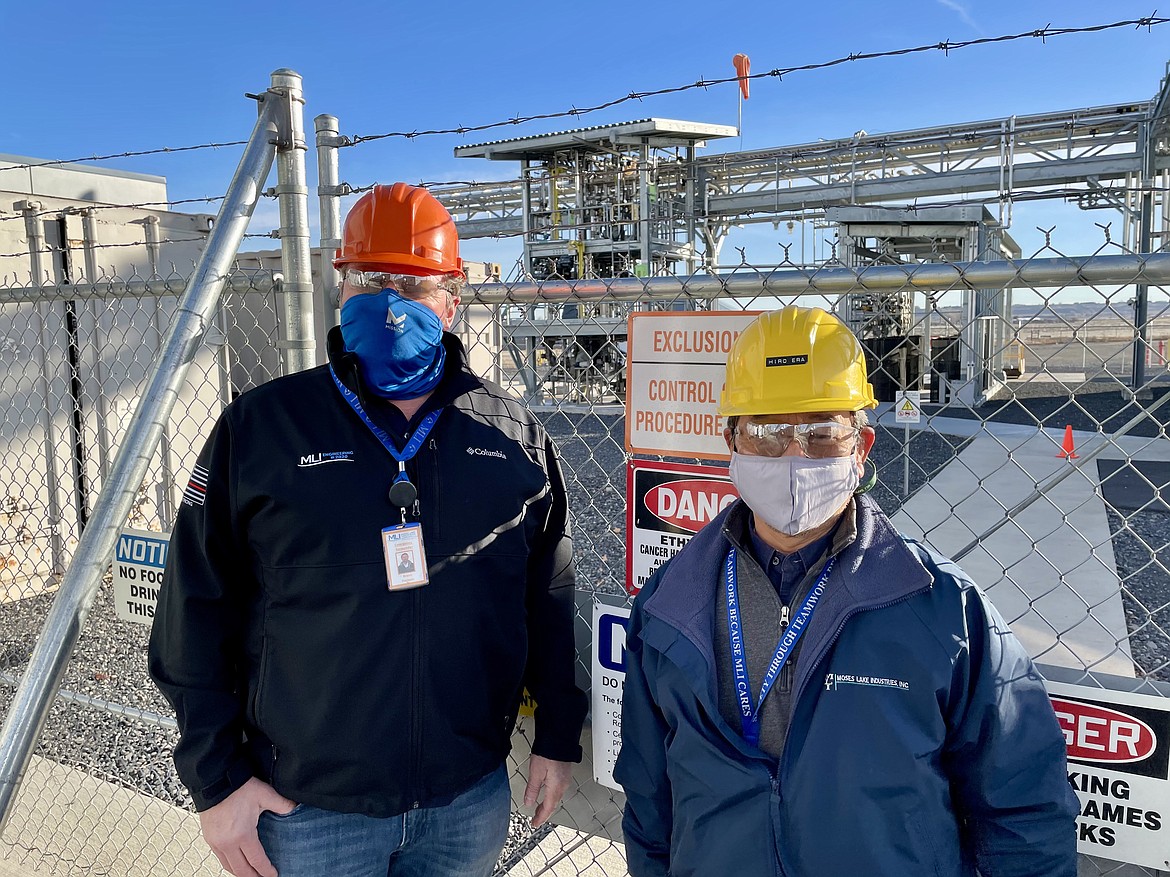
Moses Lake Industries Vice President of Operations Brent Hansen, left, and President Hiroyuki Era stand in front of the company’s polymer reaction unit in December.
Charles H. Featherstone
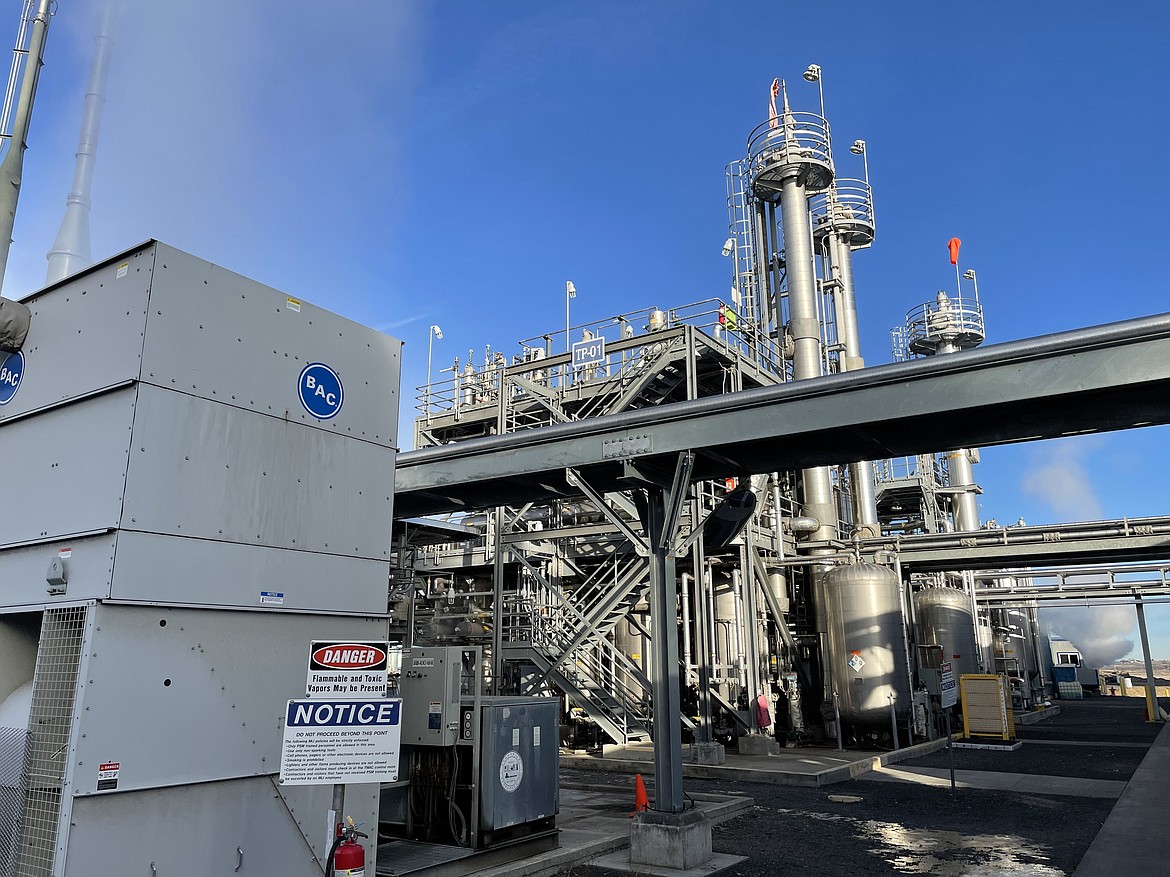
Some of the cracking and distillation units at Moses Lake Industries.
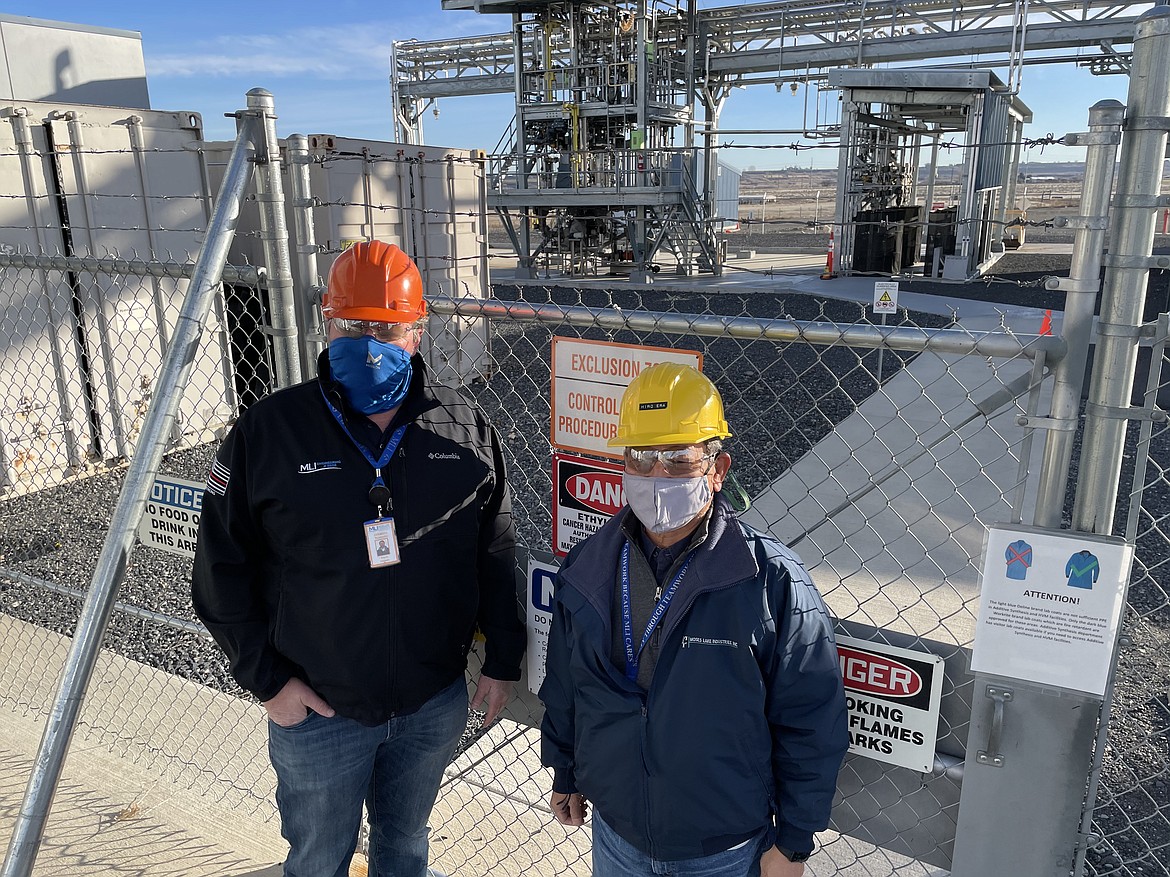
Moses Lake Industries Vice President of Operations Brent Hansen, left, and President Hiroyuki Era stand in front of the company’s polymer reaction unit in December.
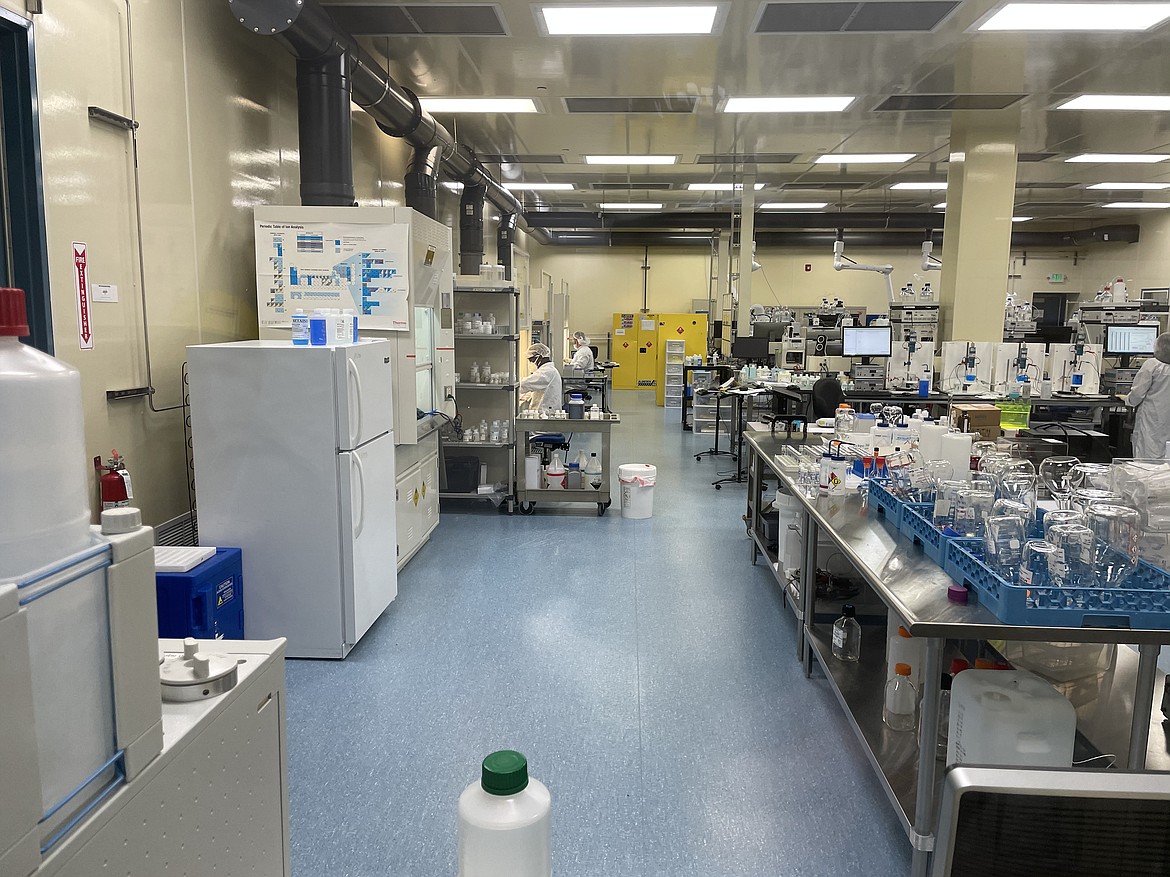
Quality control chemists evaluate the purity of the chemicals produced at Moses Lake Industries in December 2020.
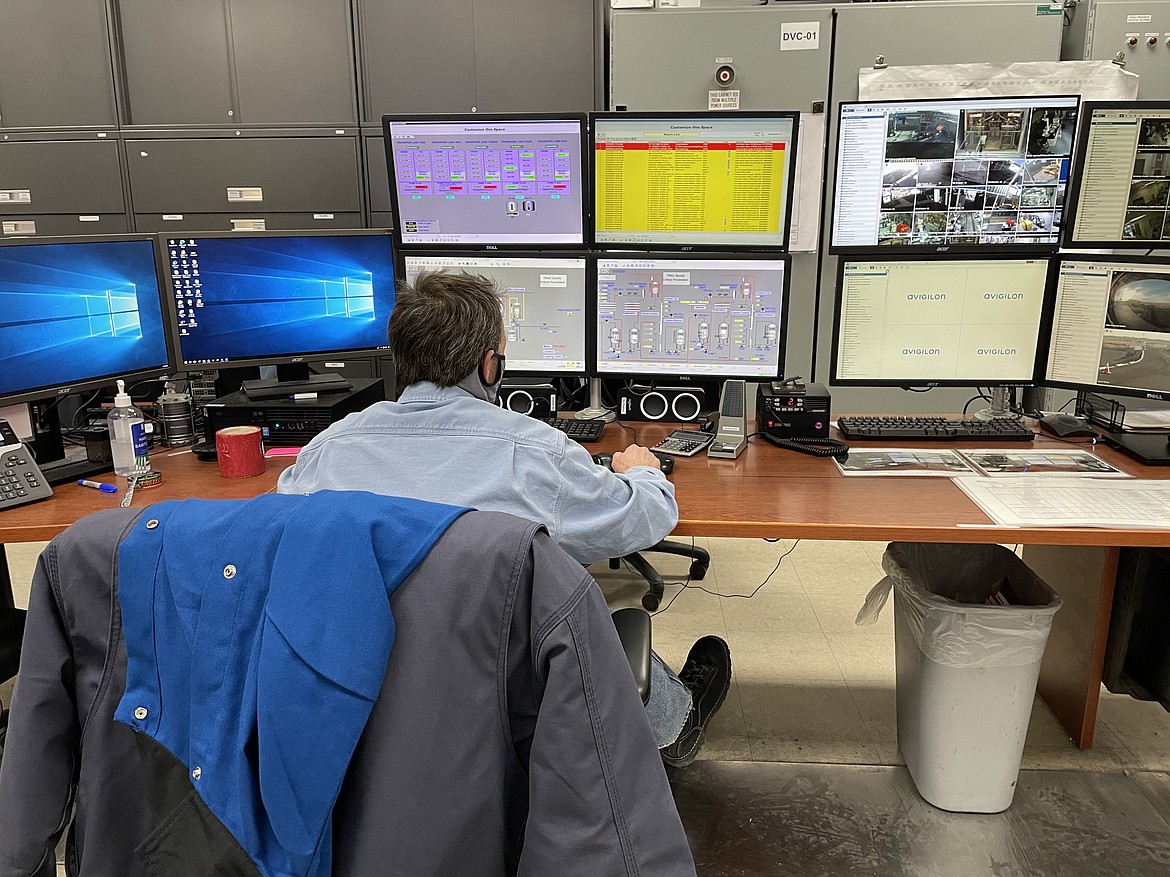
Engineer Mike Poff monitors the chemical production process at Moses Lake Industries in December 2020.
MOSES LAKE — There’s a good chance you have never heard of Moses Lake Industries.
But there’s a nearly certain chance you’ve used something made possible by the company’s products — a cellphone, a laptop, a widescreen television.
“What we do here is we make ultra-high purity chemicals that are used in computer chip manufacturing, in the manufacturing of integrated circuits,” said Brett Hansen, MLI’s vice president for operations. “And our biggest customers are companies like Intel, Samsung and Micron.”
“It’s virtually 100% guaranteed,” Hansen said.
“They’re everywhere, everywhere,” added Hiroyuki Era, MLI president and CEO.
Because of that, the last few years have been good years for MLI, and 2020 has been “a record year,” Hansen said. A subsidiary of the privately-owned Kawasaki, Japan-based Tama Chemicals, the company is fairly tight-lipped about exactly what “good” and “record” mean.
“The last five years our sales have tripled. That we can say,” Era said.
Started in 1984 after Tama owner and founder Dr. Cho met an engineer from Moses Lake during a trip to Antarctica, Moses Lake Industries began by making “ultra-pure” TMAH — tetramethylammonium hydroxide, used by computer chip makers to etch the tiny grooves in silicon semiconductors — and has, over the years, branched out to create copper and cobalt compounds used in the electroplating portion of making semiconductor chips.
It’s tough work Hansen has been a part of since the early 1980s, when his father helped with the construction of the company’s first building. Hansen, whose family arrived in Moses Lake in 1910, said he’s worked for MLI since 1994.
“When I started here, we had something like 12 or 13 people. And now we’re at 400 in the U.S.,” he said. “And then we have two factories in China that we’ve built, where we have around 62 people there between them.”
Even with the COVID-19 pandemic, Hansen said the company has been busy, and workers have kept coming in to produce chemicals needed to manufacture the products that keep the rest of us busy and entertained as we work from our kitchen tables or hunker down on our couches binge-watching Hulu.
“Our biggest customers, Intel, Samsung, Micron, our customers are all over the globe,” he said. “We’re this tiny little company in Moses Lake taking on multi-billion dollar international companies, and we’ve succeeded in a lot of our efforts.”
And that has everything to do with MLI’s employees, Hansen explained.
“We have a lot of people who come out here every day to get the job done,” he said. “These are the real heroes for us in that they still come out, they’re following the policies that have been implemented, they’re adhering to them in a very safe manner.”
“And that’s how we’ve been able to have a record year here,” Hansen added.
It’s important to keep the chemicals coming as chip makers continue to shrink the circuit pathways on integrated chips. Hansen said right now, some companies are working on pathways as thin as 3 nanometers — three one-billionths of a meter — wide. By comparison, Hansen explained, a human hair is 100,000 nanometers wide.
“So as a team, we continue to develop and build our capability and so I believe that is a big part of what’s making us successful,” Hansen said.
Everything is controlled from a central control room that once would have been dials and monitors and gauges, but is now nothing but flat panel computer displays.
“I can monitor everything from in here, I control reactor feeds, evaporator temps, pressures; we can monitor the bulk storage areas and offload areas,” said Mike Poff, an engineer with MLI. “It’s an overview of everything that’s out there. We can see boilers, we can see chillers, everything.”
Hansen said making TMAH is very energy-intensive — one reason Dr. Cho was happy to locate a facility in Moses Lake — and so thanks to contacts Cho had with Toshiba, MLI got into the copper and cobalt electrolyte business in 2001.
“So we now manufacture copper electrolyte as well as cobalt electrolyte, as well as all of the specialty additives that go along with it,” he said. “Getting into the plating business, that has led to most of the growth in the last 15-20 years.”
The company recently finished a $17 million expansion of its electrolysis operations that will allow it to boost production by 80%, and has two more expansion projects slated for this year. And five years out, Hansen said MLI is looking at something the company is calling “our mega building,” which will house production, warehouses and maybe even administration.
“We continue to invest in the company,” Hansen said. “We hire local contractors, and we buy local as much as we can. So even though we are a global company, a lot of money gets put right back into our community through our employees and projects like this.”
Commitment to community is also important for what is still a family owned company, Hansen said, noting Cho’s son Toshitsura is the president of Tama Chemicals. In 2020, MLI donated $4,000 to the Grant County Sheriff’s Office for its “Shop With a Cop” program, as well as $2,500 each to the Moses Lake Food Bank and the Boys & Girls Clubs of The Columbia Basin, and $5,000 to Serve Moses Lake to help care for the area’s homeless.
“Serve Moses Lake is relatively new for us,” Hansen said. “That’s a really important one, because that’s helping take care of the least fortunate folks in our community.”
Despite being owned by a Japanese company, Era said the founder Cho decided to call the company Moses Lake Industries on purpose as a way to highlight the company would be a cooperative effort between Americans and Japanese.
“We have to live together here, so that’s why he picked this name as the company name,” Era said.
Charles H. Featherstone can be reached at [email protected].

ARTICLES BY CHARLES H. FEATHERSTONE

Potato prices up, sales down for first quarter 2023
DENVER — The value of grocery store potato sales rose 16% during the first three months of 2023 as the total volume of sales fell by 4.4%, according to a press release from PotatoesUSA, the national marketing board representing U.S. potato growers. The dollar value of all categories of U.S. potato products for the first quarter of 2023 was $4.2 billion, up from $3.6 billion for the first three months of 2022. However, the total volume of potato sales fell to 1.77 billion pounds in the first quarter of 2023 compared with 1.85 billion pounds during the same period of 2022, the press release noted. However, total grocery store potato sales for the first quarter of 2023 are still above the 1.74 billion pounds sold during the first three months of 2019 – a year before the outbreak of the COVID-19 pandemic, the press release said.

WSU Lind Dryland Research Station welcomes new director
LIND — Washington State University soil scientist and wheat breeder Mike Pumphrey was a bit dejected as he stood in front of some thin test squares of stunted, somewhat scraggly spring wheat at the university’s Lind Dryland Research Station. “As you can see, the spring wheat is having a pretty tough go of it this year,” he said. “It’s a little discouraging to stand in front of plots that are going to yield maybe about seven bushels per acre. Or something like that.” Barely two inches of rain have fallen at the station since the beginning of March, according to station records. Pumphrey, speaking to a crowd of wheat farmers, researchers, seed company representatives and students during the Lind Dryland Research Station’s annual field day on Thursday, June 15, said years like 2023 are a reminder that dryland farming is a gamble.

Wilson Creek hosts bluegrass gathering
WILSON CREEK — Bluegrass in the Park is set to start today at Wilson Creek City Park. The inaugural event is set to bring music and visitors to one of Grant County’s smallest towns. “I've been listening to bluegrass my whole life,” said the event’s organizer Shirley Billings, whose family band plays on their porch every year for the crowd at the Little Big Show. “My whole family plays bluegrass. And I just wanted to kind of get something for the community going. So I just invited all the people that I know and they’ll come and camp and jam.” ...