
Cryptocurrency rates subject of Grant PUD commission discussion
CHERYL SCHWEIZER | Hagadone News Network | UPDATED 5 years, 2 months AGO
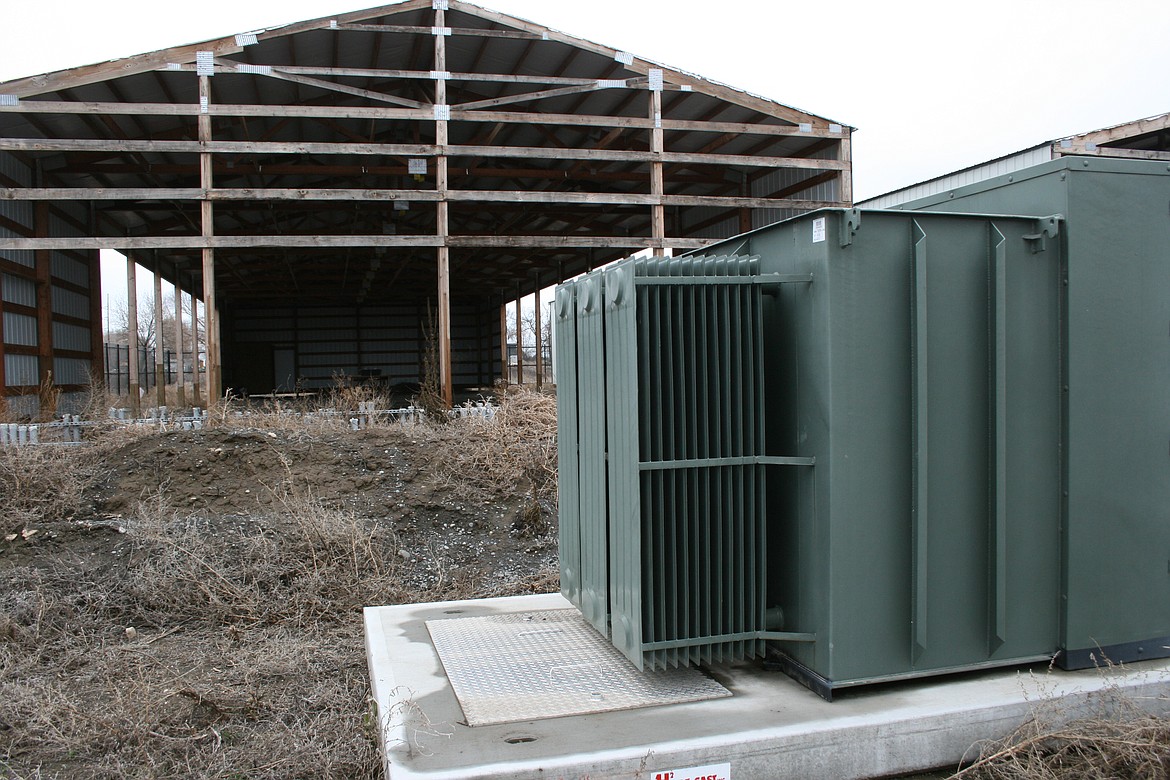
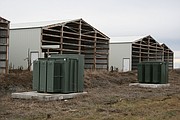
A transformer sits outside a partially finished cryptocurrency operation at the intersection of Road 1 SE and Road L.5 SE south of Moses Lake. The electrical rates that should be charged to cryptocurrency operations is a subject of discussion among Grant County PUD commissioners.
Cheryl Schweizer/Columbia Basin Herald
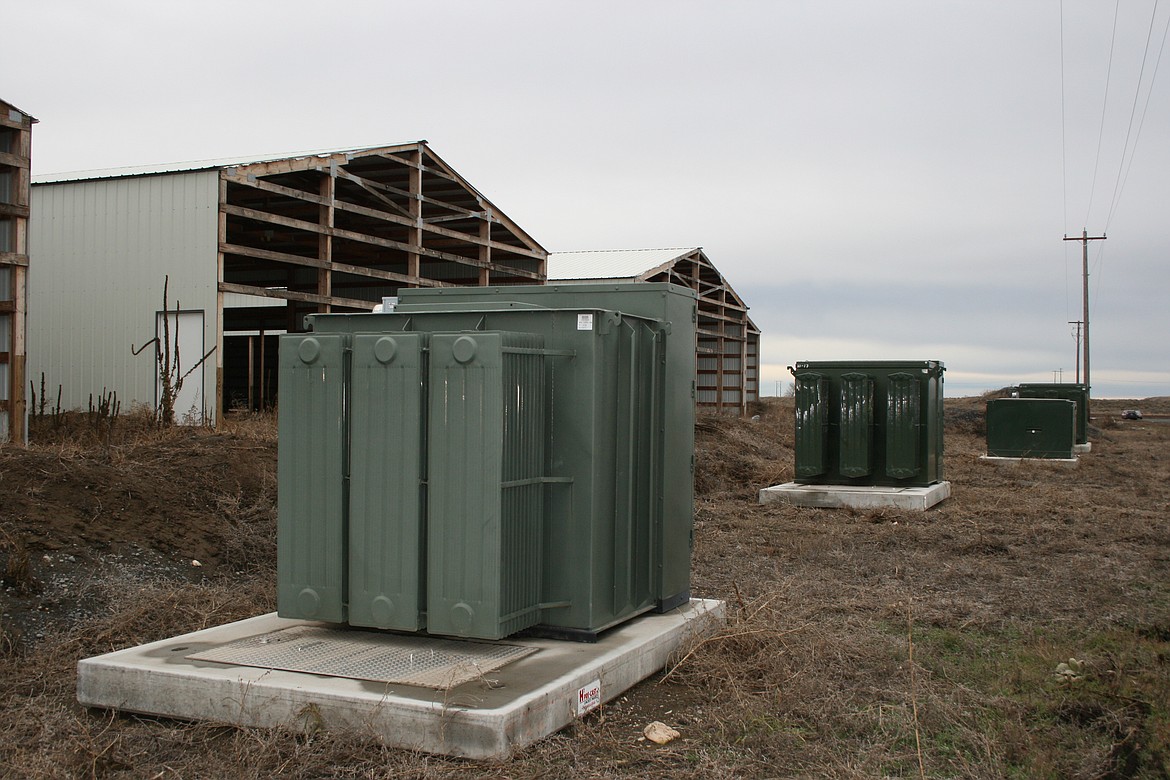
Electrical rates to be charged to cryptocurrency operations is a subject of discussion for Grant County PUD commissioners. The discontinued facility pictured is at the intersection of Road 1 SE and Road L.4 SE.
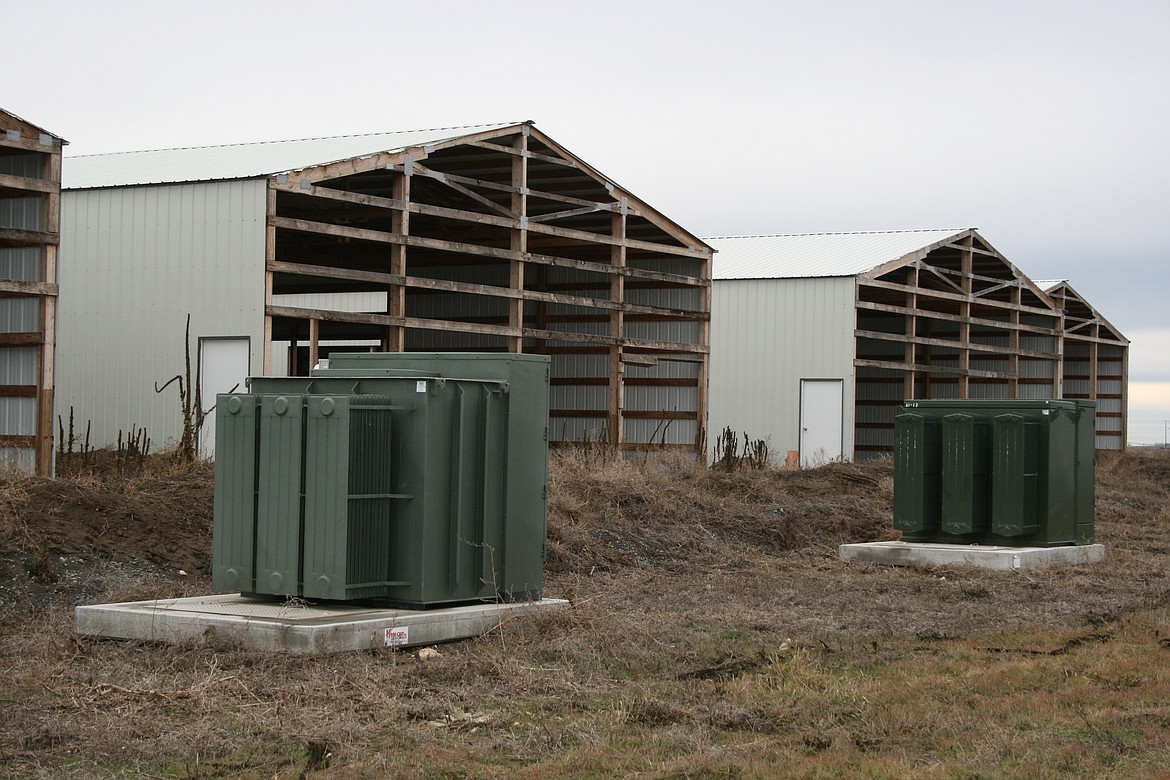
A cryptocurrency facility sits unused, with electrical transformers outside, at the intersection of Road 1 SE and Road L.4 SE. Grant County PUD commissioners are involved in a continuing discussion about electrical rates for cryptocurrency operations.
Senior Reporter Cheryl Schweizer is a journalist with more than 30 years of experience serving small communities in the Pacific Northwest. She began her post-high-school education at Treasure Valley Community College and enerned her journalism degree at Oregon State University. After working for multiple publications, she has settled down at the Columbia Basin Herald and has been a staple of the newsroom for more than a decade. Schweizer’s dedication to her communities and profession has earned her the nickname “The Baroness of Bylines.” She covers a variety of beats including health, business and various municipalities. | January 26, 2021 1:00 AM
EPHRATA — Demand for electricity among cryptocurrency businesses in Grant County has fallen to the point where the industry no longer qualifies for its current Grant County PUD rate class. That has left PUD commissioners discussing what rates they should be charged.
Currently, cryptocurrency businesses are in the “evolving industries” class, or Class 17. Class 17 was added to the rate schedule, after the PUD experienced a surge in requests for service from cryptocurrency operations in fall 2018 and spring 2019.
PUD Chief Operating Officer Dave Churchman said during the Jan. 12 PUD commission meeting, since cryptocurrency operations no longer qualified for Class 17, they would move to other rate classes. The new rate class for individual customers will depend on the characteristics of the business.
That might put some of the businesses in the “Large General Service” class, or rate Class 7. Large general service customers are considered “core customers,” and their rates are below the cost of providing electrical service. Commissioner Larry Schaapman said Jan. 12 he wasn’t sure cryptocurrency belonged in that class, since it does not fit the definition of core customers.
Residential, small business and irrigation customers also are considered core customers; core customers are the first to receive the benefits of PUD-produced electricity.
Class 17 was set up with three qualifying criteria, the first being the amount of electricity used by customers in that class. A new industry would present a “concentration risk” if it used more than 5% of total and forecast countywide demand for electricity. The rate structure includes a mechanism to move an industry back to Class 17 if demand rises above the 5% threshold and the business meets other criteria.
In a Jan. 14 interview, Schaapman said he didn’t think that would be fair to cryptocurrency customers who had followed the rules.
“We can’t whipsaw these people back and forth,” he said.
At the commission meeting, Schaapman asked PUD staff to come up with some alternatives, possibly moving cryptocurrency operations to rate Classes 14 or 15, two classes for industrial customers, including data centers.
“They’re kind of in that data world,” he said Jan. 14.
Louis Szablya, senior manager for the large power solutions group, said Dec. 29 there were fewer cryptocurrency customers in Grant County and fewer requests for service in early 2020. Rates for Class 17 customers were up April 1 of last year, but went down after April 1, Szabyla said.
From August 2019 to August 2020, the average demand from cryptocurrency businesses was 12.9 megawatts, Szbalya said. From April to August 2020, the average demand was 3.9 megawatts. That accounts for about 3% of total demand for electricity of PUD customers.
Currently, there are six cryptocurrency businesses in Grant County.
The price of Bitcoin, the most recognizable product in the industry, has been rising, and it’s trading at or near historic highs. That hasn’t spurred a lot more cryptocurrency activity in Grant County.
“We have seen a slight increase in demand,” Szabyla said.
Cheryl Schweizer can be reached via email at [email protected].
ARTICLES BY CHERYL SCHWEIZER

Road closures, roundabout, mean construction season underway
EPHRATA — The grass is starting to turn green, the trees are starting to leaf out, construction crews are starting to build roundabouts – hey, it’s spring. At least one roundabout project is in its final phase, held over from fall 2025. The intersection of State Route 282 and Nat Washington Way will be closed the week of April 6 to allow crews to install permanent lights. “This really is the final (closure),” wrote Grant County Administrator Tom Gaines in a media release. “The roundabout will close at 6 a.m. Monday, and we plan to reopen by Friday, possibly sooner if the work finishes early.”

Ybarra announces run for Washington Senate
QUINCY — State Representative Alex Ybarra, R-Quincy, has announced his candidacy for the Washington Senate. If he’s elected, he would replace Judy Warnick, R-Moses Lake, who announced her retirement in March.
Othello Community Museum to open April 25
OTHELLO — With a couple of new exhibits, a new heating-cooling system, rearranged displays and a thorough cleaning, the Othello Community Museum will open for the summer April 25. The goal, said Molly Popchock, museum board secretary, is to operate for a full season.