
Proper cooking, storage key to summer food safety
CHERYL SCHWEIZER | Hagadone News Network | UPDATED 4 years, 8 months AGO
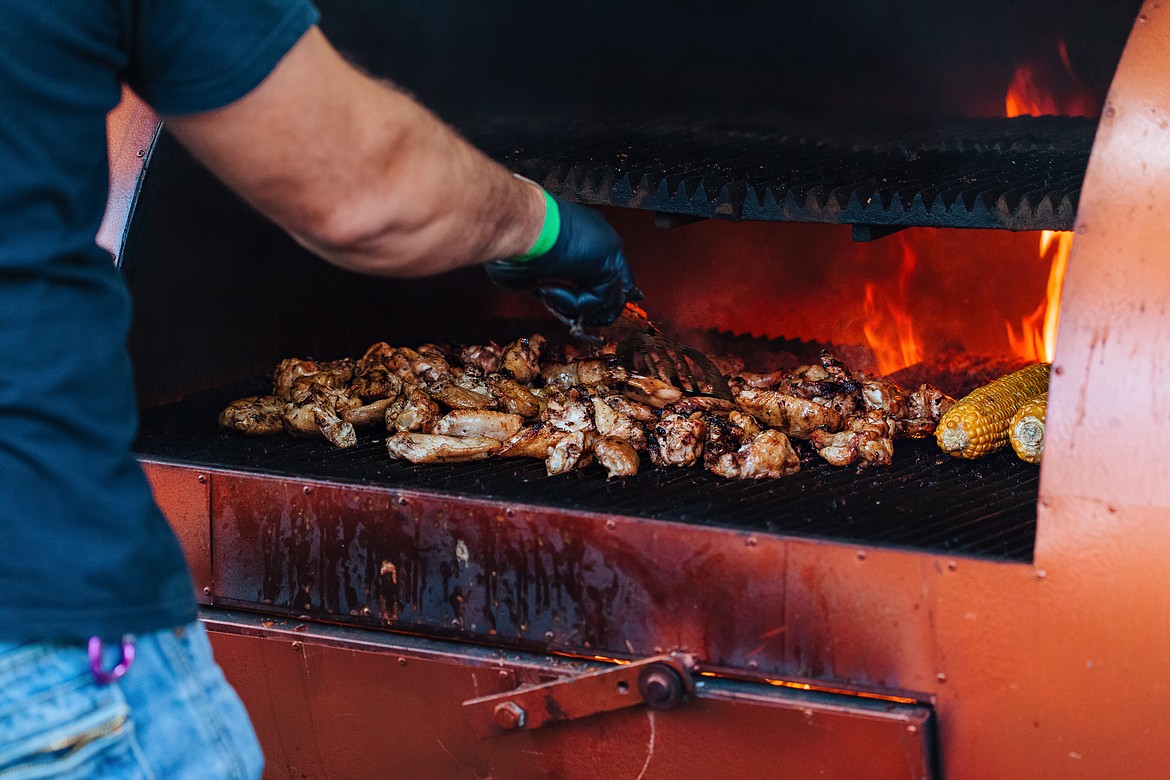
Everyone loves a summer cookout, but be careful to watch your food temperatures.
Julia Filirovska/Pexels
Senior Reporter Cheryl Schweizer is a journalist with more than 30 years of experience serving small communities in the Pacific Northwest. She began her post-high-school education at Treasure Valley Community College and enerned her journalism degree at Oregon State University. After working for multiple publications, she has settled down at the Columbia Basin Herald and has been a staple of the newsroom for more than a decade. Schweizer’s dedication to her communities and profession has earned her the nickname “The Baroness of Bylines.” She covers a variety of beats including health, business and various municipalities. | July 20, 2021 1:03 AM
MOSES LAKE — The (mostly) post-pandemic summer is about getting together, maybe around the picnic table in the backyard. Good stuff on the grill, maybe a nice big green salad, melon salsa and a macaroni salad.
But there is something to keep in mind. There are still contaminants that can get into food or can remain in food if it’s not cooked properly.
Stephanie Shopbell of the Grant County Health District said cold food has to stay cold to avoid the possibility of contamination -- and that includes foods that usually aren’t associated with food-borne illness.
“If you’ve got foods that should be kept cold and you’re not able to control the temperature, you don’t want them to sit out for more than two hours,” Shopbell said. “And if it’s above 90 degrees, which lately that’s been nearly every day, you don’t want them to sit out for more than an hour to keep pathogens from growing.”
That’s when a nice, efficient cooler comes in handy.
“It’s better if you can keep things in a cooler with ice, keep it at 40 degrees or less, for things that need to stay cold,” Shopbell said.
There are some surprising things on the list of foods that need to be cold.
“Any kind of cut leafy greens,” Shopbell said. “So if you’ve got a green salad that you’re serving. Cut tomatoes, if you’ve cut up some for salsa, you want to keep that stuff cold.”
Pasta salad and macaroni salad, for example, can be susceptible to contamination, bacteria that can cause them to become unhealthy. And it’s not just mayonnaise, unless the mayo is homemade. It’s the pasta.
Cooked pasta should be cooled quickly, Shopbell said, so that it’s less than 40 degrees. That inhibits the growth of bacteria.
People should keep an eye on that melon salsa, too, or anything with cut melon. A fruit salad with, say, apples and grapes, bananas and oranges won’t be a problem, but adding cut melons changes the equation.
“If you add in cantaloupe, honeydew, watermelon, any of the melons, then that needs to be kept cold,” Shopbell said.
Just as some food needs to be cold, other foods, especially meat, need to be hot. Grilled meat that’s undercooked can host contaminants.
Shopbell recommended using a digital thermometer to ensure the meat is getting to the right temperature, and cooks need to know the right temperature for the burgers isn’t right for the shrimp.
“Things like fish have different pathogens than (something like) chicken,” Shopbell said.
The pathogen-killing temperature for hamburger is 158 degrees; fish, shellfish, steaks and ribs should be 145 degrees. Poultry should be cooked to 165 degrees.
The thermometer used should measure temperature on the meat surface, Shopbell said.
Of course, the food that’s going to be cut up needs a good bath first, and any utensils used to cut raw meat should be sanitized before they’re used to cut up anything else. Sanitation also is recommended for any countertops or cutting boards. And sanitizing requires more than just hot water.
“Bleach solution is the easiest and cheapest,” Shopbell said. “It’s a capful (of bleach) per gallon (of water). You can mix (the solution) up in a spray bottle and spray it.”
It’s good to let the solution sit for a minute or two before wiping it off, she said.
“You want it to stay on the surface for a little while and let it dry. You don’t want to wipe it down immediately so it has time to kill anything that might be on there,” Shopbell said.
ARTICLES BY CHERYL SCHWEIZER

Road closures, roundabout, mean construction season underway
EPHRATA — The grass is starting to turn green, the trees are starting to leaf out, construction crews are starting to build roundabouts – hey, it’s spring. At least one roundabout project is in its final phase, held over from fall 2025. The intersection of State Route 282 and Nat Washington Way will be closed the week of April 6 to allow crews to install permanent lights. “This really is the final (closure),” wrote Grant County Administrator Tom Gaines in a media release. “The roundabout will close at 6 a.m. Monday, and we plan to reopen by Friday, possibly sooner if the work finishes early.”

Ybarra announces run for Washington Senate
QUINCY — State Representative Alex Ybarra, R-Quincy, has announced his candidacy for the Washington Senate. If he’s elected, he would replace Judy Warnick, R-Moses Lake, who announced her retirement in March.
Othello Community Museum to open April 25
OTHELLO — With a couple of new exhibits, a new heating-cooling system, rearranged displays and a thorough cleaning, the Othello Community Museum will open for the summer April 25. The goal, said Molly Popchock, museum board secretary, is to operate for a full season.