
'There's hope': Former Royal City Police chief details importance of attention to mental health
CHERYL SCHWEIZER | Hagadone News Network | UPDATED 5 years, 1 month AGO
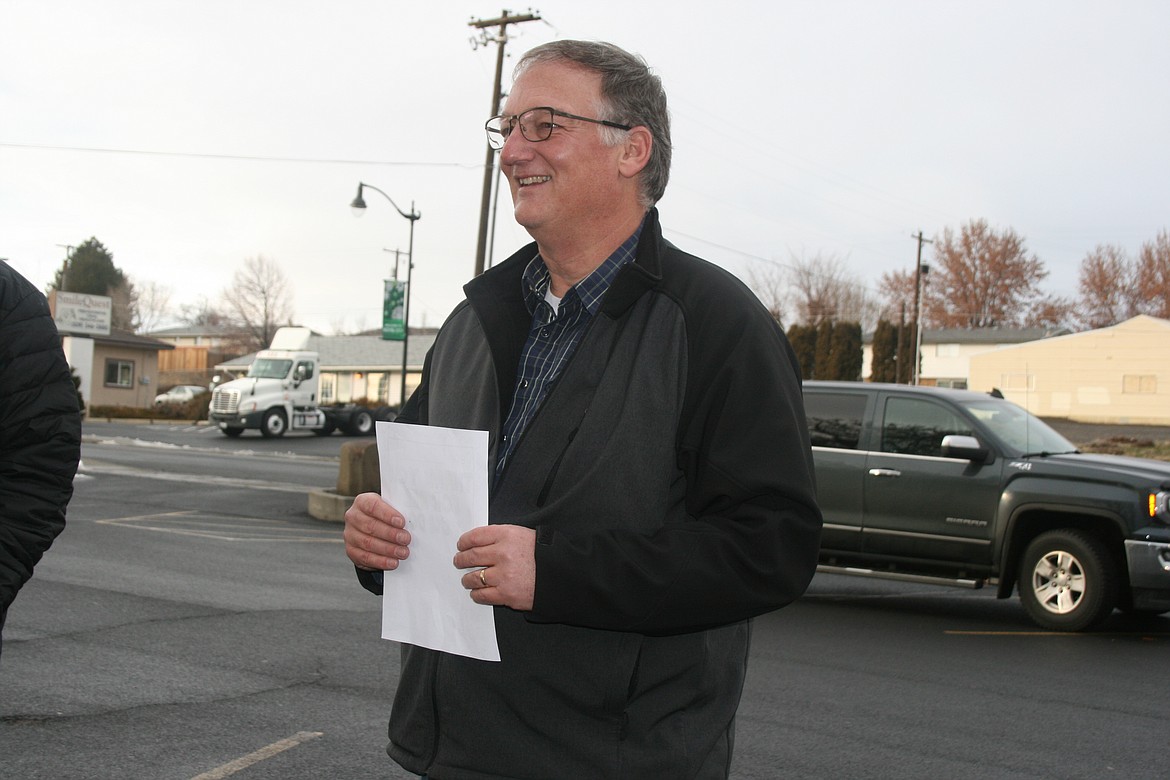
Retired Royal City Police Department chief Darin Smith.
Cheryl Schweizer/Columbia Basin Herald
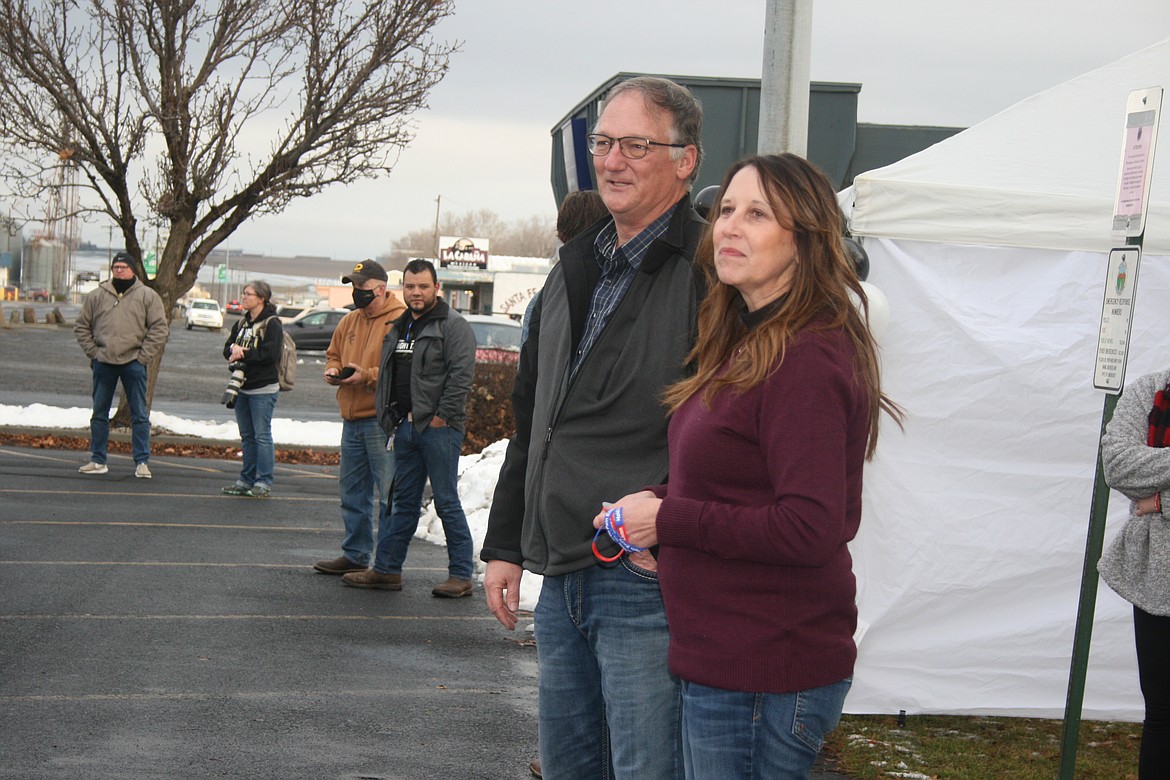
Retiring Royal City Police Chief Darin Smith (left),with wife Angie, said law enforcement officers, and others dealing with trauma and stress, should ask for help to address mental health issues.
Senior Reporter Cheryl Schweizer is a journalist with more than 30 years of experience serving small communities in the Pacific Northwest. She began her post-high-school education at Treasure Valley Community College and enerned her journalism degree at Oregon State University. After working for multiple publications, she has settled down at the Columbia Basin Herald and has been a staple of the newsroom for more than a decade. Schweizer’s dedication to her communities and profession has earned her the nickname “The Baroness of Bylines.” She covers a variety of beats including health, business and various municipalities. | March 1, 2021 1:00 AM
ROYAL CITY — Darin Smith said his law enforcement career, his experiences and their impact on him emphasized the importance of paying attention to his mental health.
And he hoped speaking out about it showed other people in high-stress jobs it’s important to know when to seek help because help is out there.
Smith retired as Royal City Police chief at the end of January, but, he said, the end of his law enforcement career really came before that.
“October 14, 2019, was my last day in uniform,” Smith said.
He was called to the scene of a suicide, who turned out to be a longtime friend. And a long-simmering crisis in his life came to a head.
“After my last call, the weight of everything just broke me,” he said.
But Smith said while it can be a difficult road, there is a road back.
He said he had been struggling with the stress caused by his experiences since about 2008 and it got to the point of nightmares and flashbacks in 2010.
“The last couple years got really hard on me,” he said.
But he was getting close to retirement, his youngest children were in high school, and he was thinking he would try to wait it out. However, he said he felt there was a risk he could commit suicide.
His friend’s suicide was the turning point. Smith said he went to see his family physician and had a realization during the visit.
“If I don’t say something, I’m going to die,” he said.
Smith moved to Royal City at 16 years of age and he liked his law enforcement job allowed him to help his community.
“It’s my home, and I wanted to serve my community,” he said.
He had offers from other agencies, but he spent his 30-year career in Royal City.
“I love it here, I love the people I’m surrounded by, and I wanted to help them.”
But it was a tough job.
“I’ve seen a lot of tragedy over the years, and a lot of it was people I know,” he said.
The first fatality accident he responded to involved four victims, he said, one a friend, another a young child.
“I was just crying the whole time,” he said, and in the aftermath he decided it would be the last time he showed emotion like that.
So he pushed down the feelings that came with the job.
“Everything gets bottled up,” Smith said.
But that takes its own toll.
“You take it out other ways,” he said.
He started isolating himself, he said, and his alcohol consumption increased. He responded to a traffic accident in 2008, he said, a fatality that involved a child the age of his twin sons. That was when the pressure started building.
But he didn’t want to say anything, he said, or come off as weak, or for other officers to think he was unreliable.
So the pressure built until he was sitting in his doctor’s office in October 2019.
The doctor sent Smith to a crisis stabilization center for a week, and in early January 2020 he went to a treatment center in Utah designed for people undergoing stress from traumatic situations – law enforcement officers, firefighters, people from the military. He spent six weeks undergoing treatment.
He said he learned speaking about the traumas and the stress were signs of strength.
“I wasn’t alone. I wasn’t broken. I wasn’t weak. Quite the opposite,” he said.
His advice for people who’ve gone through trauma is it’s important not to ignore its effects.
“Find someone that you trust. That you can talk to,” he said.
He learned an incident could affect him for years, maybe decades.
“Don’t wait to talk about something,” he said.
And coming to terms with it might take time.
“Talk about until you’re tired of talking about it,” he said.
The stress and the trauma are normal reactions to abnormal events, he said. If it doesn’t get addressed, it takes a toll. Even after it’s addressed, it still takes its toll.
“It’s a heck of a roller-coaster ride,” he said. “There are good days and bad days.”
One of the lessons he has learned, he said, is life can end at any minute, so it’s important to live life and take full advantage of every day.
People suffering from the effects of trauma need to know there’s help, he said, and if others can see him as an example, they could be more willing to ask for help themselves.
“There’s help. There’s hope. You just have to ask,” Smith said.

ARTICLES BY CHERYL SCHWEIZER

Road closures, roundabout, mean construction season underway
EPHRATA — The grass is starting to turn green, the trees are starting to leaf out, construction crews are starting to build roundabouts – hey, it’s spring. At least one roundabout project is in its final phase, held over from fall 2025. The intersection of State Route 282 and Nat Washington Way will be closed the week of April 6 to allow crews to install permanent lights. “This really is the final (closure),” wrote Grant County Administrator Tom Gaines in a media release. “The roundabout will close at 6 a.m. Monday, and we plan to reopen by Friday, possibly sooner if the work finishes early.”
Ybarra announces run for Washington Senate
QUINCY — State Representative Alex Ybarra, R-Quincy, has announced his candidacy for the Washington Senate. If he’s elected, he would replace Judy Warnick, R-Moses Lake, who announced her retirement in March.
Othello Community Museum to open April 25
OTHELLO — With a couple of new exhibits, a new heating-cooling system, rearranged displays and a thorough cleaning, the Othello Community Museum will open for the summer April 25. The goal, said Molly Popchock, museum board secretary, is to operate for a full season.