
It was the hottest summer ever, and Glacier’s trees are showing stress
CHRIS PETERSON | Hagadone News Network | UPDATED 4 years, 2 months AGO
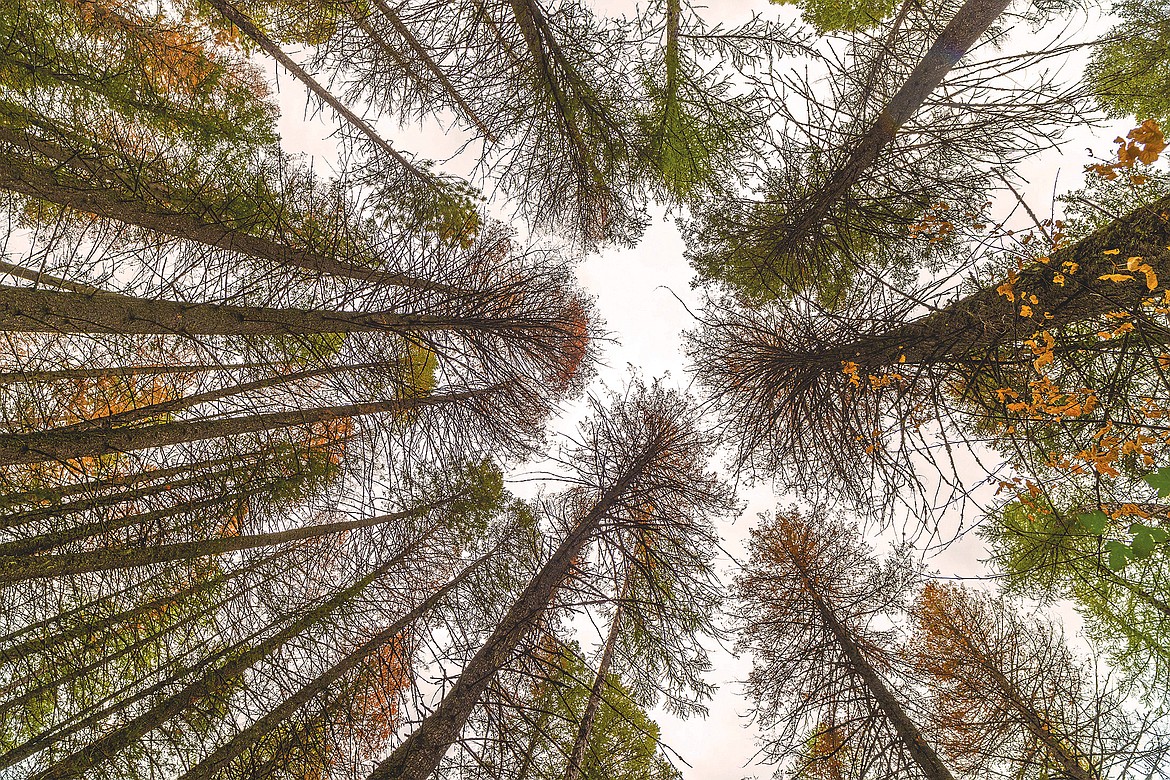
This stand of Douglas fir trees in the Belton Hills are dead from a Douglas fir beetle infestation. The green trees are primarily larch and lodgepole pine. (Chris Peterson)
Chris Peterson is the editor of the Hungry Horse News. He covers Columbia Falls, the Canyon, Glacier National Park and the Bob Marshall Wilderness. All told, about 4 million acres of the best parts of the planet. He can be reached at [email protected] or 406-892-2151. | September 29, 2021 7:30 AM
Summer 2021 will go down as the hottest ever in recorded history, and some of Glacier National Park’s trees are suffering because of it.
The average temperature in Kalispell from June 30 to Sept. 22 was 66 degrees, making it the warmest ever and 3.9 degrees above average.
The hottest days were 101 degrees on July 31 and June 29. The wettest day was Aug. 8, when the region saw a badly needed cool down and .46 inch of rain.
Regionally, Missoula set a record of 22 consecutive days of 90 degrees or warmer.
In Glacier Park the western red cedars along the Going-to-the-Sun Road are showing red needles.
“Cedar normally sheds some of its mature branchlets in the fall by turning orange/red. This process is called flagging. This year it seems to be very prevalent in almost every cedar. The amount of flagging is increased when the tree is stressed. The prolonged drought with heat and dry winds certainly has stressed vegetation, especially those species that are more heavily dependent on water, like the western red cedar,” Dawn LaFleur, vegetation biologist for the park said recently.
The Douglas Fir in the Belton Hills are also seeing a Douglas Fir beetle outbreak, LaFleur confirmed. While the beetle is a naturally occurring pest, drought will exacerbate an outbreak.
From a distance, the red streaks and patches on the mountains are from the firs dying. When the tree dies the needles turn red. The infestation of beetle larvae actually happened months earlier in most cases.
The beetles typically infest older trees.
As far as the cedars go, precipitation this fall and next spring will determine the overall health of those stands, LaFleur noted.
Glacier marks the eastern edge of the western cedars range. States like Washington and Oregon are seeing a large die-off of the iconic species, which can live more than 500 years, and research is underway to understand exactly why the trees are dying.
Overall, the reason for the dieback, scientists are finding, is longterm drought and heat. The drought likely weakens the trees and then they become susceptible to other pests, although that research is still ongoing, scientists say.
To date, the region is about 1.75 inches below normal for total rainfall, but July, which was the hottest month, saw just .2 inch of rain for the month. But August saw 1.76 inches of rain, likely saving the area from another severe fire season.
ARTICLES BY CHRIS PETERSON
Columbia Falls City Council tables e-bike law
The Columbia Falls City Council last week voted to table a city ordinance that would restrict e-bikes and e-motorcycles along with other electrically powered vehicles on its sidewalks and city parks.
Oh, Christmas tree!
I usually talk to my mother on the phone once a week or so. She lives alone in Florida and works for a church doing funerals part-time.
Oh, Christmas tree!
I usually talk to my mother on the phone once a week or so. She lives alone in Florida and works for a church doing funerals part-time.