
Swan deaths 'unprecedented'
BILL BULEY | Hagadone News Network | UPDATED 3 years, 8 months AGO
Bill Buley covers the city of Coeur d'Alene for the Coeur d’Alene Press. He has worked here since January 2020, after spending seven years on Kauai as editor-in-chief of The Garden Island newspaper. He enjoys running. | April 20, 2022 1:07 AM
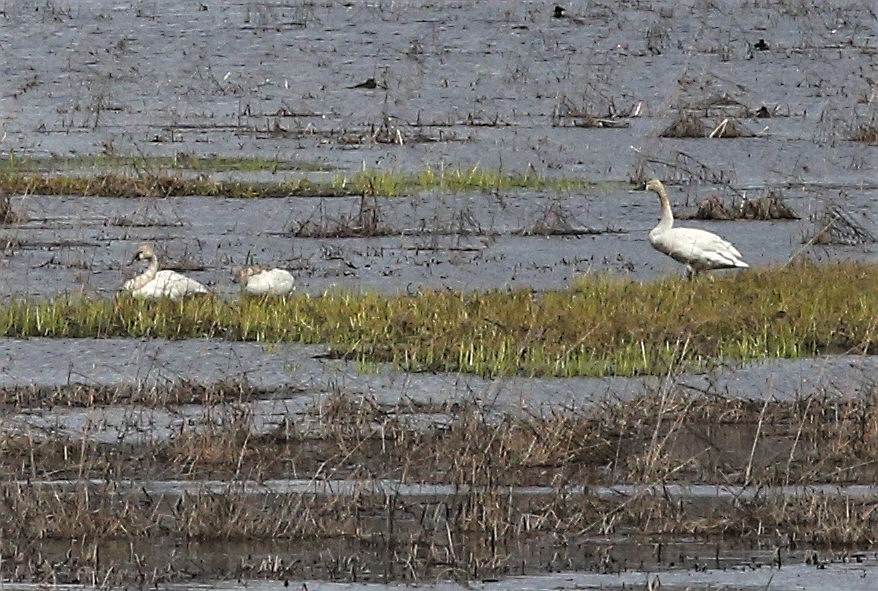
ROSE LAKE — As Kevin Kincheloe looked out from his longtime home down toward Harrison Bay and the Coeur d’Alene River on Tuesday afternoon, he could see dead tundra swans.
It's not surprising.
As the years have passed, he has become accustomed to the bodies of the beautiful white birds on shorelines and roadsides.
But this year is different.
“I have never seen a die-off of swans as we have witnessed this year,” Kincheloe said.
He estimated there were 10 dead swans on Tuesday.
“It was really disheartening,” Kincheloe said.
According to the Fish and Wildlife Service, migrating swans die each year in the Lower Basin Coeur d’Alene River because their food source is contaminated by a century of mining waste.
Tundra swan mortalities averaged 128 in 2018 and 2019, FWS reported. In previous years, it was about 50.
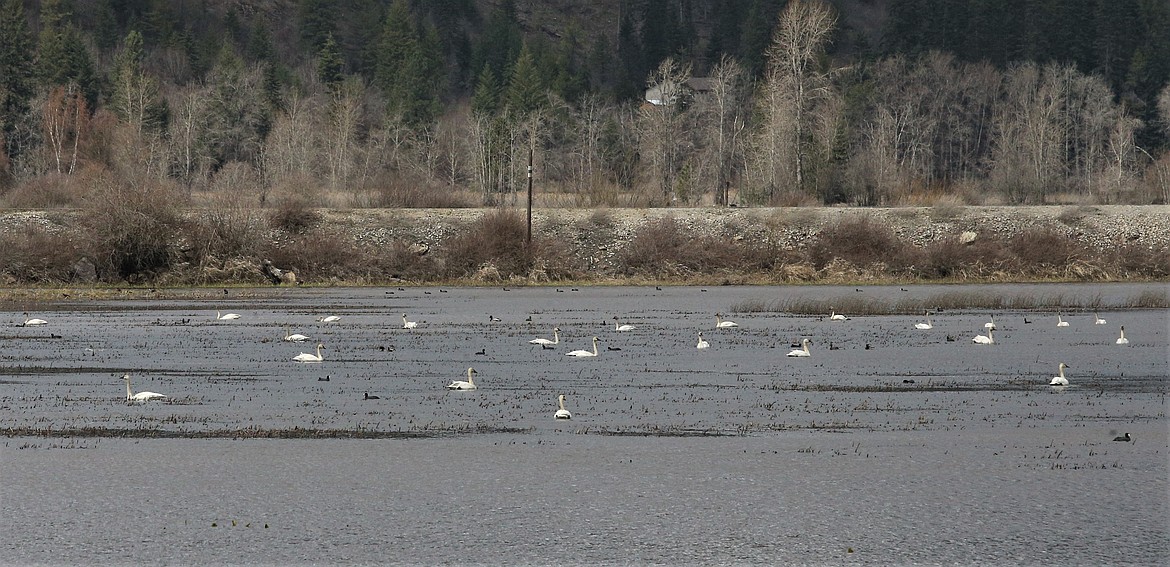
“Tundra swan mortalities have been unprecedented in 2022,” FWS said in a prepared statement, “with over 350 of the 24,000 observed swans documented as mortalities since Feb. 9 and approximately 180 live swans yet to leave the basin” as of April 15.
The number of deaths is likely even higher because observations are based on a fixed-survey route, which doesn’t include some of the less accessible wetlands or dead swans scavenged by predators, FWS said.
As part of the Basin Environmental Monitoring Program for the Bunker Hill Superfund Site, the FWS has been conducting waterfowl surveys in the Lower Basin Coeur d’Alene River for 12 weeks each year since 2005.
The Lower Basin is a key stopover refueling site for tundra swans and other migratory waterfowl, FWS said.
Swans generally arrive in late February and early March.
“Tundra swan activity and time in the basin is highly influenced by weather-related conditions such as ice cover and spring runoff," FWS said.
FWS said this year’s rising number of swan deaths may be a combination of arriving early, staying longer, and perhaps an overall increase in the number of swans flying through the basin on their way to breeding grounds in Alaska.
This year's count is more than 24,000, a record. The second-highest swan count in the basin was in 2015 at 18,689, and the average from 2005-2019 was 10,089.
“The pattern has been that mortalities increase during years when large numbers of swans spend more time feeding in contaminated basin wetlands,” FWS said.
Fish and Game said tundra swans are particularly vulnerable because they burrow deep into the mud to feed on roots and tubers, increasing the amount of exposure to contaminants in the soil.
People notice the dead swans or agency officials trying to remove them, and they inquire with wildlife officials to find out what's happening.
The Environmental Protection Agency and the Restoration Partnership, comprised of government agencies and private entities, are working on solutions:
- Cleanup and restoration to provide clean feeding habitat in lower basin wetlands. Over 400 acres are online and an additional 700 to 1,000 acres will become available for clean feeding for swans because of remediation and restoration efforts by EPA and the Restoration Partnership over the next 10 years.
- Continue to explore deterrent measures such as using a handheld laser to discourage swans from feeding in Harrison Slough, where large numbers tend to congregate when other basin lakes and wetlands remain frozen.
- Piloting technologies to remove or isolate contaminated sediment from the Lower Coeur d’Alene River channel that is the primary source of lead to the wetlands and Lake Coeur d’Alene. EPA will start construction of the first pilot in the Dudley Reach in 2024.
- Conduct studies to develop a non-invasive monitoring metric that links to swan health by comparing lead concentrations in swan blood, feces and sediment. The monitoring tool will be used to track swan lead exposures over time as wetlands are cleaned up. The study will also help to determine the relative contribution of Lower Basin lead to swan exposures compared to lead from sources outside the basin. Tracking swan movement throughout the basin will also aid remediation and restoration planning.
It will take several decades and hundreds of millions of dollars to undo the damage.
It's estimated there is a high concentration of mining waste scattered over an extremely large area — about 30 river miles.
“Around 95% of wetland habitat in the lower Coeur d’Alene River Basin contains lead levels toxic to swans and other waterfowl," a 2019 Fish and Game report said.
Kincheloe appreciates efforts to protect the swans but has concerns the problem will not be resolved. He said he recently saw two swans off the shoulder of Powderhorn Bay Road.
“One was obviously in distress and its mate was sitting with it,” Kincheloe said. “When I stopped on the way back the healthy one flew off, and the other one hobbled across the road."
He said a barometer of how well people are caring for the environment is to look at nature.
Dead swans are not a good sign.
“People don’t seem to want to acknowledge that what they do impacts nature,” Kincheloe said.
ARTICLES BY BILL BULEY

Man survives after falling tree strikes car
Wife, children OK after freak accident in Blanchard
Sandpoint man survives after tree smashes into car
CDA woman hears, feels tree come down on home
CDA woman hears, feels tree come down on home
Shaken, but OK, Kay was relieved the damage wasn’t worse. She has family around for help and said while the home had no power, it was livable.

Post 143 commander says 'Be The One' will save veteran lives
Post 143 commander says 'Be The One' will save veteran lives
Post 143 has an obligation to get involved, Shaw said. “We're trying to do something about it,” he said.