
Quincy hospital finances improving
CHERYL SCHWEIZER | Hagadone News Network | UPDATED 4 years AGO
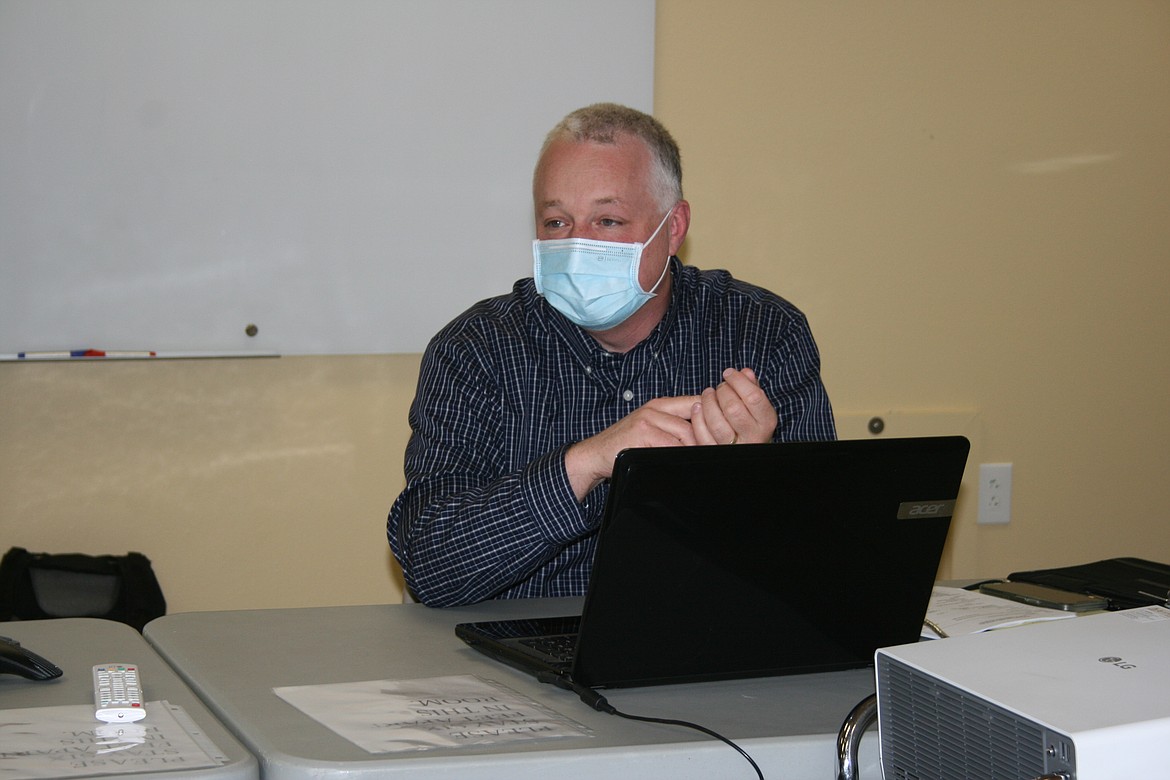
Luke Zarecor, an accountant for Quincy Valley Medical Center, goes over the results of the hospital’s 2021 financial audit during the commission meeting Tuesday.
CHERYL SCHWEIZER/COLUMBIA BASIN HERALD
Senior Reporter Cheryl Schweizer is a journalist with more than 30 years of experience serving small communities in the Pacific Northwest. She began her post-high-school education at Treasure Valley Community College and enerned her journalism degree at Oregon State University. After working for multiple publications, she has settled down at the Columbia Basin Herald and has been a staple of the newsroom for more than a decade. Schweizer’s dedication to her communities and profession has earned her the nickname “The Baroness of Bylines.” She covers a variety of beats including health, business and various municipalities. | August 26, 2022 1:25 AM
QUINCY — Financially, 2021 was a good year for Quincy Valley Medical Center.
Luke Zarecor, of the Spokane Valley accounting firm DZA, said he attended the Aug. 22 board meeting in part to recognize the work done by hospital employees and board members.
“The reason I wanted to come in person this year, in particular, is to say congratulations for an amazing job,” Zarecor said. “Going back six, seven years ago when I first started here, your registered warrants were greater than your net patient service revenue in one year. And I did not know what the path forward was.”
Registered warrants are issued by junior taxing districts, like the hospital, when they don’t have enough cash on hand to pay their obligations. The junior taxing district borrows money from Grant County to pay its bills, then pays the money back with interest.
“This financial statement (for 2021) shows no registered warrants,” Zarecor said.
At the end of 2020, the hospital owed about $2.3 million in warrants.
The hospital finished 2021 with $5.1 million in the bank, compared to a loss of $2.15 million in 2020.
Zarecor said QVMC employees did a good job estimating how much the hospital would receive in payment for its services.
“That’s one of the biggest risk factors we see,” he said.
Quincy hospital has patients who use Medicare and Medicaid, as well as private insurance. Because of the way the system is structured, any hospital must estimate the amount of money it will actually receive.
“We didn’t have to make any adjustments. That tells me your finance team did a very good job estimating that amount, which is important because I’ve seen that be a big number change every now and then, which impacts the bottom line,” he said.
Hospital administrator Glenda Bishop said the district was required to pay some money back to the Medicare program. Zarecor said that’s actually a positive sign.
“This is going to sound really counterintuitive, but you want payables,” he said. “Medicare is a break-even program. They’re going to pay you the true cost of taking care of their beneficiaries, actually a little bit less than the true cost, not a dollar more.”
The Medicare program will reimburse a medical facility, QVMC in this case, throughout the year, based on what it has cost that facility to provide care in the past, Zarecor said. At the end of the year, Medicare officials do an analysis of the actual cost of caring for patients covered under the program. If costs were higher than the past average, Medicare pays the difference; if costs were lower, they take the money back. Medicare taking money back is called a payable.
“Ultimately, payables - especially if you know they’re coming, which you do - are good things. It means you’re operating more efficiently every year, and you’re going to be more financially healthy going forward,” he said.
The hospital’s revenue increased from about $7.9 million in 2021 to about $9.7 million in 2022. Zarecor attributed the increase to services QVMC has added over time, including a physical therapy department and treatment for sores that break the skin, called wound care.
Hospital officials have done a good job controlling costs, especially labor costs, he said.
Quincy resident Dave Dormaier asked about money QVMC received during the COVID-19 pandemic. He asked how the end of that funding would affect the hospital’s finances going forward.
Bishop said QVMC, after consulting with its attorneys and accountants, set up a separate account for the coronavirus relief funds. The rules on how the money could be spent were unclear, she said.
“That money was not used,” she said. “That money did not go towards paying off our warrants.”
Board chair Randy Zolman said the district still has the funds.
“We’re leaving that, basically, like a reserve account at this point,” Zolman said.
Cheryl Schweizer may be reached at [email protected].
ARTICLES BY CHERYL SCHWEIZER
Road projects on hold for Labor Day weekend
MOSES LAKE — With Labor Day weekend dead ahead, drivers will be able to move freely about the state. Most road projects are on hold for the holiday weekend. Nobody will be working on the Hansen Road overpass on Interstate 90, but the lane restrictions that are in effect will continue through the end of the project.

Cost estimates for water source alternatives given to Moses Lake City Council
Protected under the U.S. Endangered Species Act, efforts are ongoing to keep it self-sufficient
MOSES LAKE — It’s going to cost a lot of money to provide alternative water sources for the city of Moses Lake, but some of the possible alternatives will cost more than others. City officials provided the Moses Lake City Council with costs for various alternatives Tuesday.

Dryer vent cleaning is important -- but often overlooked
MOSES LAKE — Not all the maintenance a house needs is visible. Sometimes a potential problem just goes unnoticed until it causes trouble, sometimes serious trouble. But a lot of potential problems give off warning signs. Clothes dryers often do when they need a good cleaning.