
Trumpeter swans flock to Flathead River for winter
MONTE TURNER | Hagadone News Network | UPDATED 4 years, 7 months AGO
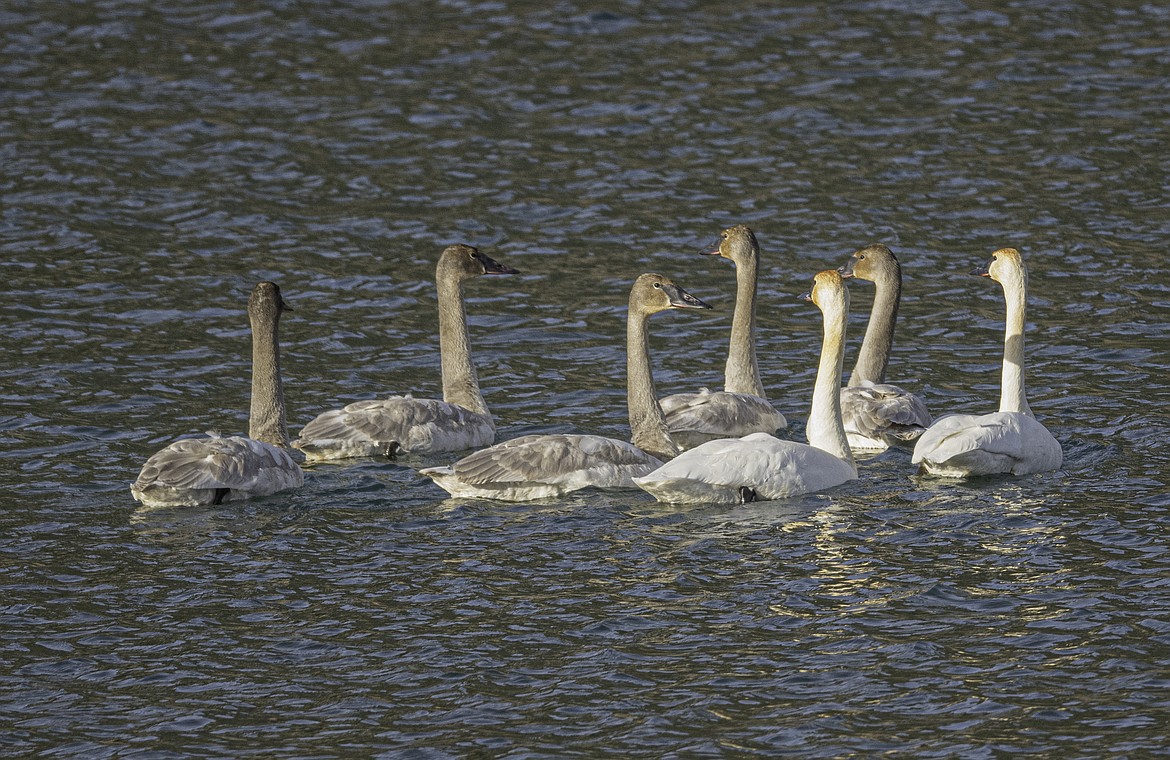
Trumpeter swans along the Flathead River Paradise. (Tracy Scott/Valley Press)
Even if you weren’t looking for them, there is no way you could miss all the swans on The Flathead River, especially between Dixon and Paradise.
Those white bodies stand out on the water as this area has taken on the appearance of a swan refuge, and it actually is as they are always protected in western Montana.
Tundra swans can be hunted near Choteau by permit each fall, but these are trumpeter swans and are fully protected.
“The majority of swans seen on the lower Flathead River are local, though there may also be stopover swans seeking refuge on the river along their migration route,” explains Kari Eneas, Wildlife Program Manager for the Confederated Salish & Kootenai Tribes. “Trumpeter swans are seen in higher numbers this time of year along the Lower Flathead River because the ponds and wetland complexes they use throughout the Mission Valley and greater Flathead Reservation freeze over during the winter. Instead of fully migrating, our local trumpeter swans will overstay winter on the lower Flathead River in areas that are free of ice.”
Trumpeter swans are bruisers, weighing as much as 23 pounds with an 80-inch wingspan, compared to the smallest swan in our area, tundra swans, at 14.4 pounds and 44 inches from wing tip to wing tip, according to The Sibley Field Guide to Birds of Western North America.
But unless they are next to each other, it’s extremely difficult to tell the difference. One indicator is the trumpeters back tends to be more evenly rounded when they are sitting on water and their bill is longer, straighter and it’s always black at the base. The tundra will have a yellow spot just below their eyes.
“Winter months, while ponds in the valley are frozen over, are the best times to view trumpeter swans from Highway 200,” shares Eneas. “There are various pull-outs along the highway that provide safety from the highway traffic, and often provide a good view of the river. They are eating insects and vegetation on the bottom of the river so they will congregate in micro-climates that support underwater vegetation coupled with shallower areas along the river.”
Like so many animals that were overhunted for feathers, meat and claws in the early 20th century, the trumpeter swan population became very fragile. By 1933, fewer than 70 wild trumpeters were known to exist, and extinction seemed imminent, until aerial surveys discovered a Pacific population of several thousand trumpeters around Alaska's Copper River.
Eneas localizes the history.
“Prior to the Confederated Salish & Kootenai Tribes restoration project, which began in 1996, trumpeter swans had been absent from the Flathead Indian Reservation for more than 100 years. With the first documented successful nesting attempt in 2004, the reintroduction of trumpeter swans to the landscape has seen success in fledging over 450 trumpeter swan cygnets through their first year. We continue to document nesting success and population counts of these large iconic birds.”
ARTICLES BY MONTE TURNER

West End Fire to turn up the heat with chili cookoff fundraiser
What better place to enjoy a bowl of full-blown, mega-scorching-hot chili than at a fire station stocked with wildfire equipment, fire extinguishers and a building full of professionally trained firefighters, EMTs and Quick Response personnel?

Senior center cooks up hot dishes with a side social fun
There’s something about a good home-cooked meal that can bring people through the door, and at the Superior Senior Citizens Center, head cook Jessica Williams seems to have figured out the recipe.
Montana-Idaho border reconfigured after survey retraces original state lines
The Bureau of Land Management has completed its official resurvey of the Montana-Idaho boundary near Lookout Pass, going back to the original survey monuments and retracing the line that was established more than 120 years ago.