
Efforts look to restore sharp-tailed grouse to western Montana
HEIDI DESCH | Hagadone News Network | UPDATED 4 years, 9 months AGO
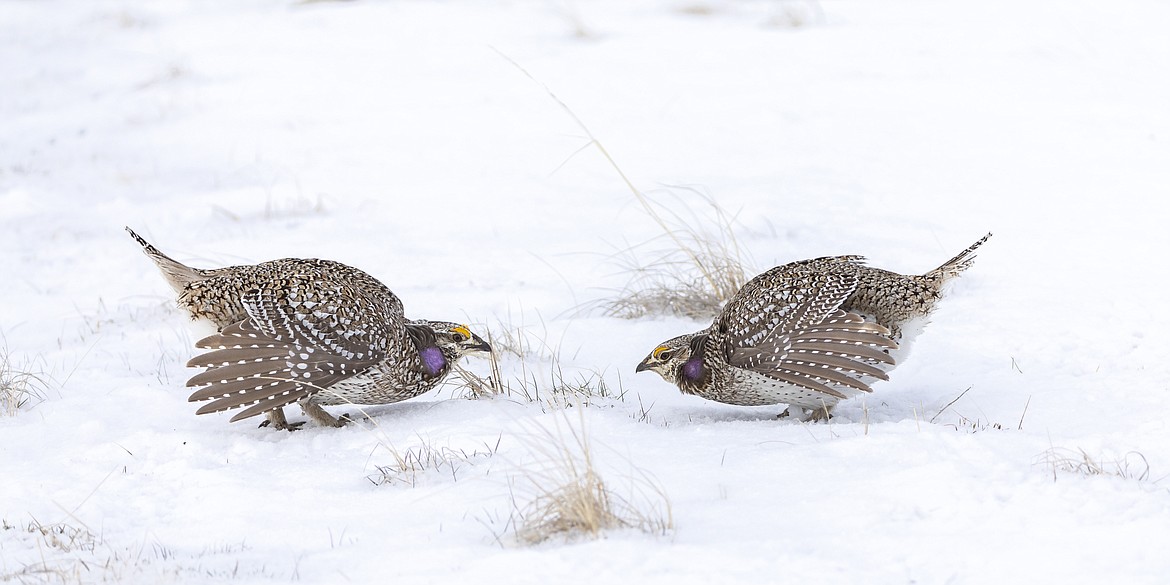
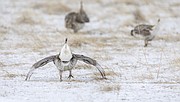
Two males face off on the lek where they gather to court female grouse. (Photo courtesy of walkerphotography.smugmug.com)
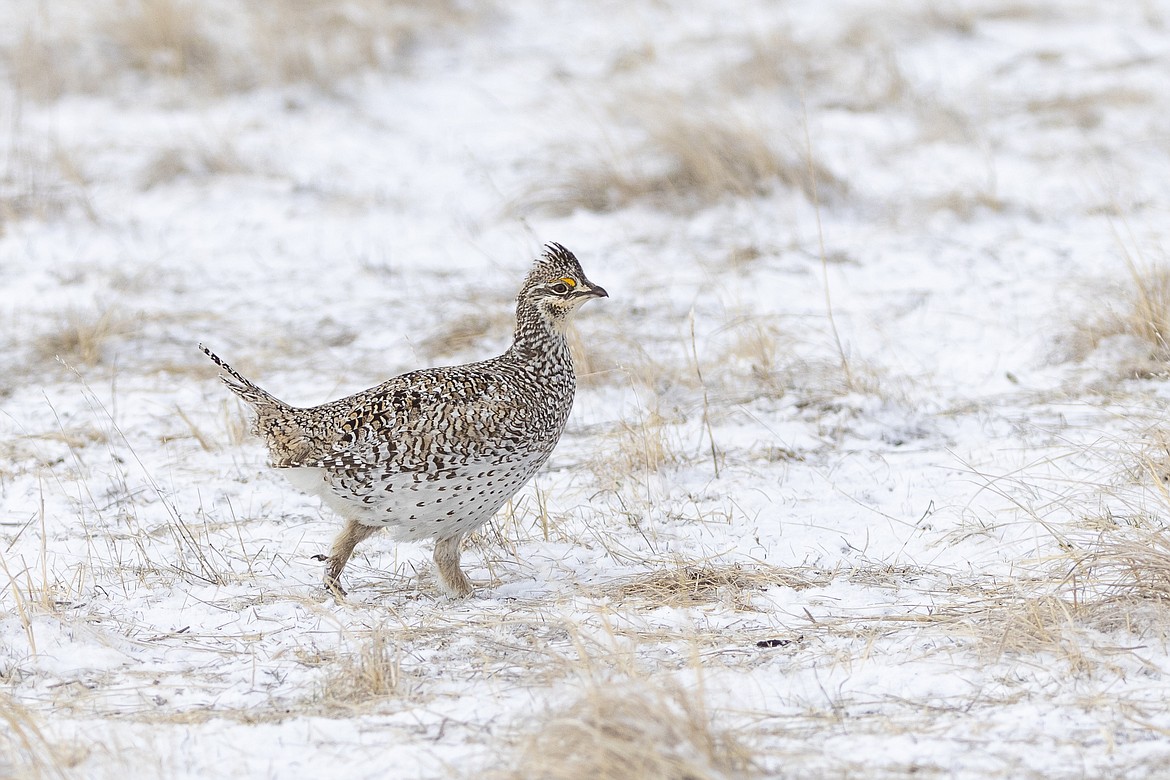
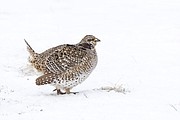
A female sharp-tailed grouse looks over prospective suitors. (Photo courtesy of walkerphotography.smugmug.com)
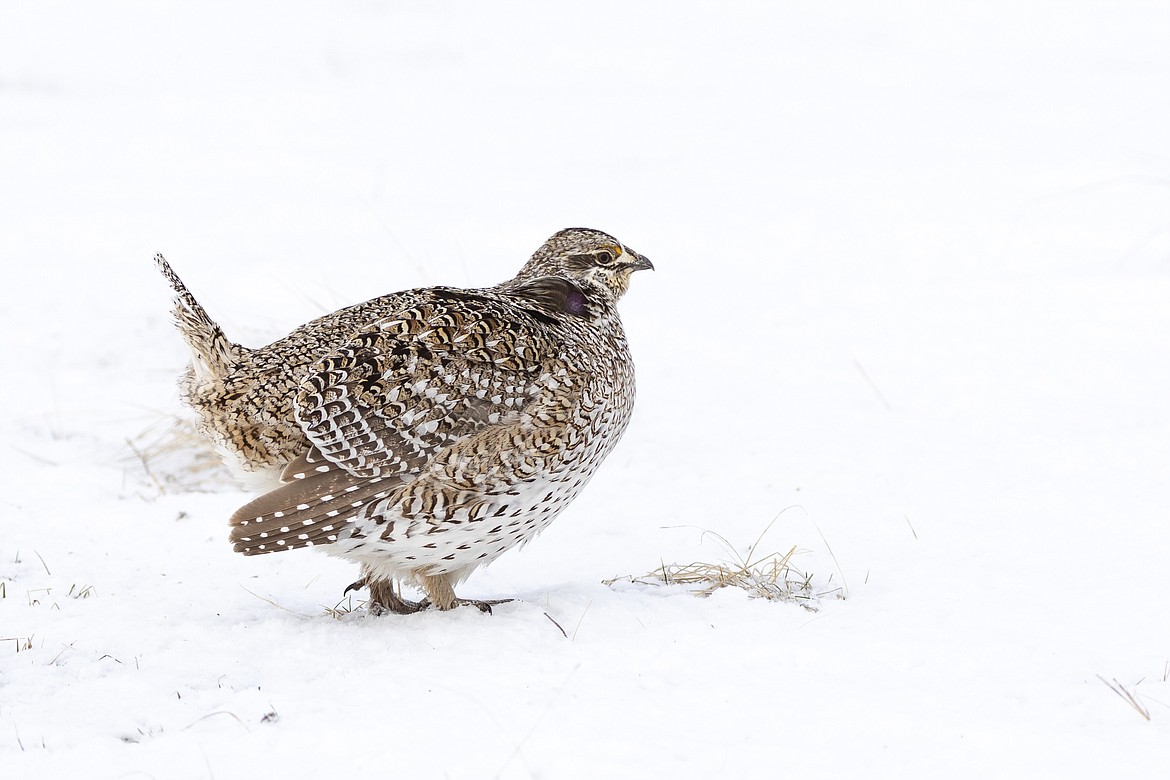
A male sharp-tailed grouse puffed up in the cold. (Photo courtesy of walkerphotography.smugmug.com)
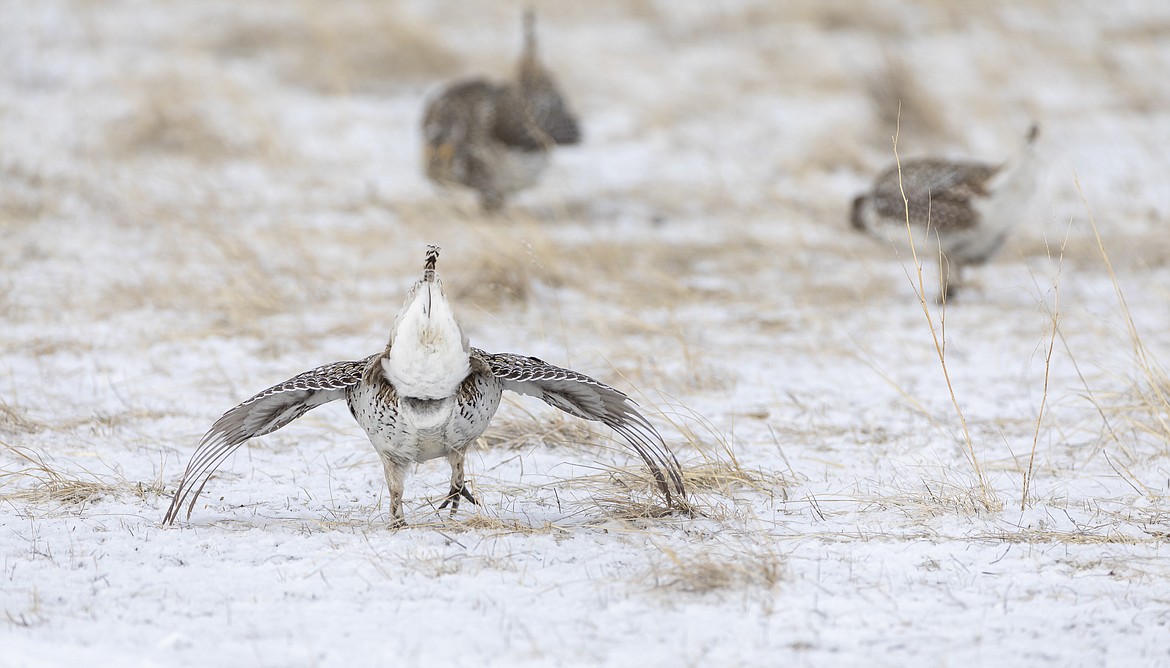
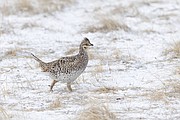
A male sharp-tailed grouse postures in a field. (Photo courtesy of walkerphotography.smugmug.com)
DEPUTY EDITOR, FEATURES Heidi Desch is the Deputy Editor at the Daily Inter Lake, overseeing coverage of arts, culture, lifestyle, community, and business. Desch leads reporters in developing stories that highlight the people, traditions, and events shaping Northwest Montana, guiding content across print and digital platforms. With more than 20 years of journalism experience, including serving as managing editor of the Whitefish Pilot, Desch is a graduate of the University of Montana School of Journalism. She has received multiple Montana Newspaper Association awards, including part of the team leading the Daily Inter Lake to Best Daily Newspaper in Montana Award and the General Excellence Award in 2024 and 2025. IMPACT: Heidi’s work connects readers with stories that deepen the understanding of the community beyond daily news. | January 22, 2022 11:00 PM
In the early morning light, a sharp-tailed grouse moves across an open patch of ground. The bird begins to dance bowing its head forward, holding its wings outstretched and its tail pointed straight up in the air.
The male birds perform this ritual as they look to entice the females who survey the lek, the area of which the male birds have gathered to perform their courtship displays.
It’s a scene that has been absent in western Montana for more than 20 years after native sharp-tailed grouse populations died out.
“Sharp-tailed grouse are a fabulous bird in part because of their fabulous courtship ritual,” said Ben Deeble, president of the Big Sky Upland Bird Association.
Deeble has been working in a public-private partnership to restore the sharp-tailed grouse to western Montana. He recently shared his experience as part of those efforts at a meeting of the Flathead Audubon Society.
The last sharp-tailed grouse in western Montana was seen in 2000.
The decline of the sharp-tailed grouse is largely attributed to a loss of habitat, he noted, including the loss of habitat that prevented the movement of different populations through mountain passes.
“A lot of Montana was frequently burned by the native peoples and historically that created a lot more grassland as opposed to forests in western Montana,” he said. “As the tribe's land management practice phased out and forest service fighting fires phased in we’ve had a lot more green tree encroachment into the valley bottoms.”
A release of birds was undertaken on the National Bison Range at Moiese from 1973 to 1980, but that proved to be unsuccessful. In the Tobacco Plains near Eureka a population of birds was supplemented from 1987 to 1997, but the last active lek there was seen in 2000.
Decades of planning and study have occurred in preparing for the potential reintroduction of the birds. Then last fall a group of biologists and volunteers began efforts by capturing 75 sharp-tailed grouse from eastern Montana and releasing them in sites in the western part of the state including near Drummond and in the Blackfoot Valley.
Deeble, who has been studying and working to conserve western birds for nearly 30 years and has worked on sharptails and sage-grouse for the Idaho Fish and Game and the Bureau of Land Management, has optimism for the return of the sharp-tailed grouse to western Montana.
“Some sharp-tailed grouse source populations as sources that are near historic highs and that provides a good place to get birds,” Deeble said. “There are some landscapes where we’re able to put them that we think are going to look like that for a long time.”
Deeble said some areas have improved habitat with grassland management and increased fire may actually be a positive for sharp-tailed grouse.
“Sharp-tailed will also use creative habitats — wheat fields or areas that have been logged or orchards,” he said. “Unlike sage grouse, which don’t like to use creative habitats.”
The goal is to restore a sustainable population of sharptails for at least the next 50 years, according to Deeble.
In order to move them to new areas, grouse are captured from a lek in the early morning hours. Biologists and volunteers band their legs, place tiny transmitters on the birds to help locate them later and take blood samples from the birds. Then the birds are placed in cardboard boxes and drivers transport them to their new home — the birds have to be moved quickly and kept cool during the trip to limit stress.
Birds are checked once they arrive at their new home before being released.
Deeble says the goal is to move 180 birds annually from source populations in eastern Montana over the next up to nine years and where necessary enhance habitats to reduce stressors on the grouse populations.
“We’ve put the males out with radios so we know where they gather in leks and that’s where we will put the next 180 birds,” he said. “We will also have to look at genetics because we may have populations that are not genetically diverse and we may need to bring in more birds.”
In addition to improving habitat for all upland birds and opening land to the public, the Big Sky Upland Bird Association also encourages the ethical hunting of birds. But Deeble says the organization is committed to assisting with the reestablishment of the sharp-tailed grouse even if a huntable population is never achieved.
“We’re interested in this because we believe that sharp-tailed grouse is the only population of birds that historically bred in western Montana that are not here,” he said. “Our organization is committed to bringing them back for that reason alone.”
Features editor Heidi Desch may be reached at 758-4421 or [email protected].
ARTICLES BY HEIDI DESCH

Whitefish wildfire protection plan up for City Council review
Fourteen areas of concern that are primed for mitigating wildlife risk are at the center of a draft Whitefish Community Wildfire Protection Plan.

Kalispell resident advocates for more women in the trades after being crowned Mrs. America
Standing on the stage in Las Vegas, wearing a white formal gown accented with feathers on one shoulder, Qadra Evans gripped hands with a fellow competitor.

Whitefish mulls updates to community growth plan
Whitefish City Council on Monday will consider updates to its community plan including language that looks to protect the historic character of its downtown amid state requirements allowing buildings up to 60 feet in height in certain zoning districts.