
Mush, puppies!
HANNAH NEFF | Hagadone News Network | UPDATED 4 years, 2 months AGO
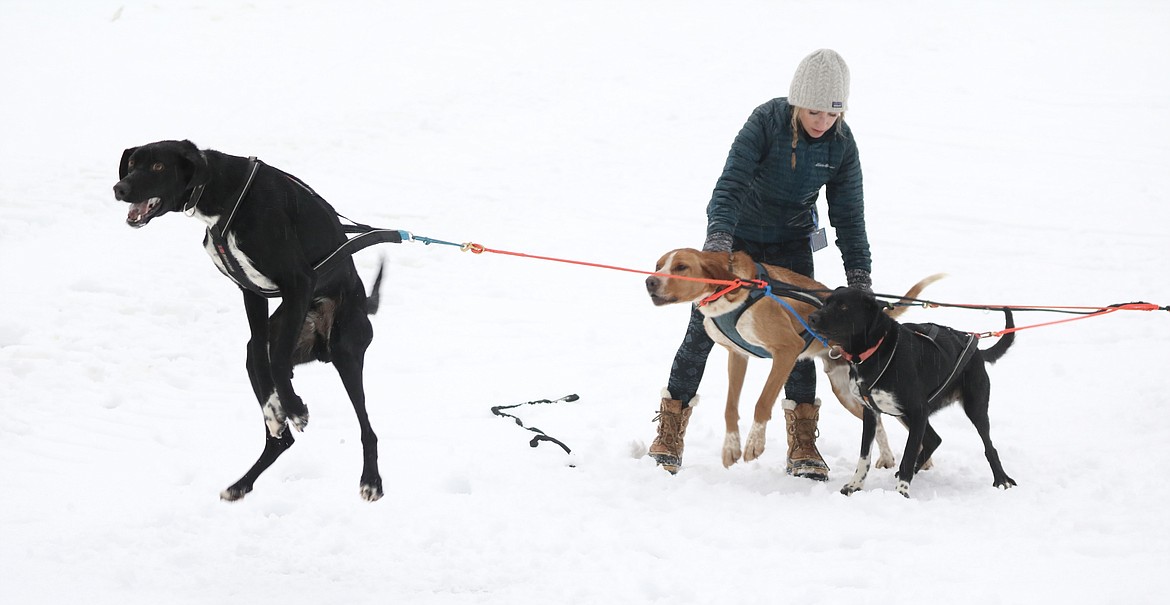
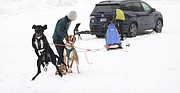
Traci Hanks of Coeur d'Alene keeps her and husband Dan's sled dogs calm while he hitches them up for a ride on a trail at Fernan Saddle. On far left, lead dog Lars jumps around barking while waiting to take off. Hanks said the dogs are excited and can't wait to start running. HANNAH NEFF/Press
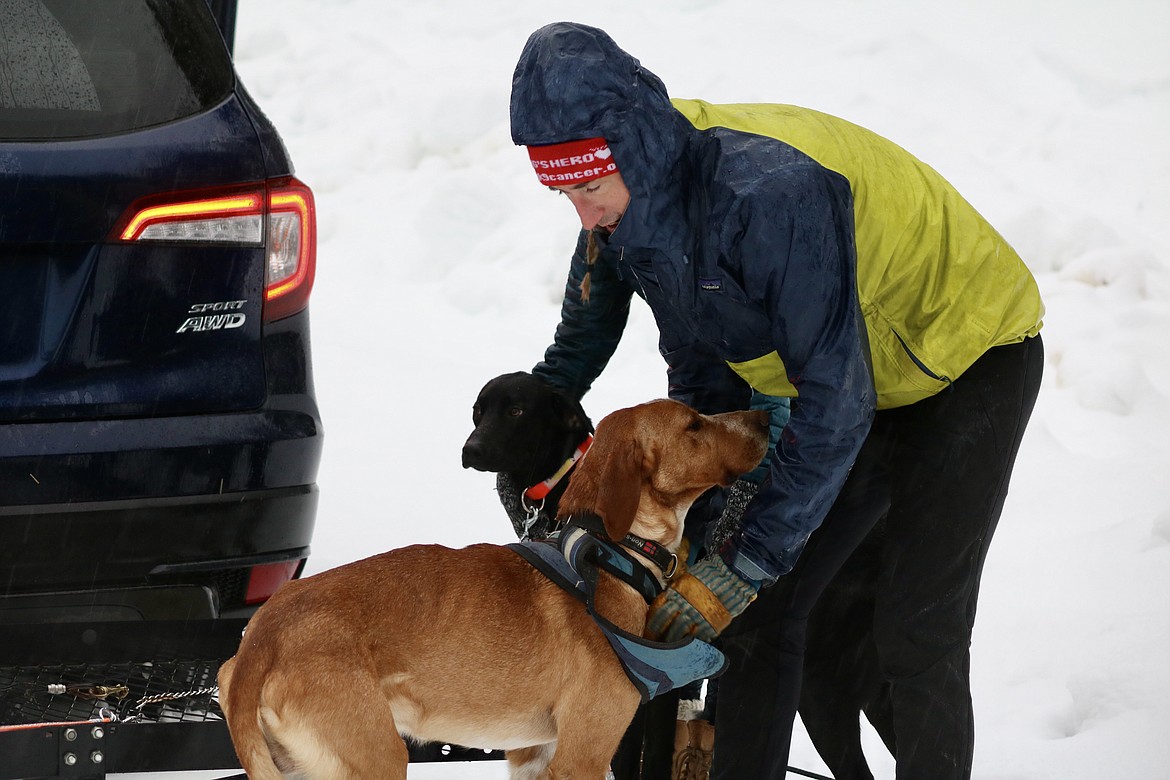
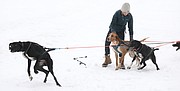
Musher Dan Hanks of Coeur d'Alene places a harness on his sled dog Linus as he prepares for a run on a trail at Fernan Saddle on Thursday morning. HANNAH NEFF/Press
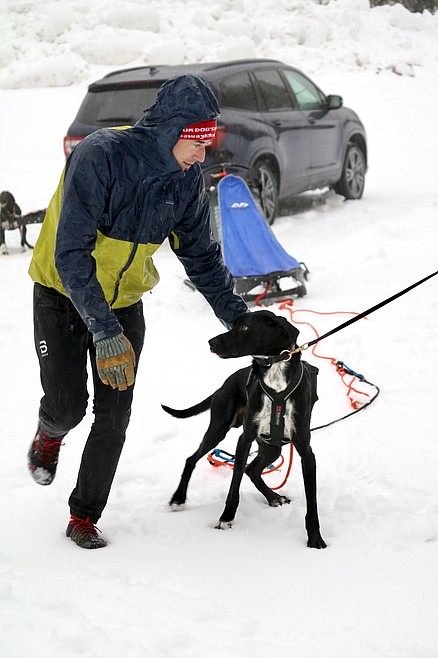
Musher Dan Hanks of Coeur d'Alene hitches his lead dog Lars to the front of his sled as he prepares for a run on a trail at Fernan Saddle. HANNAH NEFF/Press
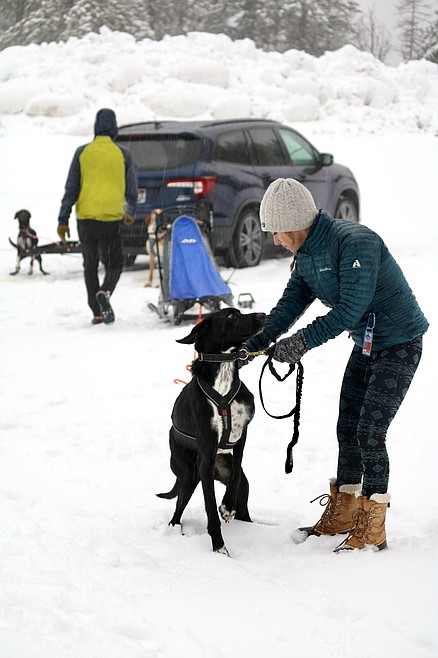
Traci Hanks of Coeur d'Alene keeps lead sled dog Lars calm while her husband Dan Hanks goes back to get another dog. Dan Hanks took the team for a run on Thursday morning on a trail at Fernan Saddle. HANNAH NEFF/Press
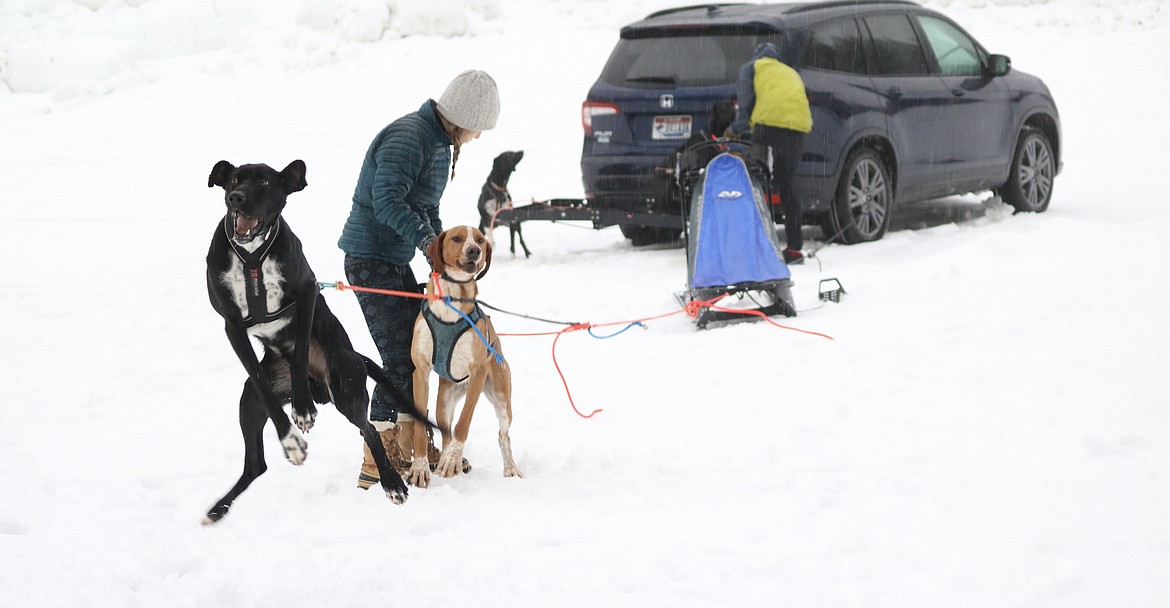
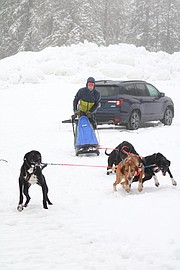
Traci Hanks of Coeur d'Alene keeps the sled dogs calm while her husband Dan gets them hitched up for an early morning run on a trail at Fernan Saddle on Thursday. In front, lead dog Lars jumps and barks while Hanks pets Linus. HANNAH NEFF/Press
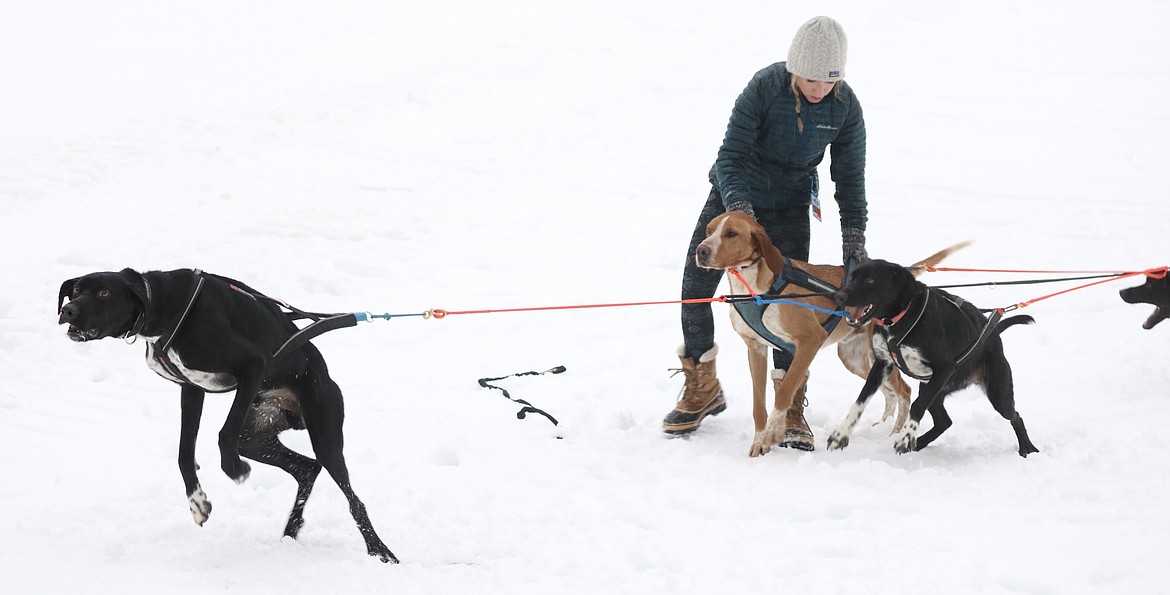
Traci Hanks of Coeur d'Alene calms sled dogs Linus, center, and Lacey, far right, while lead dog Lars jumps around ahead. Musher Dan Hanks took the dogs out for a run early Thursday morning on a trail at Fernan Saddle. HANNAH NEFF/Press
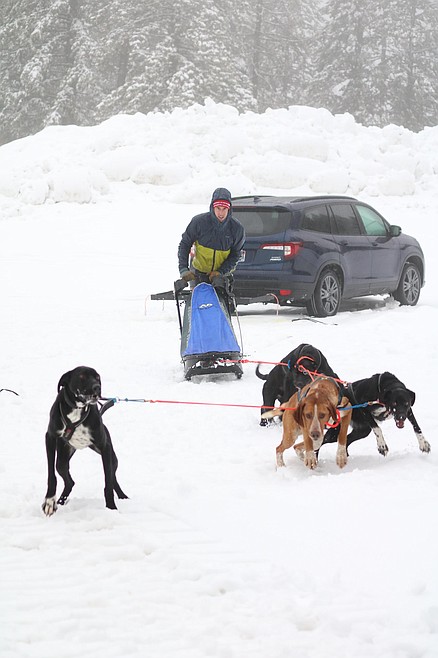
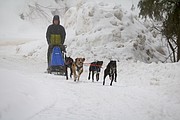
Musher Dan Hanks of Coeur d'Alene takes his sled dog team on a run early Thursday morning on a trail at Fernan Saddle. HANNAH NEFF/Press
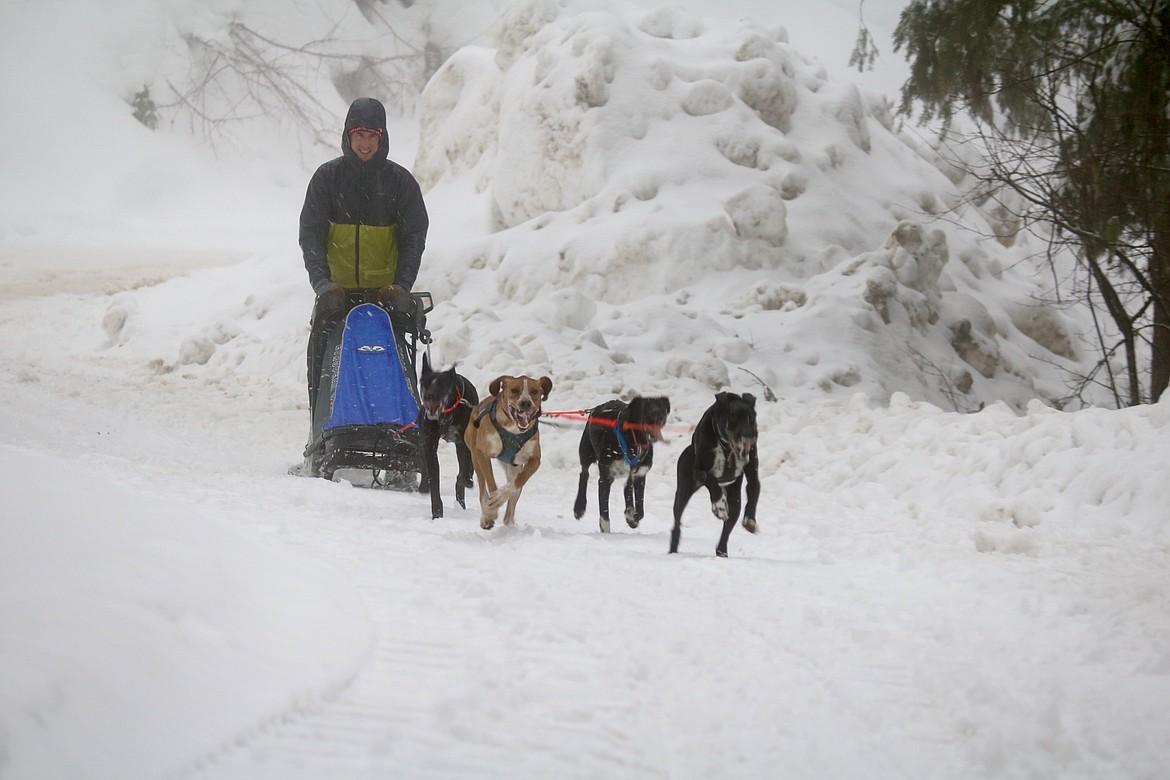
Musher Dan Hanks brings his dog sled team back from an early morning run on Thursday on a trail at Fernan Saddle. HANNAH NEFF/Press
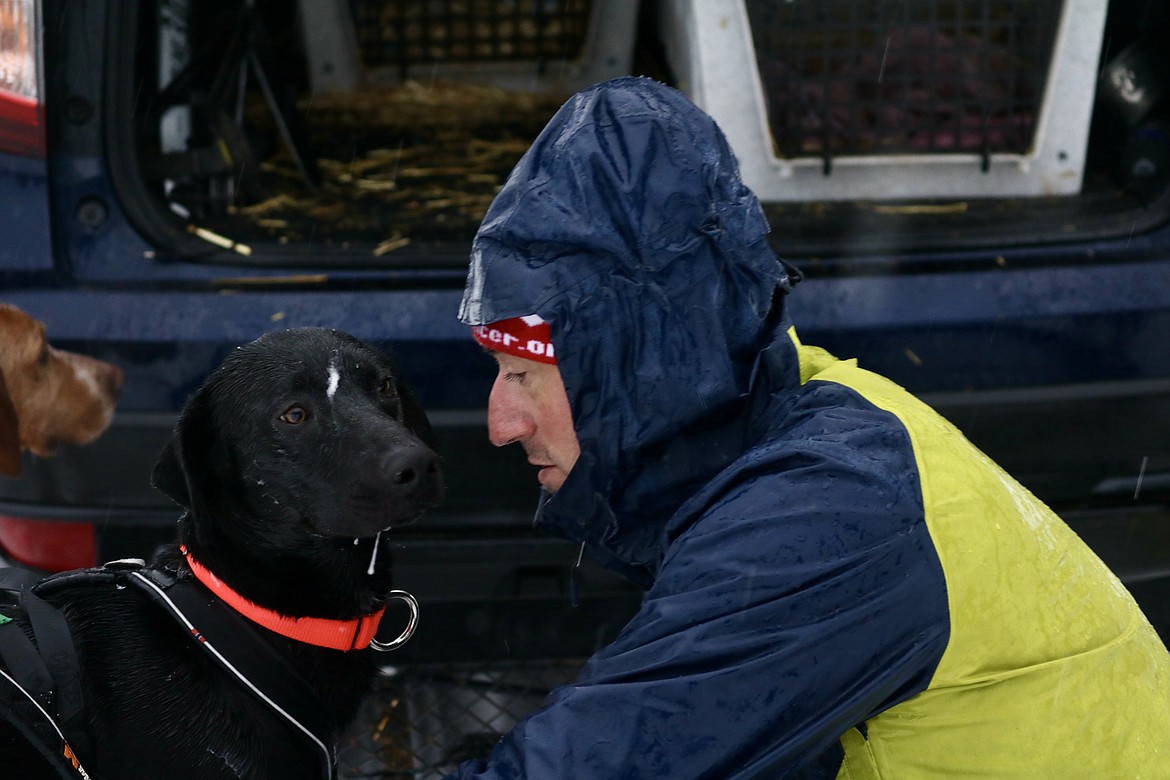
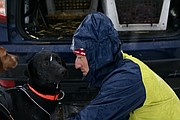
Musher Dan Hanks of Coeur d'Alene removes the harness off one of his sled dogs after a quick run Thursday morning on a trail at Fernan Saddle. HANNAH NEFF/Press
The air was filled with the sound of dogs barking.
Then silence as they took off in the snow.
Musher Dan Hanks of Coeur d’Alene said it’s normal for the dogs to get all excited, then calm down when he gives them the go-ahead to start pulling the sled.
“It’s really exciting to watch a team of dogs, because they’re so thrilled to take off,” Hanks said. “So when they take off that’s super exciting.”
Hanks took the dogs for a run on a trail in Fernan Saddle mountain pass early Thursday morning.
Hanks has been racing for around seven years. His team has traveled all over the world, racing in Sweden, Poland and Canada as well as the U.S.
“There’s a lot of this to like about the sport, but I think at the core, it’s just people who really like being around a lot of dogs,” Hanks said.
Dan and Traci Hanks said they got into the sled dog world because their Border Collie needed exercising. They started taking the dog along when they went cross country skiing, which eventually turned into skijoring, a sport where the dog and human both wear special harnesses connected by a rope and the dog pulls the human on skis.
The duo then got a second dog and Dan had a skijor team.
Traci said once her husband learned about short-distance sled dog races he started to look into that next.
“We started with one dog and now we have nine,” Dan said. “Traci stayed married the whole time.”
While the Border Collie still gets out for exercise, the Hankses got German Shorthaired pointers and Husky mixes to pull the dog sled. They work with a dog breeder and musher out of Wisconsin.
Dan works with his dogs about 20 hours a week.
“It’s just a ton of work that goes into creating a team that’s ready to race,” Dan said.
He said trainers enjoy seeing the dogs exercise, train and develop to the top level.
Dan said he starts off by teaching the dogs how to be in a harness. They learn that when they’re in a harness they’re working; playtime comes when they’re out of the harness.
He starts working with the dogs when they’re young. At around four to five months old they join him on jogs.
Dan said most of the training involves going on runs three to four times a week. Exercise might look like skiing or biking together depending on the time of year.
Sometimes they try to run hills. Other days they try to run a longer distance or work on speed and other skills.
“It’s just like any other athlete,” he said. “As a musher, you’re really sort of the coach and the fitness trainer for each of these dogs, and then nutritionist.”
Dan said the dogs all really love swimming and playing ball. In summer the dogs can’t run when it’s hot, so he said they usually just end up doing fun activities.
“The main thing you’re developing is trust,” he said. “The animals need to be able to trust that they can pull and run, and do whatever you’re asking them to do. They need to be able to do that and trust that you’ll keep them safe.”
Traci said the number one rule of mushing is you cannot let go.
“No matter what happens, you cannot let go because the dogs might get hurt,” she said.
Traci said while you have a break on the sled, mushing is different from riding a horse where the rider has control with the reins. The dogs are just tied to the sled the human rides on.
“You’re not actually touching them. You’re all the way (in the sled),” Traci said. “So it’s a lot of bonding with them.”
Traci Hanks said she doesn’t race, but enjoys helping out with the dogs and assisting mushers at the races.
At the races, she said energy is high with all the excited dogs who are ready to run.
Dan said every once in a while someone will ask if he makes the dogs run or if they want to run.
“They really, really want to do it,” Dan said.
The dogs get excited and jump around barking as he hitches each one up to the sled. Once the run is over, they’ve had their fun and energy release for the day, and are pretty calm, Traci said.
On Feb. 5 and 6, Dan and his team will race in the 51st running of the Priest Lake Sled Dog Race and International Federation of Sleddog Sports World Cup at Priest Lake. Last year the event was canceled due to COVID uncertainty.
Most competitors come from around the Northwest with a few from the local North Idaho area. They usually get between 25 to 35 entries and anticipate the same for this year.
Dan said the event is well-attended from the community up north. Spectators can park at the end of the Priest Lake Airport airfield.
“One of the things that’s kind of cool or unique about the setting is when the dogs take off, you get to watch them all the way down the airstrip,” he said. “So you have about a mile where you can see them run.”
Dan said with a lot of races, the teams take off and the trail goes directly into the woods so you can’t see the dogs run as much. For this race the track starts on the Priest Lake airstrip then goes off into groomed Nordic trails in the national forest.
The event is free to spectators.
The race is put on by the Inland Empire Sled Dog Association, a small club of locals and past and current mushers whose main focus is organizing the event each year.
The run starts with the skijor teams, then moves into the sled dog racers. There are several different categories including ones for juniors and young kids. Race entry is $60, except $35 for juniors and $5 for kids ages 4 to 7.
Registration is due by Feb. 2. Race participants must meet at 8:30 a.m. on Feb. 5, with the race starting around 9:30 a.m. On Feb. 6, participants must meet at 8 a.m. and races start around 9 a.m., continuing through the afternoon on both days.
To register, visit IESDA.org.
Based on the number of entries, a small financial award is given for specific events.
The IESDA is also looking for volunteers to help with spotting as well as other positions. Contact Ann Yanecek at [email protected].
This story has been updated.
ARTICLES BY HANNAH NEFF

Always up for the challenge
Longtime Cd’A School District employee to retire
Longtime Cd’A School District employee to retire

Transforming young readers into young leaders
Teaching young students to be good citizens
Teaching young students to be good citizens

Cd’A School District trustees vote against schedule alignment
The Coeur d’Alene School District board of trustees voted against aligning the schedules of its two high schools on Monday night, a decade long discussion.