MASTER GARDENER: Harvesting greens and root vegetables
CHRISTINA ZAMPICH/Growing In North Idaho | Coeur d'Alene Press | UPDATED 4 years, 3 months AGO

Zampich
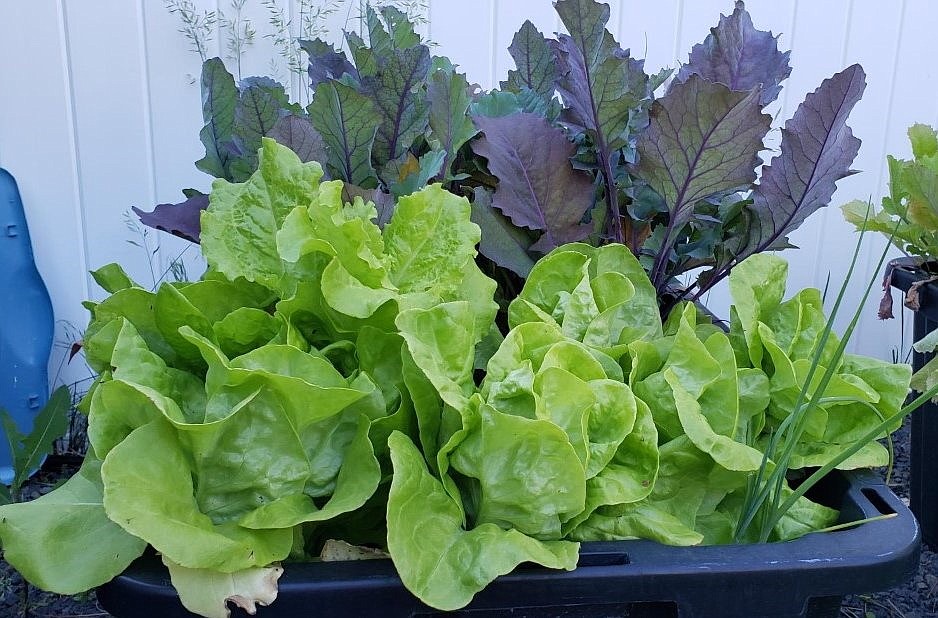
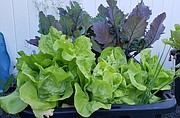
Lettuce ready to be harvested...again!
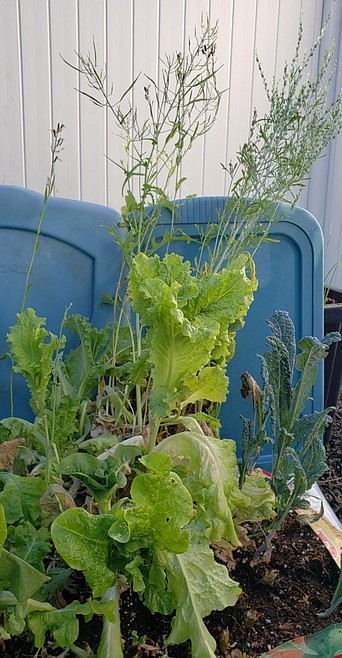
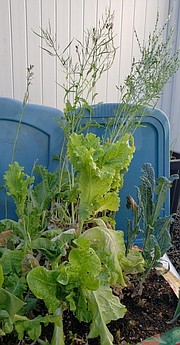
When you are finished harvesting lettuce, allow it to flower to attract pollinators.
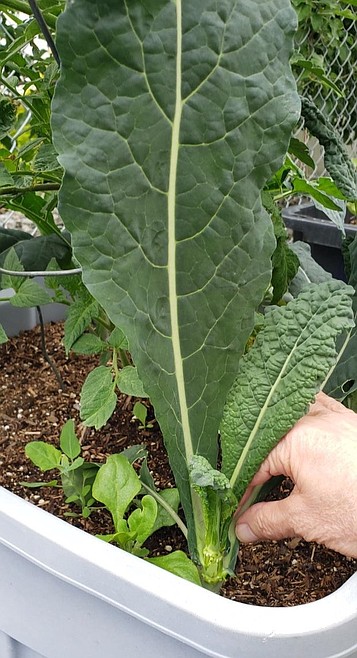
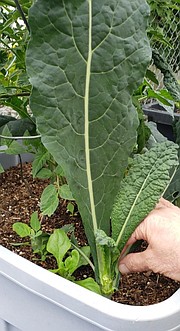
To harvest kale, pull down on the large, outermost leaves.
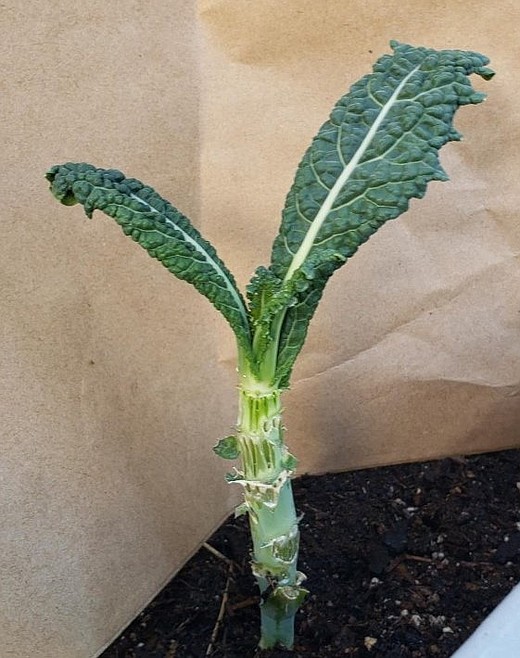
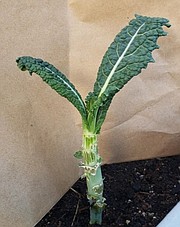
Kale will continue to grow even after the outer leaves are harvest.
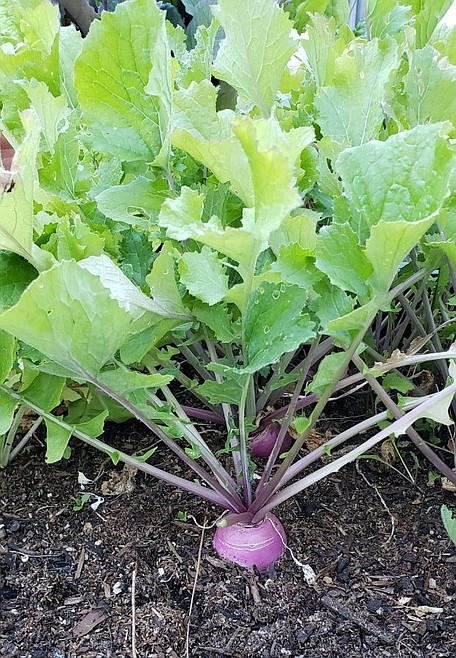
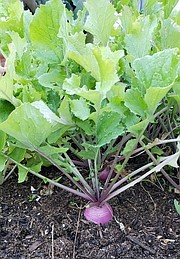
This turnip is ready for harvest.
As summer begins to heat up, it’s time to get those early season greens and root vegetables harvested and to the table.
In my garden, I’m seeing greens galore and lots of turnip tops visible in the soil.
When it comes to harvesting greens and root vegetables, I am trying to be more strategic and better prepared this year. Before harvesting, I gather my supplies — garden scissors, salad spinner and a small tub filled with cold water.
With warmer temperatures, greens and root crops can quickly wilt once harvested. To prevent this, vegetables should be harvested in the morning hours — before the heat of the day sets in.
Having a tub, bucket or bowl filled with cold water to dunk the vegetables in will immediately cool them, remove any insects and garden debris and will help to extend the vegetable’s storage life. Giving them a quick spin with the salad-spinner will dry leafy greens, further adding to their storage life.
Harvesting Knowhow
For soft, cut-and-come-again greens, like lettuces and arugula, cut the greens down to 1 to 2 inches and allow them to regrow. The more you cut leafy greens and lettuces, the more they grow. Put greens immediately into a cold bath or take them to the kitchen sink, spin them in a salad spinner and package them airtight and store them in the refrigerator.
Hardier greens, such as kale, Swiss chard, collards and bok choy should be harvested by removing the outer leaves on the plant. To harvest, pull downward on the outermost, bottom leaves, leaving the center to grow.
This keeps leaves off the ground, helping to manage pests and disease. The center stalk will thicken and grow upward and you can continue to harvest the outer leaves. Be sure to harvest symmetrically and leave enough leaves for photosynthesis.
This method of harvesting was a revelation to me as I used to let these crops grow larger leaves and then whack down the entire plant. That was the end of them, and I had many yellowing and insect damaged leaves in my harvest. Now, I continually harvest greens when the leaves are smaller and more tender.
These plants also benefit by a cold bath. Spinning is not as necessary for hardier greens like kale or collards. Just give them a good shake to remove excess water. I like to move some directly into the freezer to provide a ready supply for smoothies or stir-fry.
In addition to the edible root, the tops of turnips and beets are delicious and very nutritious. Before the root is ready for harvest, I generally trim a few leaves to add to my greens harvest.
I don’t take too many, as I want growing power to be directed into the root. Turnips grow quickly and as I harvest the root, I cut off all the greens and prepare like hardy greens.
I harvest some root vegetables earlier than I used to — tiny carrots and beets are a gourmet delight and thinning provides more space for others to grow.
Small root vegetables just need a gentle pull on the foliage to harvest or use a garden fork to rock the root back and forth, loosening it and creating less disturbance to its neighbor.
Use a hose spray nozzle to remove any soil — no need to soak root vegetables. Store your root crops in gallon bags in the refrigerator crisper drawer.
After a morning of summer harvesting, you might be inclined for a cold-water bath yourself!
• • •
Christina Zampich is a certified Idaho master gardener. The University of Idaho Extension, Kootenai County Idaho Master Gardener program is located in the UI Research Park, 958 S. Lochsa St., in Post Falls. Learn more at https://www.uidaho.edu/extension/county/kootenai/garden or on Facebook. Visit in person, email at [email protected] or call 208-292-2525. IMG services are free to the public.