
Bootleggers, moonshiners and rum runners
BILL BULEY | Hagadone News Network | UPDATED 3 years, 6 months AGO
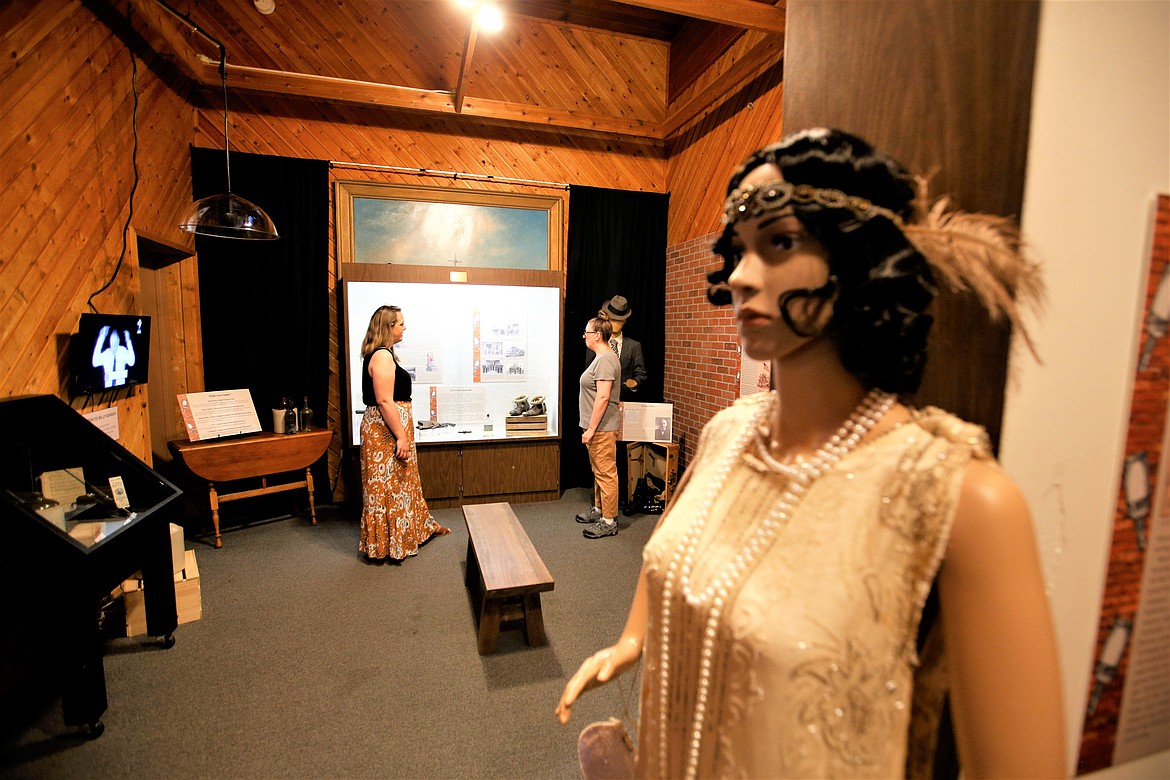
Britt Thurman, left, director of the Museum of North Idaho, chats with Patricia Nedialkova during her visit Tuesday to the museum's newest exhibit, “The Rum Rebellion: Prohibition in North Idaho."
BILL BULEY/Press
Bill Buley covers the city of Coeur d'Alene for the Coeur d’Alene Press. He has worked here since January 2020, after spending seven years on Kauai as editor-in-chief of The Garden Island newspaper. He enjoys running. | June 29, 2022 1:00 AM
COEUR d’ALENE — Two words in bold, black, capitalized letters greet guests coming to The Museum of North Idaho’s new exhibit: “SALOON CLOSED.”
Below that, on a sign, it says “Due to national prohibition. Enter at your own risk.”
Despite the warning, people keep pushing open the swinging doors and venturing in.
That’s the lure of liquor.
“I'm drawn to more of the kind of darker histories,” said Britt Thurman, museum director, who selected the exhibit. “I like the lawbreakers and the people kind of on the edge of society.
"They weren't necessarily lawbreakers, but just people trying to survive," she said.
“The Rum Rebellion: Prohibition in North Idaho,” is on display at the museum through Oct. 29.
From 1920 to 1933, the manufacture, sale, and consumption of alcohol was illegal across the country.
Kootenai County went dry in 1909, voted to go wet again in 1911, voted to go dry again in 1914 and then the entire state went dry in 1915.
Idaho finally repealed prohibition in 1935.
But in North Idaho’s towns, some figured out ways to keep the booze flowing all the time.
Shoshone County, particularly Wallace, were known for ignoring liquor laws.
“You had all of these different bootleggers and moonshiners and rum runners that were going into Montana or Canada or wherever, to be able to bring liquor to communities that were dry,” Thurman said. “So they were dry, but not at all dry.”
The exhibit includes tales of how resourceful people developed ways to make and sell liquor without getting caught, and how law enforcement caught up with them anyway, and kept them literally in shackles nailed to boots in the Kootenai County jail in 1926.
It shows a clip of an evangelist, Billy Sunday, delivering a hell-fire sermon about the “evils of alcohol.”
Visitors can put on headphones and listen to an actual 1933 newsreel talking about the celebration of prohibition ending.
There are many artifacts, including a still, bottles, and the .38 Colt revolver that belonged to Mike Roche, Coeur d’Alene police chief the last four years of prohibition.
All sorts of methods were devised to get booze into the right, or wrong, hands.
Another story tells how people would visit the post office, ask for a $5 stamp, slide over the bill and receive a bottle of whiskey.
There’s an interactive display, "What do you think happened to W.A. Rutherford?” for visitors to read about a death during prohibition, and pen their opinion on whether it was murder or an accident.
“This gentleman kind of got caught up in this bootlegging ring and at the end of it, he's dead. And you have just these different accounts of what actually happened,” Thurman said.
Patricia Nedialkova of the Bay Area toured The Rum Rebellion on Tuesday and liked it.
“I think the shackles were the oddest thing,” she said. “You could just unlace the boots and take them off.”
Thurman said while prohibition was usually touted as a success and greatly reduced drinking, it wasn’t. Jails were often filled to the brim, and it was mostly with prohibition violators.
“In actuality, it was a complete failure,” Thurman said.
Thurman believes The Rum Rebellion paints a good picture of what life was like during prohibition.
“That's just kind of this iconic period,” she said.
“My viewpoint of that era has completely changed from what I thought it was originally. I’m always learning and finding different perspectives on it.”
The museum is at 115 Northwest Blvd. Daily hours are 11 to 5.
ARTICLES BY BILL BULEY

Companions Animal Center has adopted out nearly 2,000 dogs, cats in 2025
Companions Animal Center has adopted out nearly 2,000 dogs, cats in 2025
As if to prove it, signs on two kennel doors proclaim “I have been adopted! I’m currently waiting to be picked up by my new parents.” One is a timid black mastiff. But the shelter remains crowded. Monday, it has about 50 large dogs filling kennels, including in the new wing oped this year, and there is still a four-month waiting list with names of about 80 dogs that people are looking to surrender pets.

Post Falls man named director of ministry with global reach
Post Falls man named director of ministry with global reach
Grassi, a longtime hunter and fisherman, started what was originally called “Let’s Go Fishing Ministry, Inc.” with a focus on outdoors, men and God. It was later changed to “Men’s Ministry Catalyst." The emphasis was on helping men understand their role as defined in the Bible.

Nonprofit foundation helps family become homeowners for first time
Nonprofit foundation helps family become homeowners for first time
The Young Family’s Foundation launched about a year ago with a mission "to empower young, hardworking families to achieve the dream of home ownership. Even if a family saved $25,000, they would still be $19,000 short of the down payment needed to buy a $550,000 home, which is the median price in Kootenai County. It’s estimated that only about 20% of area households can afford to buy a home.