
Ancient ways
JOEL MARTIN | Hagadone News Network | UPDATED 3 years, 11 months AGO
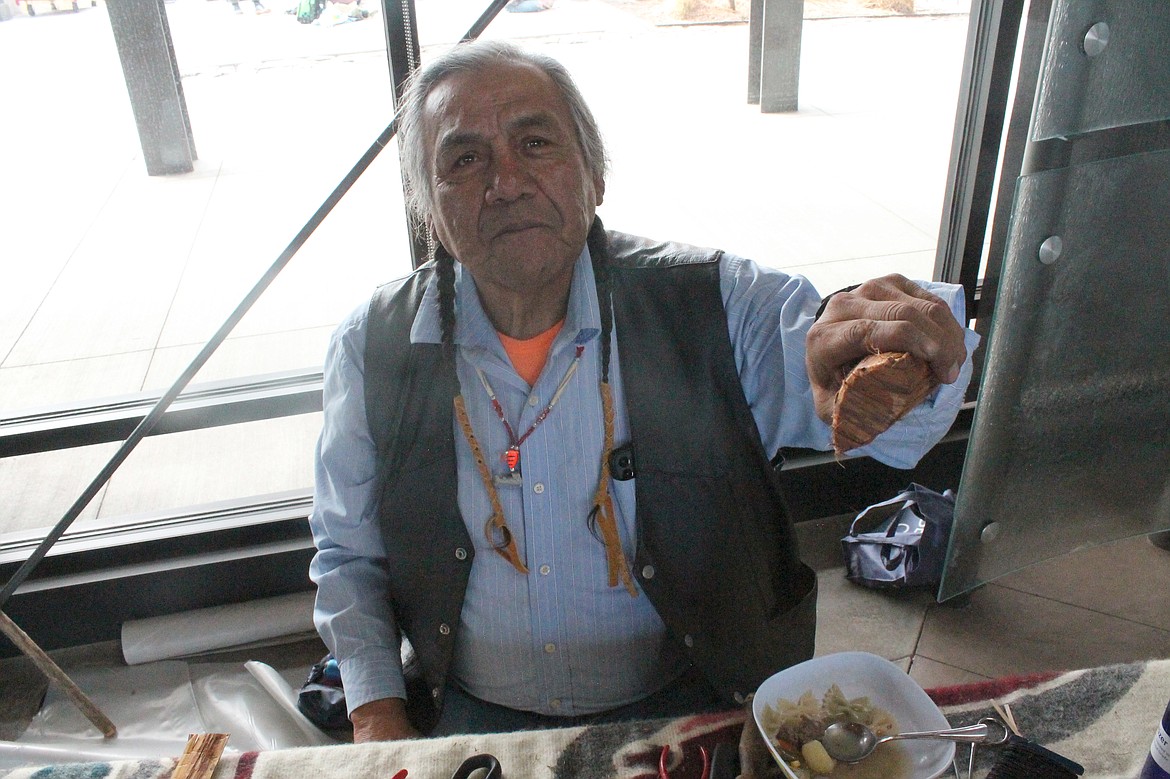
Yakama craftsman Lindsey Howtopat shows a cedar bark basket at Archaeology Days at the Wanapum Heritage Center. He’s tried different configurations, he said, but the traditional football-shaped bottom is most efficient for transporting huckleberries.
JOEL MARTIN/COLUMBIA BASIN HERALD
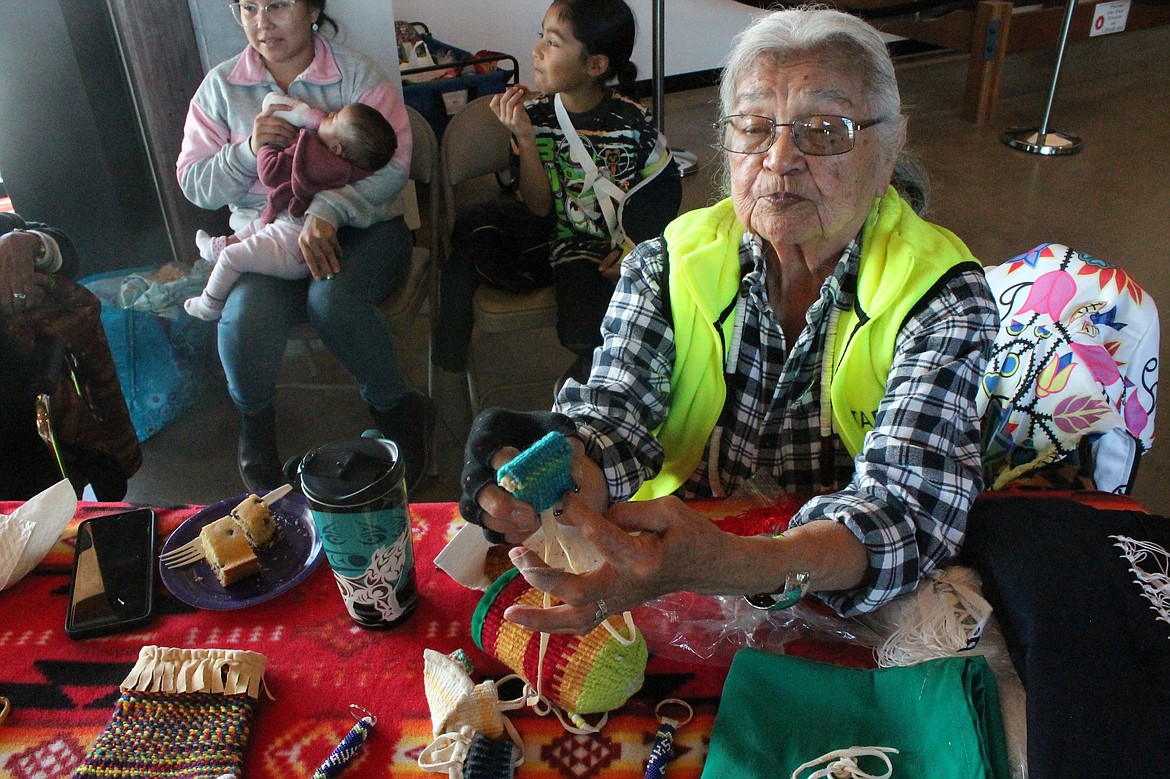
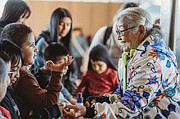
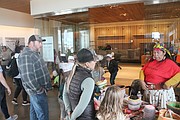
Grant PUD Cultural Resources Specialist and Wanapum Elder Ernestine Conner shows some examples of traditional weaving.
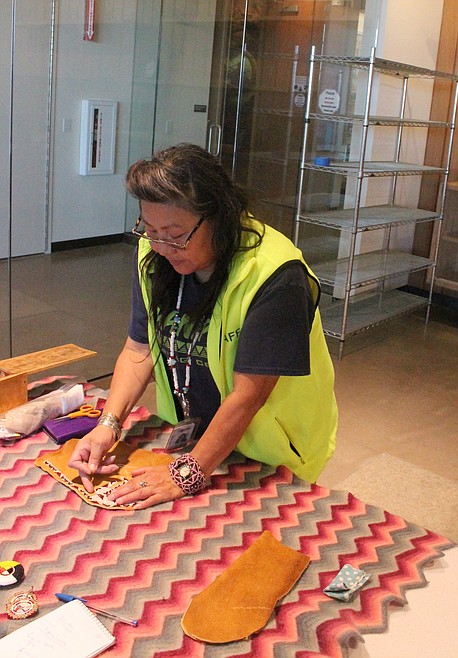
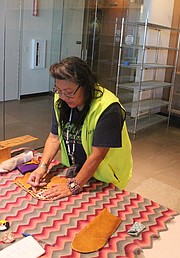
Grant PUD Cultural Project Worker Velma Wyena, a member of the Wanapum Tribe, shows how to make beaded moccasins from buckskin.
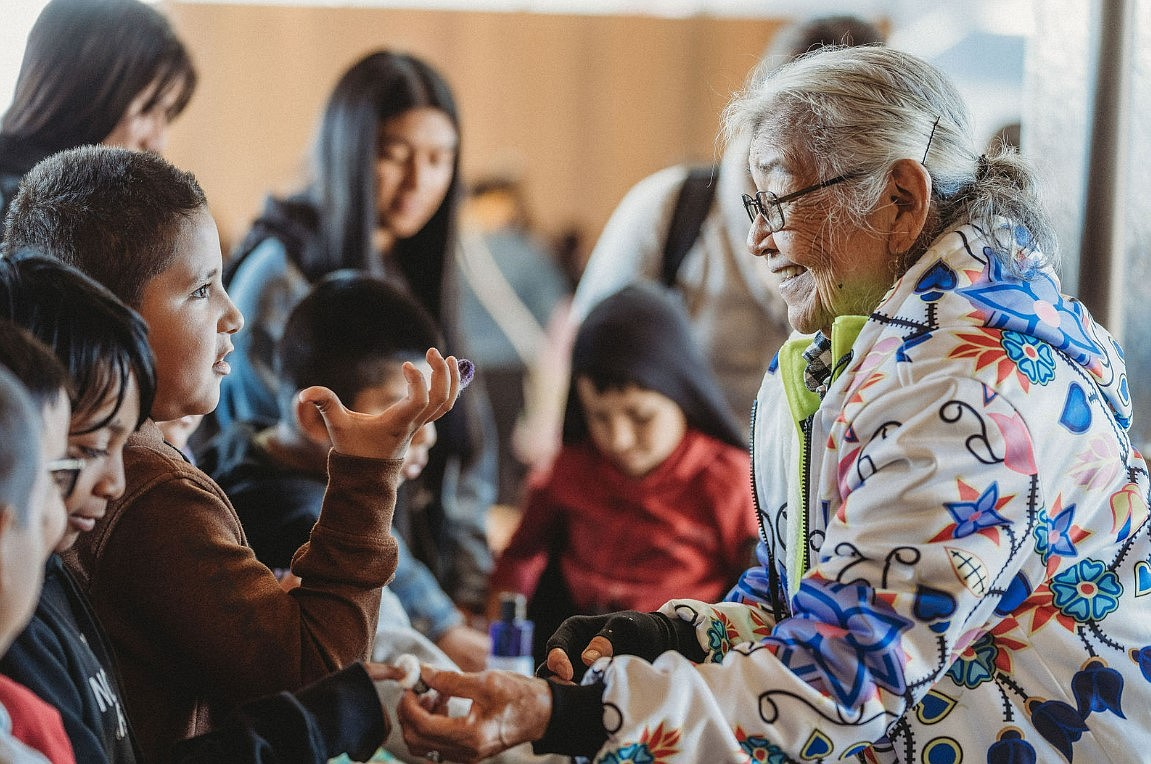
Wanapum Elder Ernestine Conner gives kids a close-up look at hand-woven textiles.
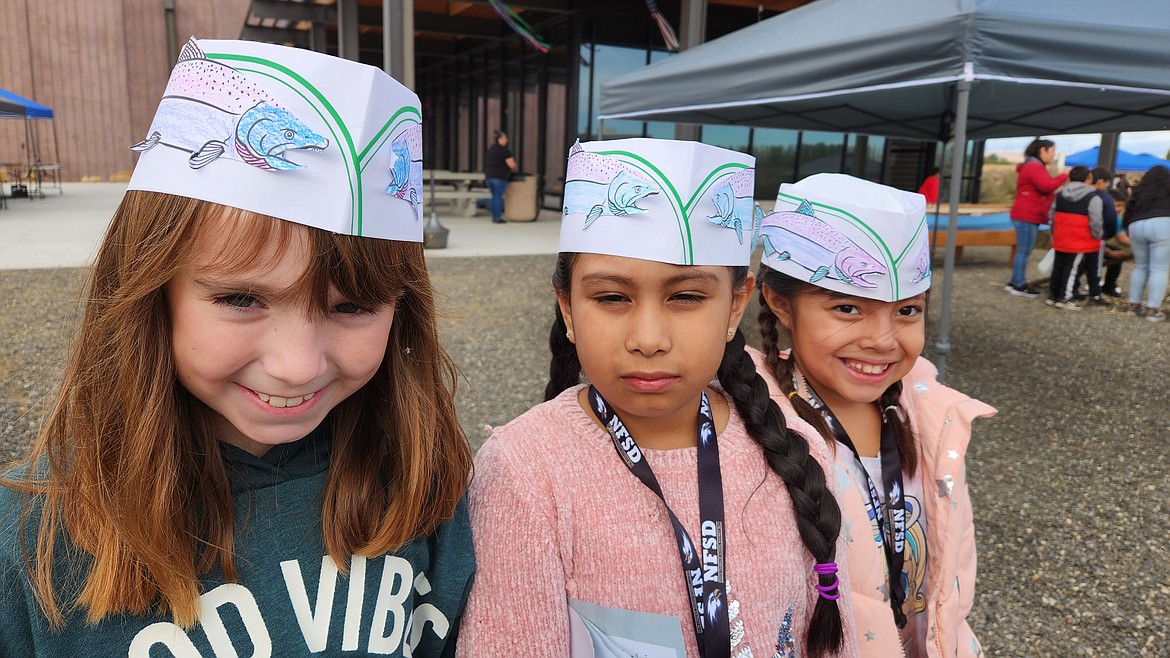
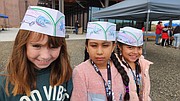
Grant PUD brought materials for kids to color and make their own salmon hats at Archaeology Days at the Wanapum Heritage Center Oct. 25.
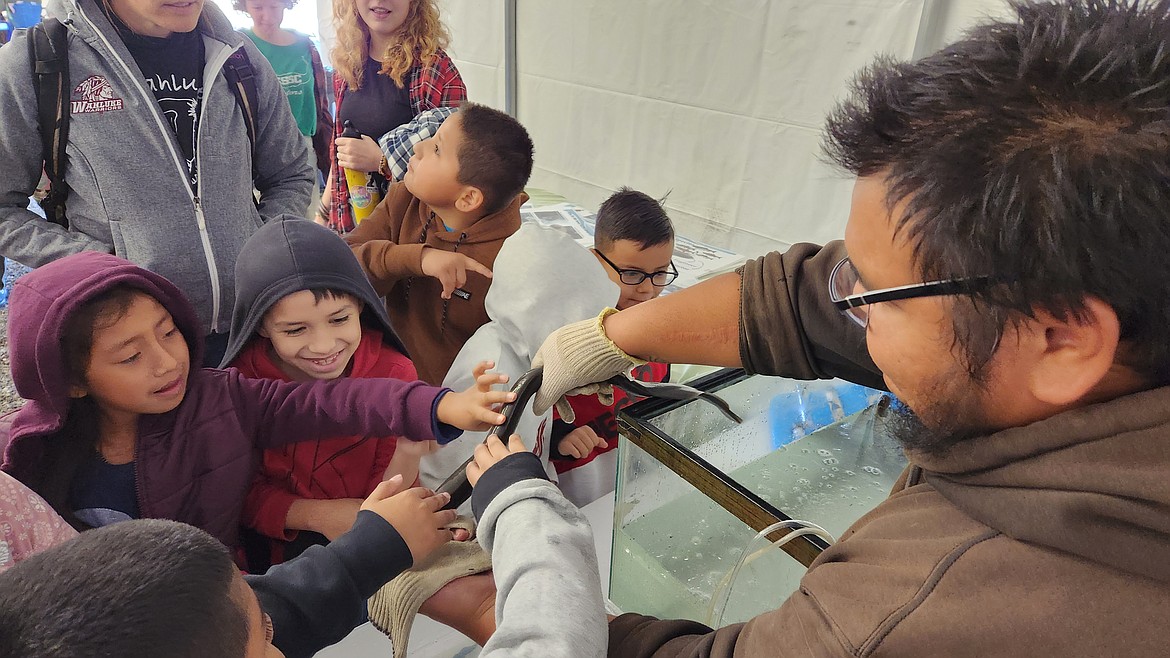
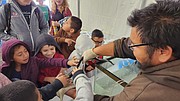
Zane Katchen brought live Pacific Lamprey for kids to see, touch, learn about and squeal over. The eel-like fish is a traditional food of the Columbia Plateau people.
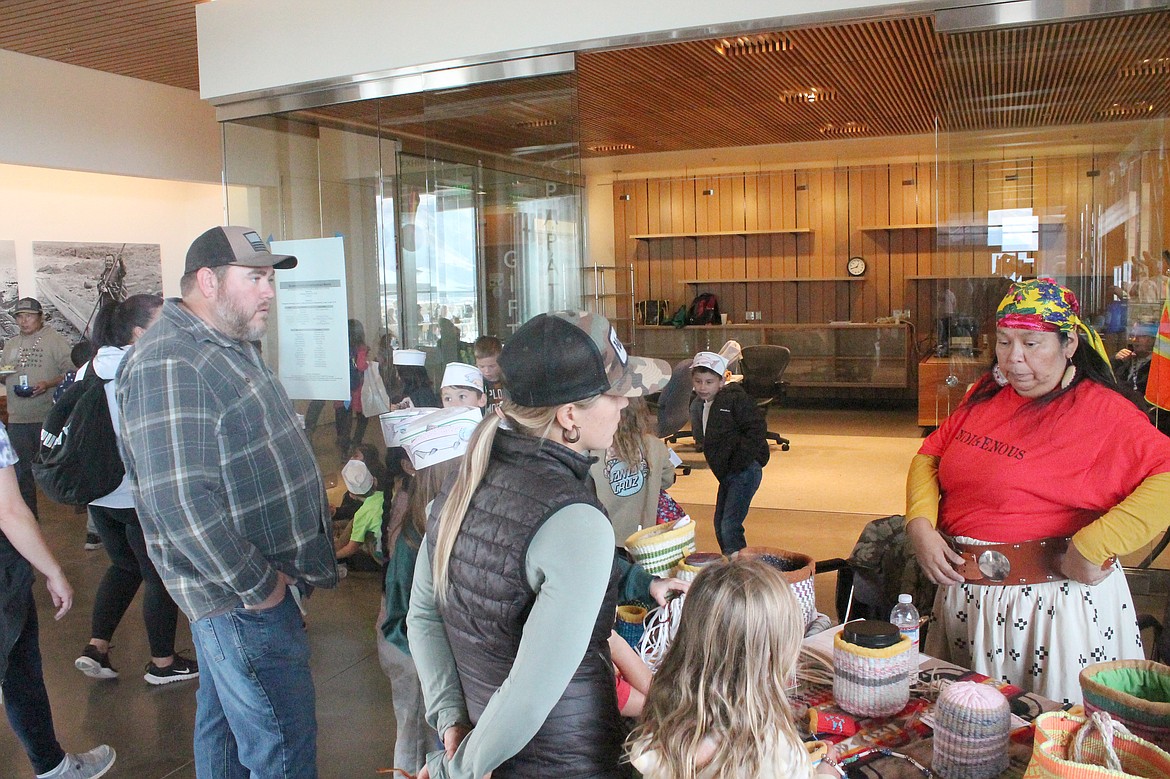
Susan Parker shows traditional crafts at Archaeology Days Oct. 25.
Joel Martin has been with the Columbia Basin Herald for more than 25 years in a variety of roles and is the most-tenured employee in the building. Martin is a married father of eight and enjoys spending time with his children and his wife, Christina. He is passionate about the paper’s mission of informing the people of the Columbia Basin because he knows it is important to record the history of the communities the publication serves. | November 3, 2022 2:12 PM
PRIEST RAPIDS DAM — Inside the Wanapum Heritage Center at Priest Rapids Dam, there’s a sign that says, “We are Wanapum, we are here, we never signed a treaty, we never gave away our land, we never left, we are going to be here tomorrow.” That timelessness was out for all to see during Archaeology Days Oct. 25-26.
“It's just kind of a combination of fun and education,” said Christine Pratt, public affairs officer for the Grant PUD. “Kind of visual and fun and face to face with the people who know about things, the Columbia Basin Plateau peoples. You can hear their story in their own words, from them, live while you're learning how to do their craft. It's pretty amazing.”
Nobody seems to be certain exactly when the first Archaeology Days was held, but Pratt said it was in the early 2000s. The event, like so much else, went on hiatus during the pandemic, so this year’s was a welcome return. Tuesday was kids’ day, with nearly 500 students from central Washington schools bused in to learn about Wanapum and other Native tribes’ customs, crafts and history.
Near the entrance to the heritage center, Wanapum elder Velma Wyena stood at a table showing how to make intricately-beaded moccasins from buckskin.
“When I was probably about these kids' age,” Wyena said, “my grandma gave me one little piece of buckskin and gave me some beads and said, ‘Here you go. I'm gonna show you this and then I want you to make something.’ I said, ‘Oh, okay, Grandma,’ and I did. I made something for her. I just made two letters, H-I, ‘Hi.’ That was my first making.”
Not far away, Yakama weaver Lindsey Howtopat had a variety of traditional cedar bark baskets spread on a table. The traditional design of the baskets works better than a lot of more modern configurations, he said.
“I've tried to make them round,” he said. “I've tried to make them square, tried to make them like a pyramid. They all failed. I always go back to the traditional way, something that I couldn't change or improve. Since time immemorial this method right here has been practiced and done until today. And I can't change it.”
The baskets aren’t just pretty artifacts, Howtopat explained. They’re a highly effective way to transport huckleberries.
“When you use a metal or plastic container, all your berries on the bottom are going to be mushy, runny. But when you use a natural basket, the juice goes into the bark, and none runs out. You can fill this up on Friday, go fishing, hunting, whatever all weekend. You get home on Monday. Then you open it and your berries are just like the day you picked them.”
Outside, Lloyd Barkley was showing some flint knives and arrowheads and describing how to make them with a technique called pressure flaking.
“That means using direct pressure to create a controlled breakage,” he said. “It's all controlled breakage when you're making this. You're breaking off a flake, it breaks down to the molecular level, sharp.”
Grant PUD and the Wanapum Tribe have a relationship that’s unique, Pratt said. The tribe’s ancestral homeland stretched along the Columbia River’s shores from Vantage down into the Hanford Reach, and the PUD treats that tie between land and people with great respect, she said.
“We're the only utility that I've ever heard of that has a relationship with an Indian tribe like Grant PUD has,” Pratt explained. “Back in the ’50s, when Grant (PUD) wanted to build its dams, the Wanapum were living on the shoreline, as they always have. They've never relocated to a reservation because the land is extremely important to them … So when Grant PUD was considering building dams, it approached the Wanapum. And the Wanapum agreed not to object to the construction, as long as the Grant PUD would help them preserve and perpetuate their culture and protect their lands and allow them to remain on their homelands.”
“We have specialists on staff who work with the Wanapum, to recover artifacts found on the reservoir lands, and to help them protect and keep people away from sacred special areas,” she added.
There were other aspects of the region’s history and culture to see as well. There were displays of rocks and replica fossils showing the ancient geology of the Hanford Reach region. The wildlife of the area was also on display. Inside the heritage center, Keaton Buell of Birds of Prey Northwest held a crowd of students rapt with a pair of raptors.
“We have the peregrine falcon right here,” he said, holding up a fierce-looking bird named Artie. “They’re the fastest animal in the entire world. They can dive at speeds of 240 miles per hour out of the sky and kill their prey on impact alone.”
“It's totally unique,” Pratt said of Archaeology Days. “And it's completely homegrown. Everybody who participates is just so enthusiastic and happy to be there, to share their knowledge.”
Joel Martin can be reached via email at [email protected].
ARTICLES BY JOEL MARTIN
Endless battle
Noxious Weed Control Board works to keep invasive plants under control
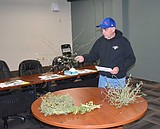
MOSES LAKE — Some of the nastiest plants in Grant County were the topic of a class led by Jay Johnson, a consultant with the Grant County Noxious Weed Control Board, Tuesday. The Noxious Weed Control Board, as its name would suggest, is tasked with keeping weeds under control in Grant County. That’s not a small job; the board’s website lists 129 species of noxious weeds that are found around Grant County. A noxious weed is defined as an invasive, non-native plant that threatens agricultural crops, local ecosystems or fish and wildlife habitat, according to the Noxious Weed Control Board. Washington state law requires that these weeds be identified and their spread kept to a minimum, if not completely eradicated. “We’re one of those agencies a lot of people don’t really understand,” Johnson said. “We’re a county office and … our funding is tax-based assessment. When you get your tax bill and you look down at all the expenses that you pay for, there we are.”
BASIN EVENTS: Oct. 16-24
COLUMBIA BASIN — Whether you feel like shopping, crafting, learning or seeing a show, there’s something happening for you this week in the Basin. Oct. 16 ‘My Family (Mi Familia)’ screening Spanning three generations, “My Family (Mi Familia)” is a heartfelt drama that follows the Sánchez family as they build their lives in East Los Angeles. Through love, hardship, triumph, and sacrifice, the film explores the immigrant experience, the strength of family bonds, and the traditions that connect one generation to the next. Lowrider show and taco truck before the screening. Sponsored by Columbia Basin Allied Arts, EDUBS C/S and the Moses Lake Creative District. $12 per person. Doors open at 6 p.m., film begins at 7 p.m. at the Moses Lake Civic Center Auditorium, 401 S. Balsam St. Tickets and info: www.cba-arts.org.
Moses Lake author encourages women to look beyond church culture norms
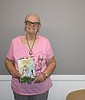
MOSES LAKE — A Moses Lake author’s book, “A Christian Woman Striving to Live Her Faith in a Man-Controlled World,” takes aim at the role to which many churches relegate the female half of their congregations. “It’s to encourage women in the faith,” Linda Curran said. “A lot of churches say, ‘Teach Sunday school, do this, do that, but don’t (evangelize.)’" In her book, Curran recounts a time when she moved to a new community and joined a church there. She was surprised to learn that, as a new female member, she had been automatically assigned church cleaning duties. When she questioned it, she wrote, she was met with condescension and her objections were brushed aside. In other churches, she said, women who were capable of teaching were relegated to “women’s ministry.”