
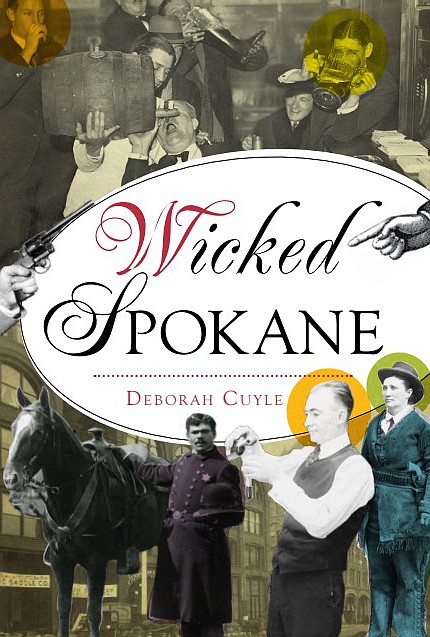
‘Wicked Spokane’
JOEL MARTIN | Hagadone News Network | UPDATED 3 years, 11 months AGO

Joel Martin has been with the Columbia Basin Herald for more than 25 years in a variety of roles and is the most-tenured employee in the building. Martin is a married father of eight and enjoys spending time with his children and his wife, Christina. He is passionate about the paper’s mission of informing the people of the Columbia Basin because he knows it is important to record the history of the communities the publication serves. | October 5, 2022 1:00 AM
EASTERN WASHINGTON — Around the turn of the 20th century, most of the Columbia Basin was little more than miles and miles of sagebrush, coulees and coyotes. There were a few little hamlets dotting the landscape, but nothing you could really call a city.
Spokane, on the other hand, was the commercial hub between the Cascades and the Rockies, and it sprang up fast, fueled by mining, railroads and the fertile farmlands surrounding it. Between 1900 and 1910 the city’s population nearly tripled to well over 100,000 residents, according to the U.S. Census records. This brought money, prestige, arts, culture; all the good things that come with urban life.
It also brought some, well, unsavory people.
“When people would get in trouble with the law, the judges would say ‘Do you want to go to prison or do you want to go to Spokane?’” said Deborah Cuyle, the author of the book “Wicked Spokane,” which was released Monday by Arcadia Press. “They literally would send their criminals by train or whatever to Spokane because it was cheaper than feeding them and housing them. Just drop ’em off in Spokane and let them fend for themselves.”
“Wicked Spokane” is the third book Cuyle (pronounced “kyle”) has written about the city, following “Ghosts and Legends of Spokane” and “Murder & Mayhem in Spokane.” A native of upstate New York, Cuyle lived in Wallace, Idaho, for a number of years and has always found Spokane fascinating.
“Spokane is probably one of my favorite cities to write about,” she said. “I just love it. I've done a lot of just walking around and taking pictures and looking at the mansions. Just amazing.”
In the early years, Spokane was the place you went when you struck it big. Men like railroad tycoon Daniel Corbin and manufacturing titan Henry J. Kaiser shelled out lavishly for homes in Spokane’s fashionable neighborhoods. At the same time, a few miles away, the decidedly less chic areas in the middle of the city were a hotbed of bootlegging, prostitution, gambling and, yes, murder. “Wicked Spokane” recounts one anecdote after another of people with names like Bronco Liz, Dutch Jake and Dirty Dora.
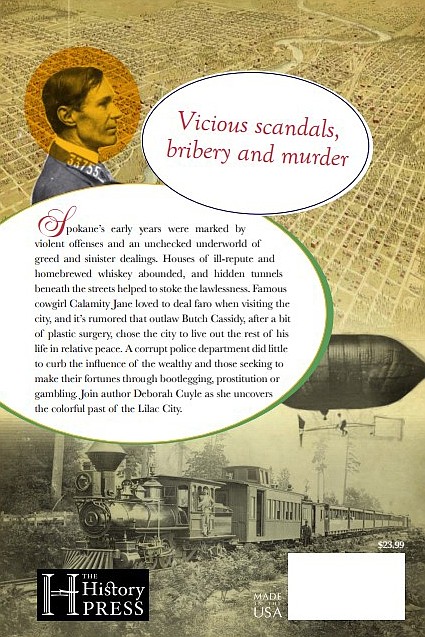
Gambling was an open secret in Spokane in the early decades. The notorious Calamity Jane was known to deal faro (a popular card game of the time) in Spokane, and gambling dens like the Owl Bar and Grill, the Lobby Saloon and the Havana Cigar Shop were known to have back rooms where a man could make a few dollars, or more likely blow his wages at cards or dice. Such places were occasionally raided by crusading lawmen or district attorneys, but their owners were seldom actually prosecuted, according to “Wicked Spokane.” In 1904, Cuyle says, police officers were ordered not to enter saloons after dark, possibly so they wouldn’t witness any illegal activity.
The stories of human trafficking in early Spokane sound depressingly familiar to a modern reader. Girls in an impoverished country were lured to America with the promise of good, above-board jobs, only to arrive and find themselves trapped in prostitution. In those days, Cuyle said, both the traffickers and their victims came from France.
“A lot of French women were brought to Spokane on false pretenses,” she said. “It was very, very common back then. And they were brought over to New York from France, young, beautiful women from France, they were told they were going to be taught English and be secretaries. That didn't happen, of course.”
One of the most fascinating things about Spokane, Cuyle said, is the network of tunnels that existed under the downtown area. During Prohibition, which in Washington began in 1916 and ended in 1933, there were numerous places with basements where the thirsty could buy liquor, including prominent hotels, businesses and even, according to Cuyle’s book, Spokane City Hall.
“The underground tunnels do exist,” she said. “You know, later they got used for boilers and steam pipes and stuff. Most of them are closed down now for safety reasons. But they did exist. They would have underground parlors or they'd gamble. They found a couple of spots in Spokane where people would be on the sidewalk, and underneath, the men would be down there with the bootleg whiskey and stuff. The person could put money down the hole in the sidewalk and up would come a cup of booze. I find that hilarious. Where there's a will there's a way, I guess.”
Coyle gleans her stories from old newspaper accounts, she said, which means having to piece together narratives from spotty and sometimes-shifting information.
“Reading old newspapers is, I would say, 70% of it,” she said. “Just going to the libraries and researching things. And then of course, some internet stuff. But you really have to piece the puzzle together. Especially when you're using newspapers, because so many facts were inaccurate back then … You will find that names and dates are commonly misspelled or inaccurate. So when I'm doing these, I have to take several sources to get the truth or the facts.”
Cuyle has been away from the Inland Northwest for a couple of years, fixing up an old farmhouse with her husband in South Dakota. She’s also currently working on her next book, about supernatural phenomena in Anaconda, Montana. To Cuyle’s way of thinking, history never completely goes away.
“When I look at time-worn brick buildings or century-old hardwood floors, I try to imagine the thousands of people who once visited these buildings,” Cuyle wrote in her preface to “Wicked Spokane. “I think of the strong horses that once pulled wagons and goods down the muddy streets. I think of the gunslingers and outlaws, the bartenders and store owners – all of them living their lives and going about their business, just as we all do today.”
Joel Martin can be reached via email at [email protected].
ARTICLES BY JOEL MARTIN
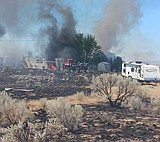
Insurance rates won’t go up in wake of 2026 wildfires
MOSES LAKE — Almost three-fifths of American homeowners have concerns about their insurance rates going up due to wildfires, according to a study by the insurance website LendingTree.com. But Moses Lake insurance agent Chris Arnberg said we don’t have much to worry about in the Columbia Basin. “I don't think we’ll see rates going up,” said Arnberg, who represents American Family Insurance. “If you're purchasing a home that's nowhere near any kind of potential wildfire, then your rates shouldn't go up more than inflation.”
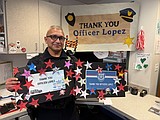
‘All in for Moses Lake’
School Resource Officer Cpl. Ray Lopez retires from MLPD
MOSES LAKE — The Moses Lake Police Department waved a regretful goodbye to Cpl. Ray Lopez Wednesday. “He’s a great ambassador for this organization in the community,” said MLPD Chief David Sands. “He’s all in for Moses Lake.” “Ray is Moses Lake,” said MLPD Public Information Officer Capt. Mike Williams. “He grew up here, he knows everyone and he is absolutely passionate about the community.” Lopez retired Wednesday after a career that spanned 40 years, first in the U.S. Army and then at Connell Police Department and the Chelan County Sheriff’s Office before coming home to Moses Lake in 2001, according to an announcement from the MLPD.

BASIN EVENTS: October 2026
COLUMBIA BASIN — The days are getting shorter and the eerie time of year is creeping up on us. Here are a few things happening in October.