
Dryland gardening
JOEL MARTIN | Hagadone News Network | UPDATED 3 years, 6 months AGO
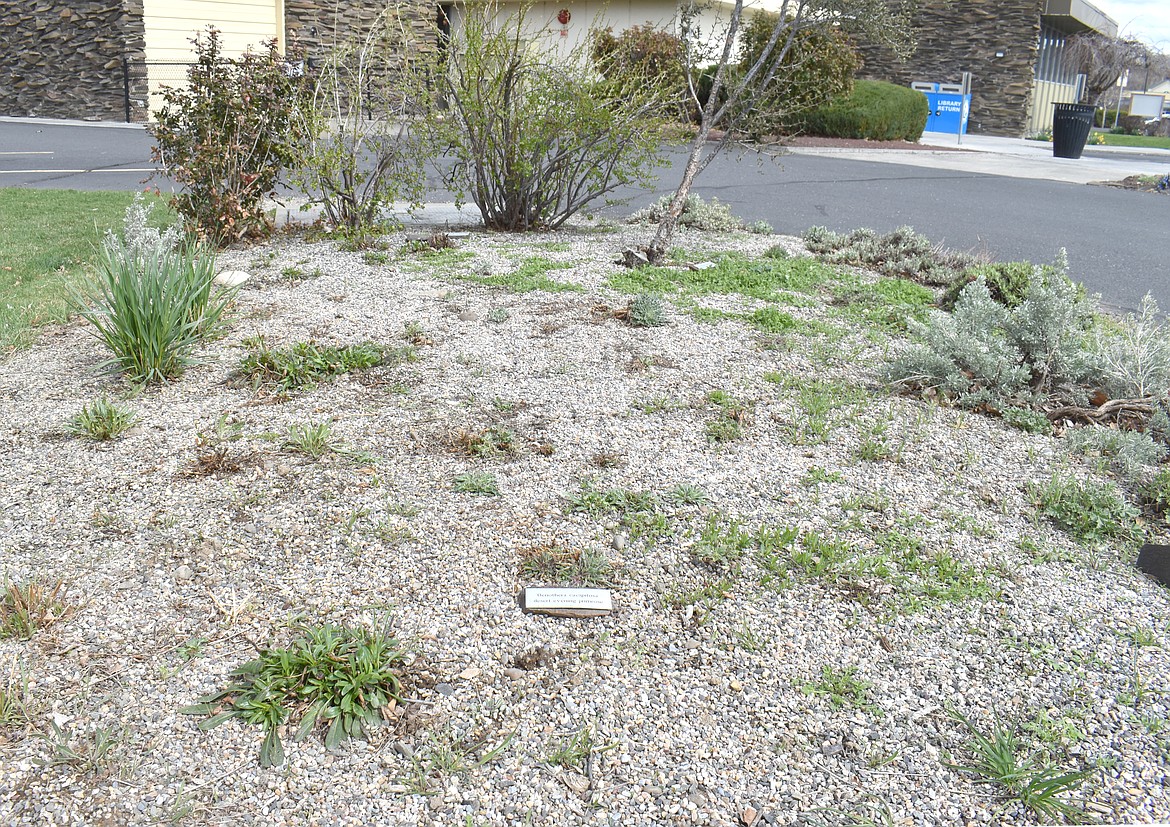
The Sixth Annual Columbia Basin Eco-Gardening Symposium will include information on creating drought-resistant landscapes like this demonstration garden outside the Moses Lake Public Library, maintained by the Washington State University Extension Grant-Adams Master Gardeners.
Joel Martin/Columbia Basin Herald
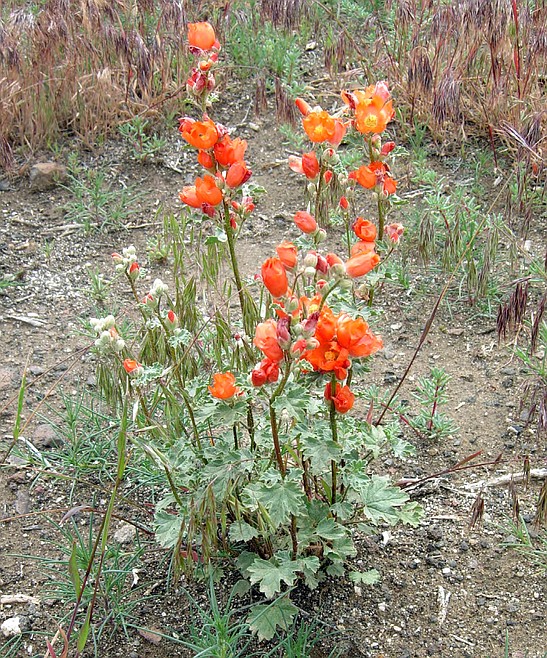
Munro’s globemallow, shown here, is one of the low-water-use plants native to the Columbia Basin. It’s the only orange-colored flower native to the area, according to Dinah Rouleau, project manager with the Columbia Basin Conservation District.
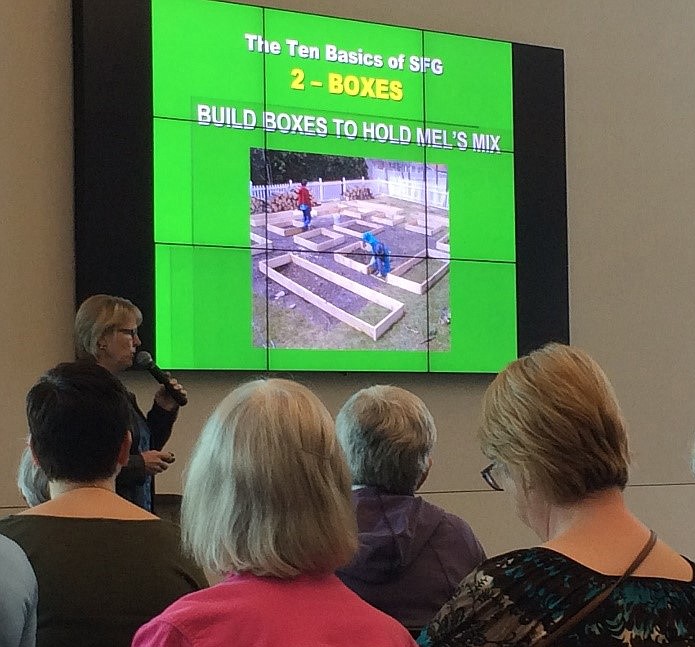
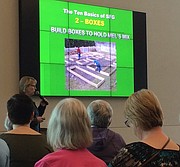
Susan Gray speaks at the 2017 Columbia Basin Eco-Gardening Symposium. This year’s event is April 22.
Joel Martin has been with the Columbia Basin Herald for more than 25 years in a variety of roles and is the most-tenured employee in the building. Martin is a married father of eight and enjoys spending time with his children and his wife, Christina. He is passionate about the paper’s mission of informing the people of the Columbia Basin because he knows it is important to record the history of the communities the publication serves. | April 14, 2023 1:00 AM
MOSES LAKE — A whole new dimension of gardening will be on display in Moses Lake next week.
“We’re looking at the gardening effects of climate change, for the public to learn about how climate change is going to affect gardening,” said Mark Amara, with the Washington State University Extension Grant-Adams Master Gardeners.
The Columbia Basin Conservation District and the Master Gardener program will host the sixth annual Columbia Basin Eco-Gardening Symposium on April 22, which is also Earth Day. The event, held at the Columbia Basin Technical Skills Center, goes from 9 a.m. to 1 p.m. and will include speakers, vendors, exhibitors and even a few door prizes.
Katie Doonan, the Extension Coordinator for WSU’s Center for Sustaining Agriculture and Natural Resources in Puyallup, will speak on “Climate Change and Planning for Uncertainty.” Her focus will be on the effects of climate change on gardens and strategies to put into practice as conditions change unpredictably.
Doonan’s talk will be followed by some demonstrations by exhibitors, including one about bees and another on putting together a plant basket for your front yard, said Dinah Rouleau, project manager with the conservation district.
The second speaker is Mike Bush, with the Washington State Department of Agriculture’s invasive pest program, based in Yakima. He’ll focus mainly on insects but will touch also on animals, weeds and plant diseases.
Finally, Rouleau and Heather Wendt, an assistant manager for both Benton and Franklin conservation districts, will take the podium together, to talk about heritage gardens and how to landscape in an environment where water isn’t always plentiful.
“It’s converting your lawn or an area of your lawn to drought tolerant landscape,” Rouleau said. “Lawns use a lot of water, but there’s many other benefits. You have the pollinators and your utility bills. And then aesthetically: people just think of sagebrush when we think of our native plants, but there’s so many beautiful wildflowers out there that actually thrive in our yards. And like it. They like our sandy soil that people think is pretty (poor), but they love it.”
The Master Gardeners program maintains three demonstration gardens, Amara said, in Moses Lake, Soap Lake and Othello.
Exhibitors will include Moses Lake-based Best Test Analytical Labs, which will offer a soil test lab, and BFI Native Seeds, which will give away free plants as a door prize, Amara said.
“They deal in native shrubs and grass and flower plugs that are sold to the public on a minor scale, but on a major scale, they do a lot of plant propagation for agencies and large-scale replanting projects throughout the West,” he said.
A late addition to the slate of exhibitors is WSU’s Honey Bee and Pollinator Research, Extension and Education Facility in Othello, Amara said., with information about enhancing honey bee habitat and the effects of herbicides and pesticides. They’ll also be giving away honey, he added.
The event is free to the public, but attendees are strongly encouraged to pre-register, Rouleau said. This is the sixth annual symposium, Amara said, but like almost everything else, it was put on hold during the pandemic. The last one was held in 2019.
Drought-friendly gardening is catching on, both Amara and Rouleau said, as people discover that gardening doesn’t have to suck up a lot of water.
“Even though we live in a water-rich area in the Columbia Basin irrigation project, we also live in a desert and people don’t understand that,” Amara said. “You know, it’s not very practical to be growing water-loving trees when they demand so much of our water. Birches, willows, cottonwoods: there are quite a few trees that people plant that, once they’re mature, demand a lot of water that we really don’t have available.”
Heritage gardening is easy to get started in, Rouleau said.
“It can be so small. Five plants is nothing. Start with a little corner and then it’ll slowly take over your entire yard.”
Joel Martin can be reached via email at [email protected].
ARTICLES BY JOEL MARTIN

Endless battle
Noxious Weed Control Board works to keep invasive plants under control
MOSES LAKE — Some of the nastiest plants in Grant County were the topic of a class led by Jay Johnson, a consultant with the Grant County Noxious Weed Control Board, Tuesday. The Noxious Weed Control Board, as its name would suggest, is tasked with keeping weeds under control in Grant County. That’s not a small job; the board’s website lists 129 species of noxious weeds that are found around Grant County. A noxious weed is defined as an invasive, non-native plant that threatens agricultural crops, local ecosystems or fish and wildlife habitat, according to the Noxious Weed Control Board. Washington state law requires that these weeds be identified and their spread kept to a minimum, if not completely eradicated. “We’re one of those agencies a lot of people don’t really understand,” Johnson said. “We’re a county office and … our funding is tax-based assessment. When you get your tax bill and you look down at all the expenses that you pay for, there we are.”

BASIN EVENTS: Oct. 16-24
COLUMBIA BASIN — Whether you feel like shopping, crafting, learning or seeing a show, there’s something happening for you this week in the Basin. Oct. 16 ‘My Family (Mi Familia)’ screening Spanning three generations, “My Family (Mi Familia)” is a heartfelt drama that follows the Sánchez family as they build their lives in East Los Angeles. Through love, hardship, triumph, and sacrifice, the film explores the immigrant experience, the strength of family bonds, and the traditions that connect one generation to the next. Lowrider show and taco truck before the screening. Sponsored by Columbia Basin Allied Arts, EDUBS C/S and the Moses Lake Creative District. $12 per person. Doors open at 6 p.m., film begins at 7 p.m. at the Moses Lake Civic Center Auditorium, 401 S. Balsam St. Tickets and info: www.cba-arts.org.

Moses Lake author encourages women to look beyond church culture norms
MOSES LAKE — A Moses Lake author’s book, “A Christian Woman Striving to Live Her Faith in a Man-Controlled World,” takes aim at the role to which many churches relegate the female half of their congregations. “It’s to encourage women in the faith,” Linda Curran said. “A lot of churches say, ‘Teach Sunday school, do this, do that, but don’t (evangelize.)’" In her book, Curran recounts a time when she moved to a new community and joined a church there. She was surprised to learn that, as a new female member, she had been automatically assigned church cleaning duties. When she questioned it, she wrote, she was met with condescension and her objections were brushed aside. In other churches, she said, women who were capable of teaching were relegated to “women’s ministry.”