
West Nile virus found in Grant County
STAFF REPORT | Hagadone News Network | UPDATED 3 years, 3 months AGO
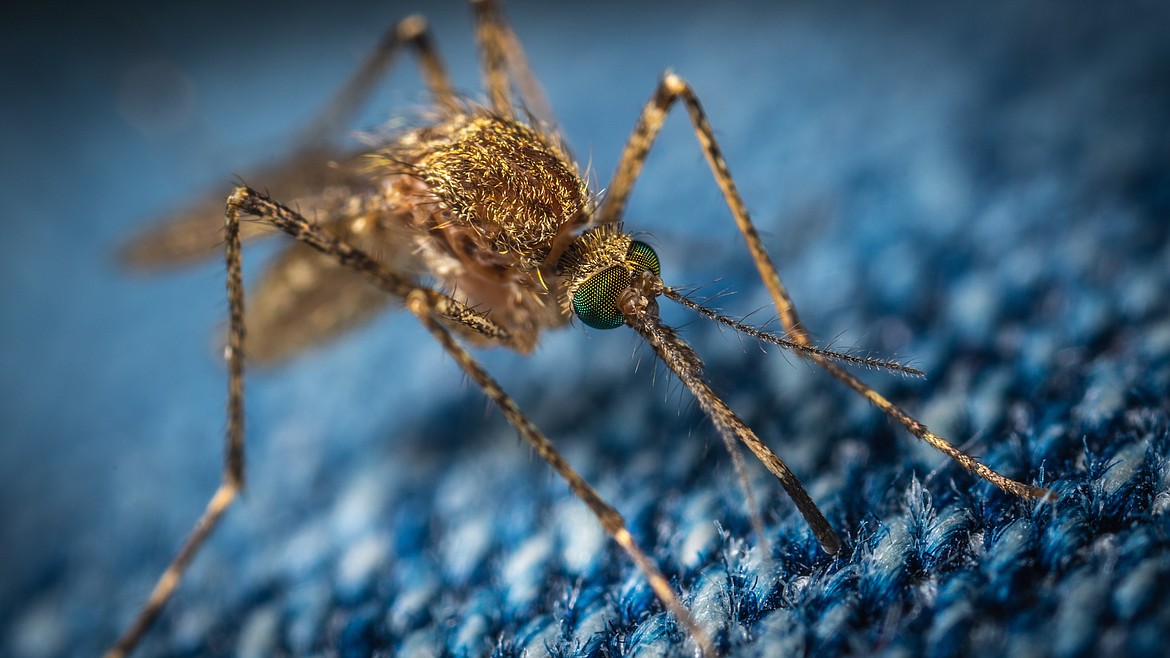
West Nile virus has been detected in two places in Grant County, so the Grant County Health District is warning residents to minimize exposure to mosquito bites. Symptoms of the infection include sudden high fever, severe headache, nausea, vamiting, sore throat and others. Area residents should contact their health care providers for more information.
COURTESY PHOTO/EGOR KAMELEV VIA PEXELS
MOSES LAKE — Two mosquito samples taken in Grant County have tested positive for West Nile virus, according to a statement from Grant County Mosquito Control District No. 1.
Both samples were collected near Moses Lake, the statement said, one just east of town and the other in the Gloyd Seeps area. It is possible for mosquitoes in other areas to carry this virus. So far, no human cases of WNV have been reported in Grant County this year. The last positive mosquito sample containing WNV in Grant County was reported in 2021.
Benton and Yakima counties have also reported detection of West Nile virus this year, according to the statement. There have been no reports of human or other animal cases testing positive for West Nile virus in Washington State so far this season. However, detection of WNV in the mosquito population means there is a potential for spread of the virus to humans and other vulnerable species.
“Although most people will not get seriously ill from West Nile virus, we do not want anyone to get sick because of a mosquito bite. If you’re enjoying activities outside, be sure to take steps to prevent getting bitten,” Stephanie Shopbell, GCHD environmental health manager, wrote in the statement.
The GCHD recommends people take steps to prevent mosquito bites and reduce places where mosquitoes live and breed around their home:
• Stay indoors at dawn and dusk, if possible, when mosquitoes are the most active
• Wear a long-sleeved shirt, long pants and a hat when going into areas with mosquitoes
• Use an EPA-registered mosquito repellent when spending time in areas with mosquitoes. Read the label and carefully follow instructions. Mosquito repellents that contain the active ingredients DEET, Picaridin, IR3535, or oil of lemon eucalyptus work best.
• Take special care when using repellent on children.
• Treat clothing and gear with permethrin to kill or repel mosquitoes.
• Make sure windows and doors are “bug-tight” and repair or replace screens as needed.
• Eliminate mosquito-breeding areas around the home by emptying or discarding anything that holds standing water – bottles, cans, old tires, buckets, plastic covers, and toys.
• Change water in birdbaths, fountains, kiddie pools, and animal troughs at least twice each week.
• Make sure roof gutters drain properly and clean clogged gutters in the spring and fall and fix leaky outdoor faucets and sprinklers.
There is no vaccine to prevent West Nile virus. WNV is most commonly spread to people through the bite of an infected mosquito. Disease due to WNV occurs during mosquito season, which starts in the summer and continues through the fall.
Most people who are infected with WNV will not get sick. Contact your healthcare provider if you have symptoms of a possible infection, especially if you recently had mosquito bites. About one in five people infected will have mild symptoms such as fever, headache and body aches. About one in 150 people infected will have more severe symptoms including headache, high fever, neck stiffness, stupor, disorientation, tremors, convulsions, muscle weakness, paralysis and coma. People over 60 years of age or who have certain medical conditions, such as cancer, diabetes, hypertension and kidney disease are at greater risk of serious illness.
Contact your healthcare provider if you have symptoms of a possible West Nile virus infection, especially if you recently had mosquito bites. There is no medication to treat WNV disease, but hospital care can be necessary for more severely ill individuals. Persons experiencing possible symptoms of WNV disease should seek medical care, especially if bitten recently by mosquitoes.
Other species at risk for West Nile virus infection are birds and horses. Certain wild birds including crows, ravens, magpies, jays and raptors are especially vulnerable. Horses are also especially vulnerable to West Nile virus and many of those infected die or have to be euthanized. Horse owners are urged to keep their horses’ West Nile virus vaccinations up to date.
More information about West Nile virus in Washington state can be found at https://bit.ly/3qo0h62.
ARTICLES BY STAFF REPORT
Connell woman killed in Booker Road crash
CONNELL — Charges are pending against a Kennewick man following a collision about 12 miles south of Othello that killed a Connell woman and injured three other people Tuesday evening. A Washington State Patrol press memo said intoxicating substances were a factor. Jessica Zarate, 37, Connell, was pronounced dead at the scene of the crash near the intersection of SR 17 and South Booker Road, the WSP memo said. She was driving south on Booker Road approaching the intersection when her car was hit by a pickup driven by John Reiss, 62, Kennewick. Edgar Garcia Quirino, 28, Othello, was driving north on SR 17 and ran into Zarate's car, the WSP memo said. The crash occurred at about 6:40 p.m.
Wheeler Road closed because of traffic collision
UPDATE: The road was reopened as of noon, according to a GCSO media release. MOSES LAKE — Grant County Sheriff’s Office has announced there is a road closure between Road 3-NE and Road S-NE. There was a serious traffic collision. GCSO is asking for drivers to avoid the area and find alternative routes. This is a developing story and will be updated as more information becomes available.

Doors opening: The Currents will provide homeownership for more local workers
About 104 homes are planned at the former Atlas sawmill site
Teachers, nurses, firefighters and other workers who keep Coeur d’Alene running will soon have more places to buy a home in the community where they work. About 104 homes are being planned to be built at Atlas Waterfront, on roughly 10 acres that are part of a swath of land that was once home to the Atlas sawmill and is being redeveloped. Ignite CDA, the city of Coeur d’Alene’s urban renewal agency, is leading this effort.