
Food grants
GABRIEL DAVIS | Hagadone News Network | UPDATED 2 years, 4 months AGO
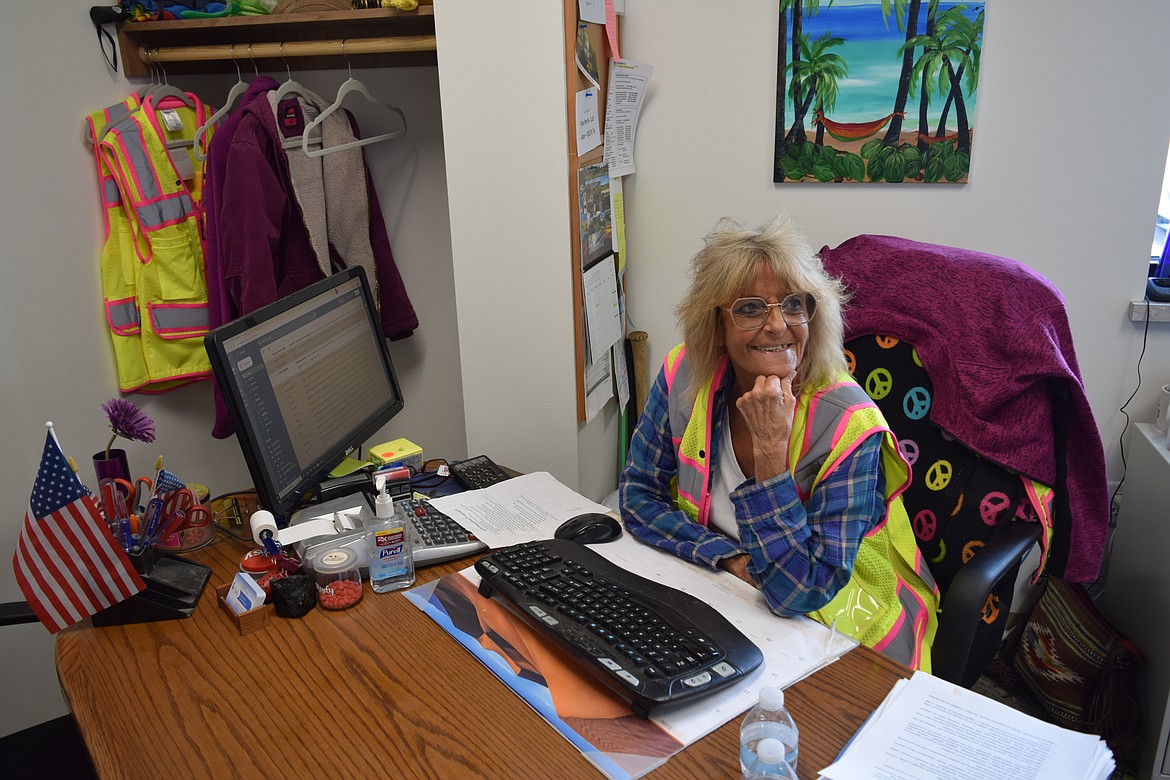
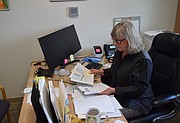
Peny Archer, Community Services of Moses Lake’s operations manager, sits at her desk inside the CSML office, located at 9299 Beacon Road in Moses Lake. Archer has worked at the food bank for 23 years.
GABRIEL DAVIS/COLUMBIA BASIN HERALD
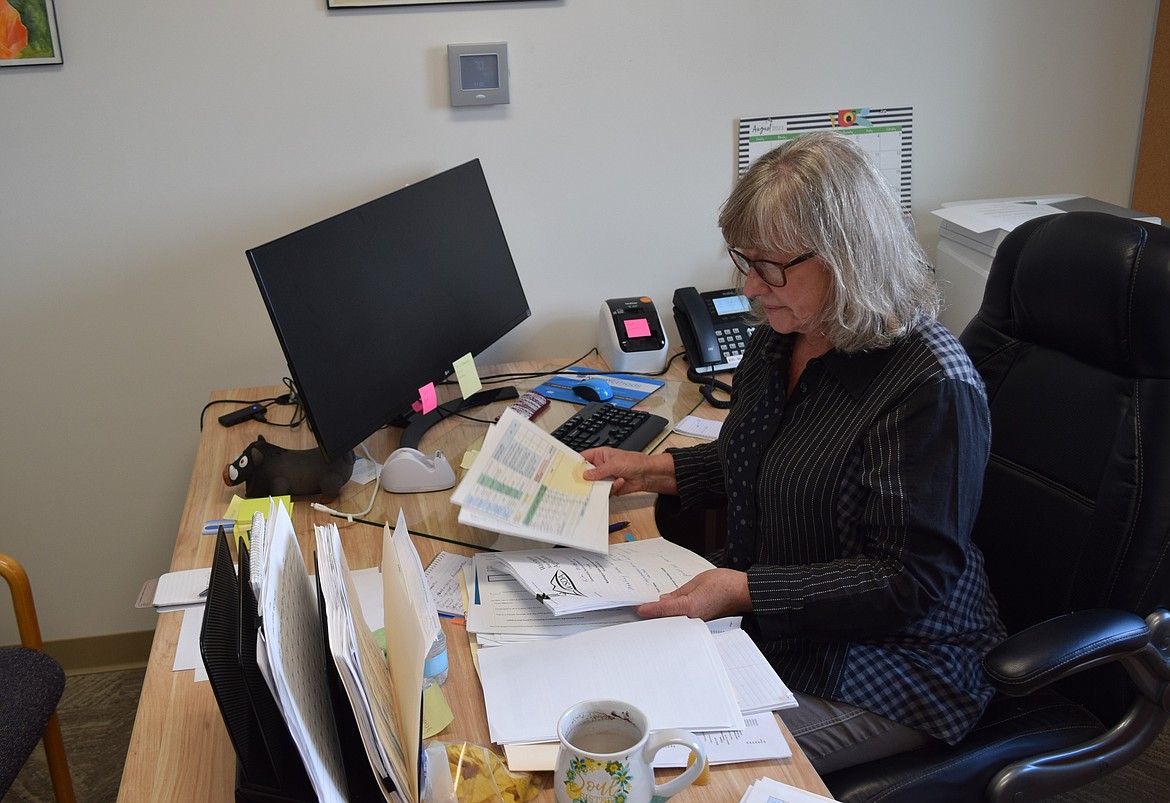
Community Services of Moses Lake Financial Manager Nan Gardener looks over papers at her desk in CSML’s offices. Gardener is working on implementing grant funding from the state to work with local socially disadvantaged farmers.
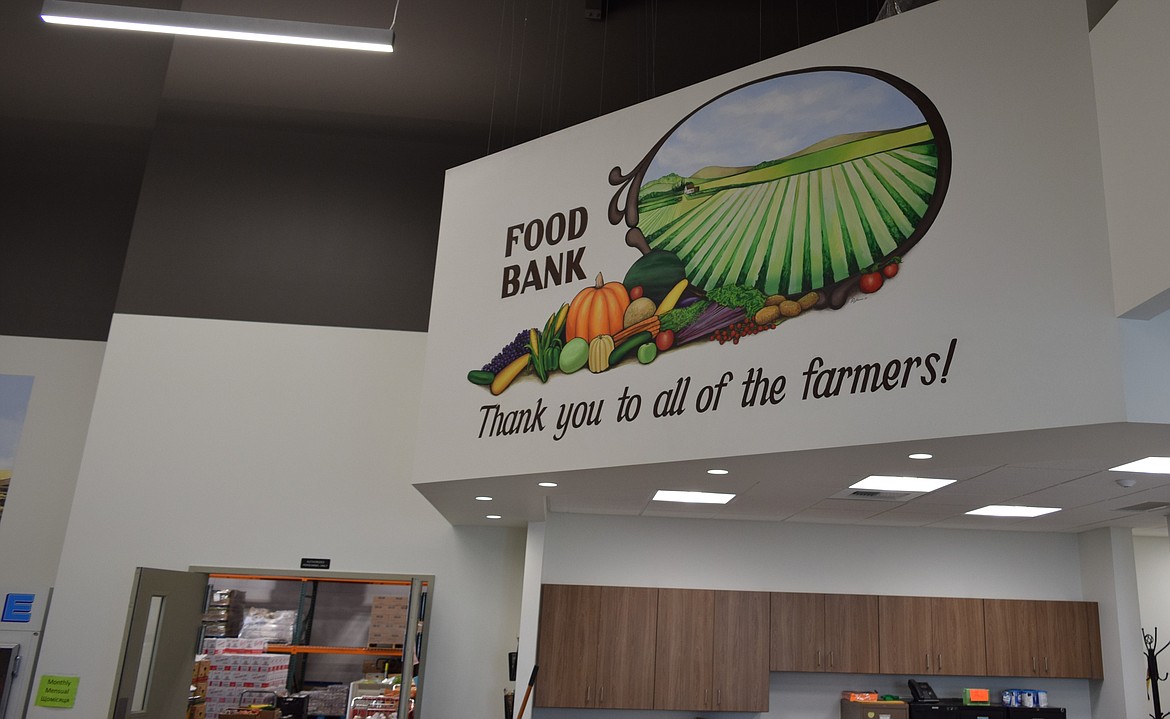
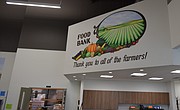
A mural inside the Community Services of Moses Lake office, painted by a local artist, thanking farmers for donating to the food bank.
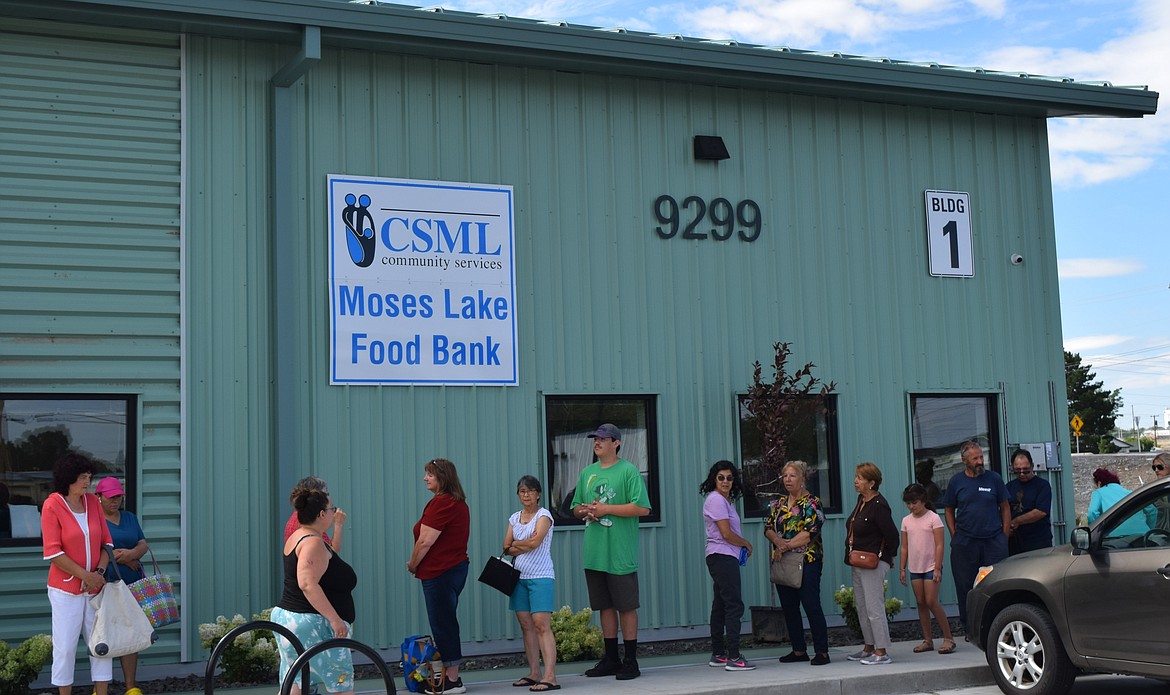
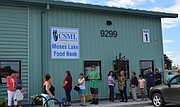
Moses Lake residents line up before the food bank opens. Community Services of Moses Lake is open to the public 11 a.m.-2:45 p.m. Monday-Thursday.
Gabriel Davis is a resident of Othello who enjoys the connections with his sources. Davis is a graduate of Northwest Nazarene University where he studied English and creative writing. During his free time, he enjoys reading, TV, movies and games – anything with a good story, though he has a preference for science fiction and crime. He covers the communities on the south end of Grant County and in Adams County. | August 15, 2023 1:30 AM
MOSES LAKE — Community Services of Moses Lake, a local food bank and regional food distribution center, is still going strong and preparing to implement new grant funding, said CSML’s Operations Manager Peny Archer.
CMSL provides a food bank for residents of Moses Lake and distributes food to 49 food banks across Grant, Adams, Lincoln, Benton, Yakima and Whitman counties, said Archer, who has worked at the food bank for 23 years after starting as a volunteer.
“Right now we're getting a lot of fresh produce in,” said Archer. “We resource food about anywhere we can….The three top producers in Washington, the counties are Grant, Benton and Yakima. That's where the food is grown, and so we have a lot of farmers bringing in their fresh produce.”
CSML Financial Manager Nan Gardener said that she is working on implementing a grant the food bank secured earlier in the year from the Washington State Department of Agriculture’s Local Food Purchasing Assistance program, which will allow the food bank to work with even more local farmers.
“What that is, is we will contract with socially disadvantaged farmers. That could be, for example, women farmers and owners, Hispanic, disabled, LGBTQ,” said Gardener. “So, they're grouped into what's called socially disadvantaged and it's a good way to get a leg up. Also, it's a good way to encourage more local farming for people that never even thought of it before, and then what we do is we take that food that we purchase from them...and we send that out into food-distressed areas.”
Gardener said that the funding will help the organization obtain more diverse foods that they are not able to stock as frequently.
“We've been protein-deficient as far as meat and that sort of thing…We pretty much got a lot of canned beef and canned pork, which has been great, but this is a really great opportunity for getting some of this quality stuff out to these people who are having poverty diets, a lot of carbs, not a lot of value to it.”
Other foods Gardener said the grant would help them source included fresh berries, fish, honey and cheeses.
“We got the grant this spring and It's been going on for a while,” said Gardener. “Everybody's doing a lot of work to get this thing launched because it's all new…I think we're doing pretty well with that.”
Archer said that the food bank gets donations steadily throughout the year, but that they slow down during the late fall and through the winter, which is when the number of patrons starts to pick up and other issues such as lack of seasonal work, sickness or harsh weather play a factor in driving people in.
“Our service usually picks up more in the winter, because…farmers aren't in the field in January,” said Archer. “But we also resource other foods as best we can. We talk to Del Monte, we talk to whoever, Simplot, the bigger factories and say, ‘Hey, we're lacking this.’”
CSML works with local organizations and farmers to resource food year-round, and Archer said that the food bank has one semi-truck that it can send out to pick up large donations from local contacts.
“We're seeing more and more seniors in our lines, because of trying to live on a fixed income. And you've seen what the economy’s done. Well, their Social Security did not keep even with that,” said Archer.
The food bank has also put on community outreach programs in the past. Archer spoke of one young member of the community she still remembered from several years previously who participated in the food bank’s seed distribution program.
“We had a little boy come in one time, and he’d grown his first tomato and wanted to donate it, and he was about 6 or 7 and he was as thrilled as if it were a truckload, and I was thrilled for him,” said Archer. “One tomato plant in a pot, a planted pot, can outrun a family as far as the amount of tomatoes...That's why that little boy was so pleased. He had gotten his start here and he brought us tomatoes all summer long.”
Archer emphasized just how important the food bank is as a resource for the community and to help community members to provide for themselves, and said many people don’t consider the circumstances that lead to people coming to the food bank.
“A lot of people think, bums, you know, ‘well, go get a job.’ A lot of these people are working. They're just not making enough.”
Gabriel Davis may be reached at [email protected]. Davis is a resident of Othello.
ARTICLES BY GABRIEL DAVIS

Work-based learning lets students build their own futures
MOSES LAKE — Work-based learning provides education opportunities for the workforce to receive hands-on training and technical education and prepare themselves to enter various industries. Educators and workforce development professionals from Eastern Washington discussed some the training they offer and the benefits of their programs. Next Generation Zone, an affiliate of WorkSource based in Spokane, provides job training opportunities for youth and young adults ages 16 to 24. Program Coordinator Kate Martin said there are multiple benefits to the program. “One of them is a paid work experience, and that’s where we reach out to area employers who are willing to take a young person and train them,” she said. “This is a short-term learning experience, so it’s typically about 240 hours; sometimes it could be longer or shorter. We’re the actual employer; we cover all of their wages, taxes, the L&I, and the employer just agrees to give them the experience and train them in whatever field it is that they’re wanting to go into.”

Serving schools: ESD superintendents reflect on operations, priorities
MOSES LAKE — Educational service districts are government-mandated agencies put in place to provide services to school districts across the state. ESD Superintendents discussed what they do and their priorities in operating their districts. ESD 105, led by Superintendent Kevin Chase, serves four counties, including Kittitas, Yakima and portions of Klickitat and Grant counties and provides support for 25 school districts – including Royal School District and Wahluke School District – and more than 66,000 students. “We help them collaborate with each other as well or collaborate with other partners,” Chase said. “(It’s) a lot of advocacy work, either regionally or across the state, or even federally, working on different issues that impact our education. And we provide very specialized services in certain situations in order to meet the needs of our students in our region and of our school districts.”

Columbia Basin Project making headway through Odessa Groundwater program
CASHMERE — The Columbia Basin Project is making gradual progress toward completion with particularly significant accomplishments for the Odessa Groundwater Replacement Program in the last six months or so, according to Columbia Basin Development League Executive Director Sara Higgins. “When we’re dealing with a project of this size, advancement is kind of like watching paint dry, but yes, there have been (developments),” she said. “There are a lot of exciting things happening right now.” There are more than 300 miles of main canals, about 2,000 miles of lateral canals and 3,500 miles of drains and wasteways in the irrigation project, according to the U.S. Bureau of Reclamation website. The CBDL advocates for the operation of those waterways and for the project to continue “build-out.”