
Going to market
JOEL MARTIN | Hagadone News Network | UPDATED 2 years, 6 months AGO

Rentyn Koehn of Royal City walks his grand champion heifer around the ring as auctioneer Chuck Yarbro Jr. calls in the bids. Koehn’s critter sold for $2,100.
Joel Martin/Columbia Basin Herald
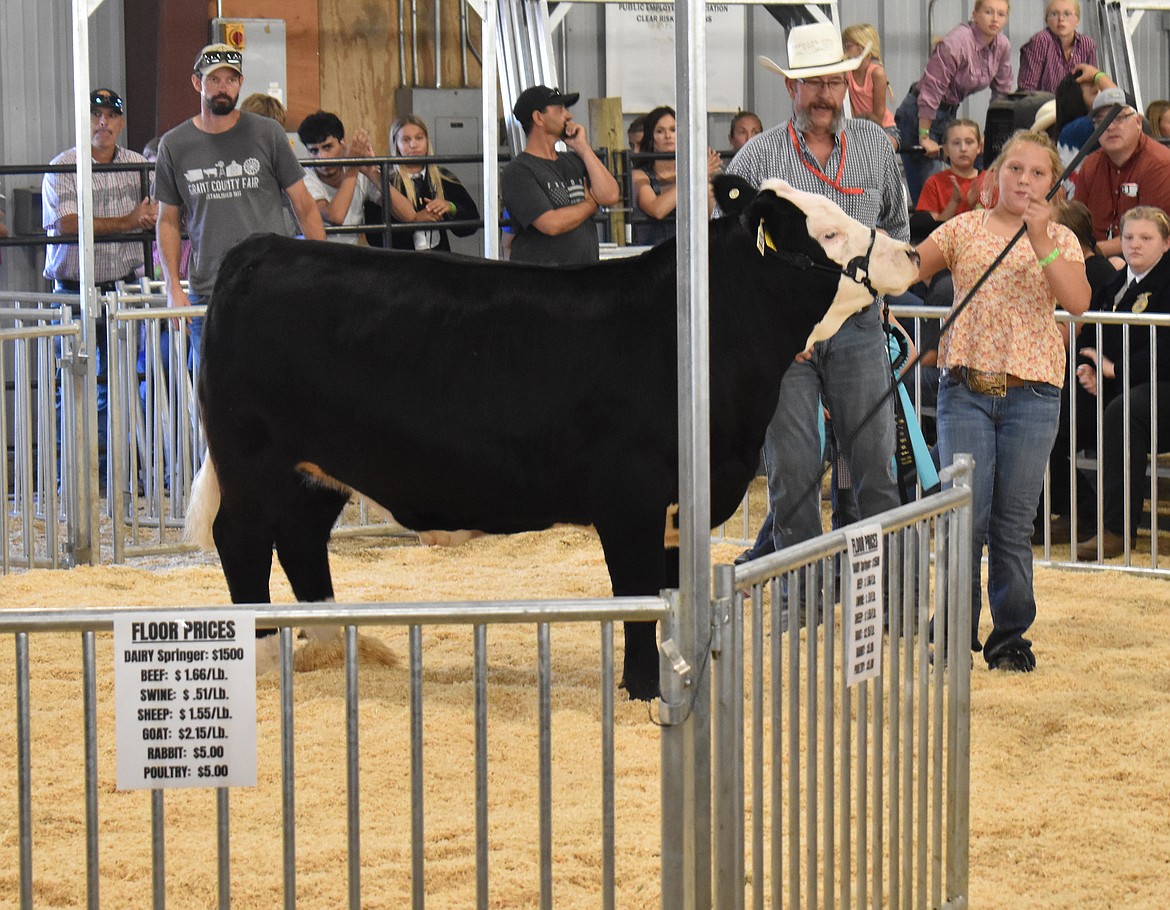
Sydney Stone of the Moses Lake 89ers 4-H club looks a little nervous as she brings her grand champion steer around the ring at the Grant County Fair livestock sale Friday morning.
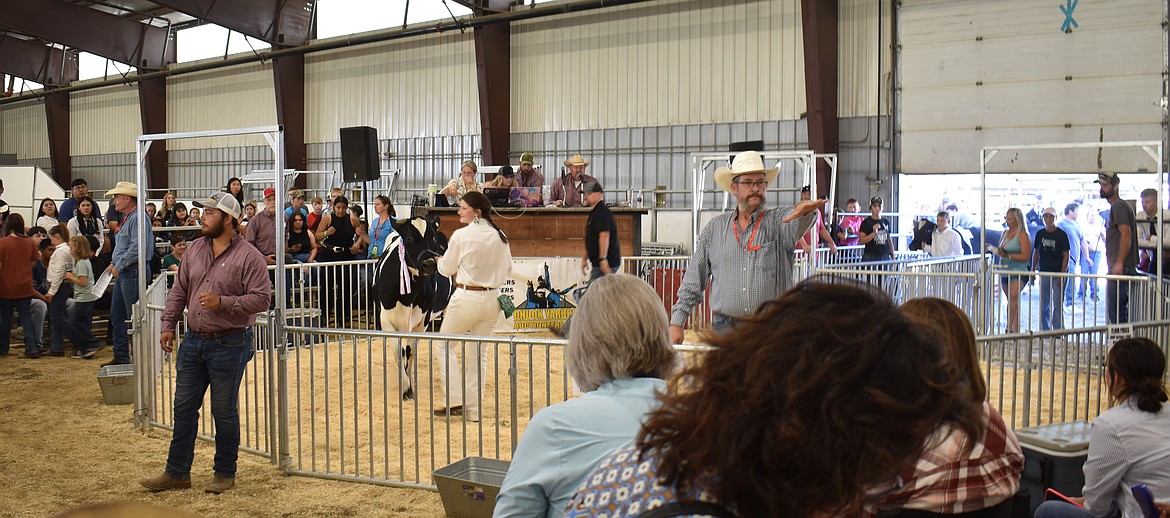
Spotters watch for bids as Chuck Yarbro, seated in the background, calls out numbers for a springer heifer up for auction at the Grant County Fair Friday morning.
Joel Martin has been with the Columbia Basin Herald for more than 25 years in a variety of roles and is the most-tenured employee in the building. Martin is a married father of eight and enjoys spending time with his children and his wife, Christina. He is passionate about the paper’s mission of informing the people of the Columbia Basin because he knows it is important to record the history of the communities the publication serves. | August 22, 2023 1:00 AM
MOSES LAKE — It’s kind of a high point, the moment when hard work is rewarded in hard cash.
Livestock sales are an integral part of a county fair, when a 4-H or Future Farmers of America student sees the benefit from all the effort they put in through the year raising a heifer or a pig or a goat.
“What’m I bid? What’m I bid? Do I hear 1,900? 1,900! Do I hear 2,000? All done, all gone…” said auctioneer Chuck Yarbro Jr., machine-gunning the ritual auction phrases Friday morning at the Grant County Fair’s Kenny Ardell Pavilion as one young person after another brought a critter into the ring to be sold. The teens looked nervous but proud as they showed off several months’ to several years’ worth of work.
“We usually get (a pig) like eight months prior to the fair,” said Joban Zarete, who was waiting to sell the oinker he had raised with Quincy FFA. “We let them grow, and at maybe two months we start training, being around the pig, getting to spend time with the pig, getting the pig to get used to you.”
All told, there were 421 students there to sell their animals. The springer heifers went first; Rentyn Koehn of the Royal Ranchers in Royal City sold his grand champion for $2,100. They were followed by beef cattle, then swine, sheep, goats, rabbits and poultry.
Ethan Wade, of the Moses Lake 89ers 4-H group, got a little something extra along with the proceeds from his reserve grand champion steer. Wade had created a video for the fair’s social media chronicling his work in raising his steer.
“For his efforts, today he takes second place and another check for $750,” announced Fairgrounds Manager Jim McKiernan.
“Yeah! Spaceburgers are on Ethan!” Yarbro said.
What do the young growers do with the money they make?
“Invest in another animal,” said Ricardo Moreno, who was selling a pig with Quincy FFA. “Possibly a steer this time.”
Joel Martin may be reached via email at [email protected].

ARTICLES BY JOEL MARTIN
Space Burger booth open March 13-15
MOSES LAKE — Those who can’t wait for the Grant County Fair can get their Space Burger fix next weekend, according to an announcement from the Lioness Club of Moses Lake. The iconic Grant County sandwiches will be available at the Grant County Fairgrounds March 13-15, according to the announcement. There is no admission fee to get into the fairgrounds that weekend.
SENIOR EVENTS: March 2026
COLUMBIA BASIN — Plays, art shows, auctions and more await seniors in the Columbia Basin this month. Here are some opportunities to get out and about in March.
Valentine’s Day cards flood Brookdale Hearthstone with love
MOSES LAKE — Residents at Brookdale Hearthstone Assisted Living in Moses Lake got Valentine’s Day greetings from across the country last month. “I believe that the only states we have not received (cards from) yet are Vermont and Maine,” Lifestyle Director Imelda Broyles said Feb. 24. “We keep receiving new cards every single day. They have not stopped. My residents are in awe with every single one of the cards that we’ve been receiving.” The Hearts Across America project started as a way for children in school classrooms to exchange Valentine’s Day cards with classes in other states or even countries, but the idea has expanded to senior living facilities, according to the project’s social media.