
Hispanic presence in tree fruit industry reflected at annual meeting
CHERYL SCHWEIZER | Hagadone News Network | UPDATED 2 years, 9 months AGO
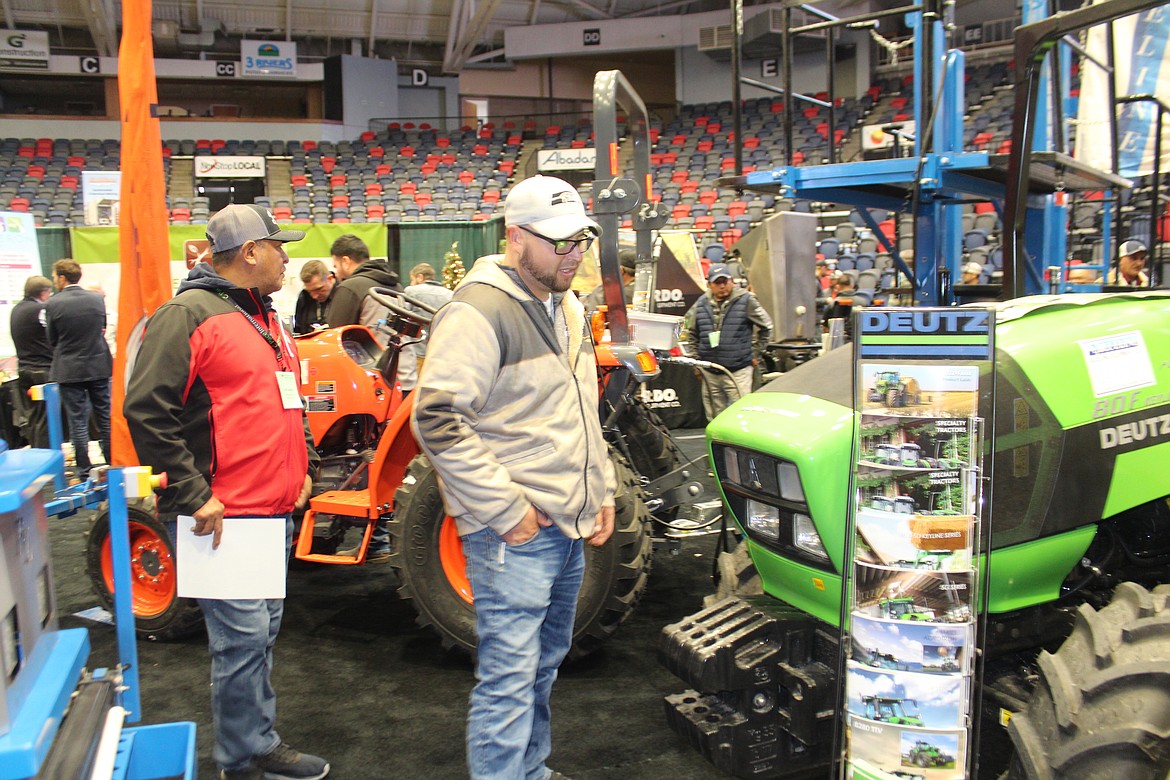
Attendees at Tuesday’s session of the Washington Horticultural Association annual meeting look over the newest in farm equipment.
Cheryl Schweizer/Columbia Basin Herald
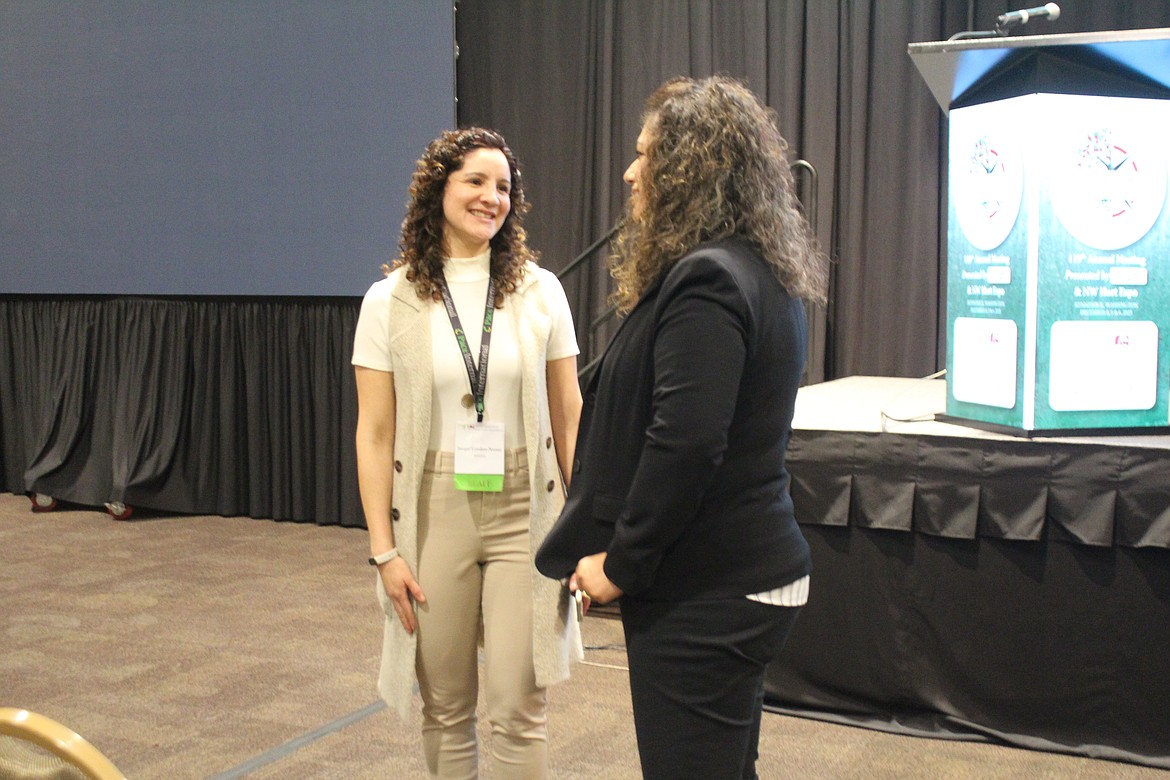
Jacqui Gordon-Nuñez, left, talks with a Washington Department of Agriculture attendee at the horticultural association meeting.
Cheryl Schweizer/Columbia Basin Herald
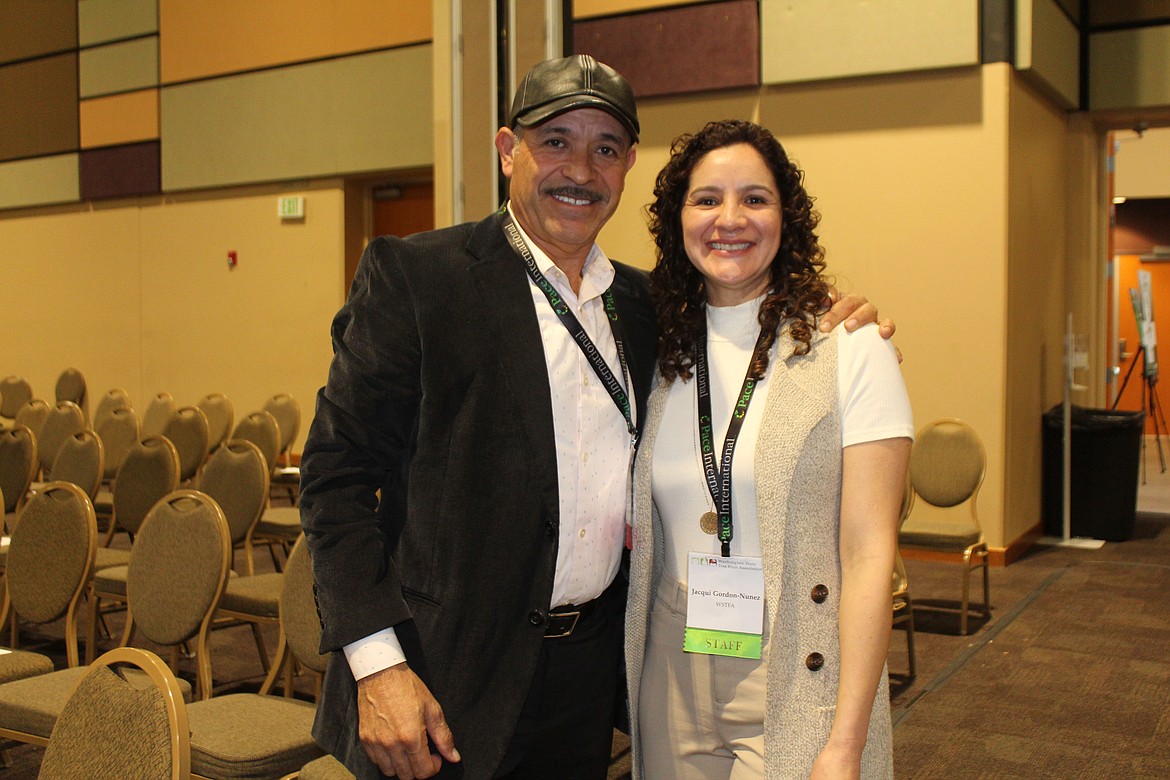
Ofelio Borges, left, of the Washington Department of Agriculture, and Jacqui Gordon-Nuñez, right, of the Washington State Tree Fruit Association, are working on leadership training for supervisory personnel in the tree fruit industry.
Cheryl Schweizer/Columbia Basin Herald
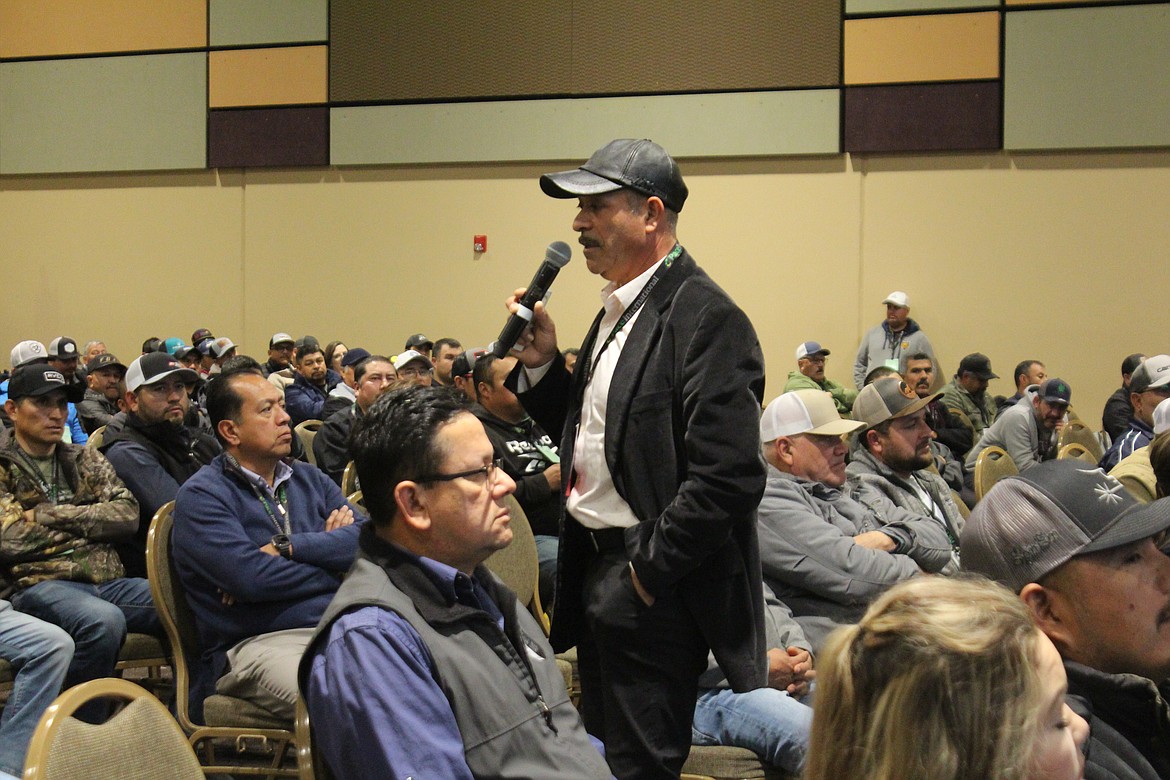
Ofelio Borges, center, gives a presentation during the Spanish-language sessions at the Washington Horticultural Association meeting Tuesday.
Cheryl Schweizer/Columbia Basin Herald
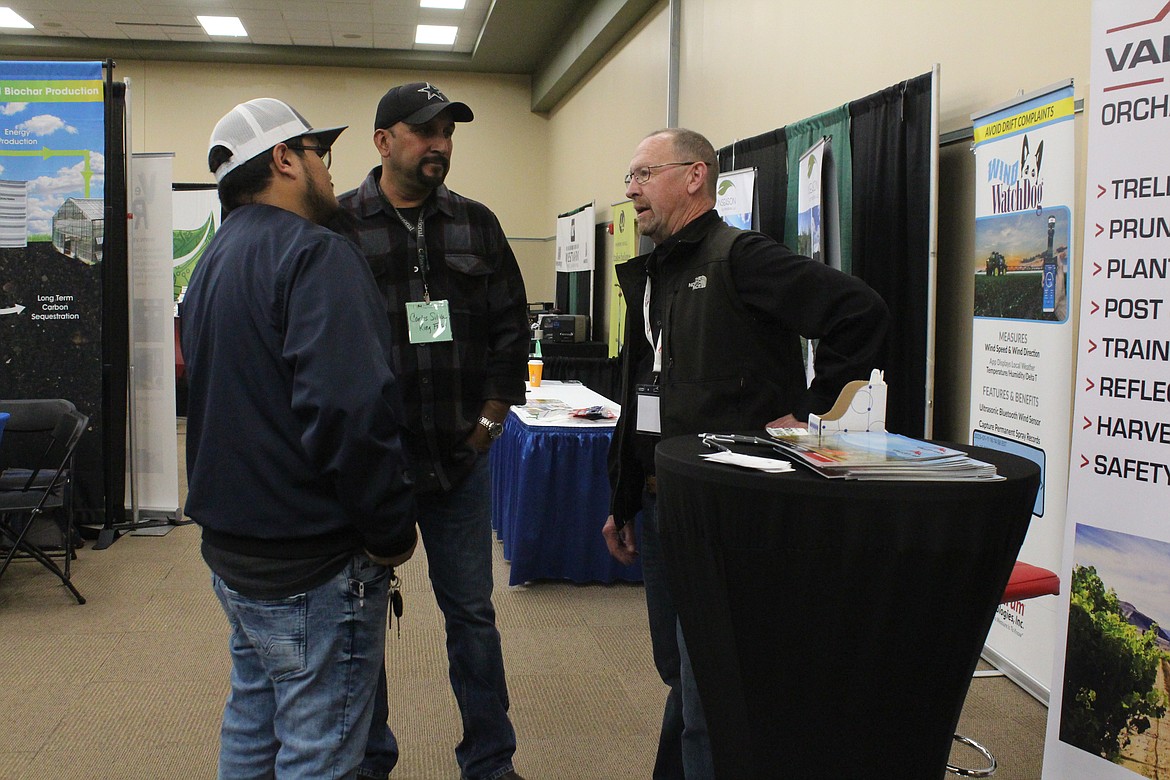
Attendees talk with a vendor at the 2023 Hort Expo.
Cheryl Schweizer/Columbia Basin Herald
Senior Reporter Cheryl Schweizer is a journalist with more than 30 years of experience serving small communities in the Pacific Northwest. She began her post-high-school education at Treasure Valley Community College and enerned her journalism degree at Oregon State University. After working for multiple publications, she has settled down at the Columbia Basin Herald and has been a staple of the newsroom for more than a decade. Schweizer’s dedication to her communities and profession has earned her the nickname “The Baroness of Bylines.” She covers a variety of beats including health, business and various municipalities. | December 6, 2023 4:43 PM
KENNEWICK — As the presence of Hispanic workers, managers and growers has increased in Washington’s tree fruit industry, so have efforts to provide training and support. The Spanish-language sessions at the Washington Horticultural Association annual meeting earlier this week reflect that.
Jacqui Gordon-Nuñez, director of training, education and member services for the Washington State Tree Fruit Association, said the Spanish-language sessions have grown a lot since the first class in 2011.
“They began with a tiny room of 50 people with a couple of talks, and now it’s the biggest session in the hort convention,” Gordon-Nuñez said. “It’s evidence of how much the Hispanic community wants to get educated, and wants to get the trending information of the industry.”
For 2023, the classes included new pesticide application technologies and the latest pesticide safety rules and techniques. Classes also covered regulations covering worker exposure to heat and wildfire smoke, the current apple industry workforce, and diagnosing and treating less common orchard maladies.
“We provide research information. We also provide some educational content that will give them pesticide recertification credits,” Gordon-Nuñez said. “They need to get continuing education in order to keep their pesticide applicator license. And to do that they need to get this updated content.”
Hispanic workers have been a major presence in the tree fruit industry for decades, she said, and have been moving into supervisory roles and orchard ownership.
“We have a big variety of people here in our audience,” she said. “Many of them are our workforce. Many, many are supervisors. They supervise hundreds of people, they are in charge of harvest. So they want to get educated so they can educate their workforce.”
The WSTFA, Washington State University and the Washington State Department of Agriculture are working on a new program to provide leadership training for orchard managers and supervisors, since that’s sometimes a different set of skills, she said.
Frequently supervisors are promoted from the workforce.
“That’s very much how the industry works here. Sometimes it works, sometimes it doesn’t, because they need to learn how to manage people, communicate with people,” she said.
Ofelio Borges of the WSDA, who’s working with Gordon-Nuñez to develop the program, said the goal is to help people learn what they need to know to succeed in a new position.
As a former migrant worker and orchard owner himself, he knows the challenges, he said.
“In most cases we get placed in supervisory positions with absolutely no training. So we use whatever means we can to get things rolling. This agricultural leadership program intends to give the supervisors and managers the skills they need to do a better job as supervisors and managers,” Borges said.
“We’re hoping that having great leaders in the agriculture sector will take the industry to the next level,” Borges said.
The first job will be to train instructors, he said, and that’s being done in conjunction with Gonzaga University. The first class for students is scheduled for November 2024.
“We have great managers in our industry, but we want them to develop leadership skills, like having a vision, knowing how to delegate, knowing how to communicate effectively with their workers, knowing how to make change happen,” Gordon-Nuñez said.
“When you have people that have great communication skills, that have emotional control, that have great skills to delegate, that develop a good working environment, people will be happier. People will perform better,” Borges said. “We’re envisioning this program bringing all these benefits to the ag industry.”
Cheryl Schweizer can be reached via email at [email protected].
 Jacqui Gordon-Nuñez, left, talks with a Washington Department of Agriculture attendee at the horticultural association meeting.
Cheryl Schweizer/Columbia Basin Herald
 Ofelio Borges, left, of the Washington Department of Agriculture, and Jacqui Gordon-Nuñez, right, of the Washington State Tree Fruit Association, are working on leadership training for supervisory personnel in the tree fruit industry.
Cheryl Schweizer/Columbia Basin Herald
 Ofelio Borges, center, gives a presentation during the Spanish-language sessions at the Washington Horticultural Association meeting Tuesday.
Cheryl Schweizer/Columbia Basin Herald
 Attendees talk with a vendor at the 2023 Hort Expo.
Cheryl Schweizer/Columbia Basin Herald
ARTICLES BY CHERYL SCHWEIZER
Road projects on hold for Labor Day weekend
MOSES LAKE — With Labor Day weekend dead ahead, drivers will be able to move freely about the state. Most road projects are on hold for the holiday weekend. Nobody will be working on the Hansen Road overpass on Interstate 90, but the lane restrictions that are in effect will continue through the end of the project.

Cost estimates for water source alternatives given to Moses Lake City Council
Protected under the U.S. Endangered Species Act, efforts are ongoing to keep it self-sufficient
MOSES LAKE — It’s going to cost a lot of money to provide alternative water sources for the city of Moses Lake, but some of the possible alternatives will cost more than others. City officials provided the Moses Lake City Council with costs for various alternatives Tuesday.

Dryer vent cleaning is important -- but often overlooked
MOSES LAKE — Not all the maintenance a house needs is visible. Sometimes a potential problem just goes unnoticed until it causes trouble, sometimes serious trouble. But a lot of potential problems give off warning signs. Clothes dryers often do when they need a good cleaning.