
Washington employer groups file lawsuit against EPA
GABRIEL DAVIS | Hagadone News Network | UPDATED 2 years AGO
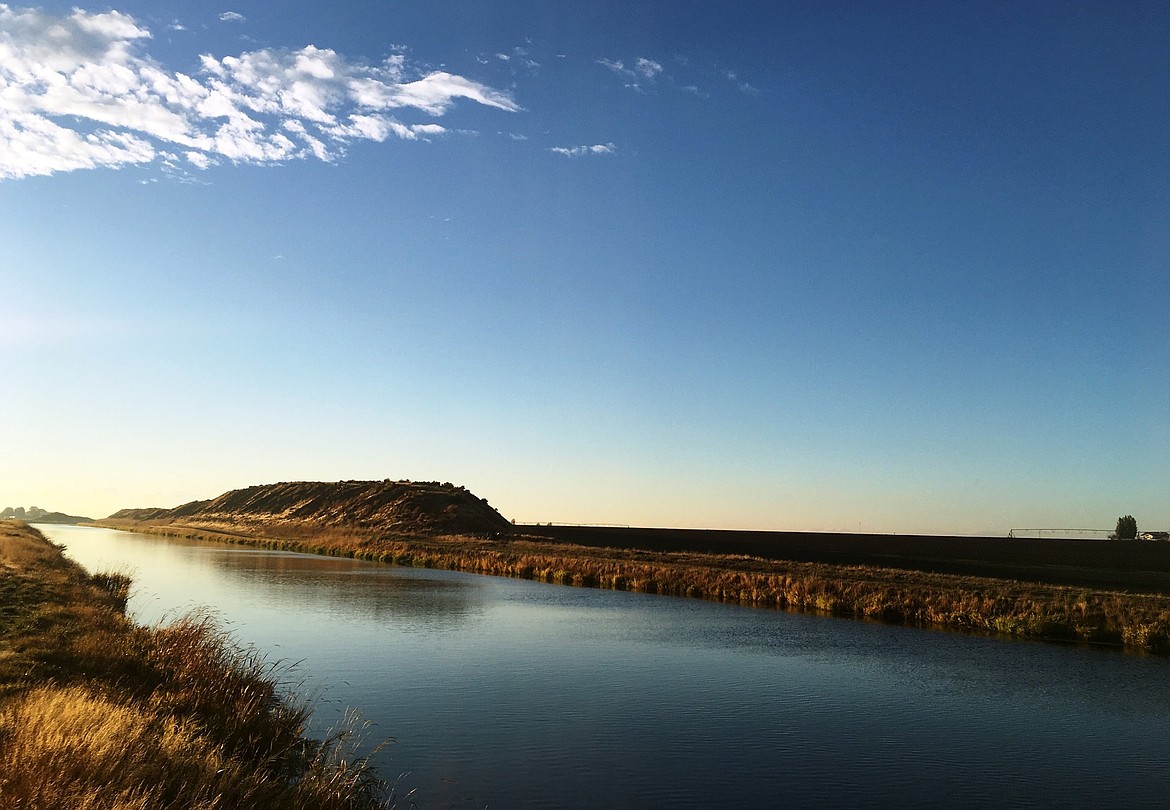
A canal in the Columbia Basin. The Environmental Protection Agency is being sued by Washington employer groups challenging the agency’s December 2022 updated water quality standards.
FILE PHOTO
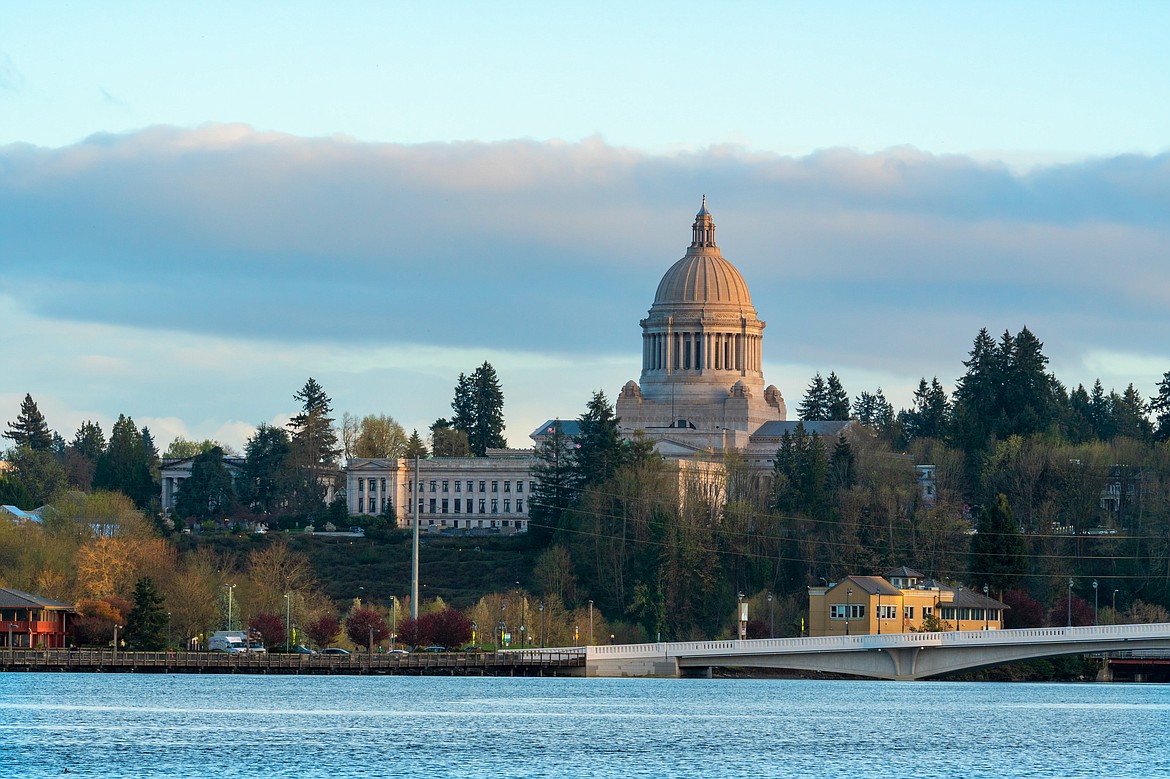
The Washington State Capitol building in Olympia. Washington employer groups filed a lawsuit December 4 challenging the Environmental Protection Agency’s most recent water quality standards for the state.
Gabriel Davis is a resident of Othello who enjoys the connections with his sources. Davis is a graduate of Northwest Nazarene University where he studied English and creative writing. During his free time, he enjoys reading, TV, movies and games – anything with a good story, though he has a preference for science fiction and crime. He covers the communities on the south end of Grant County and in Adams County. | December 21, 2023 5:48 PM
OLYMPIA — According to an announcement from the Association of Washington Business, several employer groups in Washington state filed a lawsuit Dec. 4 in U.S. District Court for the District of Columbia challenging the Environmental Protection Agency’s most recent 2022 water quality standards (WQS) for the state.
“Regrettably, the EPA adopted standards that cannot be met with any existing or reasonably foreseeable future wastewater treatment technology, jeopardizing the operation of not only thousands of private businesses, but municipal wastewater treatment systems, too,” said Kris Johnson, president of AWB.
According to the announcement, AWB is joined in the suit by the Northwest Pulp & Paper Association, American Forest & Paper Association, Greater Spokane Inc., and Food Northwest.
EPA Region 10 Public Affairs Specialist Bill Dunbar said that the EPA cannot comment on any litigation.
Background
According to a fact sheet from the EPA website, in August 2016 the Washington Department of Ecology submitted human health criteria (HHC) — which limit specific pollutants in surface water — to the EPA for review, which the EPA partially approved and partially disapproved in November of that year.
For the HHC that the EPA disapproved, it replaced the criteria with federal HHC. In May 2019, the EPA reversed its partial disapproval of Ecology’s HHC in response to a 2017 petition from several regulated entities, according to the fact sheet. In May 2020, the EPA withdrew the federal HHC.
The fact sheet stated that the EPA has since concluded that its 2019 and 2020 actions related to Washington’s HHC were not based on a sound scientific rationale and were therefore not protective of the applicable designated uses in Washington. In March 2022, EPA Administrator Regan signed a proposed rule to restore the federal HHC, which was finalized in December 2022 and covers 141 HHC for 72 specific pollutants, with stricter limits than the Ecology criteria EPA originally rejected in 2016.
A November 2022 statement from the EPA stated that the agency’s final ruling follows science to help protect the health of Washingtonians and Tribal members who eat fish and shellfish caught in the state.
“Under the Clean Water Act, EPA has taken significant action to ensure our precious waters are safe for all to enjoy,” said EPA Administrator Michael S. Regan in the statement. “This final rule utilizes the latest scientific knowledge and brings us one step closer to delivering safe swimmable, fishable bodies of water that the people of Washington deserve.”
According to the AWB announcement, the lawsuit against the EPA’s December 2022 decision claims partially override Ecology’s criteria created a rule for Washington state that is unattainable.
“This aspirational rule threatens the economic well-being of every community in our state by imposing disastrous compliance costs and failing to provide alternative methods to achieve regulatory compliance,” Johnson said. “If our challenge of the EPA rule for Washington is successful, it will result in reinstatement of the state Department of Ecology’s 2016 water quality standards rule. The 2016 Ecology rule was very stringent and highly protective in its own right, while taking into account the policy considerations from Washington employers and municipalities,”
In the November 2022 EPA statement, Ecology also weighed in on the final ruling.
“EPA’s rule reestablishes standards that truly protect people who depend on locally caught fish as a staple in their diets,” said Laura Watson, director of the Washington Department of Ecology. “I am grateful that EPA restored rules that recognize and reflect the importance of fish for Tribes as well as many other communities in our state.”
Implementation
The AWB statement said the members of the employer coalition are committed to maintaining and improving water quality in the state, but believe the EPA has undermined this goal by adopting aspirational regulations with no plan for how to implement them nor any tools to assist affected entities in complying with the new rules.
When asked what tools or processes the EPA provides to help attain the new water quality standards, Dunbar responded in an email to the Columbia Basin Herald, pointing to specific sections of the 2022 final ruling, including sections on Alternative Regulatory Approaches and Implementation Mechanisms, WQS variances and NPDES Permit Compliance Schedules.
“I think these three sections help provide some context on how EPA and Washington see flexibility that’s already built into the compliance process,” Dunbar wrote.
The Code of Federal Regulations on WQS explains a process in which WQS variances can be approved or denied by the EPA. The variance is a time-limited set of criteria that replaces the WQS with the “highest attainable conditions” for a specific body of water or permittee. The variance is only considered appropriate if the permittee or water source experiences one of seven factors that would prevent it from achieving the actual, designated WQS.
According to the 2022 final ruling, the National Pollutant Discharge Elimination System permit process also allows for time to comply with the WQS. According to the NCEBS website, the NPDES permit program addresses water pollution by regulating point sources that discharge pollutants into U.S. waters. EPA's regulations allow permitting authorities to use schedules for compliance with a time limit in the NPDES permit if the discharger needs additional time to undertake actions like facility upgrades or operation changes to meet the new standards.
The AWB announcement provided further input on the 2022 ruling from Chris McCabe, executive director of the Northwest Pulp & Paper Association.
“NWPPA members are committed to full compliance with environmental standards. However, our member companies cannot operate in states where EPA-driven standards make reliable compliance impossible,” McCabe said. “This new rule creates an untenable situation for any wastewater discharge permit holder in our state. If permittees are unable to meet their permit limits or requirements based on these water quality standards, every permittee could face legal challenges for non-compliance under the Clean Water Act. And that creates significant uncertainty for employers.”
Greater Spokane Inc. Chief Executive Officer Alisha Benson also commented on the ruling.
“Businesses have repeatedly invested in cutting-edge technology to remove harmful chemicals from our waterways but they cannot come close to achieving levels mandated by the EPA in its latest regulation,” said Benson. “It’s telling that neither the state Department of Ecology nor the EPA has stepped forward to provide implementation tools to assist in these efforts. The technology to meet these new water quality standards simply does not exist.”
Gabriel Davis may be reached at [email protected].
 The Washington State Capitol building in Olympia. Washington employer groups filed a lawsuit December 4 challenging the Environmental Protection Agency’s most recent water quality standards for the state.
ARTICLES BY GABRIEL DAVIS

Work-based learning lets students build their own futures
MOSES LAKE — Work-based learning provides education opportunities for the workforce to receive hands-on training and technical education and prepare themselves to enter various industries. Educators and workforce development professionals from Eastern Washington discussed some the training they offer and the benefits of their programs. Next Generation Zone, an affiliate of WorkSource based in Spokane, provides job training opportunities for youth and young adults ages 16 to 24. Program Coordinator Kate Martin said there are multiple benefits to the program. “One of them is a paid work experience, and that’s where we reach out to area employers who are willing to take a young person and train them,” she said. “This is a short-term learning experience, so it’s typically about 240 hours; sometimes it could be longer or shorter. We’re the actual employer; we cover all of their wages, taxes, the L&I, and the employer just agrees to give them the experience and train them in whatever field it is that they’re wanting to go into.”

Serving schools: ESD superintendents reflect on operations, priorities
MOSES LAKE — Educational service districts are government-mandated agencies put in place to provide services to school districts across the state. ESD Superintendents discussed what they do and their priorities in operating their districts. ESD 105, led by Superintendent Kevin Chase, serves four counties, including Kittitas, Yakima and portions of Klickitat and Grant counties and provides support for 25 school districts – including Royal School District and Wahluke School District – and more than 66,000 students. “We help them collaborate with each other as well or collaborate with other partners,” Chase said. “(It’s) a lot of advocacy work, either regionally or across the state, or even federally, working on different issues that impact our education. And we provide very specialized services in certain situations in order to meet the needs of our students in our region and of our school districts.”

Columbia Basin Project making headway through Odessa Groundwater program
CASHMERE — The Columbia Basin Project is making gradual progress toward completion with particularly significant accomplishments for the Odessa Groundwater Replacement Program in the last six months or so, according to Columbia Basin Development League Executive Director Sara Higgins. “When we’re dealing with a project of this size, advancement is kind of like watching paint dry, but yes, there have been (developments),” she said. “There are a lot of exciting things happening right now.” There are more than 300 miles of main canals, about 2,000 miles of lateral canals and 3,500 miles of drains and wasteways in the irrigation project, according to the U.S. Bureau of Reclamation website. The CBDL advocates for the operation of those waterways and for the project to continue “build-out.”