
Field tech: New machinery makes farming more efficient and less labor-intensive
JOEL MARTIN | Hagadone News Network | UPDATED 3 years, 8 months AGO
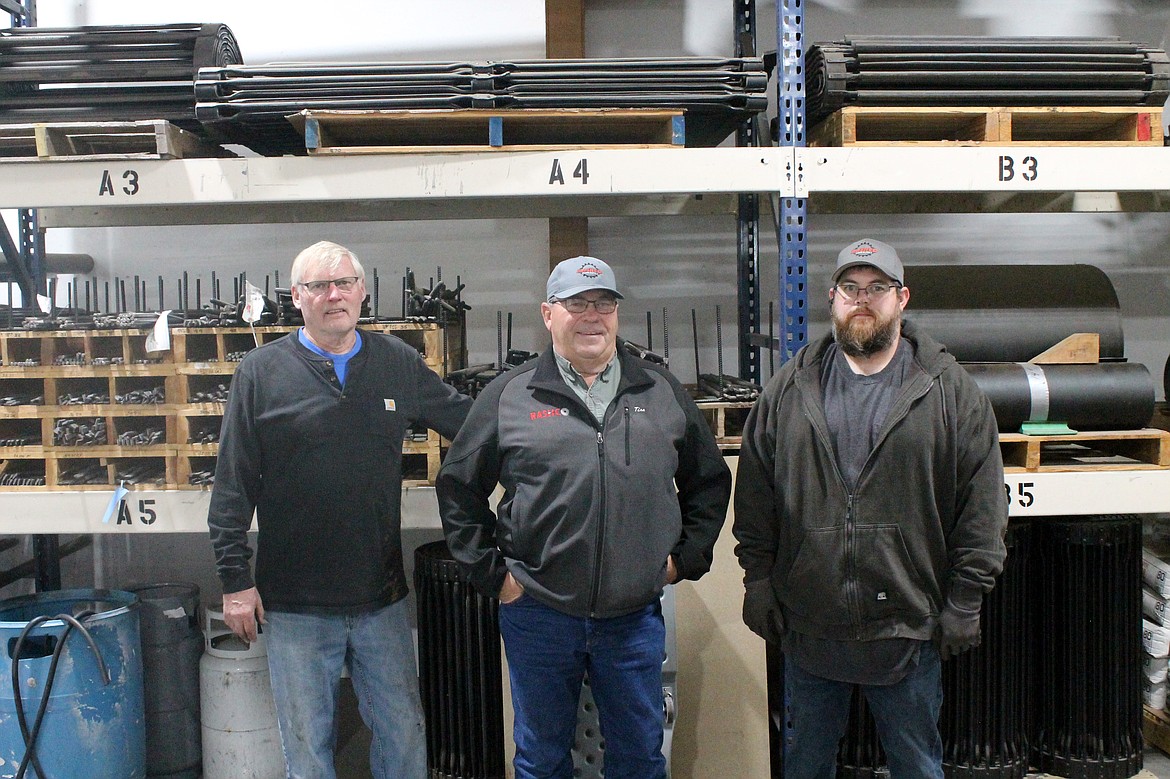
From left: Rashco Farm Supply Store Manager Mike Jenson and co-owners Tim Prickett and Scott Prickett stand in their shop in Moses Lake.
Joel Martin/Basin Business Journal
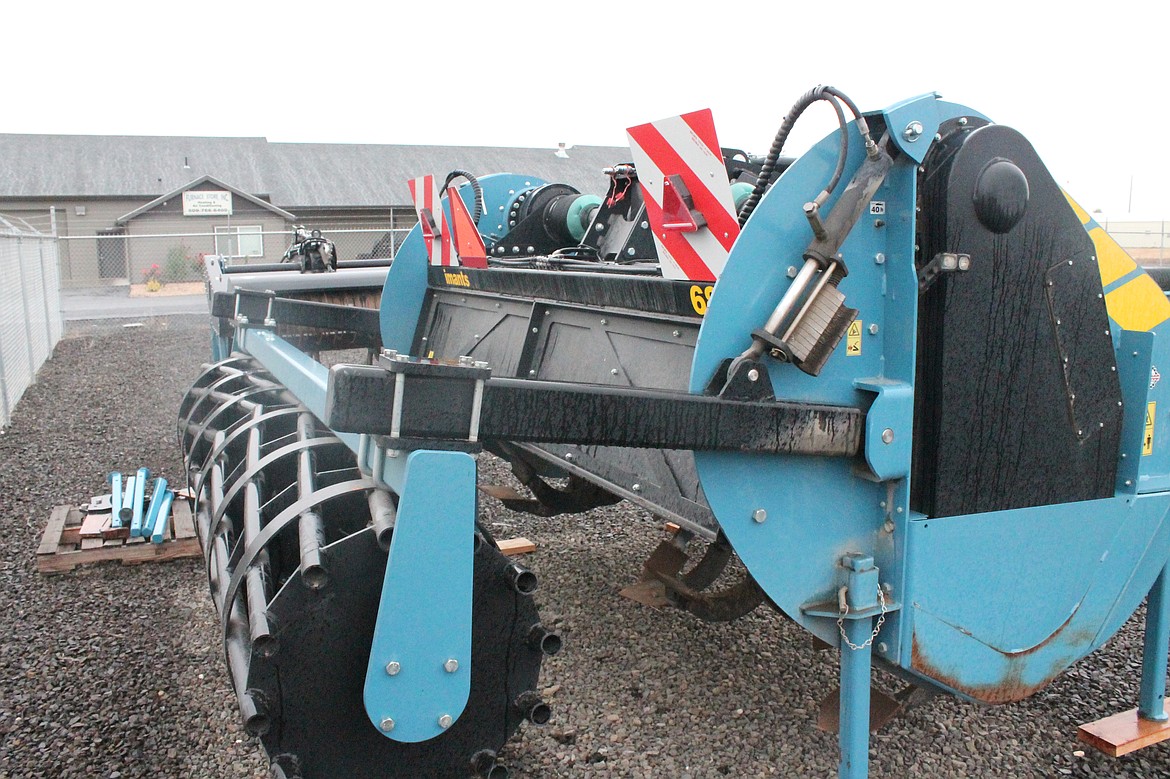
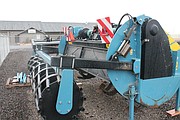
An Imants rotary spader in the yard at Rashco Farm Supply.
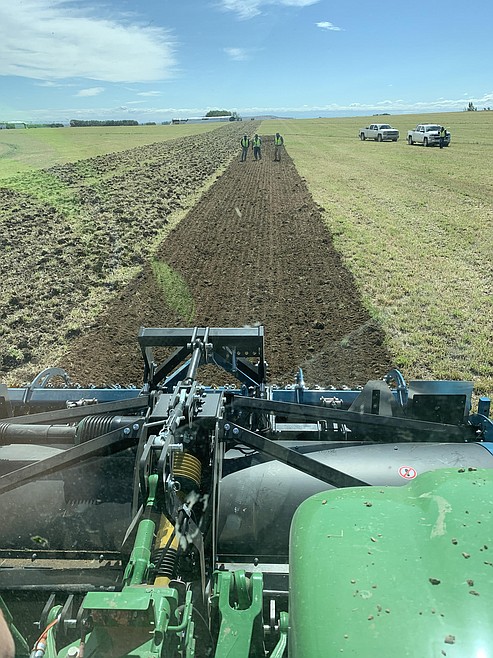
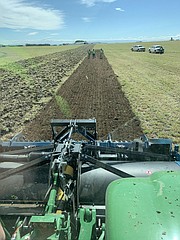
The Imants rotary spader tilled this field near Paterson, Washington in a single pass, accomplishing what would have taken two or three passes for conventional equipment.
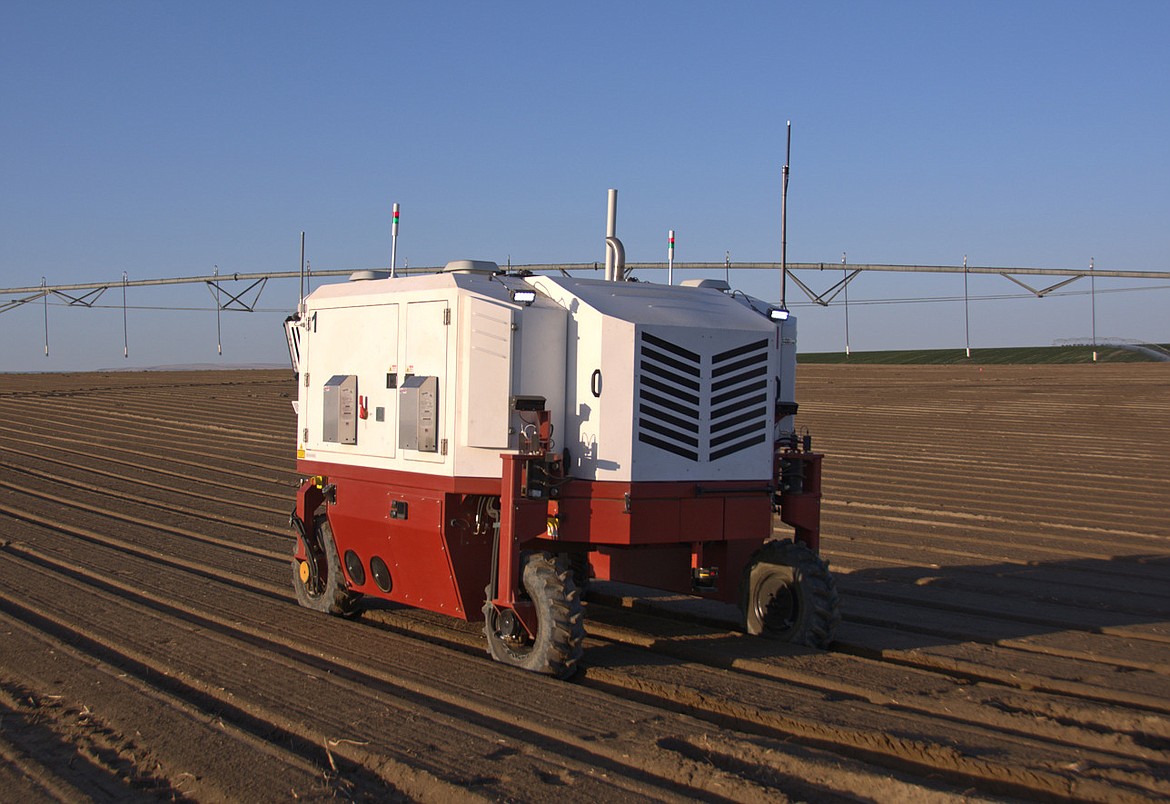
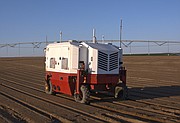
The Carbon Robotics Laserweeder, made in Seattle, can identify weeds optically and zap them with a laser.
Joel Martin has been with the Columbia Basin Herald for more than 25 years in a variety of roles and is the most-tenured employee in the building. Martin is a married father of eight and enjoys spending time with his children and his wife, Christina. He is passionate about the paper’s mission of informing the people of the Columbia Basin because he knows it is important to record the history of the communities the publication serves. | February 14, 2023 1:00 AM
MOSES LAKE — The word to watch for in farm equipment these days is “efficiency.”
“One of the biggest situations is labor,” said Tim Prickett, co-owner of Rashco Farm Supply in Moses Lake, Washington. “(The response to) the increases in cost of labor is to mechanize, improve their processes. So that’s kind of what we try to do is to find equipment that is going to reduce their inputs and increase their outputs.”
One innovation to make the most of the manpower that’s available comes from a company in the Netherlands. The Imants SX-series rotary spader can eliminate multiple passes over a field, Prickett said.
“That is a one-pass tillage machine,” Prickett said. “So you may have to go through and size material, like corn stalks or something, but other than that you go through with this one time and you can seed right behind it, as opposed to making multiple trips where they might go over with a with a disc, and then they might go with a with the disk ripper, and then they might come back with a seedbed maker or some kind of a seedbed preparation and then come back with the planter.”
That one-pass method cuts the operator’s time by a third, possibly half, Prickett added.
“Organic matter is mixed into the top layer where oxygen is available and micro-organisms are able to break down the organic matter easily,” Imants said on its website. “This way straw, corn stubble, green manure and compost can be evenly combined and provide the soil with the necessary nutrients.”
“So let’s say you’re running 14 inches deep, you’re going to incorporate all the organic matter in that full profile,” Prickett explained. “(Whereas), if you’re running the moldboard plow, you could put that trash down at the bottom of the trench or if you’re running a disc, you might leave that trash in the six-inch level, four-inch level. So your process in those applications wasn’t the best. It worked, and it’s worked for many years, but we got to improve those processes.”
Mixing the organic material – whether that’s manure or other nutrient-producing material – fully can increase the penetration of oxygen and water into the soil, Prockett said.
Weeding is another area where machinery is saving manpower in the field. The HOAF KB Twin, also made in the Netherlands, burns weeds using propane. It uses infrared technology to hold in the heat, Prockett said, and has an electronic ignition.
“The underneath hood is insulated with fiberglass insulation,” Prickett said. “So it holds the heat for a longer period of time. What it’s designed to do is to kill the weeds and kill pathogens in the top eighth-inch, half-inch of soil depending on how hot you get it … it therefore allows for a cleaner field with less hand labor.”
The electronic ignition means that if the wind comes up and blows out the flame, it can be relit automatically, Prickett said. The flame also shuts off between rows when the machine is turning around, to save fuel.
Another breakthrough in organic-friendly weeding technology is made by Carbon Robotics, based in Seattle. The Laserweeder is self-driven and uses high-resolution cameras to differentiate weeds from crops, according to the Carbon Robotics website. It then burns the weeds with a laser. This machine can operate in conjunction with the KB Twin, Prickett said, for highly-efficient weeding.
“This flamer will help speed the laser up,” he said, “because if the flamer can go through before the crops come up and take care of a substantial amount of weeds, then when the crop comes up, there’s less weeds for the laser to have to deal with. So the laser should be more efficient and be able to cover more ground.”
Optical technology enables the Einböck Row-Guard cultivator as well.
“It has a camera and this camera can see multiple colors and multiple rows,” Prickett said. “So as you’re driving to the field, it guides the cultivator within within a half an inch of the row. Even with the tractor being on GPS, the unevenness of a field, if you have that cultivator sitting on the back of the tractor rigid, and the tractor steers by the GPS, you’re gonna damage some rows because of the normal drift of equipment on hillsides and that kind of thing. So this has been a great improvement.”
While the equipment isn’t inexpensive, Prickett said that it has the potential to save money by saving on manual labor in the field. Additionally, it keeps crops from competing with weeds for nutrients. It can also save hassle during harvest time.
When it comes to fertilizer, the new John Deere ExactShot increases efficiency through precise placement, according to a statement from the manufacturer. The ExactShot, which was unveiled earlier this month, uses sensors and robotics to place fertilizer directly onto seeds in the soil, rather than spreading it indiscriminately, which can reduce the amount of fertilizer needed by as much as 60%, the statement said. This has the added advantage of not fertilizing weeds and lessening the amount of fertilizer runoff in waterways.
“It’s all about efficiencies,” Prickett said. “What we’re seeing in the industry is, if (the customer) can see that the machine will decrease their costs or increase their outputs, even though they’re expensive, they’re looking at that product because of the labor issues. If one guy can do way more work in a day, they don’t have to enter into all these problems with extra workers.”
Joel Martin may be reached at [email protected]. Read more of his work at www.basinbusinessjournal.com and www.columbiabasinherald.com.
ARTICLES BY JOEL MARTIN
Endless battle
Noxious Weed Control Board works to keep invasive plants under control
MOSES LAKE — Some of the nastiest plants in Grant County were the topic of a class led by Jay Johnson, a consultant with the Grant County Noxious Weed Control Board, Tuesday. The Noxious Weed Control Board, as its name would suggest, is tasked with keeping weeds under control in Grant County. That’s not a small job; the board’s website lists 129 species of noxious weeds that are found around Grant County. A noxious weed is defined as an invasive, non-native plant that threatens agricultural crops, local ecosystems or fish and wildlife habitat, according to the Noxious Weed Control Board. Washington state law requires that these weeds be identified and their spread kept to a minimum, if not completely eradicated. “We’re one of those agencies a lot of people don’t really understand,” Johnson said. “We’re a county office and … our funding is tax-based assessment. When you get your tax bill and you look down at all the expenses that you pay for, there we are.”

BASIN EVENTS: Oct. 16-24
COLUMBIA BASIN — Whether you feel like shopping, crafting, learning or seeing a show, there’s something happening for you this week in the Basin. Oct. 16 ‘My Family (Mi Familia)’ screening Spanning three generations, “My Family (Mi Familia)” is a heartfelt drama that follows the Sánchez family as they build their lives in East Los Angeles. Through love, hardship, triumph, and sacrifice, the film explores the immigrant experience, the strength of family bonds, and the traditions that connect one generation to the next. Lowrider show and taco truck before the screening. Sponsored by Columbia Basin Allied Arts, EDUBS C/S and the Moses Lake Creative District. $12 per person. Doors open at 6 p.m., film begins at 7 p.m. at the Moses Lake Civic Center Auditorium, 401 S. Balsam St. Tickets and info: www.cba-arts.org.

Moses Lake author encourages women to look beyond church culture norms
MOSES LAKE — A Moses Lake author’s book, “A Christian Woman Striving to Live Her Faith in a Man-Controlled World,” takes aim at the role to which many churches relegate the female half of their congregations. “It’s to encourage women in the faith,” Linda Curran said. “A lot of churches say, ‘Teach Sunday school, do this, do that, but don’t (evangelize.)’" In her book, Curran recounts a time when she moved to a new community and joined a church there. She was surprised to learn that, as a new female member, she had been automatically assigned church cleaning duties. When she questioned it, she wrote, she was met with condescension and her objections were brushed aside. In other churches, she said, women who were capable of teaching were relegated to “women’s ministry.”