
Baird Springs fire in mop up, other fires continue to cause problems in WA
JOEL MARTIN | Hagadone News Network | UPDATED 3 years, 3 months AGO
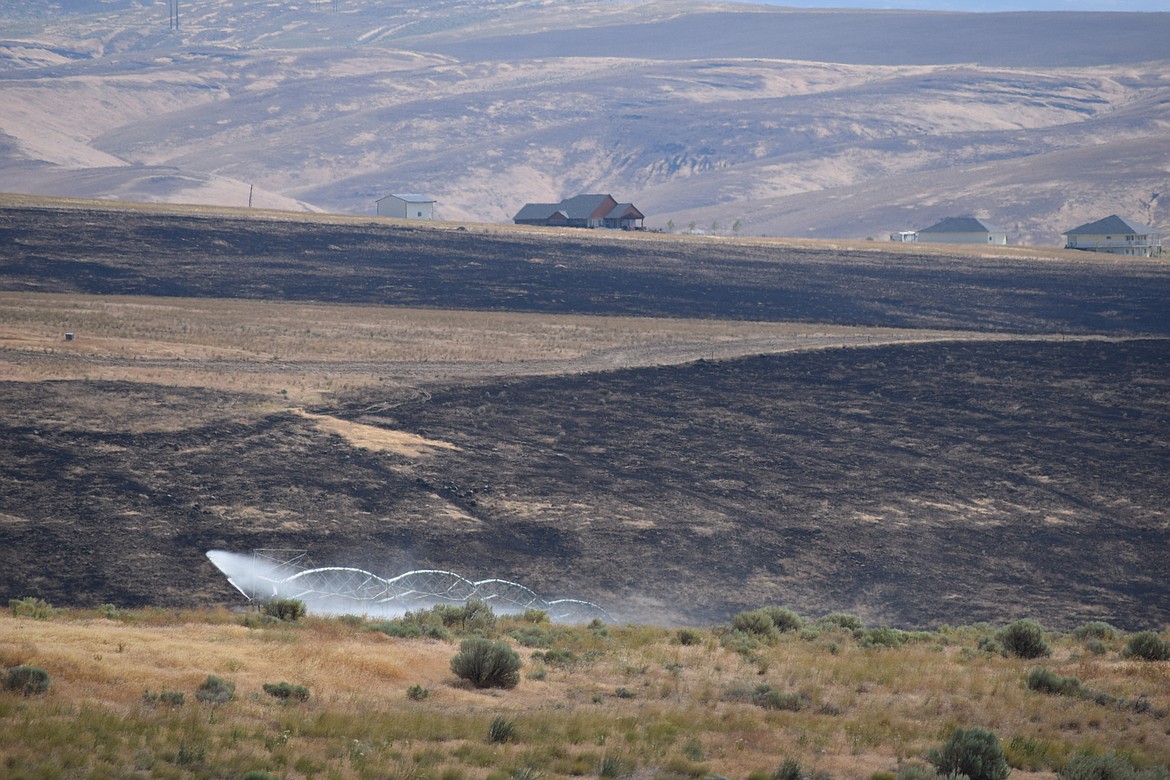
The Baird Springs fire near Crescent Bar is mostly out, according to authorities, except for a couple of smoldering spots. The fire threatened homes and agricultural land near Crescent Bar earlier this week.
R. HANS MILLER/COLUMBIA BASIN HERALD
Joel Martin has been with the Columbia Basin Herald for more than 25 years in a variety of roles and is the most-tenured employee in the building. Martin is a married father of eight and enjoys spending time with his children and his wife, Christina. He is passionate about the paper’s mission of informing the people of the Columbia Basin because he knows it is important to record the history of the communities the publication serves. | July 13, 2023 5:16 PM
QUINCY — The Baird Springs fire is nearly out, according to the Washington State Fire Marshal’s Office.
A Thursday morning statement from Southeast Washington Incident Management Team 1, which was coordinating firefighting efforts at the blaze above Crescent Bar, said that the fire had had no growth in 48 hours and only minor smoldering remains in two interior spots. All evacuations have been reduced to Level 1. All crews are demobilizing, it said, except for three engines to finish out the remaining containment and fire suppression repair work. Data indicates an estimated cost to fight the fire of about $1.5 million.
State fire assistance has been mobilized to fight the Wagner Road fire about 17 miles southeast of Sprague, according to a press release from the Washington State Fire Marshal’s office. The blaze, which was discovered Wednesday at about 5:30 pm., has burned 1,200 acres so far. It is burning in grass and brush and is threatening homes, agricultural land, and infrastructure, according to the Fire Marshal’s Office. Level 3 evacuations are in effect at this time.
These wildfires were also burning in Washington as of Thursday afternoon, according to the National Interagency Fire Center:
• Columbia River, about three miles southeast of Omak: 2.8 acres. Fire discovered on July 13. Containment information not available.
• Rainbow, at the north end of Lake Chelan: 2.5 acres. Fire discovered July 12. Containment information not available.
• Tunnel 5, about four miles west of White Salmon: 546 acres. Fire discovered July 2. 100% contained.
• Consalus, about 20 miles north of Newport: 331 acres. Fire discovered June 30. 10% contained.
• McEwan, about three miles northeast of Shelton: 250 acres. Fire discovered July 4. 85% contained.
• OIE Highway, about 10 miles northeast of Prosser: 1,300 acres. Fire discovered July 3. 100% contained.
• Hover Park, three miles southeast of Finley: 528 acres. Fire discovered June 13. 100% contained.
• Ruppert Road, about three miles north of Benton City: 155 acres. Fire discovered June 13. 100% contained.
• Oasis, about seven miles west of Touchet: 4,250 acres. Fire discovered June 19. 100% contained.
• Gold Mountain Ridge, about 12 miles northeast of Keller: 28.8 acres. Fire discovered June 29. 100% contained.
• Anderson Road, about seven miles southeast of Morton: 1 acre. Fire discovered July 10. Containment information not available.
• Farnham, about 13 miles west of Mansfield: 76 acres. Fire discovered July 8. Containment information not available.
• Coyote Creek, about 17 miles northwest of Grand Coulee: 1,555 acres. Prescribed burn.
• Canal Road, about 3 miles north of Naches: 1.5 acres. Fire discovered July 11. Containment information not available.
• Goodwin, between Vancouver and Camas: 14.5 acres. Fire discovered July 11. Containment information not available.
ARTICLES BY JOEL MARTIN

Endless battle
Noxious Weed Control Board works to keep invasive plants under control
MOSES LAKE — Some of the nastiest plants in Grant County were the topic of a class led by Jay Johnson, a consultant with the Grant County Noxious Weed Control Board, Tuesday. The Noxious Weed Control Board, as its name would suggest, is tasked with keeping weeds under control in Grant County. That’s not a small job; the board’s website lists 129 species of noxious weeds that are found around Grant County. A noxious weed is defined as an invasive, non-native plant that threatens agricultural crops, local ecosystems or fish and wildlife habitat, according to the Noxious Weed Control Board. Washington state law requires that these weeds be identified and their spread kept to a minimum, if not completely eradicated. “We’re one of those agencies a lot of people don’t really understand,” Johnson said. “We’re a county office and … our funding is tax-based assessment. When you get your tax bill and you look down at all the expenses that you pay for, there we are.”

BASIN EVENTS: Oct. 16-24
COLUMBIA BASIN — Whether you feel like shopping, crafting, learning or seeing a show, there’s something happening for you this week in the Basin. Oct. 16 ‘My Family (Mi Familia)’ screening Spanning three generations, “My Family (Mi Familia)” is a heartfelt drama that follows the Sánchez family as they build their lives in East Los Angeles. Through love, hardship, triumph, and sacrifice, the film explores the immigrant experience, the strength of family bonds, and the traditions that connect one generation to the next. Lowrider show and taco truck before the screening. Sponsored by Columbia Basin Allied Arts, EDUBS C/S and the Moses Lake Creative District. $12 per person. Doors open at 6 p.m., film begins at 7 p.m. at the Moses Lake Civic Center Auditorium, 401 S. Balsam St. Tickets and info: www.cba-arts.org.

Moses Lake author encourages women to look beyond church culture norms
MOSES LAKE — A Moses Lake author’s book, “A Christian Woman Striving to Live Her Faith in a Man-Controlled World,” takes aim at the role to which many churches relegate the female half of their congregations. “It’s to encourage women in the faith,” Linda Curran said. “A lot of churches say, ‘Teach Sunday school, do this, do that, but don’t (evangelize.)’" In her book, Curran recounts a time when she moved to a new community and joined a church there. She was surprised to learn that, as a new female member, she had been automatically assigned church cleaning duties. When she questioned it, she wrote, she was met with condescension and her objections were brushed aside. In other churches, she said, women who were capable of teaching were relegated to “women’s ministry.”