
Looking back
CHERYL SCHWEIZER | Hagadone News Network | UPDATED 2 years, 7 months AGO
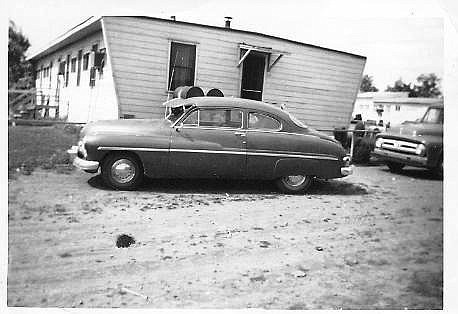
Victory Village, shown here in 1953, provided temporary housing for a generation of Moses Lake residents before it disappeared. Members of the Karneetsa chapter of the Daughters of American Revolution are looking for information on the development and its history.
COURTESY PHOTO/MARY JANE HONNEGGER
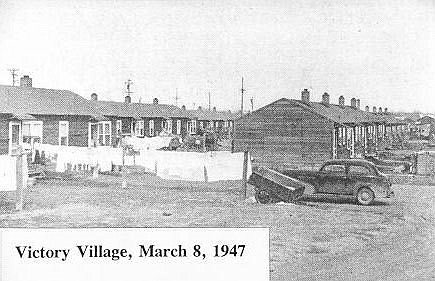
Clothes dry outside the houses in Victory Village in Moses Lake on a laundry day in 1947. Victory Village was demolished long ago, and Daughters of the American Revolution members are soliciting information about it for a commemorative project.
Senior Reporter Cheryl Schweizer is a journalist with more than 30 years of experience serving small communities in the Pacific Northwest. She began her post-high-school education at Treasure Valley Community College and enerned her journalism degree at Oregon State University. After working for multiple publications, she has settled down at the Columbia Basin Herald and has been a staple of the newsroom for more than a decade. Schweizer’s dedication to her communities and profession has earned her the nickname “The Baroness of Bylines.” She covers a variety of beats including health, business and various municipalities. | May 1, 2023 1:30 AM
MOSES LAKE — In 1940 Moses Lake was a tiny little farm town that had, as they say, a lot of potential. By 1960 Moses Lake realized some of that potential, and the local Daughters of the American Revolution chapter is looking for people to help document one of the major signs of that growth - one that has completely disappeared.
Stephanie Massart, a member of the DAR Karneetsa chapter, said its members are hoping to hear from people who remember Victory Village.
“We’d really like to know the families that were there, and get their stories,” she said.
The DAR chapter is working on a commemorative sign that will be placed at the site of Victory Village, now McCosh Park. Chapter members plan to unveil the sign sometime this summer, Massart said.
In 1940 Grand Coulee Dam was almost done, bringing with it the promise of water that would turn the Columbia Basin desert into a major agricultural region, someday. In the meantime Moses Lake - population 326 in 1940, according to the Moses Lake Museum & Art Center - waited on events.
Events came in due course. The U.S. entered World War II and millions of men went into the military, and Central Washington, with lots of sunshine and empty space, turned out to have multiple locations for air training bases. By 1943 the government had started planning for the postwar world.
Moses Lake Museum Superintendent Dollie Boyd said Victory Village was part of that vision. Not all those young guys, when they got home, were going to go back to that life that had been so rudely interrupted; as they checked out their options, they would need places to live. Not necessarily permanent places, but something that would work for a while.
“You see these temporary housing situations popping up all over the country,” Boyd said. “This was part and parcel of that. Moses Lake was a booming town at that point.”
“The (planning) committee started in 1943,” Massart said. “The first housing was available in 1945. And I think they officially ended the housing project in 1956. The last of the houses were taken down in the late Sixties and the land was turned over to the city to be used as a park. So there really is no trace of it anymore.”
Massart has a family connection to Victory Village, she said. Her grandparents were among the young couples who made a new start in Moses Lake.
“That’s when my grandparents were able to find stable housing. They kind of moved around, bounced around before that. Because my grandfather was a veteran of World War II, Victory Village was temporary housing mainly to help military personnel. They were able to get on the waitlist and be one of the first families to get into Victory Village.
“A lot of my aunts and uncles and their cousins all have memories of being in Victory Village, next to the school, on the water,” she said.
Massart said her aunt Mary Jane Honneger has been doing some research on the development, but that there’s a lot more to find out.
“Within two years, three of my father’s siblings and their families followed us to the Columbia Basin from Boise, attracted by the promise of good-paying jobs. In August 1955, five years and two additional children later, we bought our own home and moved out of the place we affectionately called ‘the housing,’” Honneger wrote in a press release.
Moses Lake grew from that 326-person farm town to 11,299 by 1960, according to the museum, spurred by the long-awaited arrival of the regional irrigation system and the Larson Air Force Base. (Larson AFB closed in the mid-1960s, but the runways remained, and the site is now the Grant County International Airport.)
“Moses Lake was a booming town at that point,” Boyd said. “I’ve seen news articles from what I call the boom years, there were things like people were living wherever they could find a spot. They were living in trailers, they were living in garages, in hastily built shacks, cars. I even saw one article that said, ‘You couldn’t walk down the street in Moses Lake without being offered four or five jobs.’ It was a crazy time,” Boyd said.
Massart said people can send information and reminiscences about Victory Village to her at [email protected]. Chapter members want to establish a website as well, she said. People who want to make donations to the project can contact Massart at the email address.
Cheryl Schweizer may be reached at [email protected].

ARTICLES BY CHERYL SCHWEIZER

Three arrested in Royal City area thefts case
ROYAL CITY — Three men were arrested and booked into the Grant County Jail on suspicion of possessing stolen property after a search was served on a home near Beverly Thursday.
More park improvements planned for Royal City in ‘26
ROYAL CITY — Lions Park in Royal City now has a soccer field, so city officials will be working on the next phase of improvements in 2026. The first phase of upgrades to Apple Avenue also is scheduled for 2026, and both are among the projects reflected in the city’s 2026 budget. The budget was approved by Royal City City Council members Tuesday.
Sleep Diagnostic Center physician pleads guilty to Medicaid fraud
Charges involve charging Apple Health for recalled, altered CPAP devices
BREWSTER — A Brewster physician who operates a sleep diagnostic clinic in Moses Lake and Wenatchee will be sentenced March 24 as part of a Wednesday plea deal on Medicaid fraud charges.