
Building bust
JOEL MARTIN | Hagadone News Network | UPDATED 3 years, 5 months AGO

A housing development under construction in Moses Lake. Builders are finding it harder and slower to build homes than in years past.
Joel Martin/Columbia Basin Herald
Joel Martin has been with the Columbia Basin Herald for more than 25 years in a variety of roles and is the most-tenured employee in the building. Martin is a married father of eight and enjoys spending time with his children and his wife, Christina. He is passionate about the paper’s mission of informing the people of the Columbia Basin because he knows it is important to record the history of the communities the publication serves. | May 12, 2023 1:00 AM
COLUMBIA BASIN — It’s no secret that housing is pretty tight right now. Our population is increasing, and new homes aren’t being built. The law of supply and demand is rearing its economic head.
“if you look at a 30-year window, our population in Washington state has increased around 60%, and our housing has only continued to grow about 33%,” said Lindsay Brown, executive officer of the Central Washington Home Builders Association. “So at that rate, the finish line feels that much farther.”
One factor in the scarcity is the lack of people to do the actual building, said Joel White, director of the Spokane Home Builders Association. The economic crash of 2008-09 affected the construction workforce in ways that have ramifications today.
“We lived in an era of excess,” White said. “All the way back from the ’90s to 2007, we had an era when builders … had a hefty operation where they had a lot of people and they were getting a little top heavy with operational management. And what happened is they downsized. So they got very lean and mean. And then all of a sudden, when things ramped up, there was nobody to hire.”
The workers who remained, White added, are getting older and not being replaced.
“Twenty percent of the construction industry, nationally, is going to age out in the next 10 years,” he said. “And we don't have that next generation coming up, that is involved in the construction.”
Another significant part of the problem, Brown said, is regulation. The more cities and counties micromanage builders, the harder it is to build, and the smaller the supply of housing will be. Building permits can be something of a legal minefield, she said.
“There could be a series of permits that a house may need,” Brown said. “And oftentimes, that can get stuck in process. So while the construction workforce is facing a shortage, doesn't maybe have the people, a lot of our jurisdictions are facing that same issue. They don't have enough office staff to process (permits) appropriately.”
Different jurisdictions also may have different restrictions on building, Brown added, which exacerbates the delays. Permitting officials sometimes interpret regulations differently, which can be frustrating for folks who just want to get a house built.
“Between design changes of a house could go through multiple reviews,” she said. “The average permit approval timeline across the state is six and a half months. You can build a house faster than that if you've got all the right parts and pieces. But the permit response time isn't part of that build timeline. A lot of our builders are just giving people who are interested in building homes longer timelines. ‘Oh, I'm booked a year out? Oh, no, I'm booked until 2025.’”
One phrase that dominated the news during the pandemic was “supply chain,” the ability to move materials from manufacturer to market. The supply chain in the construction sector is still reeling from the slowdown during that time, both White and Brown said.
The various supply chains are all interlaced, White said, so a shortage in one area can affect other areas.
“So we were doing fine, leading up to COVID, then we had a shock and supply chain disruptions,” he said. “That priced out a number of people because lumber went from less than $500 per 1,000 board-feet all the way up to $1,500 per 1,000 board-feet … Once lumber came down, guess what? Concrete went up, and we have a concrete shortage. I went and toured one of our large appliance providers recently, and they had chip shortages. There’s microchips that they didn’t have for all the appliances.”
Electricity is a large part of home functionality, and there are shortages associated with that as well.
“One (holdup) right now is electrical panels,” Brown said. “There’s a shortage, and those can be months out. If you can’t get the electrical stuff set up and in, you can’t continue to build the rest of the house.”
A change is desperately needed, both Brown and White said, because the crunch isn’t abating and home ownership is crucial to a community.
“You have lower teen pregnancy rates when you have higher homeownership rates,” White said. “You have more (people) voting; they’re more tied to their communities when they have ownership versus rental.”
Despite the challenges, Brown said the industry will push forward to meet the demand as well as it can.
“It’s hard to say what’s coming down the pipeline, but we are always going to attempt to fight the good fight,” Brown said, “so that the American dream can be met. Housing becomes one of those telltale indicators of success in life. And, you know, the less of that we see, the more worried we should be.”
Joel Martin can be reached via email at [email protected].
ARTICLES BY JOEL MARTIN
Endless battle
Noxious Weed Control Board works to keep invasive plants under control
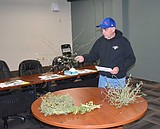
MOSES LAKE — Some of the nastiest plants in Grant County were the topic of a class led by Jay Johnson, a consultant with the Grant County Noxious Weed Control Board, Tuesday. The Noxious Weed Control Board, as its name would suggest, is tasked with keeping weeds under control in Grant County. That’s not a small job; the board’s website lists 129 species of noxious weeds that are found around Grant County. A noxious weed is defined as an invasive, non-native plant that threatens agricultural crops, local ecosystems or fish and wildlife habitat, according to the Noxious Weed Control Board. Washington state law requires that these weeds be identified and their spread kept to a minimum, if not completely eradicated. “We’re one of those agencies a lot of people don’t really understand,” Johnson said. “We’re a county office and … our funding is tax-based assessment. When you get your tax bill and you look down at all the expenses that you pay for, there we are.”
BASIN EVENTS: Oct. 16-24
COLUMBIA BASIN — Whether you feel like shopping, crafting, learning or seeing a show, there’s something happening for you this week in the Basin. Oct. 16 ‘My Family (Mi Familia)’ screening Spanning three generations, “My Family (Mi Familia)” is a heartfelt drama that follows the Sánchez family as they build their lives in East Los Angeles. Through love, hardship, triumph, and sacrifice, the film explores the immigrant experience, the strength of family bonds, and the traditions that connect one generation to the next. Lowrider show and taco truck before the screening. Sponsored by Columbia Basin Allied Arts, EDUBS C/S and the Moses Lake Creative District. $12 per person. Doors open at 6 p.m., film begins at 7 p.m. at the Moses Lake Civic Center Auditorium, 401 S. Balsam St. Tickets and info: www.cba-arts.org.
Moses Lake author encourages women to look beyond church culture norms
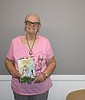
MOSES LAKE — A Moses Lake author’s book, “A Christian Woman Striving to Live Her Faith in a Man-Controlled World,” takes aim at the role to which many churches relegate the female half of their congregations. “It’s to encourage women in the faith,” Linda Curran said. “A lot of churches say, ‘Teach Sunday school, do this, do that, but don’t (evangelize.)’" In her book, Curran recounts a time when she moved to a new community and joined a church there. She was surprised to learn that, as a new female member, she had been automatically assigned church cleaning duties. When she questioned it, she wrote, she was met with condescension and her objections were brushed aside. In other churches, she said, women who were capable of teaching were relegated to “women’s ministry.”