
Safe storage
JOEL MARTIN | Hagadone News Network | UPDATED 3 years, 4 months AGO
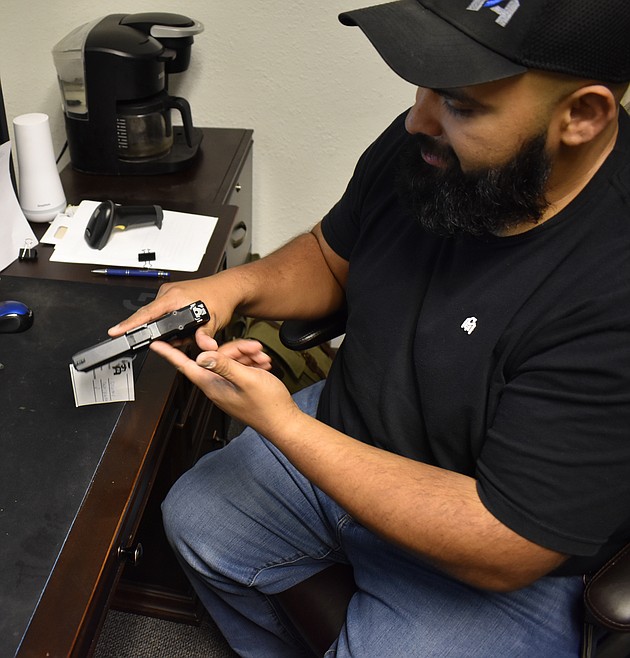
Firearm safety instructor Edgar Salazar shows the right way to take out and put away a handgun – carefully.
Joel Martin/Columbia Basin Herald
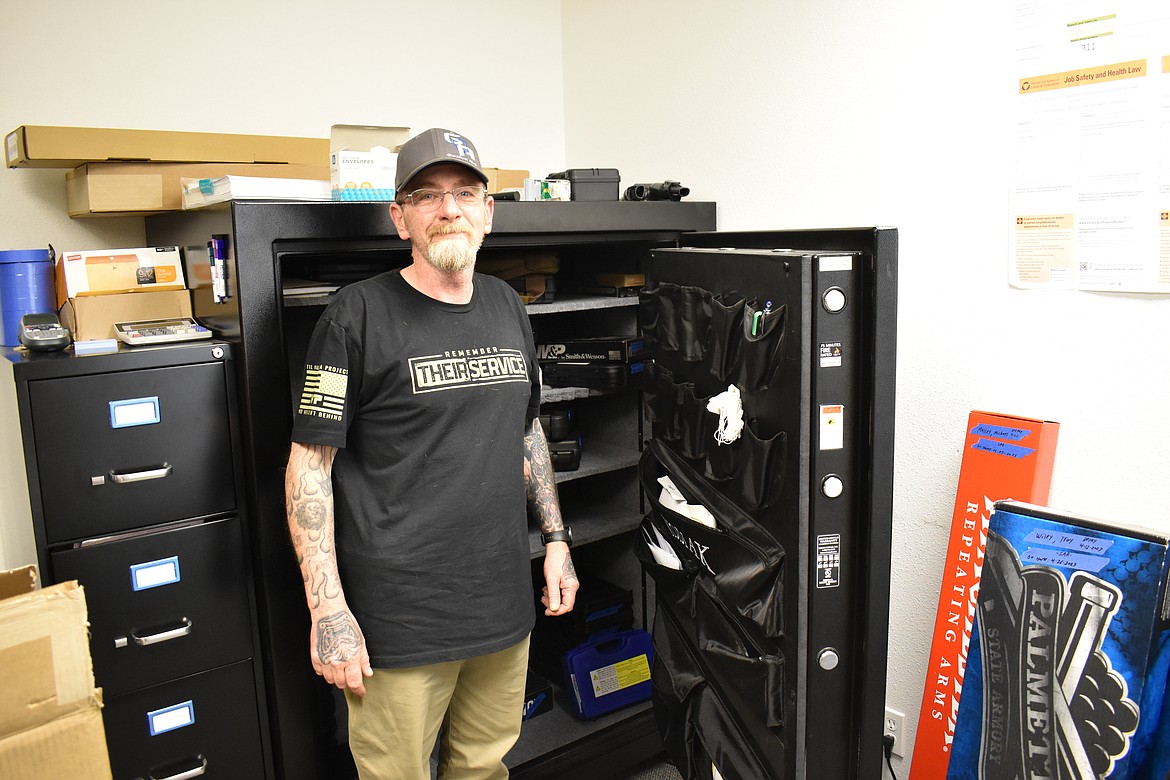
Bruce Davis, owner of Guardian Arms in Moses Lake, shows a large gun safe in the back of his store. This one uses a rotary combination lock, but PIN and thumbprint locks are also available.
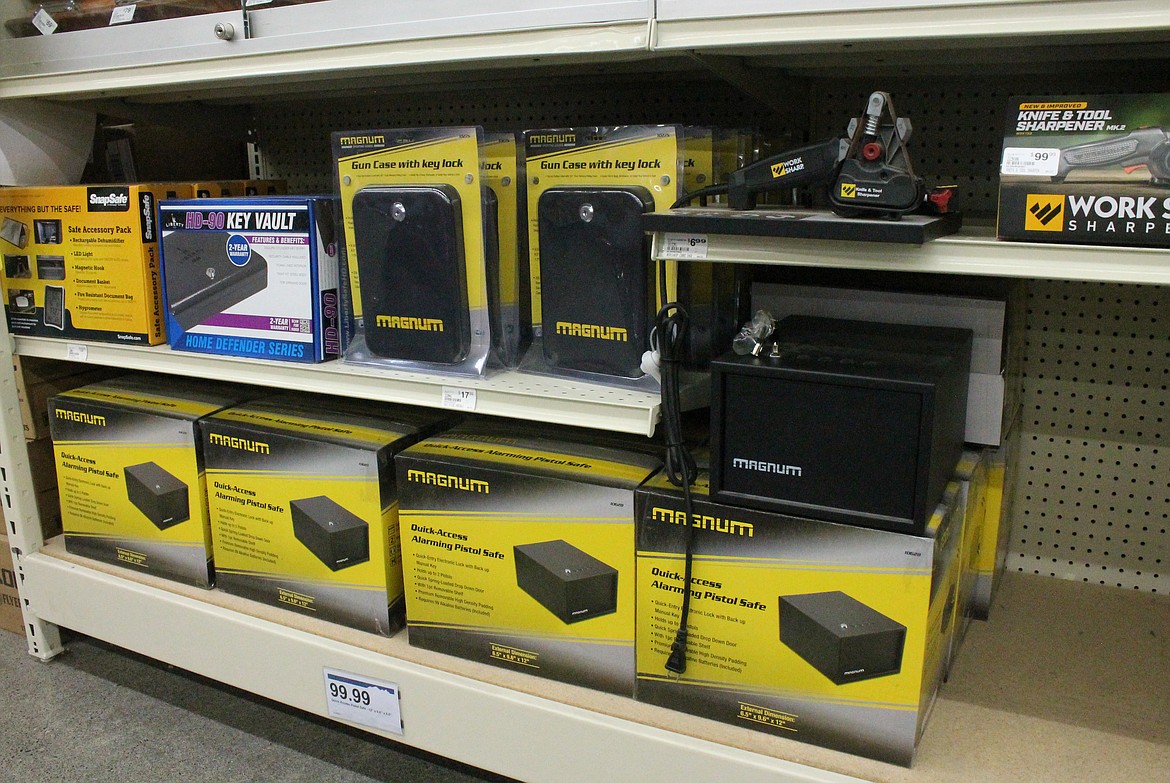
Not all gun safes are large and expensive. Some owners only need a box large enough for a single pistol.
Joel Martin has been with the Columbia Basin Herald for more than 25 years in a variety of roles and is the most-tenured employee in the building. Martin is a married father of eight and enjoys spending time with his children and his wife, Christina. He is passionate about the paper’s mission of informing the people of the Columbia Basin because he knows it is important to record the history of the communities the publication serves. | May 26, 2023 1:00 AM
MOSES LAKE — It seems like guns and gun owners are in the news a lot these days. Plenty of people in the Basin keep firearms, both for personal protection and for recreational shooting. But when you have guns in the home, where you can access them, there’s always the risk that a child can too. So could a burglar or a friend or relative who, for whatever reason, shouldn’t be allowed access to a firearm. A recent study by experts at Harvard University and Boston Children’s Hospital indicated that if 20% more American households kept their guns securely stored, gun-related deaths among children and teens could be decreased by a third. It’s essential to make sure weapons are stored where the right people can get to them easily, but the wrong people can’t. That often means a gun safe.
Household gun safes come in all sizes, from smaller 8-by-12-inch strongboxes to wardrobe-sized cabinets that can hold a dozen rifles or more. Prices range from $25 to about $2,500, according to Consumer Reports. The thing they all have in common is that they lock securely.
When it comes to locking mechanisms there are several possibilities, said Moses Lake firearms safety instructor Edgar Salazar. Some use the traditional rotary lock, but others are more high-tech.
“Some people have safes that can remote open from their keys,” Salazar said. “And a lot of safes nowadays are biometric; they require a fingerprint for you to access it.”
All have their benefits and drawbacks, Salazar said.
“Children are more likely to make it obvious that they're watching your combination to the safe when you're sitting there spinning a lock,” Salazar said. “A PIN pad safe is easier and faster to get into. But it's also easier for anybody to see your PIN to the safe when you're not paying attention. And that really comes into play. You have to weigh your options.”
With a biometric lock, you don’t have that danger, since it’s virtually impossible to steal a fingerprint. It’s also faster to put your thumb on a lock than to enter numbers. But they’re also finicky, Salazar said.
“If you have a muddy hand or a sweaty hand or you have dirt on your hand and you're trying to access your safe, you might not be able to do so until you clean your hands, which would kind of defeat the purpose of trying to get in your safe in a fast manner,” he said.
More important than the kind of safe homeowners use is developing the right habits, Salazar said. A good practice to follow is always storing live ammunition in a place away from the weapons themselves.
“Anywhere in your house where you maintain your firearms or you make changes to your firearms, you don't want live ammunition anywhere in the area, because that's how accidents happen. You might accidentally chamber a round when you don't intend to.”
Salazar added that the exception to this is the criminal invading the home isn’t going to stand by and wait for the owner to load up. That firearm requires more careful habits.
“if you have a designated firearm for home defense, you need to have that mindset, that mental pathway, embedded in your brain that that particular firearm does have ammunition with it at all times,” Salazar said. “So you need to take extra precautions when handling it when you don't intend to use it.”
Trigger locks add another level of safety for weapons in the home and are available from $10 to more than $100 with a wide variety of options.
No lock or safe can replace good safety precautions strictly adhered to, Salazar emphasized. He listed four basic safety rules that should be treated as gospel: Every gun must be treated as if it’s loaded, never point it unless you intend to fire it, keep your finger off the trigger and know what your target is – and what’s behind it.
“Contrary to popular belief, a gun can only go off if you pull the trigger,” he said.
People who carry concealed firearms outside the home need to develop good habits as well, Salazar said. The right routine can save a life.
“The rule of thumb is if you're a concealed carrier and you have you have your gun in your home, your gun is the very, very, very last thing you grab when you leave home,” he said, rather than risk setting the weapon down while looking for keys or turning off an appliance. “You make sure that all the petty honey-dos and whatever else are done. And only once you're ready to walk out the door, do you grab your firearm, load the chamber, put it in your holster and walk out the door ready to go.”
Conversely, he said, the first thing to do upon returning is to unload and store the weapon away, before doing anything else.
Discretion is also important, Salazar said, because even if you follow all the safety rules, other people might not.
“There's liability in owning a firearm if you're unsafe and you're not taking the proper precautions,” he said. “Be aware of who knows that you own firearms. Be aware of the people that your family brings to your house. Be aware of the people that your kids talk to. You don't want the wrong people finding out that you own a firearm but it's never really stored safely.”
An owner must never take firearms casually, Salazar said, inside or outside the home.
“When you become a gun owner, there's no halfway in, and there's no halfway out. There's no mediocre effort that is acceptable. It's either something that's become a part of your life, or it's not.”
Four Commandments of gun safety
• Treat every weapon as if it were loaded
• Never point the weapon at anything you don't intend to shoot or destroy.
• Keep your finger straight and off the trigger until you're ready to fire.
• Know your target and what lies beyond.
ARTICLES BY JOEL MARTIN

Endless battle
Noxious Weed Control Board works to keep invasive plants under control
MOSES LAKE — Some of the nastiest plants in Grant County were the topic of a class led by Jay Johnson, a consultant with the Grant County Noxious Weed Control Board, Tuesday. The Noxious Weed Control Board, as its name would suggest, is tasked with keeping weeds under control in Grant County. That’s not a small job; the board’s website lists 129 species of noxious weeds that are found around Grant County. A noxious weed is defined as an invasive, non-native plant that threatens agricultural crops, local ecosystems or fish and wildlife habitat, according to the Noxious Weed Control Board. Washington state law requires that these weeds be identified and their spread kept to a minimum, if not completely eradicated. “We’re one of those agencies a lot of people don’t really understand,” Johnson said. “We’re a county office and … our funding is tax-based assessment. When you get your tax bill and you look down at all the expenses that you pay for, there we are.”

BASIN EVENTS: Oct. 16-24
COLUMBIA BASIN — Whether you feel like shopping, crafting, learning or seeing a show, there’s something happening for you this week in the Basin. Oct. 16 ‘My Family (Mi Familia)’ screening Spanning three generations, “My Family (Mi Familia)” is a heartfelt drama that follows the Sánchez family as they build their lives in East Los Angeles. Through love, hardship, triumph, and sacrifice, the film explores the immigrant experience, the strength of family bonds, and the traditions that connect one generation to the next. Lowrider show and taco truck before the screening. Sponsored by Columbia Basin Allied Arts, EDUBS C/S and the Moses Lake Creative District. $12 per person. Doors open at 6 p.m., film begins at 7 p.m. at the Moses Lake Civic Center Auditorium, 401 S. Balsam St. Tickets and info: www.cba-arts.org.

Moses Lake author encourages women to look beyond church culture norms
MOSES LAKE — A Moses Lake author’s book, “A Christian Woman Striving to Live Her Faith in a Man-Controlled World,” takes aim at the role to which many churches relegate the female half of their congregations. “It’s to encourage women in the faith,” Linda Curran said. “A lot of churches say, ‘Teach Sunday school, do this, do that, but don’t (evangelize.)’" In her book, Curran recounts a time when she moved to a new community and joined a church there. She was surprised to learn that, as a new female member, she had been automatically assigned church cleaning duties. When she questioned it, she wrote, she was met with condescension and her objections were brushed aside. In other churches, she said, women who were capable of teaching were relegated to “women’s ministry.”