
Fire focus: GCFD 8 Commissioner speaks at candidate forum.
GABRIEL DAVIS | Hagadone News Network | UPDATED 3 years AGO
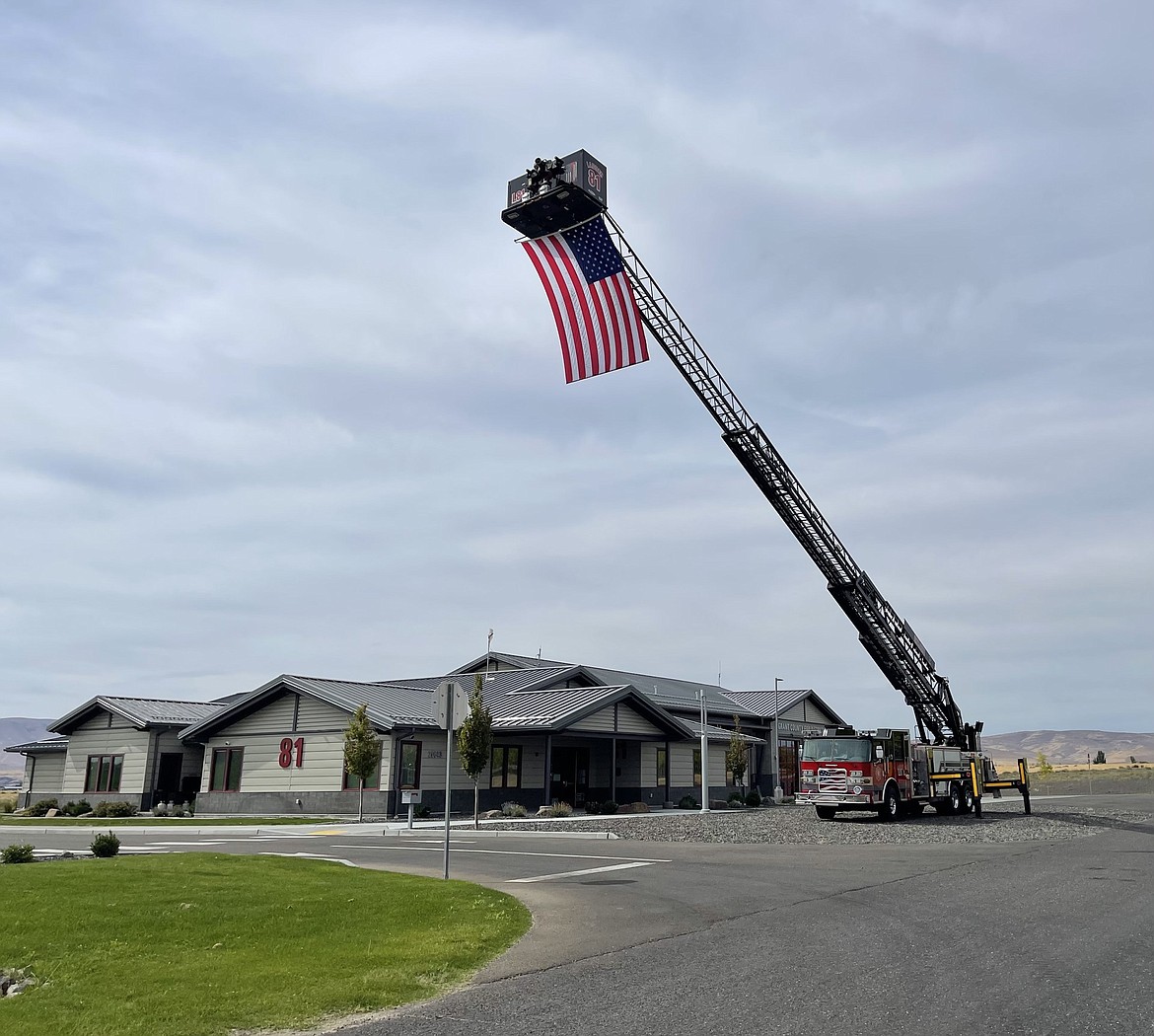
Grant County Fire District 8’s 100-foot-long ladder fire truck serves as a 9/11 memorial outside the GCFD 8 station in Mattawa.
COURTESY PHOTO/GRANT COUNTY FIRE DISTRICT 8
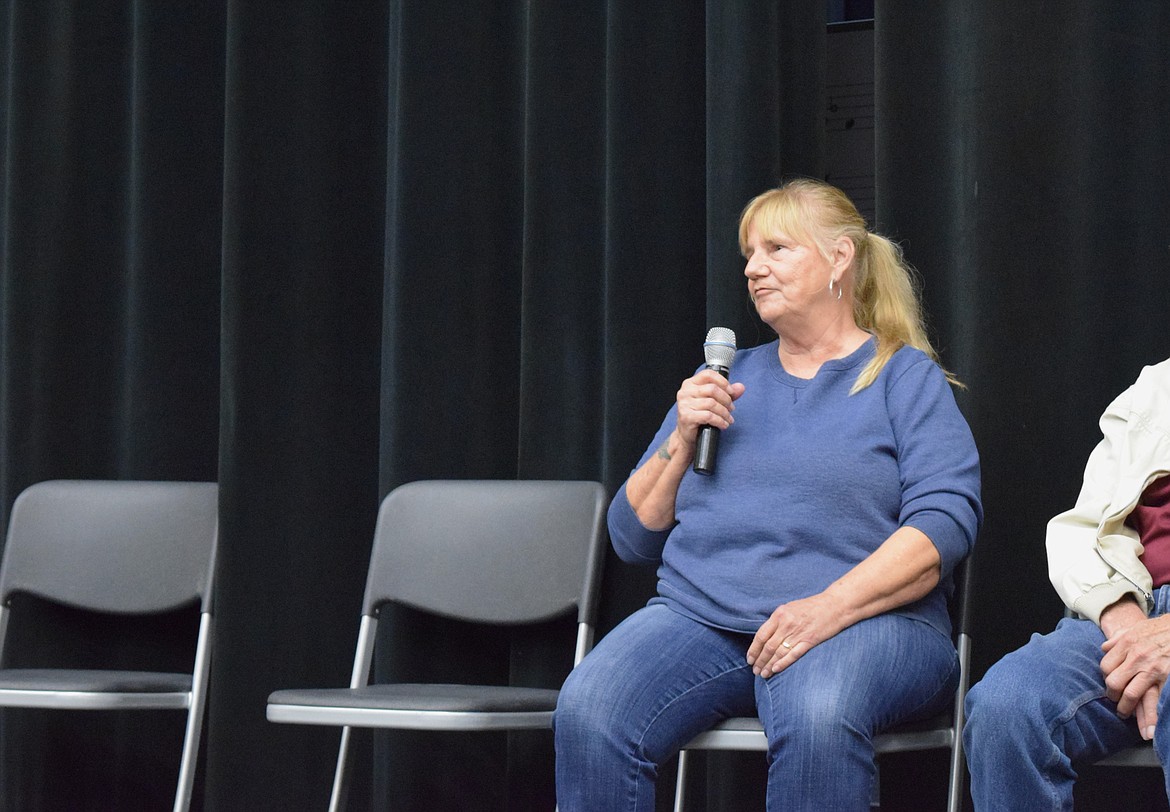
Debra Crain speaks at the South Grant County candidate forum in Mattawa Wednesday at Wahluke High School.
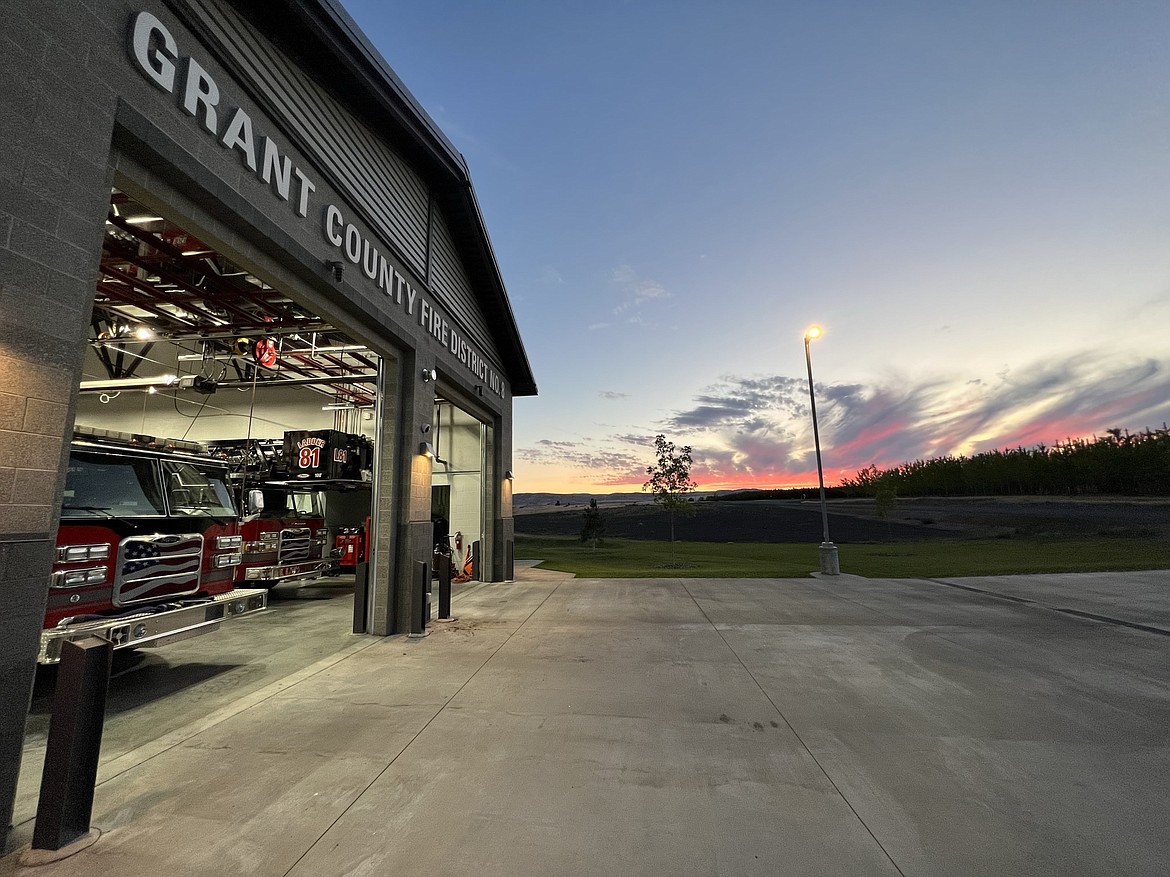
The Grant County Fire District 8 Station 81, pictured, is located at 20643 Road 22.5 S.W. in Mattawa and is the GCFD headquarters, built in 2021, according to the GCFD 8 website. GCFD 8 also has two other stations – Station 82 is located at 7 Desert Aire Drive S.W. in Desert Aire, and Station 83 is located at 24062 Road J S.W., about nine miles east of Mattawa.
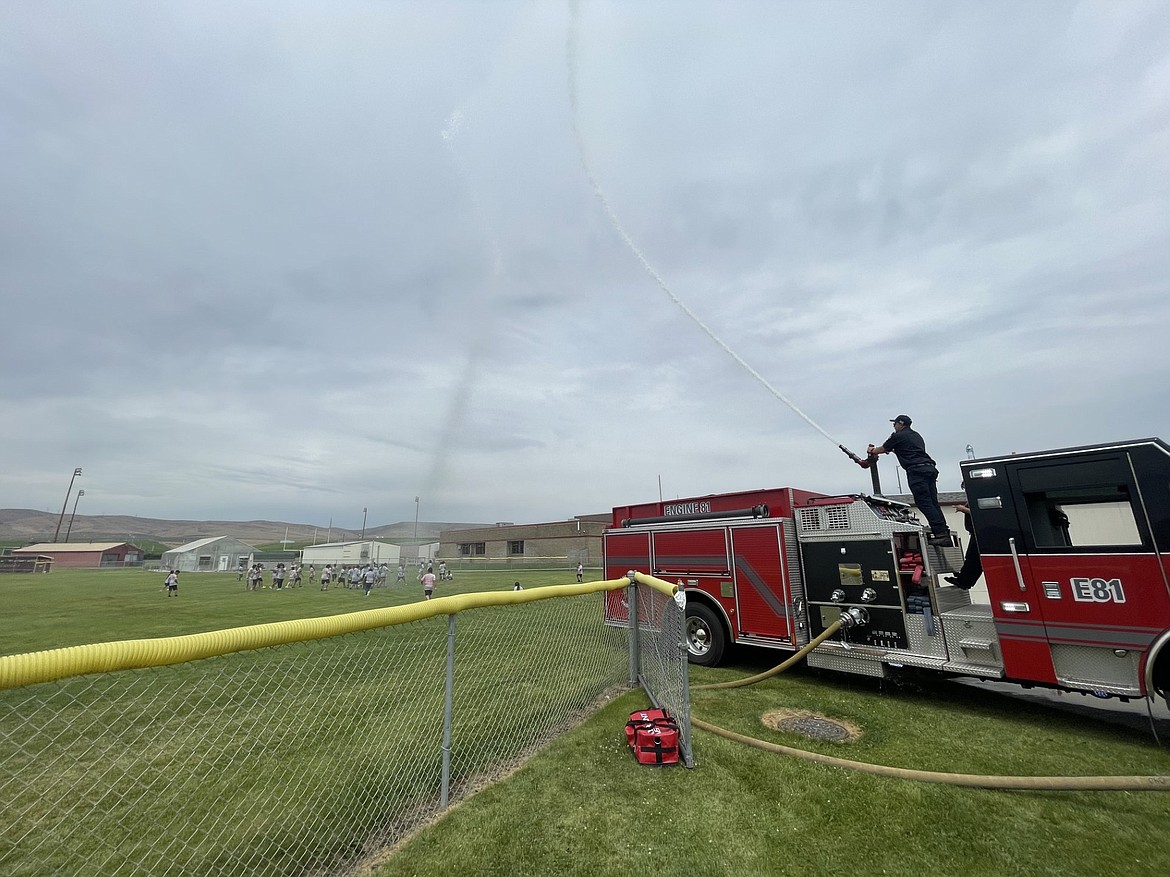
A Grant County Fire District 8 fire truck entertains kids on a sports field in Mattawa.
Gabriel Davis is a resident of Othello who enjoys the connections with his sources. Davis is a graduate of Northwest Nazarene University where he studied English and creative writing. During his free time, he enjoys reading, TV, movies and games – anything with a good story, though he has a preference for science fiction and crime. He covers the communities on the south end of Grant County and in Adams County. | November 1, 2023 1:30 AM
MATTAWA — Last week’s South Grant County candidate forum featured unopposed candidate for Grant County Fire District 8 Commissioner Debra Crain, who spoke during the forum about GCFD 8 and gave advice to the public.
“I’ve been a volunteer firefighter for 11 years and when I quit doing that, I decided I liked the fire district, so I wanted to help,” Crain said. “I ran for commissioner and I've been commissioner for 11 years.”
Crain talked about the unique challenges and rewards of being a firefighter.
“Our business is taking care of everybody in the worst day of their life. And with that, we have to have our employees and our volunteers safe. Top priority, they have to be safe,” Crain said. “They have to be educated, so when they come to you with your worst day emergency, they know what to do, how to help you and make you safe too...We've got a lot of volunteers, and If you ever volunteer to help somebody on their worst day, when you go home that night, I tell you it gives you a feeling that you keep wanting to help other people, and that's what our district does.”
Crain then elaborated on GCFD’s budget and financial situation.
“We know what we have, we know what we need, and like everybody else, the price of everything is sky high,” she said. “We have to order stuff in advance because it isn’t coming to us for six months. So we have to know what we have and how long this will sustain us.”
GCFD has also had to deal with growth in the Mattawa area.
“This community is growing, and with them growing we have to grow too,” Crain said. “It used to be that everybody had single homes. Well, now, we've got apartments (here) that are three stories. We have to have a ladder truck. If they're having an emergency, we have to have a ladder truck to get there to get them out of their emergency.”
Crain said the GCFD also purchased the 100-foot ladder truck to be able to extend over cliffs or ravines, along with other applications. Other infrastructure improvements included building a new fire station.
“The one we had here in the city wasn't big enough,” Crain said. “So we had to budget, (apply for) grants, whatever we could get to get a new fire station. We got a new fire station, we got a new fire truck, so we're ready. We constantly, the five commissioners, the five of us talk about strategic planning. What’s coming up? What do we need and where do we get the money to do it? We have to have the tax money but also that isn't enough to sustain us, to help people during their emergencies, so we apply for a lot of grants.”
The department has been able to decrease its response time from about 10 to 15 minutes to roughly seven or eight minutes by having more paid employees and by arranging to have firefighters at the station all the time, Crain said.
“With the new fire station, we also have now paid employees,” she said. “We have six paid employees, so we have somebody on duty all the time. It used to be that if you called 911 it was all volunteer. It took them a while to leave their home, drive to the fire station, get in the fire truck or ambulance and come and help you with your emergency.”
Crain advised the public on what to do to prevent fires and if one starts nearby.
“If you've got dead brush up against your house or your shop or whatever, get rid of it,” she said. “Also, don't be a looky-loo when there's a fire or an ambulance call. When we're trying to put out a brush fire or help somebody in their emergency and we've got people standing around that just want to see what's going on, it’s a big hindrance to us. Now we have to make sure you're safe and complete the job that we're in for. So really, look at your homes, see what’s around your home that can burn that probably shouldn't be there.”
GCFD 8 responds where they are most needed, Crain said.
“You have to understand that if there's a brush fire and there's homes in the area and your house is down the road, and you think it's coming your way, don't call and yell at us because you saw a fire truck rolling the wrong direction. We're like everybody else. We're going to follow command. And if the fire is kind of coming towards your house, but it's really blazing over here, (dispatch is) going to pull us away, he's going to pull us to where we needed most.”
Crain said GCFD will be going through the budget process early in November and will be making decisions on its finances going forward.
Gabriel Davis may be reached at [email protected]. Download the Columbia Basin Herald app on iOS and Android.
 Debra Crain speaks at the South Grant County candidate forum in Mattawa Wednesday at Wahluke High School.
 The Grant County Fire District 8 Station 81, pictured, is located at 20643 Road 22.5 S.W. in Mattawa and is the GCFD headquarters, built in 2021, according to the GCFD 8 website. GCFD 8 also has two other stations – Station 82 is located at 7 Desert Aire Drive S.W. in Desert Aire, and Station 83 is located at 24062 Road J S.W., about nine miles east of Mattawa.
 A Grant County Fire District 8 fire truck entertains kids on a sports field in Mattawa.
ARTICLES BY GABRIEL DAVIS

Work-based learning lets students build their own futures
MOSES LAKE — Work-based learning provides education opportunities for the workforce to receive hands-on training and technical education and prepare themselves to enter various industries. Educators and workforce development professionals from Eastern Washington discussed some the training they offer and the benefits of their programs. Next Generation Zone, an affiliate of WorkSource based in Spokane, provides job training opportunities for youth and young adults ages 16 to 24. Program Coordinator Kate Martin said there are multiple benefits to the program. “One of them is a paid work experience, and that’s where we reach out to area employers who are willing to take a young person and train them,” she said. “This is a short-term learning experience, so it’s typically about 240 hours; sometimes it could be longer or shorter. We’re the actual employer; we cover all of their wages, taxes, the L&I, and the employer just agrees to give them the experience and train them in whatever field it is that they’re wanting to go into.”

Serving schools: ESD superintendents reflect on operations, priorities
MOSES LAKE — Educational service districts are government-mandated agencies put in place to provide services to school districts across the state. ESD Superintendents discussed what they do and their priorities in operating their districts. ESD 105, led by Superintendent Kevin Chase, serves four counties, including Kittitas, Yakima and portions of Klickitat and Grant counties and provides support for 25 school districts – including Royal School District and Wahluke School District – and more than 66,000 students. “We help them collaborate with each other as well or collaborate with other partners,” Chase said. “(It’s) a lot of advocacy work, either regionally or across the state, or even federally, working on different issues that impact our education. And we provide very specialized services in certain situations in order to meet the needs of our students in our region and of our school districts.”

Columbia Basin Project making headway through Odessa Groundwater program
CASHMERE — The Columbia Basin Project is making gradual progress toward completion with particularly significant accomplishments for the Odessa Groundwater Replacement Program in the last six months or so, according to Columbia Basin Development League Executive Director Sara Higgins. “When we’re dealing with a project of this size, advancement is kind of like watching paint dry, but yes, there have been (developments),” she said. “There are a lot of exciting things happening right now.” There are more than 300 miles of main canals, about 2,000 miles of lateral canals and 3,500 miles of drains and wasteways in the irrigation project, according to the U.S. Bureau of Reclamation website. The CBDL advocates for the operation of those waterways and for the project to continue “build-out.”