
Othello earmarks additional $50,000 for ACPR in preliminary budget
GABRIEL DAVIS | Hagadone News Network | UPDATED 2 years, 1 month AGO
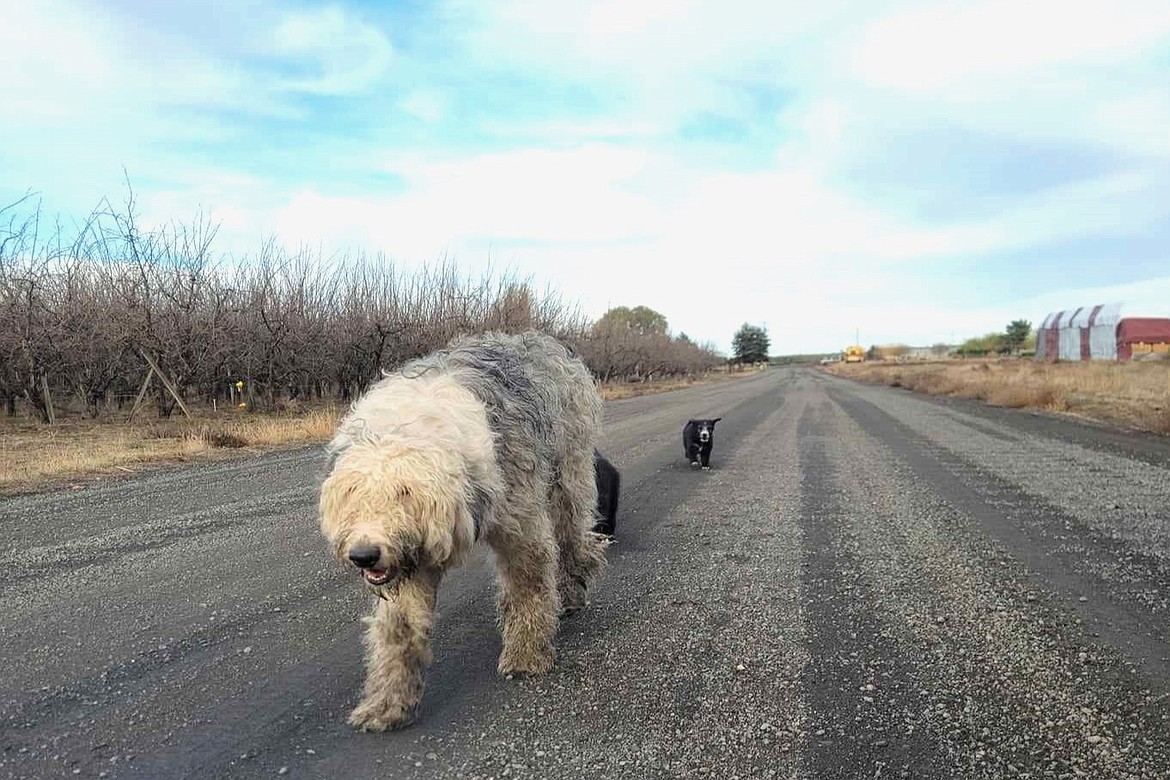
A mama dog and some of her puppies walk down a road in the Othello area. Adams County Pet Rescue picked them up along the road over the weekend.
COURTESY PHOTO/ADAMS COUNTY PET RESCUE
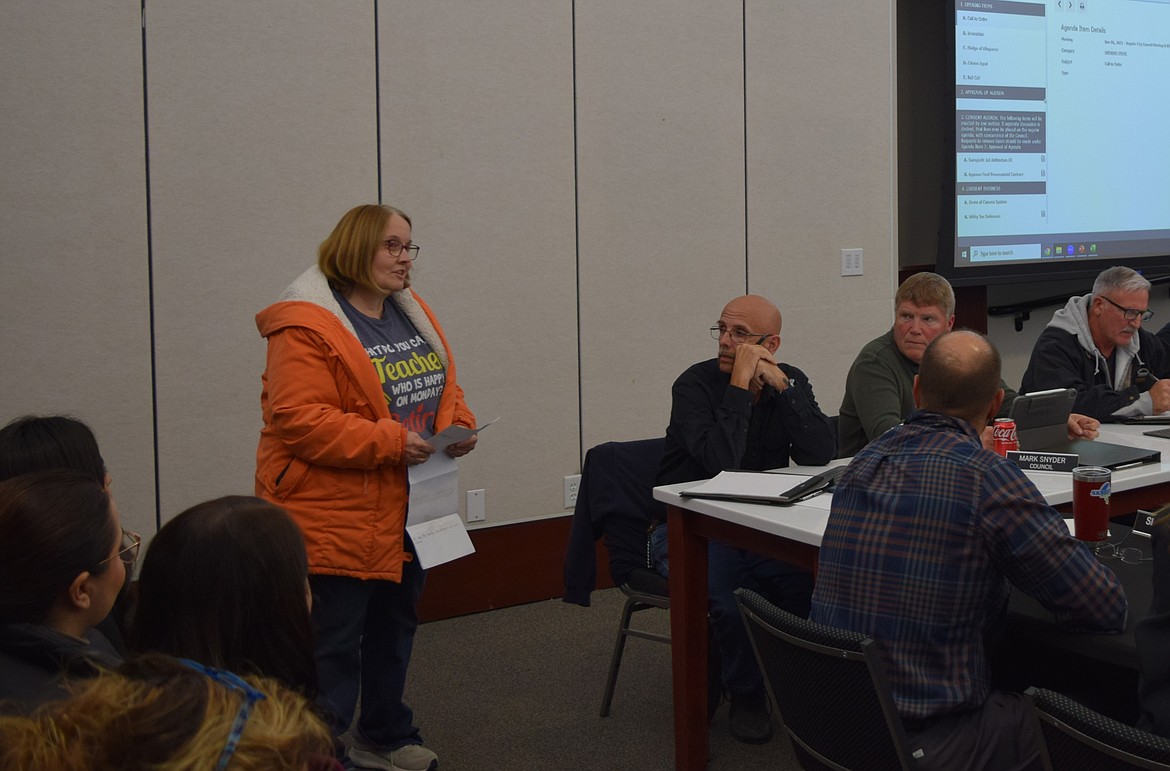
Adams County Pet Rescue board member Tammy Foley speaks during the public input portion of Monday’s regular Othello City Council meeting at city hall. The ACPR submitted a letter to the council requesting $150,000 total for its animal control services contract.
Gabriel Davis/Columbia Basin Herald
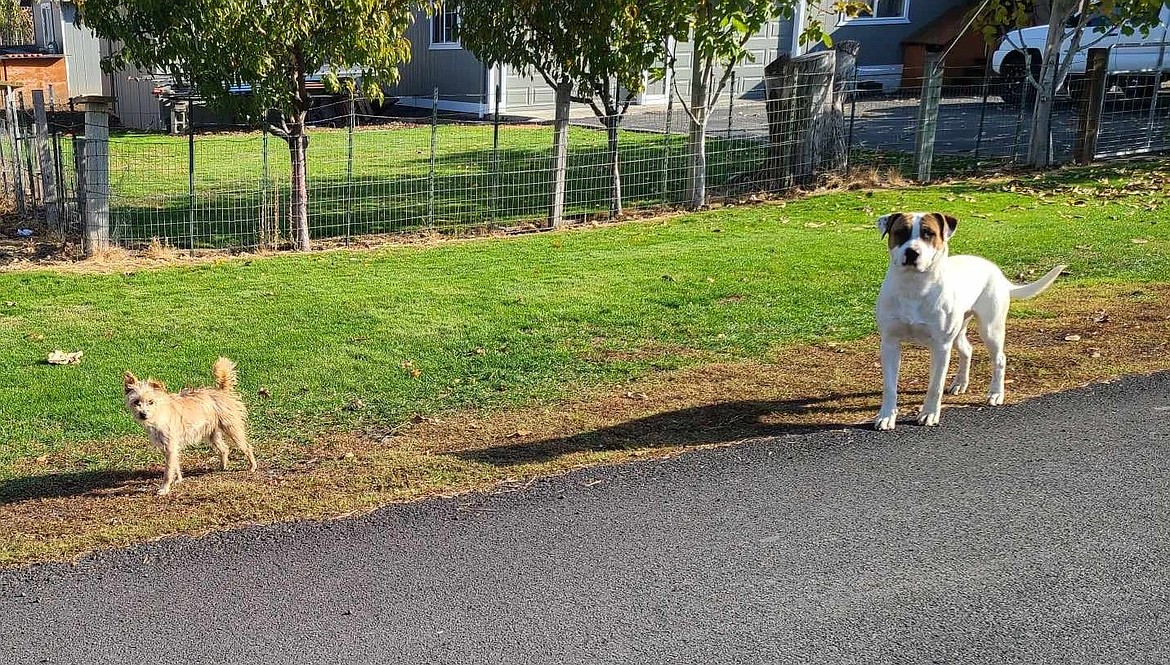
Two stray dogs roam in the Othello area. The city of Othello currently contributes $52,000 to the Adams County Pet Rescue for its animal control services, and has listed an additional $50,000 in its preliminary 2024 budget.
COURTESY PHOTO/ADAMS COUNTY PET RESCUE
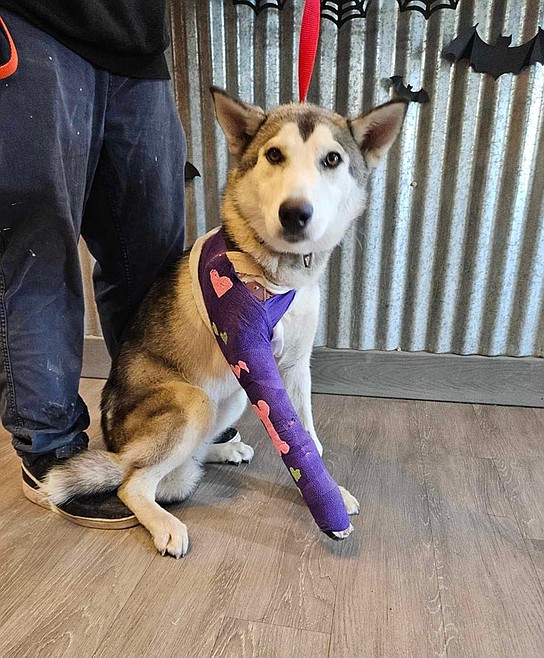
One of the Adams County Pet Rescue’s shelter dogs, an injured husky named Selene, sits in the ACPR lobby after treatment in October.
COURTESY PHOTO/ADAMS COUNTY PET RESCUE
Gabriel Davis is a resident of Othello who enjoys the connections with his sources. Davis is a graduate of Northwest Nazarene University where he studied English and creative writing. During his free time, he enjoys reading, TV, movies and games – anything with a good story, though he has a preference for science fiction and crime. He covers the communities on the south end of Grant County and in Adams County. | November 8, 2023 3:15 PM
OTHELLO — During Monday’s regular Othello City Council meeting, the city listed an additional $50,000 in its preliminary budget workshop for its animal control services contract with Adams County Pet Rescue, and ACPR submitted a letter requesting a total of $150,000.
ACPR Board President Ken Simmons submitted a letter to the council for Monday’s meeting explaining the funding request.
“ACPR is facing a public health crisis. Despite funding from the city of Othello and generous donations, our shelter is in danger of closing,” Simmons said. “We are asking for increased funding to keep up with the rising costs of inflation, minimum wage, longer-term animal care and desperately needed maintenance at the rescue.”
ACPR Board Member Tammy Foley also spoke about the funding request during the council meeting.
“We need the city's funding so we can educate people about this crisis,” Foley said. “We are working on becoming more sustainable. We're working at bringing you more donations and increasing adoptions but we can't do this without your funding to get us through this public health crisis.”
The city currently contributes $52,000 to ACPR for animal control, which would make $102,000 total in the 2024 preliminary budget. The city and ACPR are still in the process of renegotiating the contract, and the 2024 budget will not be finalized until several council meetings in the future.
ACPR Director Kyya Grant said that ACPR is hoping to renegotiate its contract with Adams County as well, including requesting a total of $150,000 for its services. The county currently contributes $60,000 to ACPR. Grant said nothing was decided when she met with the Adams County Board of Commissioners and they will be looking at their budget.
In the letter to the Othello council, both Foley and Simmons characterized the danger of parvovirus for dogs and humans, as well as stray dogs as a public safety issue.
“Parvo is so contagious it is killing not just these unvaccinated dogs and puppies, but also affecting fully-vaccinated dogs. Parvo can get into the soil and water. It can make people sick, too. This is absolutely a public health crisis,” Simmons said. “We are working to make our animal shelter sustainable. In the meantime, we need increased funds from the City of Othello. Many people contributed to this public health crisis. It will take all of us working together to solve this problem.”
ACPR ended its parvo adoption hold, which prohibited them from taking in or adopting dogs from the shelter for two weeks after a parvo outbreak, Nov. 2. ACPR Director Kyya Grant said it is hard to tell how adoption rates are going after exiting the two-week hold, but they are now bringing in a lot of dogs.
“We've had five dogs dropped off, tied up in the parking lot, and we've gotten puppies in that were left in a crate, six puppies,” Grant said. “At one of the trailer parks we found a mom and four puppies walking down the road. I mean it just never ends. You adopt one out and get 12, 15 in.”
Speaking with the Columbia Basin Herald, Foley commented on the city’s preliminary budget listing of at least $15,000 for marketing purposes.
“Since the city is asking for $15,000 for marketing expenses, and it's a city ordinance that we're trying to enforce … if they approve that $15,000 that they requested for marketing, they would be welcome to use some of that money to market pet licensing, pet vaccines, all the ordinances that they were requiring for Othello residents,” Foley said.
Council member John Lallas commented during the budget workshop on the contract with the ACPR.
“We're going to pay them $102,000 moving forward for a contract to provide a service to the city,” Lallas said. “We need to spell out what those services are. That would cover X-number of dogs, X-number of cats. When you get to a point where you're above that and they need more money, then we have to either pony up a little bit more or, if they never get to the number that we actually decide to come up with, that's one thing.”
Mayor Shawn Logan said those requirements can be worked into the contract during negotiations. Lallas also said that ACPR needs to respond to every call, to which Logan responded that one of the concessions the city would like to make is to have the Othello Police Department be more aggressive with animal control cases after 5 p.m. since the ACPR staff works from 8 a.m. to 5 p.m.
Council member Corey Everett said he would like to know how much the ACPR makes in fines and dog licensing.
“I don't know how significant that number is, but there’re some dollars there,” he said.
Grant responded during the meeting, saying it was less than $4,000 a year, despite holding dog licensing events with discounted prices annually.
Grant said that ACPR currently relies on social media and word of mouth to market its services, including dog licensing and adoptions. Grant said she believes hiring professional marketing would be too expensive.
At press time, the ACPR’s ongoing GoFundMe page had raised more than $37,000. To donate, visit their GoFundMe page at gofund.me/b6b63dfe.
Gabriel Davis may be reached at [email protected]. Download the Columbia Basin Herald app on iOS and Android.
 Adams County Pet Rescue board member Tammy Foley speaks during the public input portion of Monday’s regular Othello City Council meeting at city hall. The ACPR submitted a letter to the council requesting $150,000 total for its animal control services contract.
Gabriel Davis/Columbia Basin Herald
 Two stray dogs roam in the Othello area. The city of Othello currently contributes $52,000 to the Adams County Pet Rescue for its animal control services, and has listed an additional $50,000 in its preliminary 2024 budget.
COURTESY PHOTO/ADAMS COUNTY PET RESCUE
 One of the Adams County Pet Rescue’s shelter dogs, an injured husky named Selene, sits in the ACPR lobby after treatment in October.
COURTESY PHOTO/ADAMS COUNTY PET RESCUE
ARTICLES BY GABRIEL DAVIS

Work-based learning lets students build their own futures
MOSES LAKE — Work-based learning provides education opportunities for the workforce to receive hands-on training and technical education and prepare themselves to enter various industries. Educators and workforce development professionals from Eastern Washington discussed some the training they offer and the benefits of their programs. Next Generation Zone, an affiliate of WorkSource based in Spokane, provides job training opportunities for youth and young adults ages 16 to 24. Program Coordinator Kate Martin said there are multiple benefits to the program. “One of them is a paid work experience, and that’s where we reach out to area employers who are willing to take a young person and train them,” she said. “This is a short-term learning experience, so it’s typically about 240 hours; sometimes it could be longer or shorter. We’re the actual employer; we cover all of their wages, taxes, the L&I, and the employer just agrees to give them the experience and train them in whatever field it is that they’re wanting to go into.”

Serving schools: ESD superintendents reflect on operations, priorities
MOSES LAKE — Educational service districts are government-mandated agencies put in place to provide services to school districts across the state. ESD Superintendents discussed what they do and their priorities in operating their districts. ESD 105, led by Superintendent Kevin Chase, serves four counties, including Kittitas, Yakima and portions of Klickitat and Grant counties and provides support for 25 school districts – including Royal School District and Wahluke School District – and more than 66,000 students. “We help them collaborate with each other as well or collaborate with other partners,” Chase said. “(It’s) a lot of advocacy work, either regionally or across the state, or even federally, working on different issues that impact our education. And we provide very specialized services in certain situations in order to meet the needs of our students in our region and of our school districts.”

Columbia Basin Project making headway through Odessa Groundwater program
CASHMERE — The Columbia Basin Project is making gradual progress toward completion with particularly significant accomplishments for the Odessa Groundwater Replacement Program in the last six months or so, according to Columbia Basin Development League Executive Director Sara Higgins. “When we’re dealing with a project of this size, advancement is kind of like watching paint dry, but yes, there have been (developments),” she said. “There are a lot of exciting things happening right now.” There are more than 300 miles of main canals, about 2,000 miles of lateral canals and 3,500 miles of drains and wasteways in the irrigation project, according to the U.S. Bureau of Reclamation website. The CBDL advocates for the operation of those waterways and for the project to continue “build-out.”