
Cold incoming: Prepping homes for the Columbia Basin’s cold winters
JOEL MARTIN | Hagadone News Network | UPDATED 2 years, 11 months AGO
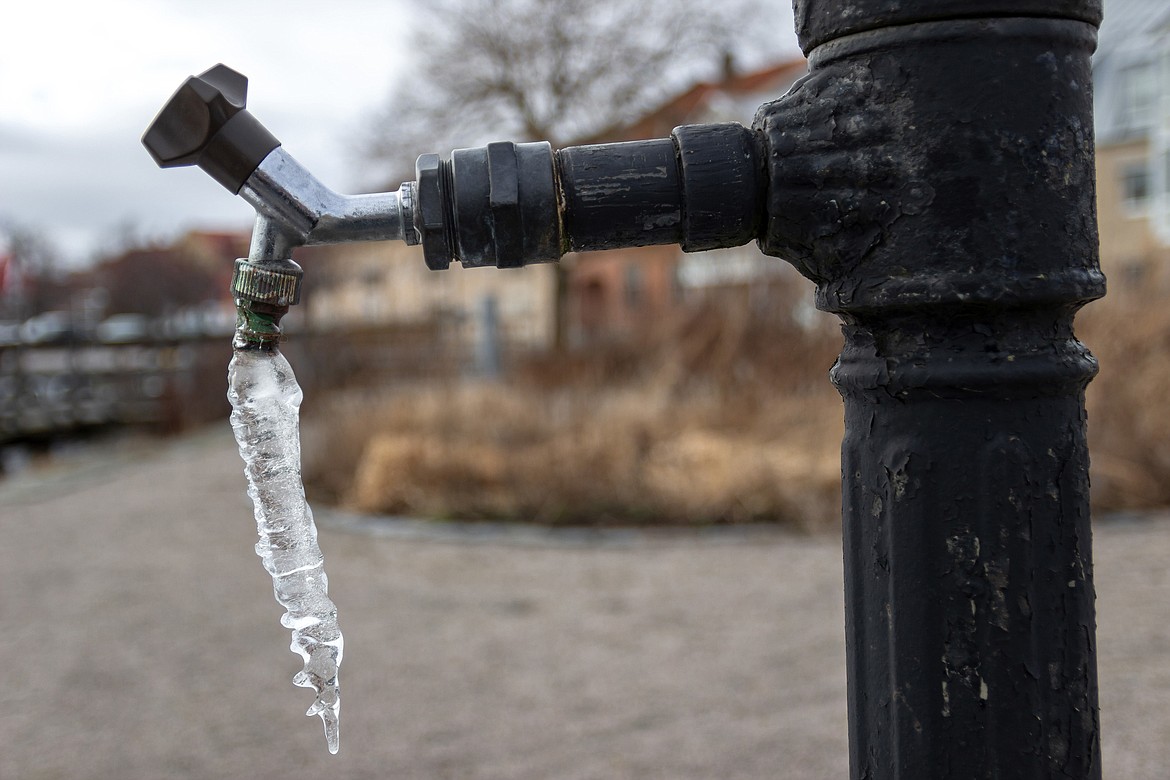
Plan ahead now to prevent frozen pipes and other wintertime problems that come with living in the northern half of the country.
DREAMSTIME/TNS
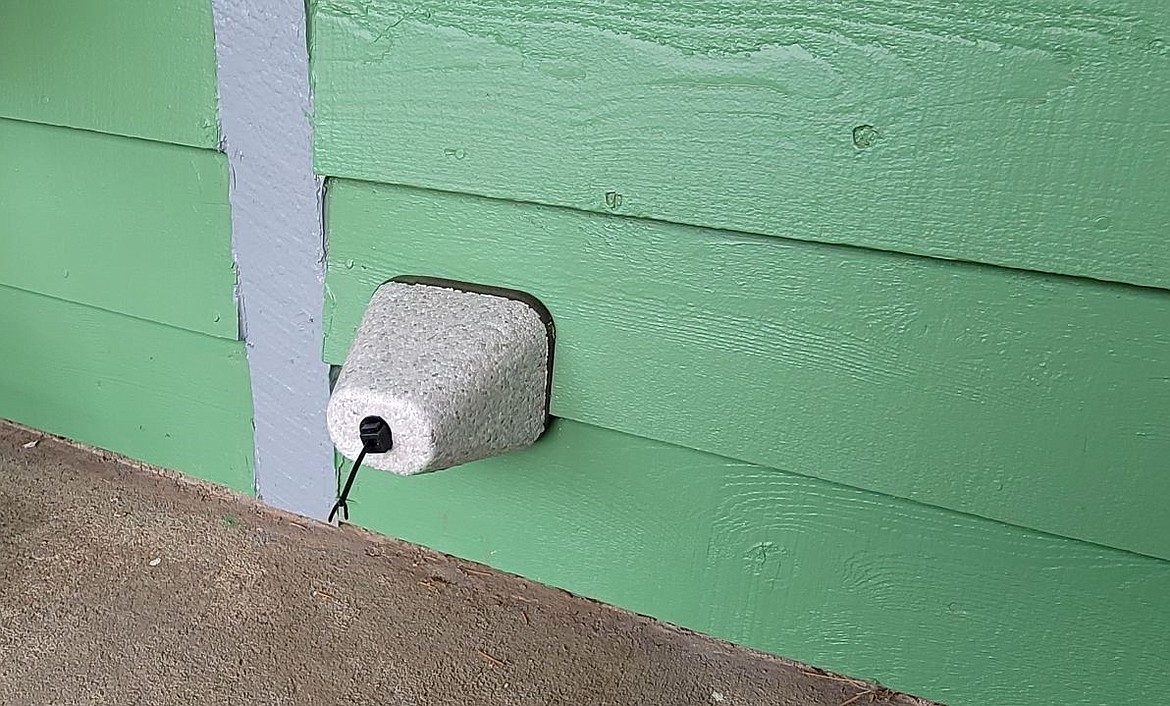
Keeping pipes from freezing is a challenge in the Pacific Northwest, but a simple cap like this one or an insulated bag on free-standing outdoor spigots can prevent costly burst pipes. Water from a frozen pipe situation can do serious property damage if not caught quickly, so spending a few dollars on a cover can save a lot of money in the long run.
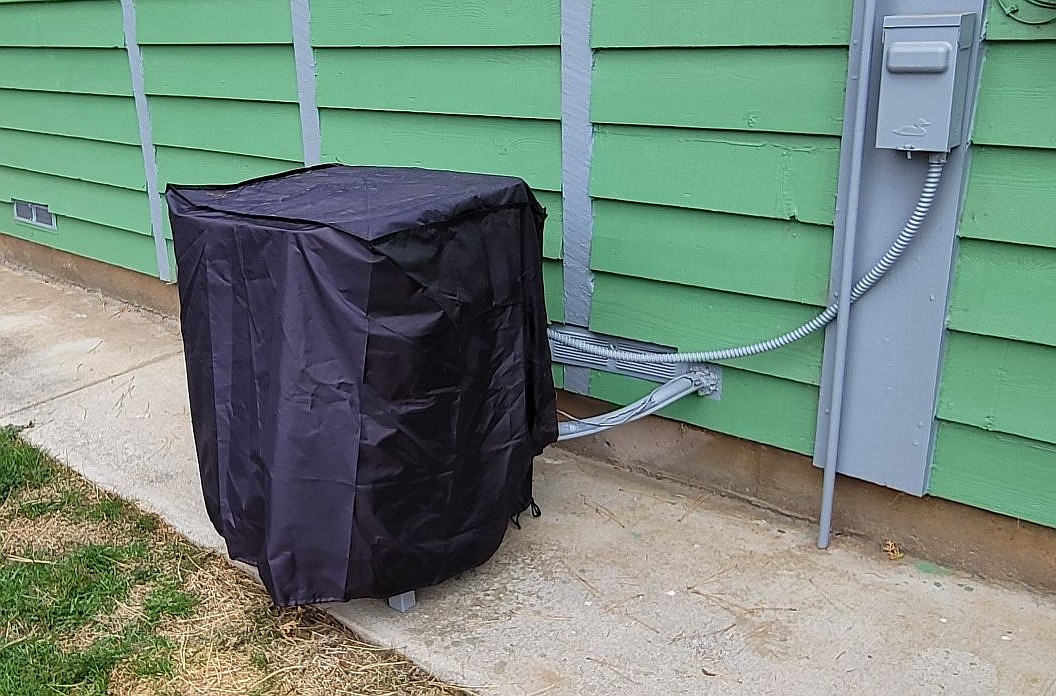
Air conditioners won’t be used much in the chilly winter months. Covering the outside unit with an inexpensive vinyl covering, like the one shown here, can keep debris from getting into the unit and prevent maintenance concerns in the spring. Covers such as this one sell for about $20-$40, depending on features and size.
Joel Martin has been with the Columbia Basin Herald for more than 25 years in a variety of roles and is the most-tenured employee in the building. Martin is a married father of eight and enjoys spending time with his children and his wife, Christina. He is passionate about the paper’s mission of informing the people of the Columbia Basin because he knows it is important to record the history of the communities the publication serves. | November 15, 2023 2:48 PM
MOSES LAKE — In case anyone hasn’t noticed, it’s getting chilly out there. Even though the National Weather Service is predicting a fairly mild winter for the Columbia Basin, it’s still a good time to get homes ready for the colder weather.
The first place to look is the pipes. There’s one big mistake that homeowners make, said Steve West, owner of Top Plumbing in Moses Lake.
“They leave their hoses on their outdoor spigots,” West said. “(They may say) ‘Well, I turned it off.’ It doesn’t matter. The hose has to be disconnected.”
Most newer houses use frost-free outdoor spigots with a vacuum system to drain them, West said, which won’t work if the hose is still connected. Older homes without frost-free spigots are even more vulnerable, so it’s important to cover them with a freeze cap during the winter months.
 Keeping pipes from freezing is a challenge in the Pacific Northwest, but a simple cap like this one or an insulated bag on free-standing outdoor spigots can prevent costly burst pipes. Water from a frozen pipe situation can do serious property damage if not caught quickly, so spending a few dollars on a cover can save a lot of money in the long run.
Homeowners with underground sprinkler systems should have the pipes blown out by a professional every year, West added.
Draining hoses prior to storing them for the winter is also a good idea in order to prevent ice from forming inside them which can cause damage.
The Grant PUD website offers tips for homeowners preparing to face the frigid months. Maintaining the weather stripping on exterior doors and windows will help hold in the heat, the PUD wrote. Windows that have a draft should be covered and sealed tightly with some heavy-duty clear plastic. Closing drapes in the evening and on overcast days will help keep heat in the home as well, the PUD wrote.
Owners who have a heat pump should schedule a service visit to see if it needs maintenance, making sure the filter is clean and fitted properly.
Finally, homeowners should go around the house and close or plug foundation vents. That not only keeps the living space warmer but also insulates the pipes under the house.
According to Ray Acheson, manager of Valley Quality Homes in Moses Lake, owners of manufactured homes have a few extra precautions to take.
When Valley Quality places a home, Acheson said, they put a cement wall around the foundation and taper it 2-3% to divert water away from the underside of the home.
“Some places grade them flat, and then you can get water underneath the home,” Acheson said. “And if you do, you can get your warranty voided on the house. That's not good at all.”
The best solution for a manufactured home owner who doesn’t have the concrete wall is to rake some gravel or sand around the home and smooth it out to a taper, he added.
Buyers of manufactured homes should look for Energy Star certification, said sales representative Rudy Salazar. That certification, issued by the Environmental Protection Agency, is an indication of energy efficiency in the home’s construction, as well as in the appliances.
Snowbirds and others who only live in the home part of the year should keep the home heated if they’re away in the winter, Acheson said.
“I like to leave the heat at like 55 or 60 in the house, even if they're gone all winter because that keeps the pipes from freezing,” he said. “And you can't blow it out, really, to get it perfect.”
“When it comes to winterizing, the best (thing) is just good common sense,” Salazar said.
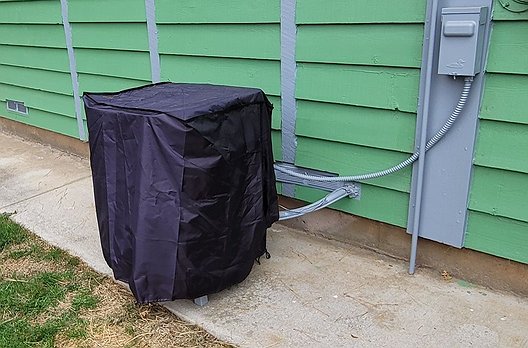 Air conditioners won’t be used much in the chilly winter months. Covering the outside unit with an inexpensive vinyl covering, like the one shown here, can keep debris from getting into the unit and prevent maintenance concerns in the spring. Covers such as this one sell for about $20-$40, depending on features and size.
Joel Martin may be reached via email at [email protected].
Save energy this winter:
• Use ceiling fans to gently direct rising heat downward. This makes the room feel warmer without turning up the heat.
• When you are home and awake, set your thermostat as low as comfortably possible.
• When you are asleep or out of your home, turn the thermostat down even further. A programmable thermostat can help you adjust your heat to match your schedule. If you have a heat pump, it is recommended to not drop your thermostat lower than 4 degrees below your normal heat setting.
• Lower the heat setting on your water heater. The U.S. Department of Energy estimates that 18% of a household's energy consumption is from water warming. Keeping your temperature at 120 degrees will help you see small changes in your energy bill.
SOURCE: Grant County Public Utility District
ARTICLES BY JOEL MARTIN
Endless battle
Noxious Weed Control Board works to keep invasive plants under control
MOSES LAKE — Some of the nastiest plants in Grant County were the topic of a class led by Jay Johnson, a consultant with the Grant County Noxious Weed Control Board, Tuesday. The Noxious Weed Control Board, as its name would suggest, is tasked with keeping weeds under control in Grant County. That’s not a small job; the board’s website lists 129 species of noxious weeds that are found around Grant County. A noxious weed is defined as an invasive, non-native plant that threatens agricultural crops, local ecosystems or fish and wildlife habitat, according to the Noxious Weed Control Board. Washington state law requires that these weeds be identified and their spread kept to a minimum, if not completely eradicated. “We’re one of those agencies a lot of people don’t really understand,” Johnson said. “We’re a county office and … our funding is tax-based assessment. When you get your tax bill and you look down at all the expenses that you pay for, there we are.”

BASIN EVENTS: Oct. 16-24
COLUMBIA BASIN — Whether you feel like shopping, crafting, learning or seeing a show, there’s something happening for you this week in the Basin. Oct. 16 ‘My Family (Mi Familia)’ screening Spanning three generations, “My Family (Mi Familia)” is a heartfelt drama that follows the Sánchez family as they build their lives in East Los Angeles. Through love, hardship, triumph, and sacrifice, the film explores the immigrant experience, the strength of family bonds, and the traditions that connect one generation to the next. Lowrider show and taco truck before the screening. Sponsored by Columbia Basin Allied Arts, EDUBS C/S and the Moses Lake Creative District. $12 per person. Doors open at 6 p.m., film begins at 7 p.m. at the Moses Lake Civic Center Auditorium, 401 S. Balsam St. Tickets and info: www.cba-arts.org.

Moses Lake author encourages women to look beyond church culture norms
MOSES LAKE — A Moses Lake author’s book, “A Christian Woman Striving to Live Her Faith in a Man-Controlled World,” takes aim at the role to which many churches relegate the female half of their congregations. “It’s to encourage women in the faith,” Linda Curran said. “A lot of churches say, ‘Teach Sunday school, do this, do that, but don’t (evangelize.)’" In her book, Curran recounts a time when she moved to a new community and joined a church there. She was surprised to learn that, as a new female member, she had been automatically assigned church cleaning duties. When she questioned it, she wrote, she was met with condescension and her objections were brushed aside. In other churches, she said, women who were capable of teaching were relegated to “women’s ministry.”