
CBDL still pushing Columbia Basin Project forward
GABRIEL DAVIS | Hagadone News Network | UPDATED 2 years, 4 months AGO

The Columbia Basin Project consists of 2,320 miles of canals, such as the one pictured, throughout the Columbia Basin, according to the Columbia Basin Development League website.
COURTESY PHOTO/CBDL
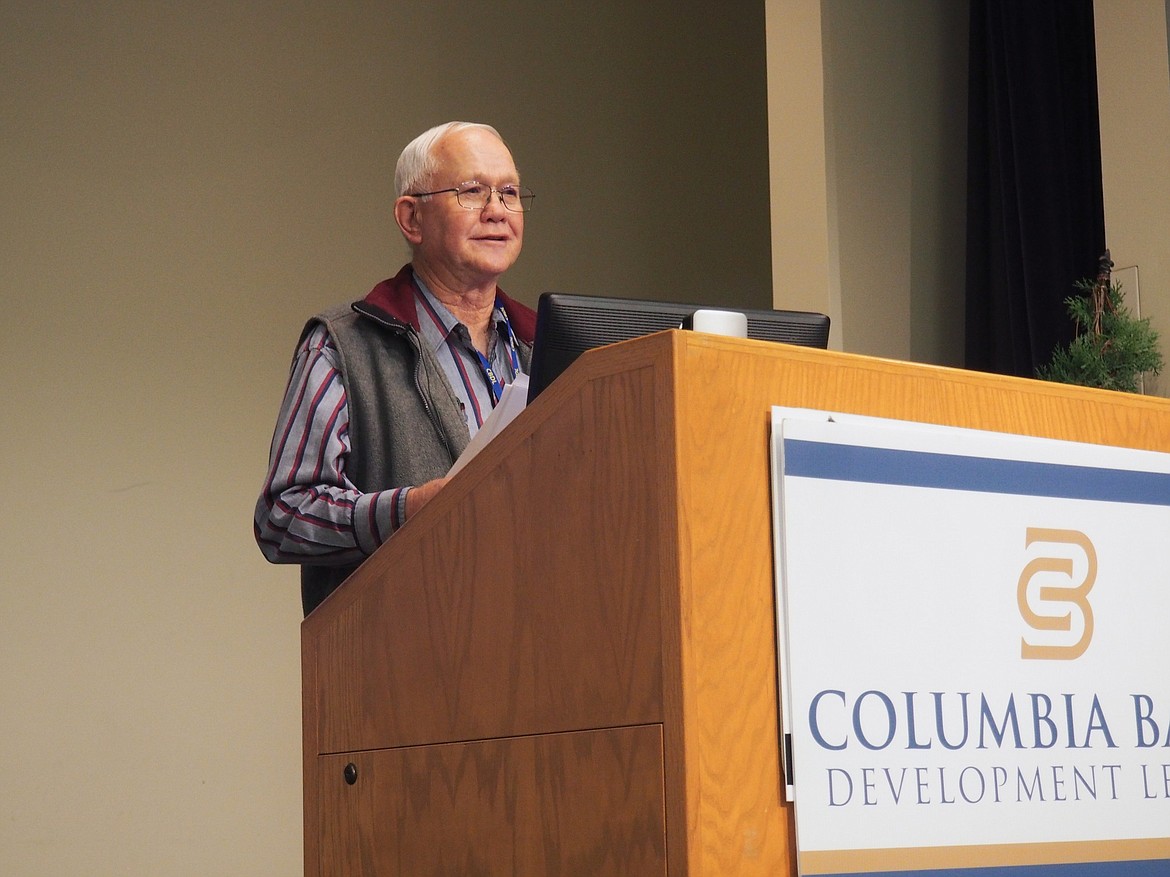
Columbia Basin Development League Board of Trustees Chair Dale Pomeroy speaks at the 59th annual Columbia Basin Development Conference in Moses Lake at Big Bend Community College. The CBDL is based in Cashmere.
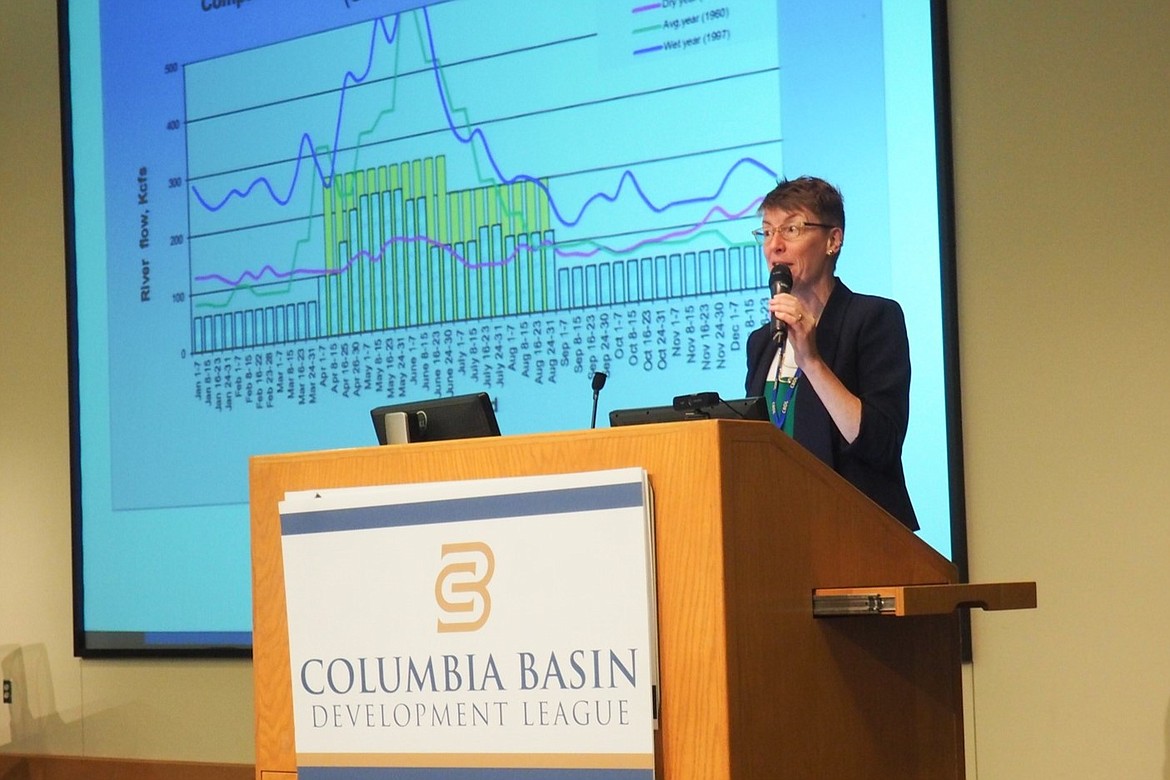
Columbia Basin Development League Executive Director Sara Higgins speaks at the CBDL’s annual conference Nov. 14 at Big Bend Community College in Moses Lake.
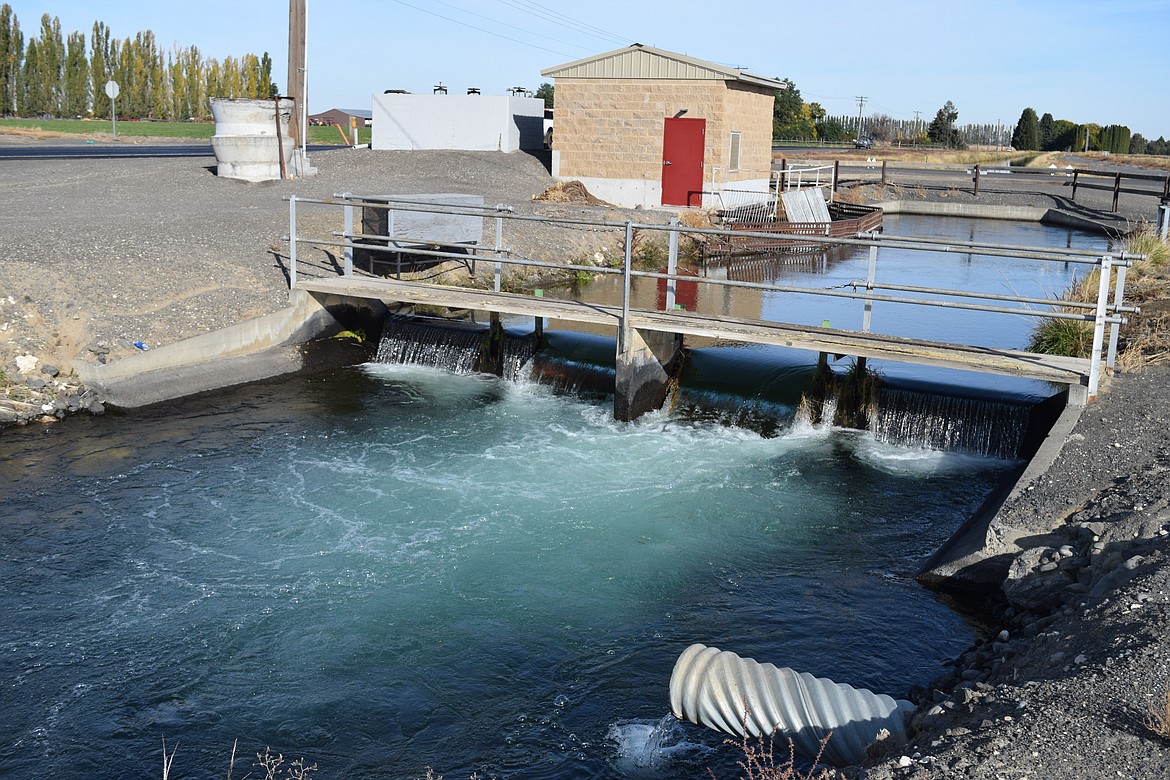
A pump house delivering East Columbia Basin Irrigation District water to growers near the intersection of roads M and 2 Southeast, south of Moses Lake. The ECBID and other irrigation districts in the Columbia Basin are key partners with the Columbia Basin Development League.
Gabriel Davis is a resident of Othello who enjoys the connections with his sources. Davis is a graduate of Northwest Nazarene University where he studied English and creative writing. During his free time, he enjoys reading, TV, movies and games – anything with a good story, though he has a preference for science fiction and crime. He covers the communities on the south end of Grant County and in Adams County. | November 22, 2023 2:42 PM
CASHMERE — Despite the completion of the Columbia Basin Project being potentially decades away, according to Columbia Basin Development League Executive Director Sara Higgins, the CBDL is still hard at work as the project’s nonprofit arm and advocacy group.
There are more than 300 miles of main canals, about 2,000 miles of lateral canals and 3,500 miles of drains and wasteways in the project, according to the U.S. Bureau of Reclamation website. The CBDL advocates for the operation of those waterways and for the project to continue.
“Our tagline is ‘The voice of the Columbia Basin Project,’” Higgins said. “The league has been around since 1964. It's a nonprofit organization, and it's a grassroots organization that really represents the stakeholder interest in the overarching Columbia Basin Project, and we're an advocacy organization. So we exist to engage in education and outreach awareness about the Columbia Basin Project and its value, but ultimately to advocate for infrastructure reinvestment … The primary purpose of the league is to see the project developed to completion.”
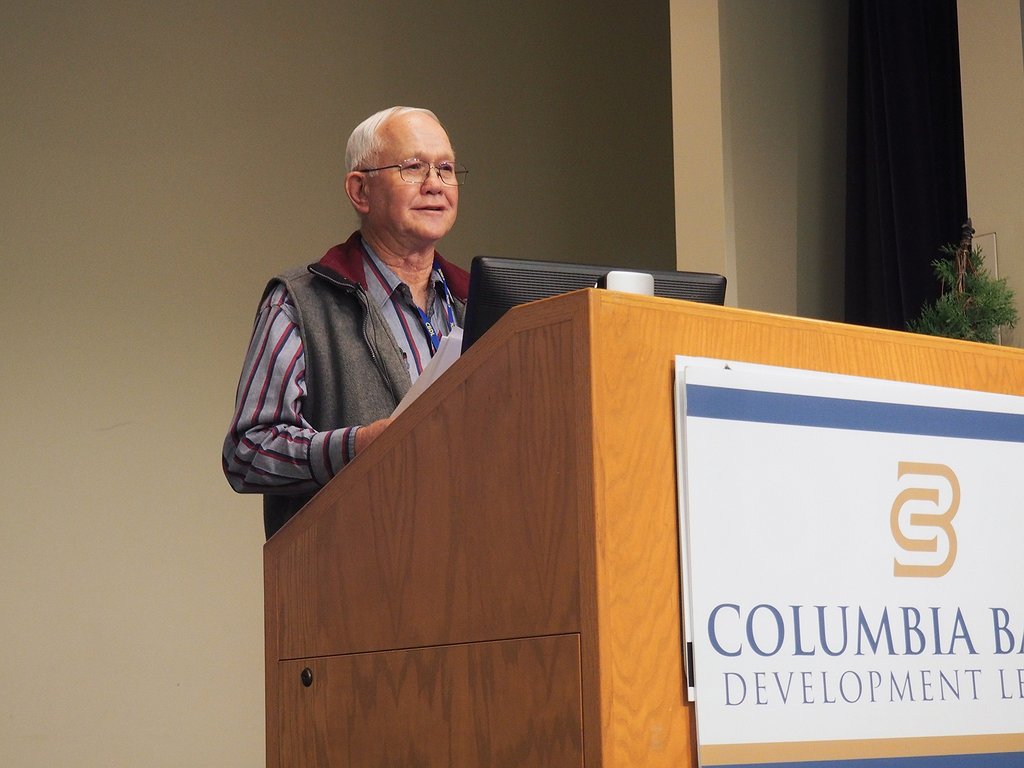 Columbia Basin Development League Board of Trustees Chair Dale Pomeroy speaks at the 59th annual Columbia Basin Development Conference in Moses Lake at Big Bend Community College. The CBDL is based in Cashmere.
Reclamation’s website explains the basics of the project.
“The Columbia Basin Project … currently serves about 671,000 acres, or approximately 65% of the 1,029,000 acres originally authorized by Congress, in portions of Grant, Lincoln, Adams, and Franklin counties, with some northern facilities located in Douglas County,” the site said. “These first half of project lands were developed primarily in the 1950s and 1960s, with some acreages being added sporadically until 1985.”
Higgins elaborated on the long-term nature of the project.
“The original Columbia Basin Project development was anticipated to be done in phased development that was expected to be around 70 years, and we’ve hit that and we're not done yet,” she said.
According to Reclamation’s website, the project was first authorized by Congress in 1943.
“There was a moratorium on the river withdrawals back in the ’80s and ’90s. That certainly put a pause on project development, and then we had issues with the Odessa Aquifer, which shifted focus to the Odessa Groundwater Replacement Program. So we're talking several more decades before that torch is picked up again,” Higgins said. “If you speak in round terms we’re talking about 300,000 acres that have yet to be developed.”
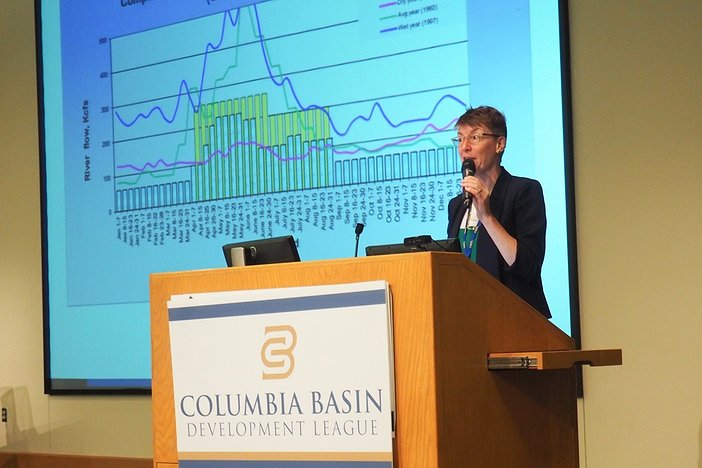 Columbia Basin Development League Executive Director Sara Higgins speaks at the CBDL’s annual conference Nov. 14 at Big Bend Community College in Moses Lake.
Higgins said the OGWRP has been the significant focus in recent years, pulling away from the original Columbia Basin Project. The lengthy lifespan of the project as a whole was its nature from the beginning, she said, and it was known that it might take longer than one individual’s lifetime.
“When you're dealing with any major Reclamation project, that's the kind of frame of reference that you have,” Higgins said. “So, you temper your expectations and you keep your eye on the ball and on the finish line.”
Higgins said incremental accomplishments are also important in thinking about progressing the project. One such accomplishment is finding new funding sources.
“Historically, funding has come from Reclamation, but as the OGWRP was developed and has taken off and is advancing, the funding that is needed to complete OGWRP currently sits at, I think, approximately $400 million remaining needed for the pipelines and laterals, and I think it's about another $100 million for on-farm connections,” Higgins said. “We are not seeing those kinds of dollars coming through Reclamation’s budget.”
Landowners came together several years ago and identified potential for funding from a different government entity, the Natural Resources Conservation Service, Higgins said.
“It's a different agency through a different department, so it has different requirements and different rules than Reclamation for essentially securing funding through their programs,” Higgins said. “Recently, an announcement came out that identified that we can use the final environmental impact study that was released by reclamation a few years ago for OGWRP, and that study can also be used for NRCS to advance the efforts toward accessing NRCS funding. That's significant because it streamlines the process; it saves time and it saves money. Rather than having to go do a separate study, we can use the bones of the reclamations study.”
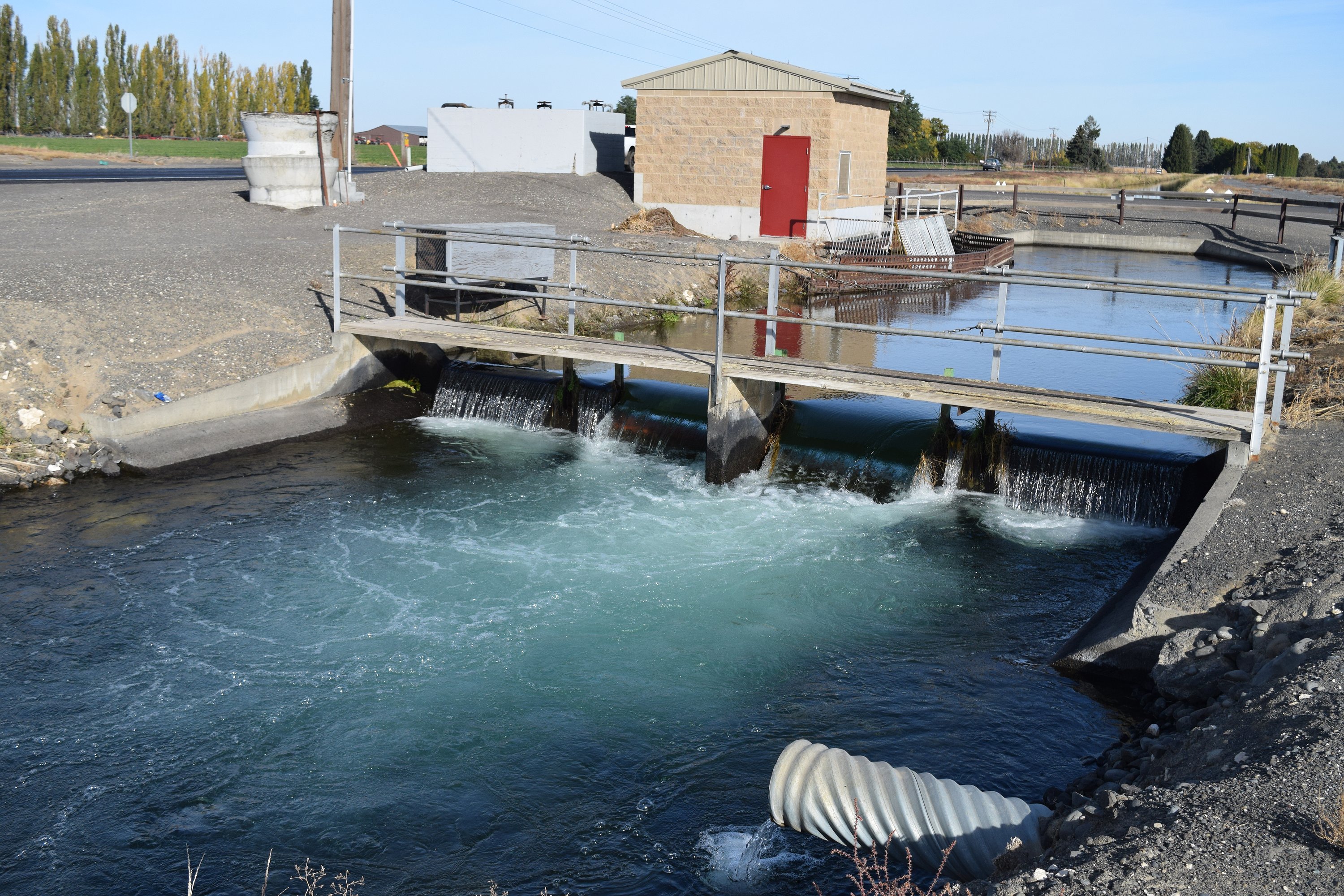 A pump house delivering East Columbia Basin Irrigation District water to growers near the intersection of roads M and 2 Southeast, south of Moses Lake. The ECBID and other irrigation districts in the Columbia Basin are key partners with the Columbia Basin Development League.
Colleen Frei, the general counsel for the CBDL, explained the CBDL’s overarching goal and motivation.
“Our vision is working on supporting the project and moving towards completion of the project, and the members of the league include all of these different parties. It includes the state and federal and local and private landowners, and interested advocates and parties. So, membership is where we really have the opportunity to pull those groups and those individuals together in support,” Frei said. “It's quite amazing to think of the impact of the Columbia Basin Project on our communities and really on the industry for the state and the livelihood of its people.”
Gabriel Davis may be reached at [email protected]. Download the Columbia Basin Herald app on iOS and Android.
ARTICLES BY GABRIEL DAVIS

Work-based learning lets students build their own futures
MOSES LAKE — Work-based learning provides education opportunities for the workforce to receive hands-on training and technical education and prepare themselves to enter various industries. Educators and workforce development professionals from Eastern Washington discussed some the training they offer and the benefits of their programs. Next Generation Zone, an affiliate of WorkSource based in Spokane, provides job training opportunities for youth and young adults ages 16 to 24. Program Coordinator Kate Martin said there are multiple benefits to the program. “One of them is a paid work experience, and that’s where we reach out to area employers who are willing to take a young person and train them,” she said. “This is a short-term learning experience, so it’s typically about 240 hours; sometimes it could be longer or shorter. We’re the actual employer; we cover all of their wages, taxes, the L&I, and the employer just agrees to give them the experience and train them in whatever field it is that they’re wanting to go into.”

Serving schools: ESD superintendents reflect on operations, priorities
MOSES LAKE — Educational service districts are government-mandated agencies put in place to provide services to school districts across the state. ESD Superintendents discussed what they do and their priorities in operating their districts. ESD 105, led by Superintendent Kevin Chase, serves four counties, including Kittitas, Yakima and portions of Klickitat and Grant counties and provides support for 25 school districts – including Royal School District and Wahluke School District – and more than 66,000 students. “We help them collaborate with each other as well or collaborate with other partners,” Chase said. “(It’s) a lot of advocacy work, either regionally or across the state, or even federally, working on different issues that impact our education. And we provide very specialized services in certain situations in order to meet the needs of our students in our region and of our school districts.”

Columbia Basin Project making headway through Odessa Groundwater program
CASHMERE — The Columbia Basin Project is making gradual progress toward completion with particularly significant accomplishments for the Odessa Groundwater Replacement Program in the last six months or so, according to Columbia Basin Development League Executive Director Sara Higgins. “When we’re dealing with a project of this size, advancement is kind of like watching paint dry, but yes, there have been (developments),” she said. “There are a lot of exciting things happening right now.” There are more than 300 miles of main canals, about 2,000 miles of lateral canals and 3,500 miles of drains and wasteways in the irrigation project, according to the U.S. Bureau of Reclamation website. The CBDL advocates for the operation of those waterways and for the project to continue “build-out.”