
Farming technology: Vegetable Association trade show has high-tech feel
JOEL MARTIN | Hagadone News Network | UPDATED 2 years, 9 months AGO
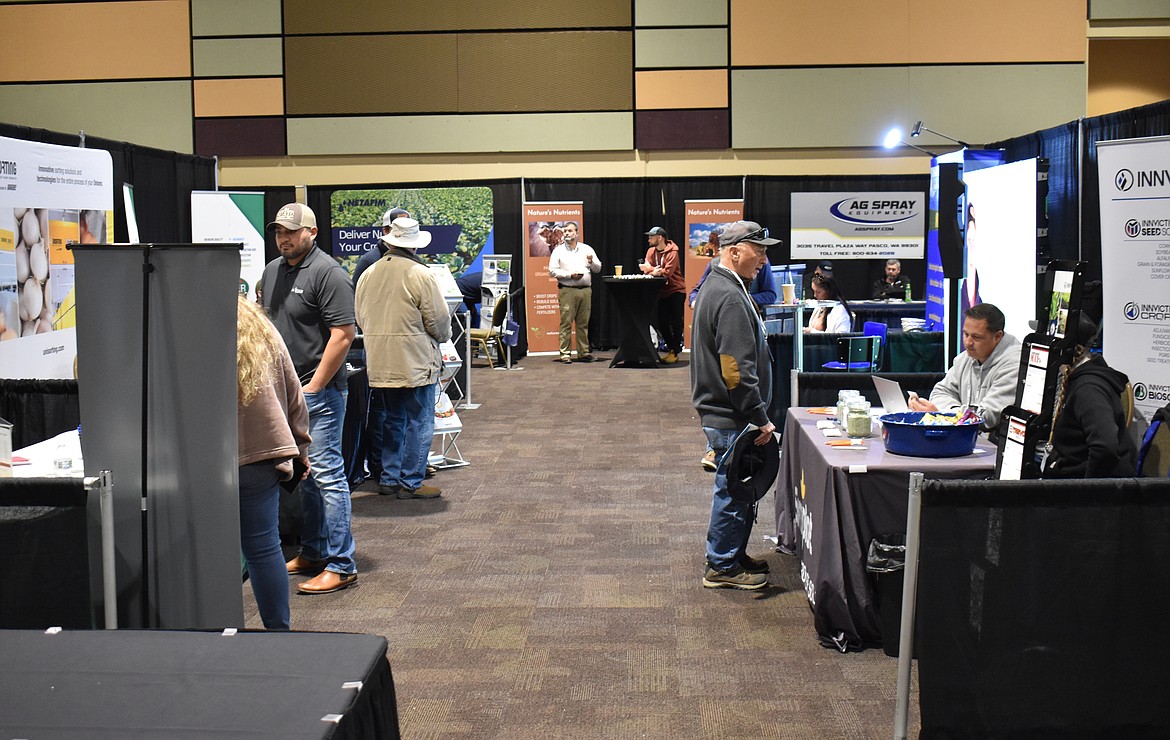
The Pacific Northwest Vegetable Growers Association’s annual conference and trade show brought 115 vendors and more than 800 people to Kennewick Nov. 15-16.
Joel Martin/Basin Business Journal
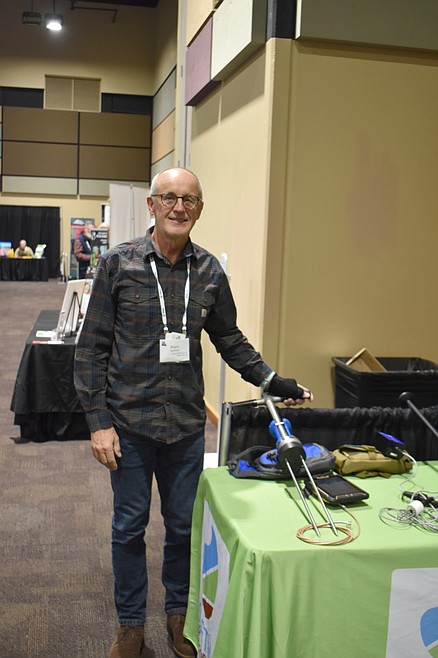
Bruno Quanquin, owner of Earth Platforms, shows a portable soil monitor designed to track moisture for irrigators.
Joel Martin/Basin Business Journal
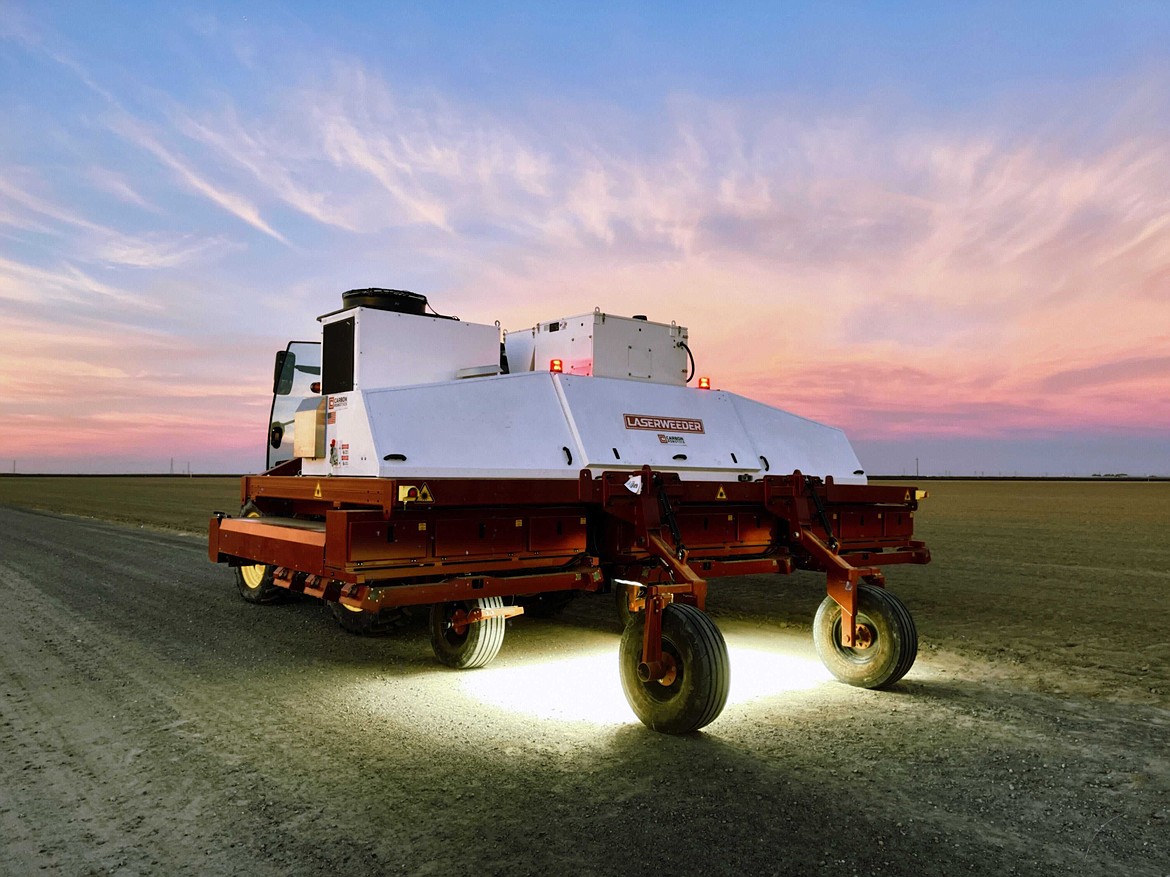
The laserweeder has some impressive gear that even Batman might appreciate. Underneath its body, there are 150 LED lights that make the lighting about four times that of the sun, according to Carbon Robotics VP of Marketing Brett Goodwin. It also has 42 predict and targeting cameras that can direct lasers to eliminate 5,000 weeds per minute.
Courtesy photo/Carbon Robotics
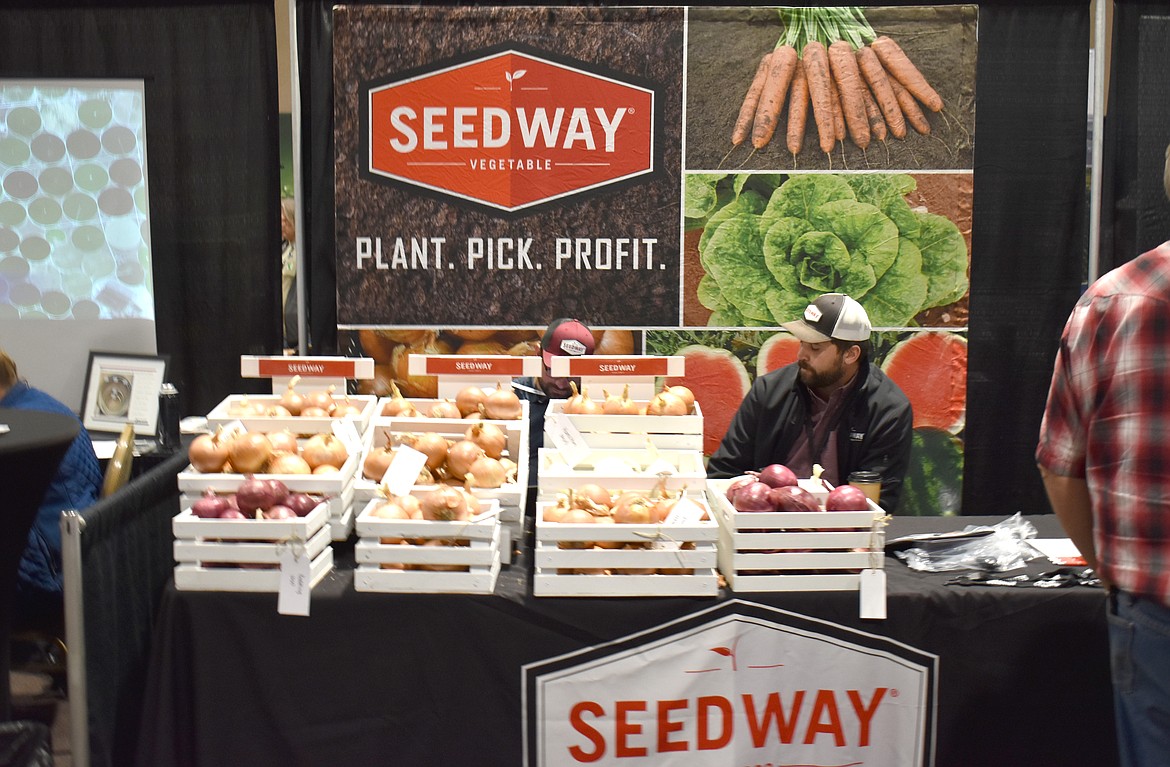
Not everything at the Pacific Northwest Vegetable Growers Association trade show was high-tech. A number of seed, fertilizer and other traditional vendors had their wares on display as well.
Joel Martin/Basin Business Journal
Joel Martin has been with the Columbia Basin Herald for more than 25 years in a variety of roles and is the most-tenured employee in the building. Martin is a married father of eight and enjoys spending time with his children and his wife, Christina. He is passionate about the paper’s mission of informing the people of the Columbia Basin because he knows it is important to record the history of the communities the publication serves. | November 28, 2023 1:00 AM
KENNEWICK — Veggies have gotten very high-tech, if the exhibitors at the 2023 Pacific Northwest Vegetable Association conference and trade show are anything to judge by.
The conference, held Nov. 15-16 at the Three Rivers Convention Center in Kennewick, offered seminars on techniques and developments in farming by experts drawn from universities and businesses all over Washington, Oregon and Idaho. Classes covered a range of topics, although pests and diseases – always a source of concern for vegetable growers – dominated the schedule.
The trade show went a little farther afield, so to speak. Interspersed among the seed growers and fertilizer dealers were things that sounded like something out of a science fiction story.
One of those was Seattle-based Carbon Robotics, which uses artificial intelligence to train its autonomous laser weeders.
“Right now we’re running on 62 different crops,” said Demo Engineer Travis Palmer. “It’s able to discern from the crop to the weed, so you could be on onions at one point, and then drive across the street to a carrot field, hit the model for the carrot, and away you go. It’s pre-programmed, and it’s continually gathering data from what it’s seen – what the weed density is, what the crop looks like – gathering that information and sending it off. It is compiling a very robust program for that type of crop.”
The weeder, nicknamed “Slayer,” is 20 feet wide and fires 30 lasers with sub-millimeter precision to weed as much as two acres in an hour. The weeders are improving at an exponential rate, Palmer said.
“The last couple of years, the machine speed has doubled, and almost maybe (tripled) depending on what crop you’re on,” he said. “That’s a big, big thing. The farmers are always saying, ‘We need more speed, and we need more lasers.’ So what’s happened is, each laser used to shoot four times per second, then it went to eight times per second in the last two years, then in the last six months, we’ve gone to 16 times per second. So now we have 30 lasers shooting at 16 times per second.”
Not far away, Breann Speer, operations manager for MAF PNW in Yakima, was singing the praises of the MAF Roda Agrobotic’s Globalscan system, which can sort and size fruits and vegetables at high speed. It’s a set of high-speed cameras that can take as many as 60 photos of each apple, pear, cherry or almost any other fruit at high speed, sizing it precisely and ferreting out defects both inside and out.
“Outside the effect would be like a limb rub or tail damage or maybe (it’s) just low in color because it was on the inside of the tree instead of the outside, so that’s a downgrade. Internally you could have internal browning you could have water core … (The camera shines) a light spectrum through it and based on the results on the far side we know whether or not it has issues.”
Bruno Quanquin, an agronomist and the owner of Earth Platforms, had a line of soil monitoring equipment, both portable and stationary, that promised to make efficient use of both water and power.
“Water is an important resource, but there’s a cost of water as well,” Quanquin said. “In some areas, water is an allocation, so it’s a finite resource; sometimes they give you 60 days, sometimes 30 days, sometimes 90 days. So you have to manage that very carefully … The thing, ultimately, is to bring exactly what the plant needs – not more, not less.”
Earth Platforms’ devices can monitor soil moisture and salinity at multiple depths and send the data directly to the user’s computer or phone, Quanquin said. It can also track weather forecasts and past trends and project how much irrigation will be needed several days in advance.
A couple of the technologies on display were less directly connected to the actual business of growing food but were intended to make farmers’ jobs easier. One of the side effects of farming is that it tends to require a lot of machinery, none of it cheap. Equipment theft is a real problem in some parts of eastern Washington, said Aaron Seelye, representing Gear Mapper, which tracks equipment electronically and monitors where it is, how long it’s running and so forth.
“Imagine if somebody has a pile of tractors,” Seelye said. “Say they’ve got 40 of them. You can steal two of them, that guy doesn’t even know for months. (You can) throw them on a trailer and take them to Montana or California or wherever, and sell them at an auction. A lot of times these things are sold and bought without titles.”
Gear Mapper sets up a geofence, or electronic perimeter, around a farm or a business and if a piece of equipment is taken offsite, the owner can be notified immediately, That tracking is also useful for delivery trucks, Seelye said.
“We can help along with efficiency thing,” he said. “When people are leaving, idle times if they’re taking the long road between. Say you’re going from Spokane to Wenatchee and you happen to go through Oregon. The supervisor could say, ‘I know you want to see your girlfriend, but on your own time, please.’ … If you own a fleet of pickups you at least deserve to know where they are and what are they honestly doing, and that’s what we’re hoping to give them.”
This year’s conference was one of the best attended in the organization’s history, said Executive Director Sheri Nolan. Between 800 and 850 people attended over the course of two days, she estimated, and the trade show boasted 115 exhibitors.
“I think it’s one of the best attendances that we’ve had,” Nolan said. “And we’re starting to grow back as far as exhibitors go … I think we’re pretty strong and pretty consistent. We have an excellent program every year, which is why everybody keeps coming back.”
Joel Martin may be reached at [email protected]. He has been employed with the Columbia Basin Herald and Basin Business Journal for more than 25 years.
 Bruno Quanquin, owner of Earth Platforms, shows a portable soil monitor designed to track moisture for irrigators.
Joel Martin/Basin Business Journal
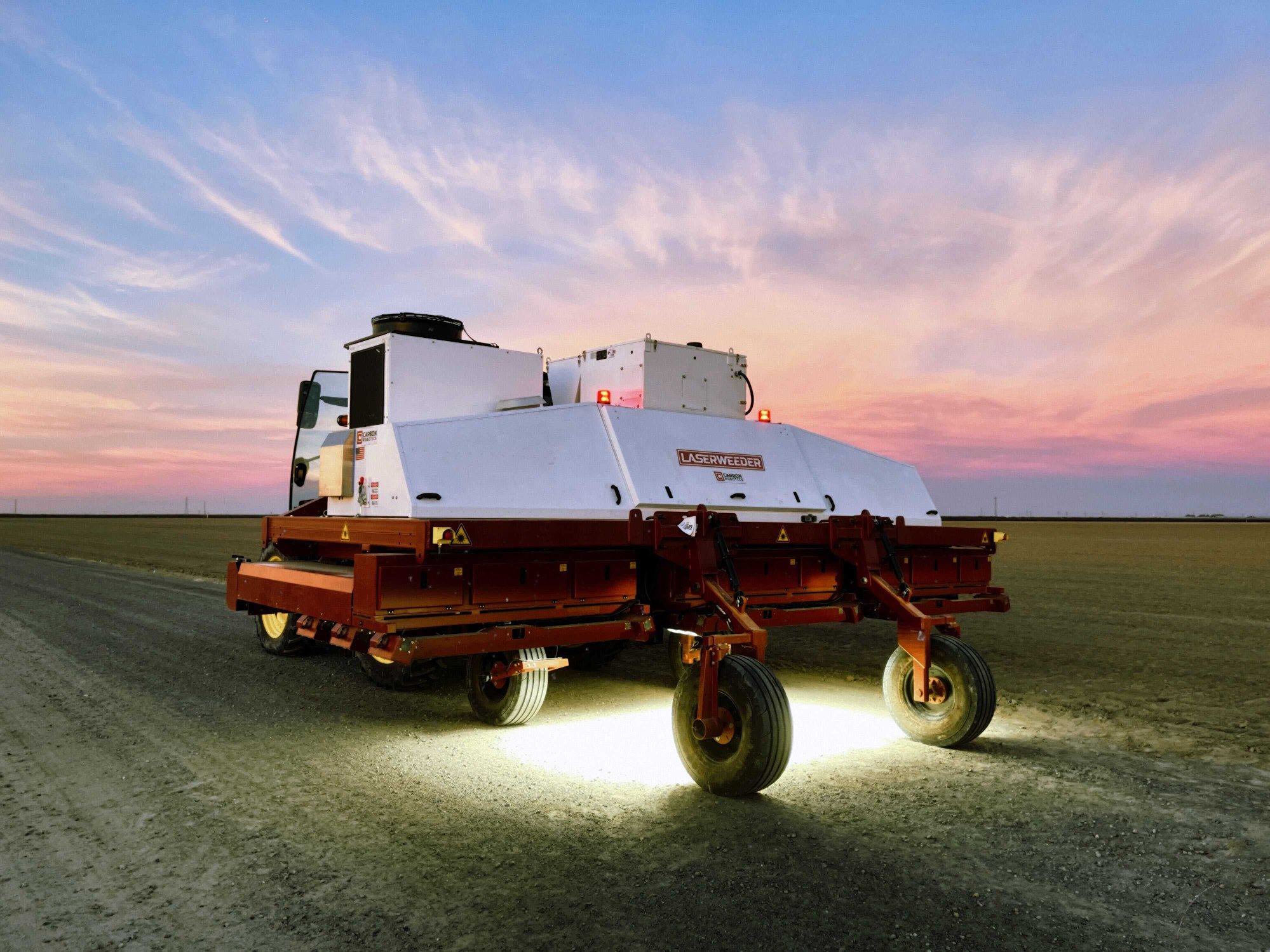 The laserweeder has some impressive gear that even Batman might appreciate. Underneath its body, there are 150 LED lights that make the lighting about four times that of the sun, according to Carbon Robotics VP of Marketing Brett Goodwin. It also has 42 predict and targeting cameras that can direct lasers to eliminate 5,000 weeds per minute.
Courtesy photo/Carbon Robotics
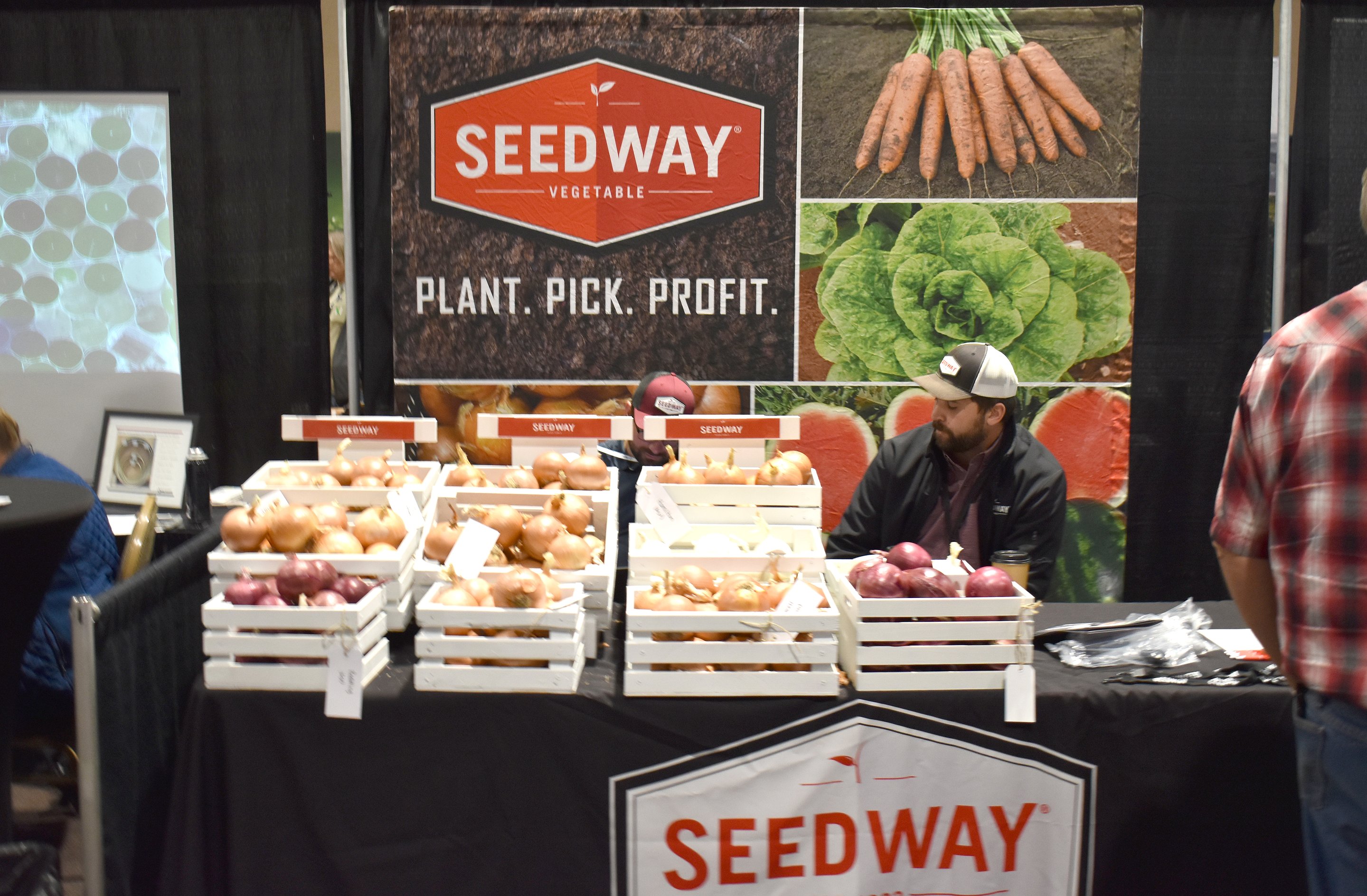 Not everything at the Pacific Northwest Vegetable Growers Association trade show was high-tech. A number of seed, fertilizer and other traditional vendors had their wares on display as well.
Joel Martin/Basin Business Journal
ARTICLES BY JOEL MARTIN

Quincy National Night Out scales down
QUINCY — Quincy’s National Night Out was more compact this year, which worked out well, said QPD Sgt. Joe Westby, who’s in charge of event planning for the Quincy Police Department. “National Night Out is a big event, and the fact that we’re able to shrink it up is like a breath of fresh air,” Westby said. “If you're always doing the same thing, it's kind of nice to switch things up and see how it works.” National Night Out took place Thursday on the block of C Street next to the police station, a shift from previous years when it was held at Lauzier Park. The smaller space meant fewer emergency vehicles for children to explore, but it also meant less walking for attendees. Grant County Fire District 5 brought a fire truck, and the Grant County Sheriff’s Office had a patrol boat. Renew, the Grant County behavioral health agency, had a booth and so did Quincy Partnership for Youth. Veterans Operation Creation sang the national anthem, and the Quincy Animal Shelter brought kittens that piled over each other making friends with passersby. As before, the QPD served grilled hot dogs.

Quincy Police retirements leave big shoes to fill
QUINCY — There are some big shoes to fill at the Quincy Police Department. “We’re losing 48 years of experience between them,” Quincy Police Chief Ryan Green said at the retirement party for Capt. Jorge Trujillo and Det. Damon Powell Thursday. Trujillo, who grew up in Sunnyside, has been with QPD for 19 years, he said, coming on as a patrol officer fresh out of the military. From there he served as a field training officer, a detective and finally captain. “I consider him my left-hand man,” Green said. “He runs the operations side of the house … He knows the agency very well, and he knows the community.” Trujillo has some projects around the house to tackle now that he’s retired, he said.

Big fun on a small scale
Wheat Land Communities’ Fair opens Thursday
RITZVILLE — The Wheat Land Communities’ Fair isn’t as big or as flashy as some of the county fairs around central Washington, but the folks who keep it going like it just the way it is. “It’s somewhere you can go and get an old-time traditional feeling, and you’re comfortable letting your kids roam the grounds and experience all that it has to offer,” said Board Member Lori Williams. “It’s more of a feeling than (one) specific thing,” The fair starts Thursday in Ritzville and runs through Sunday. Starting Friday, the 56th Ritzville Rodeo will take place alongside the fair at the rodeo grounds. This year the entertainment budget was expanded, Williams said, to be able to offer more fun that’s covered by the cost of admission. For the kids, there’s face painting, balloon art, Lego crafts, races, contests and games. Children can also ride on a little train towed around the fairgrounds behind a tractor.