
The other tree fruit: Pear harvest looking good this year
JOEL MARTIN | Hagadone News Network | UPDATED 3 years AGO
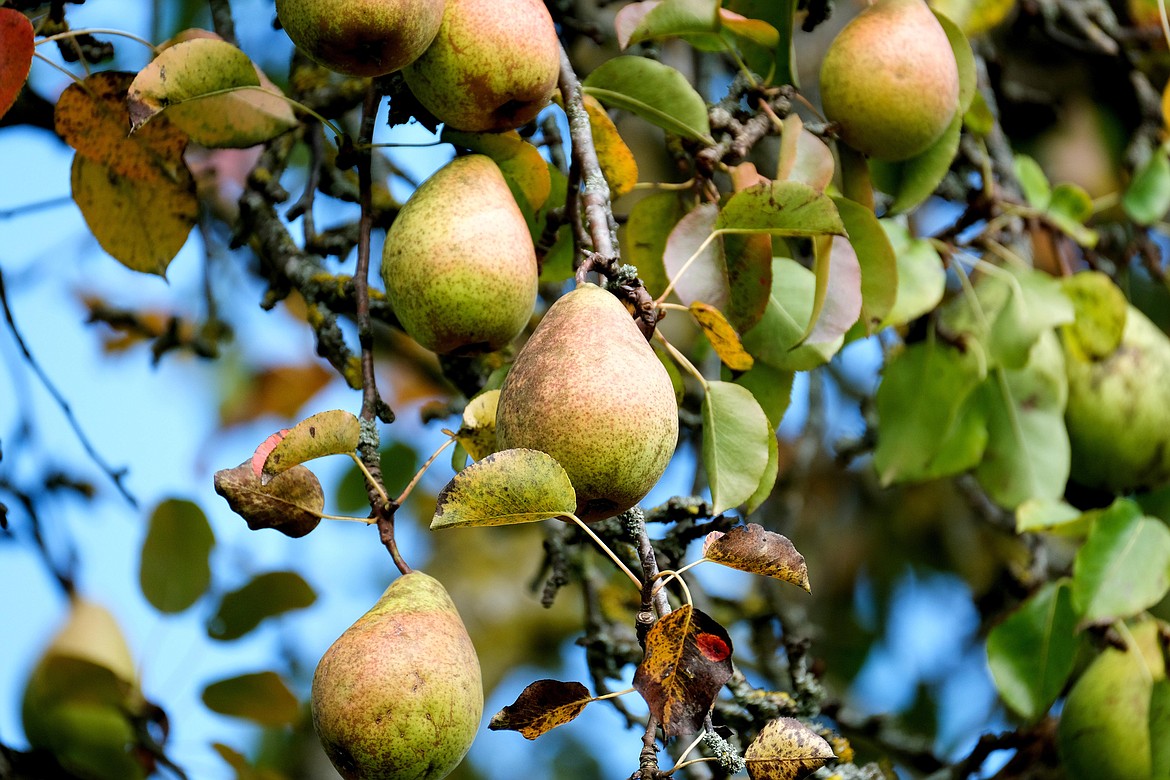
Washington's pear harvest is looking strong this year.
Courtesy photo/NickyPe/Pixabay
Joel Martin has been with the Columbia Basin Herald for more than 25 years in a variety of roles and is the most-tenured employee in the building. Martin is a married father of eight and enjoys spending time with his children and his wife, Christina. He is passionate about the paper’s mission of informing the people of the Columbia Basin because he knows it is important to record the history of the communities the publication serves. | October 2, 2023 1:00 AM
CASHMERE — The pear harvest is looking good this year in Washington, according to Jon DeVaney, president of the Washington State Tree Fruit Association.
“(Pears are like) the younger sibling.” DeVaney said. “They get a little overshadowed in the Northwest by apples. But pears have a really important place in Northwest agriculture, in the tree fruit industry. And our pear crop is looking good this year.”
Washington pear growers are expected to produce 15.1 million boxes of pears, according to data from The Pear Bureau Northwest. Pears are shipped in 44-pound boxes rather than the 42-pound boxes that are standard for apples, DeVaney added. About 12.5% of that crop is organic pears, he said.
“That’s an important and growing sector of the industry,” he said. “Consumers that prefer organic will pay a premium to get that, and that premium can often offset some of the costs of growing a crop under the organic production standards.”
Pears favor a moderate climate even more than apples, DeVaney said. In Washington, most pears are grown in the Wenatchee and Yakima valleys, and in the Columbia Gorge around White Salmon and Bingen. There are also pear operations in the Medford, Oregon area, DeVaney said.
Water was a concern for growers of almost everything in the Yakima Valley, with the region teetering on the edge of a drought, but DeVaney said that didn’t really affect pears as much as was feared. Pear growers have ways of using water efficiently and effectively, he said.
“Fortunately, we do not have long stretches of really high heat that can cause damage to growing fruit,” DeVaney said. “And, one of the ways that you can mitigate that potential damage is with overhead cooling to try to evaporatively cool the fruit, just like you would do, if you have kids, sending them out to play in the sprinkler on a hot day. We do that for the fruit to keep it cool and not get sunburned. But more moderate temperatures meant there was less need for continuous overhead cooling, which reduced overall demands for water.”
The weather pattern this year did affect pears in another way, however, said Gene Woodin, general manager of growers coop Blue Star Growers in Cashmere. Growers experienced a flash bloom, which means the trees bloomed early and had less time for pollination.
“It kind of caught us off guard, and then the flowers just weren’t viable for as long a period as normal,” Woodin said.
That flash bloom may have been counteracted a little bit, Woodin said, by an unexpected source: wildfire smoke. The northern Cascades have had their share of forest fires this year, which can have really negative effects on crops like wine grapes or hops, but with pears, the smoke had a different effect.
“There can actually be higher ethylene content in the smoke, and ethylene would be the hormone that causes pears to ripen,” Woodin said. “And I don’t think that’s necessarily a negative thing. For pears, a delay in pollination, or just the timing of the flowers getting pollinated on the tree, can create some mixed maturity, and the smoke can actually even that out, so the less-ripe pears may ripen up a little bit faster. It creates a little more consistency.”
The Bartlett pear crop is a little above estimate, Woodin said, but the green Anjous were more affected by the poor pollination. Russet bosc pears need some cooler moist weather early in the season that didn’t materialize, making the fruit less marketable in a year when industry demand is high.
Labor shortages, as with many other crops, is making the pear harvest more expensive for farmers.
“There’s research going on into automated harvesting equipment, but we still need people to grow and pick these crops,” DeVaney said. ”That’s a challenge in this economy. There’s a lot of open jobs and potential workers have a lot of choices. And the overall number of people working domestically in agriculture has been declining.”
More growers are turning to H2A temporary guest workers, which is both expensive and paperwork-heavy, to get their fruit picked, he added.
About 25.5% of the pear crop is exported, DeVaney said, about 16% going to Mexico, the U.S.’ largest buyer of both pears and apples. The recent easing of tariffs on exports to India won’t affect the pear market much, since there’s not a lot of interest in pears there yet. However, China still has retaliatory tariffs on fruit, which has made exporting more difficult than it used to be, he said.
“Sometimes pears are overlooked, but they shouldn’t be,” DeVaney said. “They are delicious and extremely healthy. And now that they’re in season, folks should be enjoying beautiful Northwest pears while they’re fresh on the market.”
Joel Martin may be reached via email at [email protected].
ARTICLES BY JOEL MARTIN
Endless battle
Noxious Weed Control Board works to keep invasive plants under control
MOSES LAKE — Some of the nastiest plants in Grant County were the topic of a class led by Jay Johnson, a consultant with the Grant County Noxious Weed Control Board, Tuesday. The Noxious Weed Control Board, as its name would suggest, is tasked with keeping weeds under control in Grant County. That’s not a small job; the board’s website lists 129 species of noxious weeds that are found around Grant County. A noxious weed is defined as an invasive, non-native plant that threatens agricultural crops, local ecosystems or fish and wildlife habitat, according to the Noxious Weed Control Board. Washington state law requires that these weeds be identified and their spread kept to a minimum, if not completely eradicated. “We’re one of those agencies a lot of people don’t really understand,” Johnson said. “We’re a county office and … our funding is tax-based assessment. When you get your tax bill and you look down at all the expenses that you pay for, there we are.”
BASIN EVENTS: Oct. 16-24
COLUMBIA BASIN — Whether you feel like shopping, crafting, learning or seeing a show, there’s something happening for you this week in the Basin. Oct. 16 ‘My Family (Mi Familia)’ screening Spanning three generations, “My Family (Mi Familia)” is a heartfelt drama that follows the Sánchez family as they build their lives in East Los Angeles. Through love, hardship, triumph, and sacrifice, the film explores the immigrant experience, the strength of family bonds, and the traditions that connect one generation to the next. Lowrider show and taco truck before the screening. Sponsored by Columbia Basin Allied Arts, EDUBS C/S and the Moses Lake Creative District. $12 per person. Doors open at 6 p.m., film begins at 7 p.m. at the Moses Lake Civic Center Auditorium, 401 S. Balsam St. Tickets and info: www.cba-arts.org.

Moses Lake author encourages women to look beyond church culture norms
MOSES LAKE — A Moses Lake author’s book, “A Christian Woman Striving to Live Her Faith in a Man-Controlled World,” takes aim at the role to which many churches relegate the female half of their congregations. “It’s to encourage women in the faith,” Linda Curran said. “A lot of churches say, ‘Teach Sunday school, do this, do that, but don’t (evangelize.)’" In her book, Curran recounts a time when she moved to a new community and joined a church there. She was surprised to learn that, as a new female member, she had been automatically assigned church cleaning duties. When she questioned it, she wrote, she was met with condescension and her objections were brushed aside. In other churches, she said, women who were capable of teaching were relegated to “women’s ministry.”