
Q&A: Soap Lake City Council position 7 candidates
GABRIEL DAVIS | Hagadone News Network | UPDATED 2 years, 11 months AGO
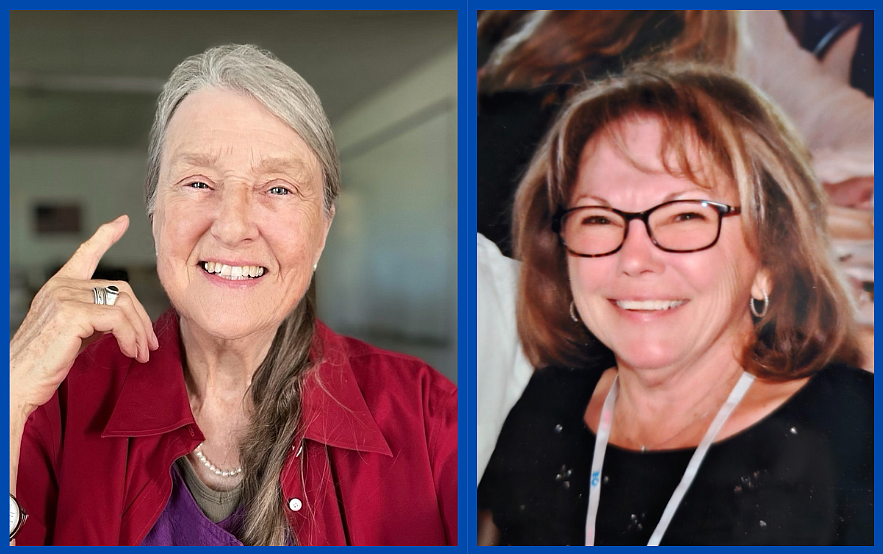
Judith Gorman, left, is running against Incumbent JoAnn Rushton, right, for Soap Lake City Council Position 7.
Gabriel Davis is a resident of Othello who enjoys the connections with his sources. Davis is a graduate of Northwest Nazarene University where he studied English and creative writing. During his free time, he enjoys reading, TV, movies and games – anything with a good story, though he has a preference for science fiction and crime. He covers the communities on the south end of Grant County and in Adams County. | October 21, 2023 12:15 PM
SOAP LAKE — Incumbent JoAnn Rushton is facing Judith Gorman for Soap Lake City Council Position 7.
The Columbia Basin Herald asked each candidate the questions below with matching word count restrictions and a deadline to submit responses. The paper encourages voters to contact the candidates if they want to discuss issues in more depth.
Responses are in alphabetical order according to the candidates’ last names.
Election Day is Nov. 7; ballots have been mailed out and early voting started Oct. 20.
How would you approach finances in the city of Soap Lake as a council member, especially in light of the city’s recent performance in state audits?
Gorman: I want a balanced budget for this year, 2023, first and formost that has all items in their correct category. It is my priority that the budget pass the auditor with all items in their correct category and amounts. I’d also like to have a 2024 budget in place early in 2024. I want both to pass the auditor’s evaluation. I have seen nothing as yet, including at the two public workshops for the council. Hopefully this will be provided soon to the public.
Rushton: First we have to make sure to have a qualified staff to perform duties required. That would be mayors top priority. With information from staff, make sure budgets are set and followed. Curb unnecessary spending and keep funds going to the highest priorities for the wellbeing of our citizens.
How do you plan on helping Soap Lake grow, economically and physically?
Gorman: I am supportive of Soap Lake growing. All design must, in my opinion, take the facts into account. The Economic Development Committee and the Creative District Planning for
growth is key. I am very much a supporter of both of those committees. Financing design
studies, infrastructure studies and other related studies are key. Infrastructure systems must be in place and the accurate research for growth must clearly take lake health into account. The lake is the lowest elevation for all surrounding directions. Funding for this infrastructure is key. Since a small part of the shoreline of the lake is within the city limits, long term planning for development that will benefit our city of Soap Lake should be done minimally at least, with Grant County, The Department of Ecology (state entities) and the Bureau of Reclamation and Quincy Columbia Basin Irrigation District. Soap Lake has a strong history of therapeutic use of the mineral lake for healing. I would like to see that continue as it has through most of the lake’s historic use – by people actually using the lake itself for their therapeutic use, rather than continuing to remove water from the lake for that use and dumping the mineral water into the sewage treatment facility.
Rushton: Encourage business, new homes and families to grow our tax base. We can do this by keeping it a clean, safe place to live, through law and code enforcement.
What do you believe are Soap Lake’s strengths, and how do you intend on capitalizing them?
Gorman: I think it is “the people” who live in and are attracted to Soap Lake who I believe to be the greatest resource of the city. The commitment of individuals historically to work independently is key in the practice of the democratic process. Soap Lake has some signs of success at this through the buildings that stand today…and also those that no longer exists or remain in remodel process (i.e. City Hall). I believe it is the diversity of skills of the people who live in Soap Lake and the personal agency with which their interactions are usually based that are the “greatest strengths”. In addition, those skills enhance the towns and the peoples’ resiliance. It is the people who bring their diverse perspective, skills, histories and cultures and also who share a love for the land, the mineral lake and the ecosystem that enliven living here as well as the governmental processes. As a City Council Member, I will utilize my considerable skills in systems analysis, communication and mediation, all which helps in prioritizing/researching issues, fact finding and problem-solving pathways for success with other agencies and departments within the city (including in the budget process).
Rushton: Our inviting small town atmosphere and sunny summers are our strong assets. By keeping a strong chamber to hold fun events for citizens and invite summer guests.
How can the public contact you?
Gorman: During the campaign, I can be reached via my email at [email protected].
Rushton: I can be reached at 509-750-8351 or a letter can be dropped off at the city addressed to me.
ARTICLES BY GABRIEL DAVIS

Work-based learning lets students build their own futures
MOSES LAKE — Work-based learning provides education opportunities for the workforce to receive hands-on training and technical education and prepare themselves to enter various industries. Educators and workforce development professionals from Eastern Washington discussed some the training they offer and the benefits of their programs. Next Generation Zone, an affiliate of WorkSource based in Spokane, provides job training opportunities for youth and young adults ages 16 to 24. Program Coordinator Kate Martin said there are multiple benefits to the program. “One of them is a paid work experience, and that’s where we reach out to area employers who are willing to take a young person and train them,” she said. “This is a short-term learning experience, so it’s typically about 240 hours; sometimes it could be longer or shorter. We’re the actual employer; we cover all of their wages, taxes, the L&I, and the employer just agrees to give them the experience and train them in whatever field it is that they’re wanting to go into.”

Serving schools: ESD superintendents reflect on operations, priorities
MOSES LAKE — Educational service districts are government-mandated agencies put in place to provide services to school districts across the state. ESD Superintendents discussed what they do and their priorities in operating their districts. ESD 105, led by Superintendent Kevin Chase, serves four counties, including Kittitas, Yakima and portions of Klickitat and Grant counties and provides support for 25 school districts – including Royal School District and Wahluke School District – and more than 66,000 students. “We help them collaborate with each other as well or collaborate with other partners,” Chase said. “(It’s) a lot of advocacy work, either regionally or across the state, or even federally, working on different issues that impact our education. And we provide very specialized services in certain situations in order to meet the needs of our students in our region and of our school districts.”

Columbia Basin Project making headway through Odessa Groundwater program
CASHMERE — The Columbia Basin Project is making gradual progress toward completion with particularly significant accomplishments for the Odessa Groundwater Replacement Program in the last six months or so, according to Columbia Basin Development League Executive Director Sara Higgins. “When we’re dealing with a project of this size, advancement is kind of like watching paint dry, but yes, there have been (developments),” she said. “There are a lot of exciting things happening right now.” There are more than 300 miles of main canals, about 2,000 miles of lateral canals and 3,500 miles of drains and wasteways in the irrigation project, according to the U.S. Bureau of Reclamation website. The CBDL advocates for the operation of those waterways and for the project to continue “build-out.”