
Moving bales
GABRIEL DAVIS | Hagadone News Network | UPDATED 2 years, 6 months AGO
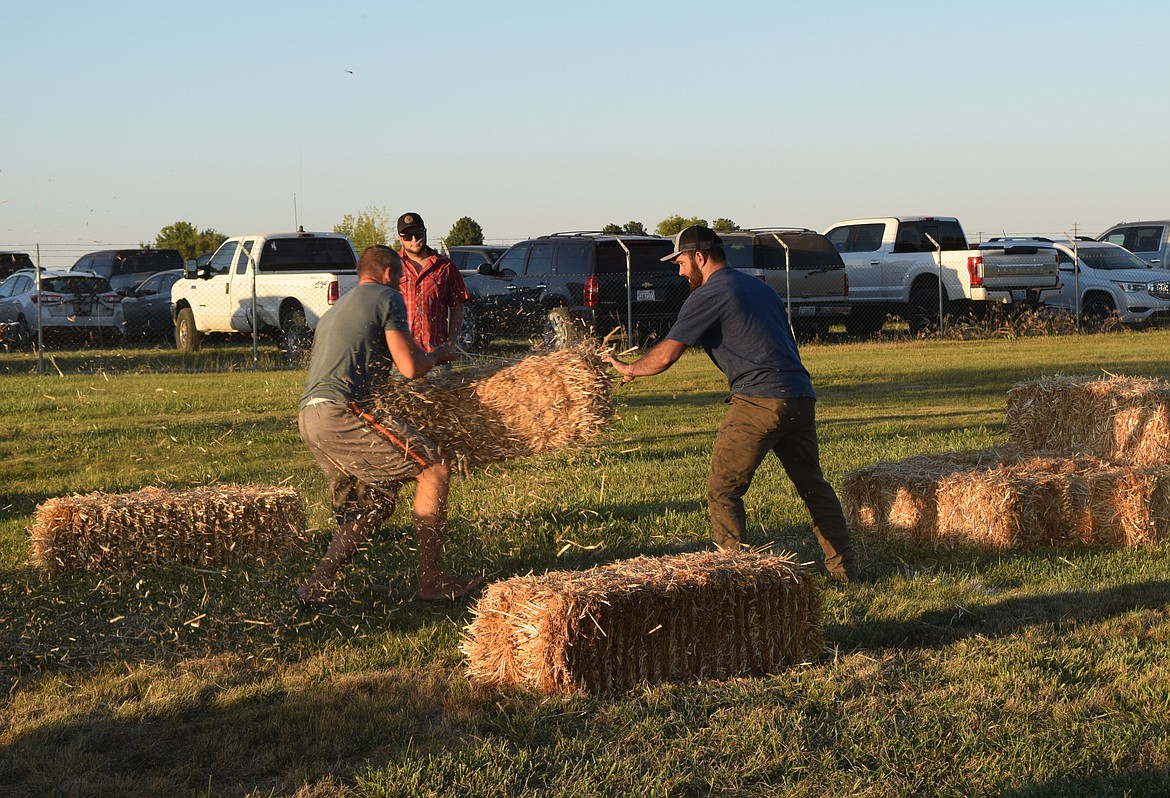
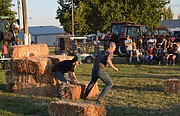
Eric Belnap, left, and Easton Roylance compete in the 2023 Hay Bucking Contest on the North Lawn of the Adams County Fairgrounds Thursday during the Othello Fair.
GABRIEL DAVIS/COLUMBIA BASIN HERALD
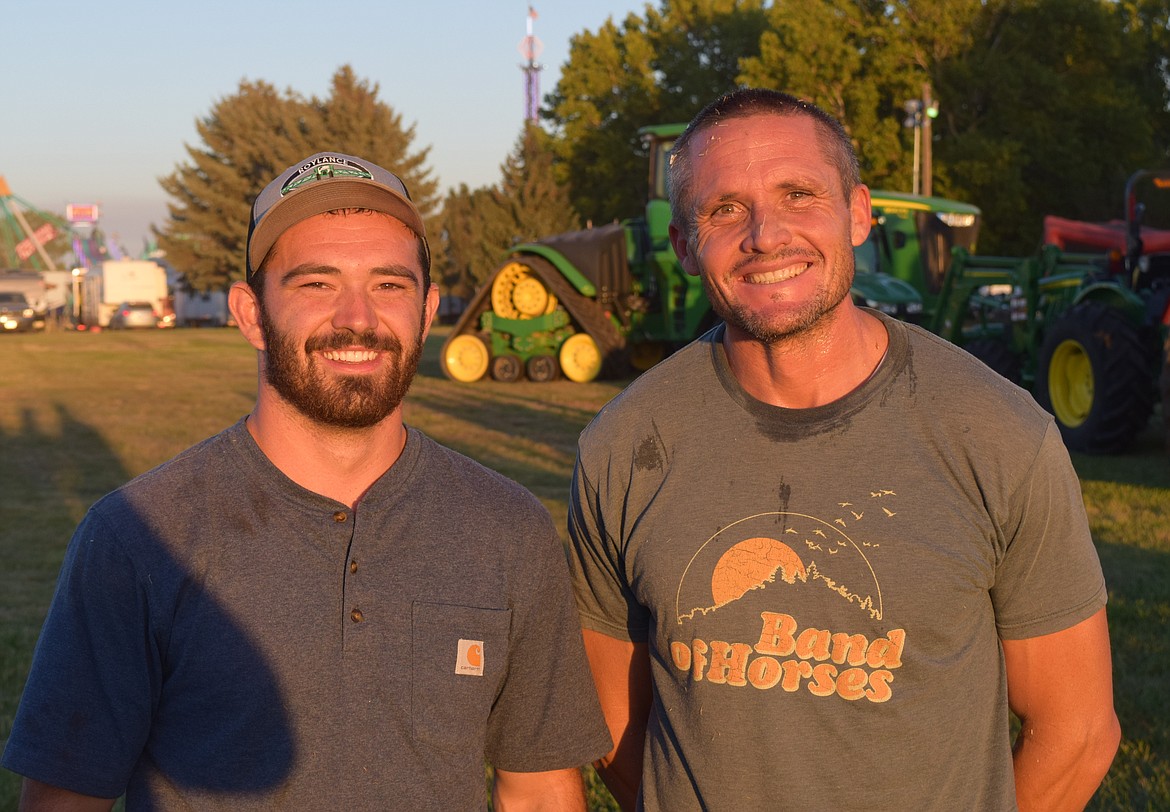
Easton Roylance, left, and Eric Belnap, right, the returning champions of the 2022 Hay Bucking Contest won again at the 2023 Othello Fair Thursday evening, netting them $1000 in prize money.
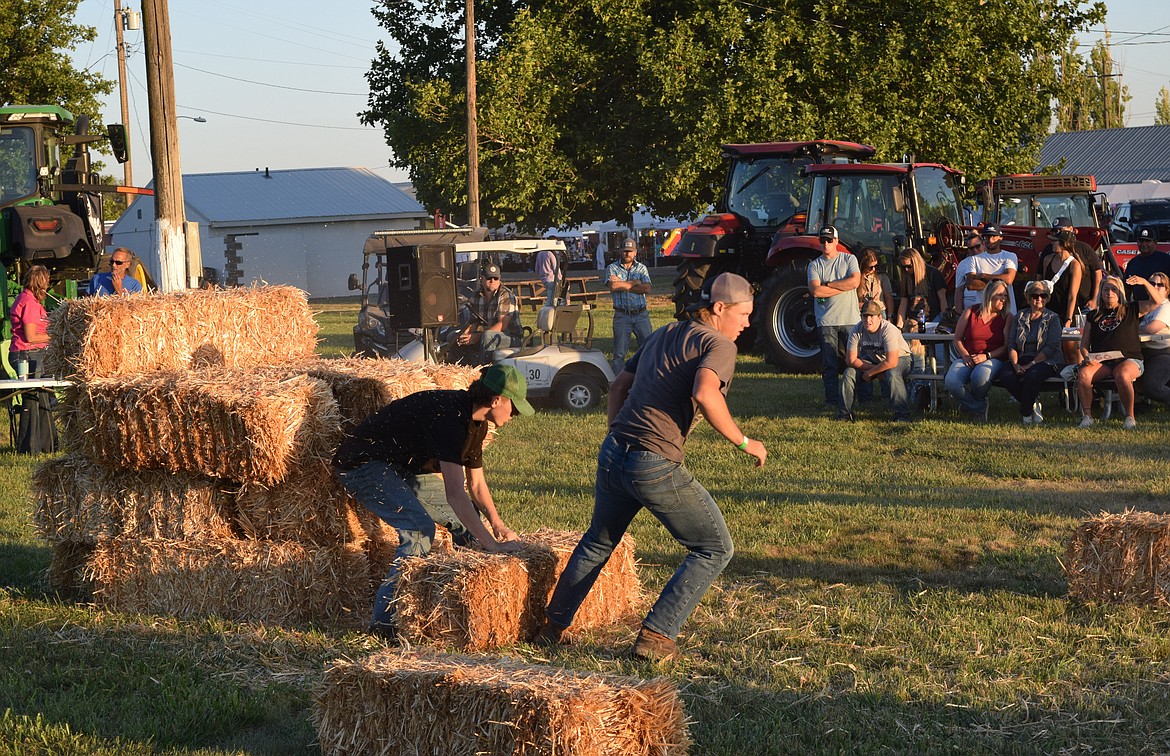
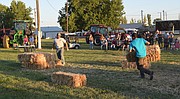
A team of two competes in the 2023 Othello Fair Hay Bucking Contest. The goal of the contest is for one team member to stack hay bales while the other carries them, as quickly as possible.
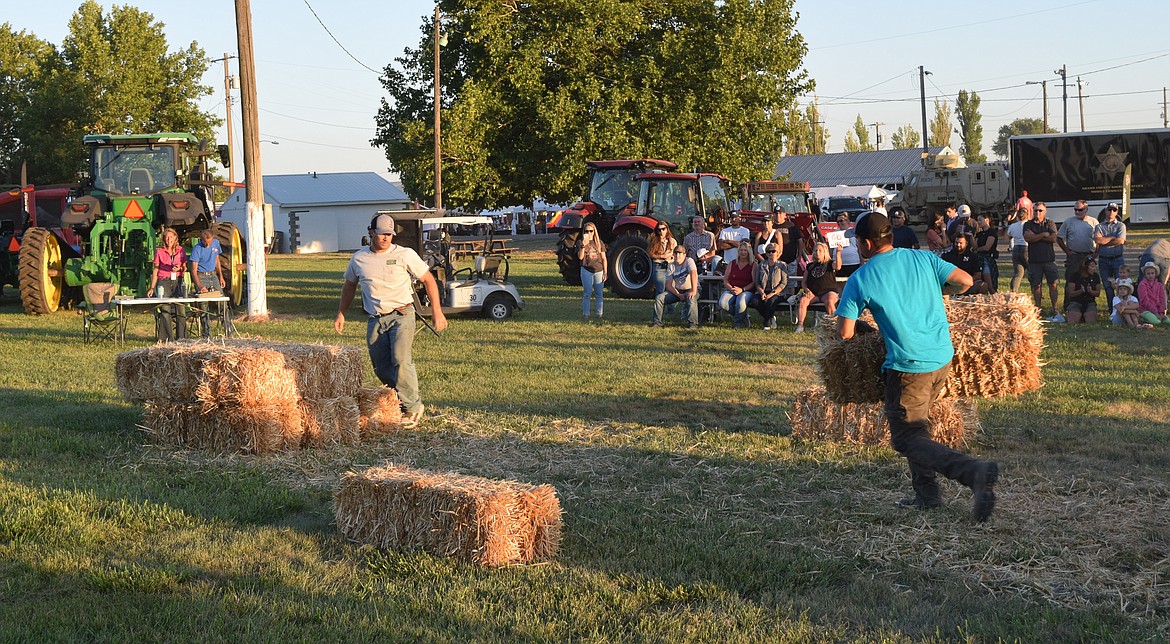
One hay bucking team member carries a bale of hay to the other team member, the stacker. After the bales are stacked, the team members switch roles and re-stack all the hay.
Gabriel Davis is a resident of Othello who enjoys the connections with his sources. Davis is a graduate of Northwest Nazarene University where he studied English and creative writing. During his free time, he enjoys reading, TV, movies and games – anything with a good story, though he has a preference for science fiction and crime. He covers the communities on the south end of Grant County and in Adams County. | September 19, 2023 1:30 AM
OTHELLO — Othello Fair attendees lined the North Lawn next to the Adams County Fairgrounds entrance Thursday evening to watch teams of two participants compete in the 2023 Hay Bucking Contest for a chance at the first place $1000 prize.
This is the second year the Hay Bucking contest has returned to the Othello Fair after a long absence, said Othello Fair President Becky Flint.
“They did it years ago, and back when people just bucked that. Now there’s, you know, stackers and everything else. So when they actually bucked hay, they did it here and it was a hit.”
Flint said the former entertainment coordinator for the 2022 Othello Fair suggested they bring back the hay bucking contest. Flint said she was originally doubtful that the event would be a success.
“But last year it was like the highlight of the fair,” said Flint. “It’s like gold.”
The contest is simple in concept but difficult in its execution. Hay bales are neatly stacked a few yards away from a marked square. One team member must take hay bales from the stack and run them across the arena to the other participant, who then has to take the hay bales and form a new stack.
After all the hay bales from the original stack are re-stacked, the team members switch jobs and the stacker takes bales and runs them back to the spot where they were originally and the runner becomes the stacker.
Flint explained what goes into organizing the contest.
“I find 70-pound bales,” said Flint. “It's donated by a great hay farmer here…and he donates it every year.”
The bales must be stacked in a certain configuration during the contest, with four bales in each layer. This year participants couldn’t throw the hay bales, because if any bales fell apart it was a ten-second penalty to the team’s time.
It takes both strength and endurance to run a dozen bales of hay to your partner, then turn around and start stacking them. Interested individuals must sign a release waiver acknowledging they may be injured in the competition, and participants under 18 must get signed parent or guardian permission.
This year’s team with the fastest time was made up of Eric Belnap and Easton Roylance, who were also the winners of the 2022 Hay Bucking Contest. Belnap and Roylance said they had to return to defend their title.
“I feel good, I feel real good,” said Belnap. “I was a little fearful this year.”
Belnap said they were doing the event for fun and hadn’t practiced for the contest.
“I just showed up about 30 minutes ago into town, and he (Easton) got off work and came over here,” said Belnap. “We came back, had to come back.”
Flint said while there were 10 teams who competed in the 2022 contest, only three registered for this year’s event. However, Flint said Thursday evening that she anticipated more involvement from youth involved with the fair on Friday when they would be holding a separate Hay Bucking Contest between Livestock Judging competitions.
“We have a bunch of schools coming in for FFA judging tomorrow morning, and they asked me if they could do it next year, which is now this year,” said Flint. “So they're having their own contest for belt buckles tomorrow.”
Gabriel Davis may be reached at [email protected]. Download the Columbia Basin Herald app on iOS and Android.

ARTICLES BY GABRIEL DAVIS

Work-based learning lets students build their own futures
MOSES LAKE — Work-based learning provides education opportunities for the workforce to receive hands-on training and technical education and prepare themselves to enter various industries. Educators and workforce development professionals from Eastern Washington discussed some the training they offer and the benefits of their programs. Next Generation Zone, an affiliate of WorkSource based in Spokane, provides job training opportunities for youth and young adults ages 16 to 24. Program Coordinator Kate Martin said there are multiple benefits to the program. “One of them is a paid work experience, and that’s where we reach out to area employers who are willing to take a young person and train them,” she said. “This is a short-term learning experience, so it’s typically about 240 hours; sometimes it could be longer or shorter. We’re the actual employer; we cover all of their wages, taxes, the L&I, and the employer just agrees to give them the experience and train them in whatever field it is that they’re wanting to go into.”

Serving schools: ESD superintendents reflect on operations, priorities
MOSES LAKE — Educational service districts are government-mandated agencies put in place to provide services to school districts across the state. ESD Superintendents discussed what they do and their priorities in operating their districts. ESD 105, led by Superintendent Kevin Chase, serves four counties, including Kittitas, Yakima and portions of Klickitat and Grant counties and provides support for 25 school districts – including Royal School District and Wahluke School District – and more than 66,000 students. “We help them collaborate with each other as well or collaborate with other partners,” Chase said. “(It’s) a lot of advocacy work, either regionally or across the state, or even federally, working on different issues that impact our education. And we provide very specialized services in certain situations in order to meet the needs of our students in our region and of our school districts.”

Columbia Basin Project making headway through Odessa Groundwater program
CASHMERE — The Columbia Basin Project is making gradual progress toward completion with particularly significant accomplishments for the Odessa Groundwater Replacement Program in the last six months or so, according to Columbia Basin Development League Executive Director Sara Higgins. “When we’re dealing with a project of this size, advancement is kind of like watching paint dry, but yes, there have been (developments),” she said. “There are a lot of exciting things happening right now.” There are more than 300 miles of main canals, about 2,000 miles of lateral canals and 3,500 miles of drains and wasteways in the irrigation project, according to the U.S. Bureau of Reclamation website. The CBDL advocates for the operation of those waterways and for the project to continue “build-out.”