
Inconvenient accommodation
JOEL MARTIN | Hagadone News Network | UPDATED 2 years, 6 months AGO
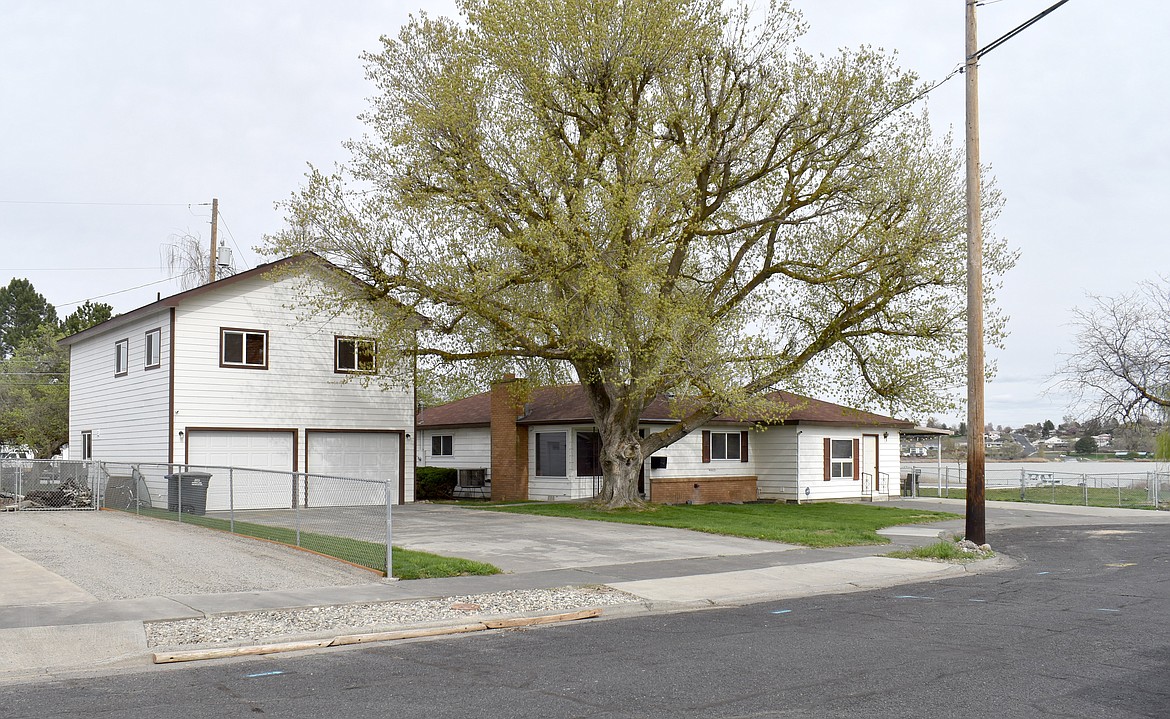
This lakefront short-term rental home in Moses Lake was listed Wednesday at $598.30 per day, according to AirDNA, which tracks short-term and vacation rental properties. Short-term rentals are a lucrative business, but some neighbors think it’s gotten out of hand.
Joel Martin/Columbia Basin Herald
Joel Martin has been with the Columbia Basin Herald for more than 25 years in a variety of roles and is the most-tenured employee in the building. Martin is a married father of eight and enjoys spending time with his children and his wife, Christina. He is passionate about the paper’s mission of informing the people of the Columbia Basin because he knows it is important to record the history of the communities the publication serves. | April 4, 2024 5:53 PM
MOSES LAKE — The prevalence of short-term or vacation rentals has upset some people in Moses Lake.
“(There’s been) increased activity, a lot of vehicles and trailers,” said Moses Lake resident Rebecca Hutsell, who said her neighborhood has at least four homes available for short-term rental that she knows of.
Traffic through the one entrance into her neighborhood can get hectic, she said.
“Everybody wants to bring their trailers ... A lot of strangers in the neighborhood we don't know,” Hutsell said.
She said she found out some of the neighboring homes were short-term rentals when she and her husband were on vacation and they saw children they didn’t know on their yard cameras in front of their house.
The city has some pretty stringent requirements for licensing short-term rentals: Each property has to have a specialized business license from the city and comply with all state regulations. If the property owner lives more than 30 miles from Moses Lake, there has to be a manager available 24 hours a day to respond to complaints or concerns. Maximum occupancy is two people per bedroom, plus another two. Every property has to have off-street parking, and on-street parking can’t exceed 40% of the front-yard frontage. Neighbors within 200 feet of a rental property have to be notified when a license is issued, and again if the local property manager changes.
Not every property lives up to these requirements, however. According to AirDNA, a Denver-based company that tracks short-term and vacation rentals nationwide, there were 127 short-term rentals listed Wednesday in Moses Lake’s ZIP code. Not all were within the city limits, but the majority were, according to AirDNA’s map. However, Moses Lake Utility Services Manager Jessica Cole said at the city council’s Feb. 27 meeting there are around 27 properties licensed by the city. A license application takes at least 14 days to process, she added.
“There's one right next door to us,” Sharon Van Woert of Moses Lake said at the meeting. “It was there two years before we knew what it was, without a license. We're okay, we're trying to just coexist, only I have a problem with the number of people. They've had anywhere from six people to 30 people … All summer long, every weekend, there's lots of people.”
That overabundance of visitors is a large part of why residents say they object to the unpermitted short-term rentals.
“It's not feeling residential when you have 15, 20, 30 people,” Hutsell said. “That's the problem: on occasion, you'll have an event at your house, everybody knows that, Fourth of July, and that's OK. Everybody kind of says OK. But when it’s every weekend, it feels like you're next to a hotel.”
Short-term rentals are big business. The average short-term rental brought in $44,400 in the last year, according to AirDNA. The average daily rate was $318, and some properties, particularly on the lakefront, can go for $500-$600 per night. At any given time, an average of half of those properties is occupied, according to AirDNA statistics.
The Moses Lake Municipal Code doesn’t stipulate any limitation on the density of short-term rental properties in a given area, which causes residents to worry about their residential neighborhoods turning more and more commercial as time goes on. The number of active listings in Moses Lake has increased by 19% in the last year, according to AirDNA.
“What’s kind of scary is that a bunch of houses are for sale on this street, a couple of them empty,” Hutsell told the Columbia Basin Herald. “You start getting afraid that they’re gonna get sold, and then who knows what happens?”
The Moses Lake Municipal Code is in the process of a major overhaul, said City Manager Kevin Fuhr, and there will be some changes to how short-term rentals are handled. One thing the city wants to do is contact the unlicensed rental owners and get them licensed and in compliance, he said.
“We are actually even reaching out to these two (online listing) companies, VRBO and Airbnb, and any others and asking the companies if they will pull people's ads on their sites until they get a business license,” Fuhr said. “Apparently, on these sites, there's a spot where they could require it and some cities require it. So we're going to ask these businesses if they can pull any listings that don't have a business license associated with (them).”
Other proposed reforms include expanding the radius in which neighbors must be notified from 200 yards to 300, which would generally cover the neighbors two houses away in any direction, and requiring owners to renew their business license every year. Short-term rental home owners would receive written warnings after two verified code violations, and have their license revoked after the third.
“When I say violations, I mean these have to be legit verified violations; it can't just be somebody calls in and says they're making too much noise,” Fuhr said. “It would have to be actual, proven violations. On the third violation, the community development director would vacate their business license and they would be prohibited from putting that place back on the listing.”
Fuhr emphasized that those are only proposed changes. The city has to submit the entire revised code to the State of Washington for vetting, and then to the Moses Lake City Council for final approval.
Joel Martin may be reached via email at [email protected].
ARTICLES BY JOEL MARTIN

Endless battle
Noxious Weed Control Board works to keep invasive plants under control
MOSES LAKE — Some of the nastiest plants in Grant County were the topic of a class led by Jay Johnson, a consultant with the Grant County Noxious Weed Control Board, Tuesday. The Noxious Weed Control Board, as its name would suggest, is tasked with keeping weeds under control in Grant County. That’s not a small job; the board’s website lists 129 species of noxious weeds that are found around Grant County. A noxious weed is defined as an invasive, non-native plant that threatens agricultural crops, local ecosystems or fish and wildlife habitat, according to the Noxious Weed Control Board. Washington state law requires that these weeds be identified and their spread kept to a minimum, if not completely eradicated. “We’re one of those agencies a lot of people don’t really understand,” Johnson said. “We’re a county office and … our funding is tax-based assessment. When you get your tax bill and you look down at all the expenses that you pay for, there we are.”

BASIN EVENTS: Oct. 16-24
COLUMBIA BASIN — Whether you feel like shopping, crafting, learning or seeing a show, there’s something happening for you this week in the Basin. Oct. 16 ‘My Family (Mi Familia)’ screening Spanning three generations, “My Family (Mi Familia)” is a heartfelt drama that follows the Sánchez family as they build their lives in East Los Angeles. Through love, hardship, triumph, and sacrifice, the film explores the immigrant experience, the strength of family bonds, and the traditions that connect one generation to the next. Lowrider show and taco truck before the screening. Sponsored by Columbia Basin Allied Arts, EDUBS C/S and the Moses Lake Creative District. $12 per person. Doors open at 6 p.m., film begins at 7 p.m. at the Moses Lake Civic Center Auditorium, 401 S. Balsam St. Tickets and info: www.cba-arts.org.

Moses Lake author encourages women to look beyond church culture norms
MOSES LAKE — A Moses Lake author’s book, “A Christian Woman Striving to Live Her Faith in a Man-Controlled World,” takes aim at the role to which many churches relegate the female half of their congregations. “It’s to encourage women in the faith,” Linda Curran said. “A lot of churches say, ‘Teach Sunday school, do this, do that, but don’t (evangelize.)’" In her book, Curran recounts a time when she moved to a new community and joined a church there. She was surprised to learn that, as a new female member, she had been automatically assigned church cleaning duties. When she questioned it, she wrote, she was met with condescension and her objections were brushed aside. In other churches, she said, women who were capable of teaching were relegated to “women’s ministry.”