
Dent reflects on 2024 legislative session
GABRIEL DAVIS | Hagadone News Network | UPDATED 1 year, 8 months AGO
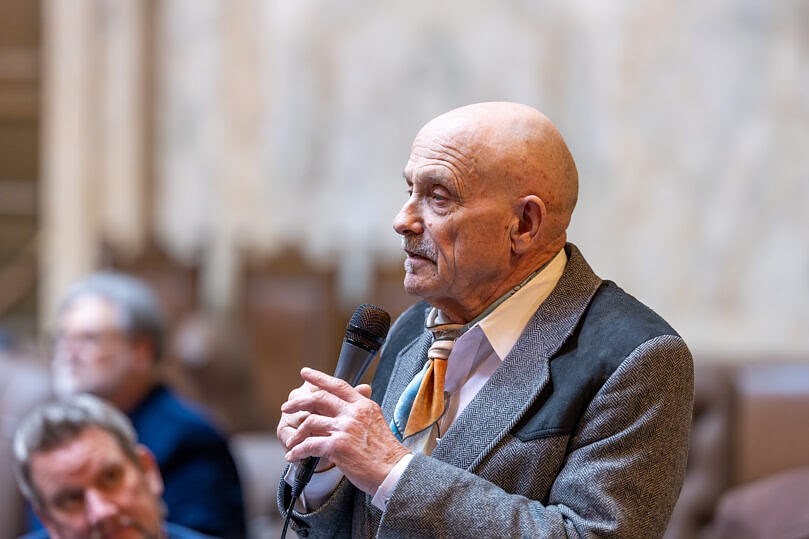
Rep. Tom Dent, R-Moses Lake, speaks at the Washington State Capitol Building in Olympia during the 2024 short legislative session.
COURTESY PHOTO/WASHINGTON STATE HOUSE REPUBLICANS
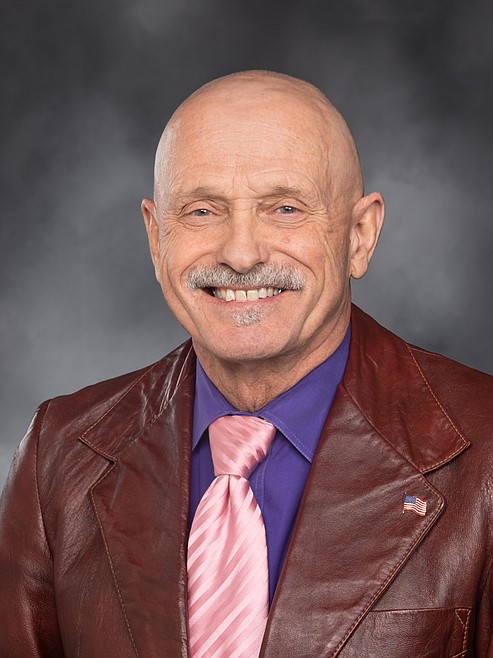
Pictured is Rep. Tom Dent, R-Moses Lake, who recently wrapped up the short 60-day 2024 legislative session and reflected on what went well during the session and what could have gone better.
Gabriel Davis is a resident of Othello who enjoys the connections with his sources. Davis is a graduate of Northwest Nazarene University where he studied English and creative writing. During his free time, he enjoys reading, TV, movies and games – anything with a good story, though he has a preference for science fiction and crime. He covers the communities on the south end of Grant County and in Adams County. | April 11, 2024 5:53 PM
MOSES LAKE — After 2024’s short 60-day legislative session, which wrapped up in March, Rep. Tom Dent, R-Moses Lake, discussed what went well for him during the session and some of his disappointments this year.
“It feels like there is always a different feeling or different mood of the sessions,” Dent said. “I would say that overall, most of these sessions for me are a little bit consistent; I can never say I've had a bad session for the things that I work on.”
Dent said his status in the legislature has shifted during his 10 years as a legislator.
“As the ranking member on the Agriculture Committee in the House, that means I'm the No. 1 Republican, and that means I work closely with the chair of the committee on everything that goes through there,” he said. “So people take your recommendation; they listen to you, and then they have to weigh it with their districts, whether they can vote for something or not. So that's the way that it works, and because of that I was able to do a lot.”
Successes
Dent said it felt good to get more things done. One accomplishment he highlighted was gaining $250,000 in funding to form a group that will help with mental health in the agricultural community.
“The ag sector in the United States of America has the No. 1 suicide rate of any sector in the country, and it's three and a half times higher than what's in second place,” Dent said. “That's a serious thing, and we live in an agricultural community.”
Dent said the money will fund a feasibility study on creating a mental health and suicide prevention hotline specifically for the agricultural sector.
“I'm real passionate about this,” he said. “I'm really passionate about mental health. I work on that a lot. I think it's our number one issue.”
Dent said another success was blocking a bill that would triple property taxes.
“There was a bill to change how much we could increase property taxes; that was a Senate Bill and it never came to the House,” he said. “But here's something that's really, really important. We can push back and we can fight, we can do everything in our power to stop bad legislation, but it still comes down to how many votes. If something comes to a vote, how many votes do we have?”
Dent emphasized that there are too many bills and issues for legislators to be up to date on all of them, as well as the importance of citizen input on blocking bills.
“One of the things that helped derail that bad piece of legislation was there were so many emails coming from people across the state against that. We just couldn't ignore that. I mean, quite often bills die or they get so watered down from that,” he said. “Your voice is louder than you think it is.”
One of the bills Dent said he was glad passed was Senate Bill 5150, which increased the levy on cattle sales – known as the beef checkoff – to $2.50 per head by 2026, with a process allowing cattle producers to apply for a refund on the increased expenses, which go to the Washington State Beef Commission’s marking and promotion of the industry.
“Major ones that were opposing each other were the (Washington Cattlemen’s Association) and the Cattle Producers (of Washington). They were way off. They were way apart,” Dent said. “Last year, the bill came up again. We had our hearing. We knew it wasn't gonna move as written because people weren't on board … After we got out of session in 2023, I started talking to cattlemen, and cattle producers and advising those folks (on) how do we how do we find common ground here?”
Dent said he has been in discussions with the various stakeholders since 2017, when the bill was first introduced and subsequently died.
“We got into this session this year, we continued to talk about it, (saying) ‘We have to come together,’ and they were struggling with that,” Dent said. “So I put together an amendment to this bill … I said ‘Okay, we'll just do this then.’ Well, nobody liked that, so they sat down, they started working together on how they could make it work, and we got there.”
The bill passed through the legislature this session and was signed into law, Dent said.
Disappointments
According to the legislative wrap-up newsletter Dent sent out March 28, there were also some disappointments, including the operating budget. Dent wrote that he opposed the budget because it has become too large, does not fully reimburse the agricultural industry for Climate Commitment Act fees, doesn’t provide any tax relief and does not focus on key priorities.
“There were pieces of legislation that passed which are very concerning,” Dent wrote. “There were three bills passed that continue to chip away at citizens’ Second Amendment rights. House Bill 1903 makes it a civil infraction to fail to report a stolen or lost firearm within 24 hours, Senate Bill 5444 further restricts where you can legally carry, and House Bill 2118 puts onerous new regulations on firearm businesses.”
Despite the disappointments, Dent said the session went well. Dealing with people is the most important part of participating in a legislative session, he said.
“Politics is relationships, and it's all about the relationships you build and your ability to work with other people,” he said. “And relationships aren’t necessarily friendships, but they are relationships; they do have to be built on trust and respect on both sides, I mean, you just have to do that and you're able to make things happen.”
Gabriel Davis may be reached at [email protected].
 Pictured is Rep. Tom Dent, R-Moses Lake, who recently wrapped up the short 60-day 2024 legislative session and reflected on what went well during the session and what could have gone better.
ARTICLES BY GABRIEL DAVIS

Work-based learning lets students build their own futures
MOSES LAKE — Work-based learning provides education opportunities for the workforce to receive hands-on training and technical education and prepare themselves to enter various industries. Educators and workforce development professionals from Eastern Washington discussed some the training they offer and the benefits of their programs. Next Generation Zone, an affiliate of WorkSource based in Spokane, provides job training opportunities for youth and young adults ages 16 to 24. Program Coordinator Kate Martin said there are multiple benefits to the program. “One of them is a paid work experience, and that’s where we reach out to area employers who are willing to take a young person and train them,” she said. “This is a short-term learning experience, so it’s typically about 240 hours; sometimes it could be longer or shorter. We’re the actual employer; we cover all of their wages, taxes, the L&I, and the employer just agrees to give them the experience and train them in whatever field it is that they’re wanting to go into.”

Serving schools: ESD superintendents reflect on operations, priorities
MOSES LAKE — Educational service districts are government-mandated agencies put in place to provide services to school districts across the state. ESD Superintendents discussed what they do and their priorities in operating their districts. ESD 105, led by Superintendent Kevin Chase, serves four counties, including Kittitas, Yakima and portions of Klickitat and Grant counties and provides support for 25 school districts – including Royal School District and Wahluke School District – and more than 66,000 students. “We help them collaborate with each other as well or collaborate with other partners,” Chase said. “(It’s) a lot of advocacy work, either regionally or across the state, or even federally, working on different issues that impact our education. And we provide very specialized services in certain situations in order to meet the needs of our students in our region and of our school districts.”

Columbia Basin Project making headway through Odessa Groundwater program
CASHMERE — The Columbia Basin Project is making gradual progress toward completion with particularly significant accomplishments for the Odessa Groundwater Replacement Program in the last six months or so, according to Columbia Basin Development League Executive Director Sara Higgins. “When we’re dealing with a project of this size, advancement is kind of like watching paint dry, but yes, there have been (developments),” she said. “There are a lot of exciting things happening right now.” There are more than 300 miles of main canals, about 2,000 miles of lateral canals and 3,500 miles of drains and wasteways in the irrigation project, according to the U.S. Bureau of Reclamation website. The CBDL advocates for the operation of those waterways and for the project to continue “build-out.”