
Gesa, Red Cross join forces against home fires
JOEL MARTIN | Hagadone News Network | UPDATED 2 years, 6 months AGO

Joel Martin has been with the Columbia Basin Herald for more than 25 years in a variety of roles and is the most-tenured employee in the building. Martin is a married father of eight and enjoys spending time with his children and his wife, Christina. He is passionate about the paper’s mission of informing the people of the Columbia Basin because he knows it is important to record the history of the communities the publication serves. | April 11, 2024 2:00 AM
MOSES LAKE — There are few things more frightening than a house fire. One of them is having a house fire and not knowing it.
“Oftentimes home fires happen because it's an older building or an older neighborhood where they just never installed smoke alarms, so they don't even know when there's a fire most of the time,” said Amber Merrill, community relations manager for Richland-based Gesa Credit Union. “It's really difficult in those situations because when you actually start to notice that there is a home fire, it's when you're seeing flames, and typically, at that point, the fire department is responding.”
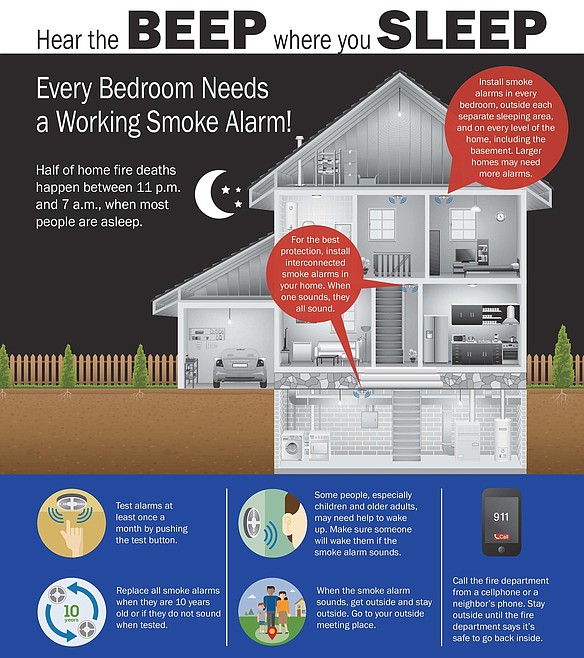
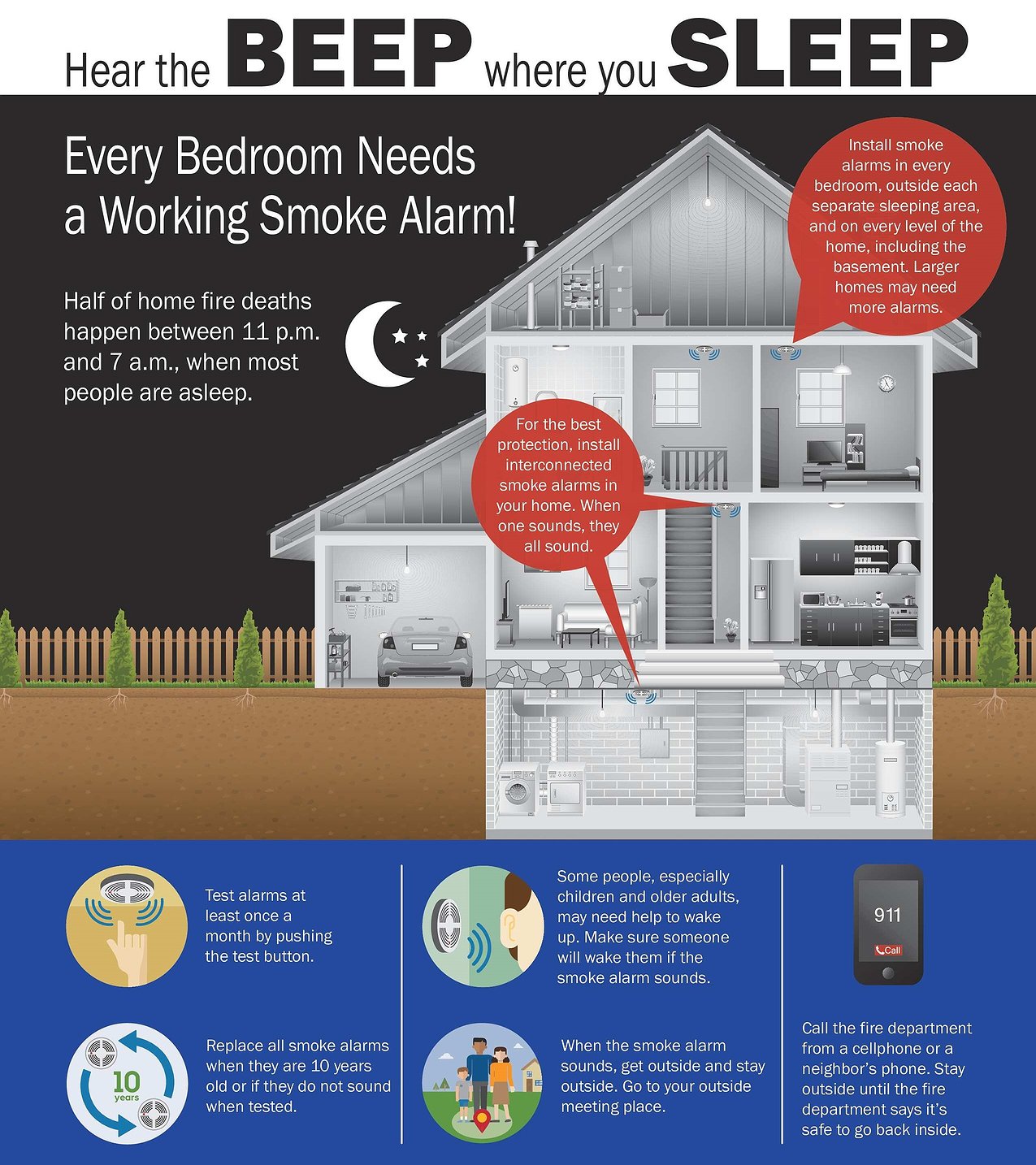
An average of seven people die every day in house fires, according to an announcement from Gesa which is partnering with the Red Cross in its Sound The Alarm, Save a Life campaign, or STA for short. The STA program purchases and installs smoke detectors in residences that don’t have them.
“What this campaign does is it helps the American Red Cross to provide free smoke alarms for those that are in need,” said Merrill. “And not only do they provide those smoke alarms, they also help to install them in partnership with local fire departments. So one of the really cool things about this campaign is it's not just providing smoke alarms, it's not just educating about home fires, but partnering with those local fire departments to go out and do those installs.”
The STA campaign began nationwide in 2014, according to the announcement, and Merrill said Gesa became involved in 2021.
“We've actually been partnering with the Red Cross for decades, it's been a very long time,” she said. “So we have a pretty longstanding relationship with the Red Cross. But when we actually heard about the Sound the Alarm campaign … it was just the perfect fit at that time. Gesa had just revamped our giving pillars and what we really focus on in the community, and one of those giving pillars is local heroes, and that includes firefighters. So for us it was, ‘Gosh, this is such a perfect fit.’”
The campaign started for the year April 6, and will continue through May 3, Merrill said. Community members can donate at the Moses Lake Gesa branch or online at gesa.com. The money will be used to help communities across the Northwest prepare for, respond to and recover from house fires, according to the Gesa announcement. The credit union will provide a matching donation of up to $10,000.
Volunteers from Gesa and the local community will go where smoke alarms are needed and install them, Merrill said. The local fire departments assist the Red Cross in finding buildings, often older ones, that may not already be equipped with adequate smoke alarms.
“We'll go into these neighborhoods the week before to put on a door flyer or speak to residents and let them know that we're going to be there in the following week to do installations,” said Michelle Roth, executive director for the Red Cross in central and southeastern Washington. “This way, they have a heads-up; they could make an appointment with us, or just flag us down that day. But then we go back to the neighborhood a week later. And we usually have a big group of volunteers, community partners and the fire department that we're partnering with, and we basically go door-to-door, and do home fire education.”
Since the campaign began in 2014, more than 2.5 million free smoke alarms have been installed and more than 1 million households have been made safer across the country, resulting in more than 2,000 confirmed lives being saved, according to the Gesa announcement.
Although the campaign supplies detectors for communities across America, the Red Cross selects a city to focus a little extra attention on every year. This year’s city is Aberdeen, Wash., which seems at first glance like an odd choice, being in one of the rainiest parts of the state.
“It typically doesn't matter which climate you live in; home fires can happen anywhere,” Merrill said. “I think that's one of one of the bigger misconceptions is that home fires only happen in dry areas, or it's only in lower-income neighborhoods. But in fact, it really happens anywhere and it can affect anyone.”
“Every day families throughout the Northwest are tragically affected by home fires,” wrote Hannah Christen, regional preparedness manager for the Red Cross, in the announcement. “That’s why our volunteers and staff work to not only deliver vital services, like providing relief and support to those in a crisis, but also to help the public feel prepared to respond in times of disaster. This national initiative has helped thousands of people in the Northwest over the last 10 years, and we couldn’t have done it without the help of our volunteers and the generosity of our donors.”
Stay safe:
To sign up for a free fire education home visit from the Red Cross, go to www.redcross.org/sound-the-alarm. To volunteer, visit bit.ly/3VSxbZX. Donations can be made at gesa.com or at the Moses Lake branch, 721 S. Pioneer Way.
ARTICLES BY JOEL MARTIN

Endless battle
Noxious Weed Control Board works to keep invasive plants under control
MOSES LAKE — Some of the nastiest plants in Grant County were the topic of a class led by Jay Johnson, a consultant with the Grant County Noxious Weed Control Board, Tuesday. The Noxious Weed Control Board, as its name would suggest, is tasked with keeping weeds under control in Grant County. That’s not a small job; the board’s website lists 129 species of noxious weeds that are found around Grant County. A noxious weed is defined as an invasive, non-native plant that threatens agricultural crops, local ecosystems or fish and wildlife habitat, according to the Noxious Weed Control Board. Washington state law requires that these weeds be identified and their spread kept to a minimum, if not completely eradicated. “We’re one of those agencies a lot of people don’t really understand,” Johnson said. “We’re a county office and … our funding is tax-based assessment. When you get your tax bill and you look down at all the expenses that you pay for, there we are.”

BASIN EVENTS: Oct. 16-24
COLUMBIA BASIN — Whether you feel like shopping, crafting, learning or seeing a show, there’s something happening for you this week in the Basin. Oct. 16 ‘My Family (Mi Familia)’ screening Spanning three generations, “My Family (Mi Familia)” is a heartfelt drama that follows the Sánchez family as they build their lives in East Los Angeles. Through love, hardship, triumph, and sacrifice, the film explores the immigrant experience, the strength of family bonds, and the traditions that connect one generation to the next. Lowrider show and taco truck before the screening. Sponsored by Columbia Basin Allied Arts, EDUBS C/S and the Moses Lake Creative District. $12 per person. Doors open at 6 p.m., film begins at 7 p.m. at the Moses Lake Civic Center Auditorium, 401 S. Balsam St. Tickets and info: www.cba-arts.org.

Moses Lake author encourages women to look beyond church culture norms
MOSES LAKE — A Moses Lake author’s book, “A Christian Woman Striving to Live Her Faith in a Man-Controlled World,” takes aim at the role to which many churches relegate the female half of their congregations. “It’s to encourage women in the faith,” Linda Curran said. “A lot of churches say, ‘Teach Sunday school, do this, do that, but don’t (evangelize.)’" In her book, Curran recounts a time when she moved to a new community and joined a church there. She was surprised to learn that, as a new female member, she had been automatically assigned church cleaning duties. When she questioned it, she wrote, she was met with condescension and her objections were brushed aside. In other churches, she said, women who were capable of teaching were relegated to “women’s ministry.”