
ACDC and Port of Othello consider indoor farming in the Basin
GABRIEL DAVIS | Hagadone News Network | UPDATED 1 year, 8 months AGO

Adams County Development Council Executive Director Kyle Niehenke sits in on a March 19 Port of Othello Commissioners meeting.
GABRIEL DAVIS/COLUMBIA BASIN HERALD

A greenhouse with a larger-scale production of leafy greens. The indoor farming industry has the potential to complement economic development in Grant and Adams Counties, according to representatives of the Port of Othello and Adams County Development Council.
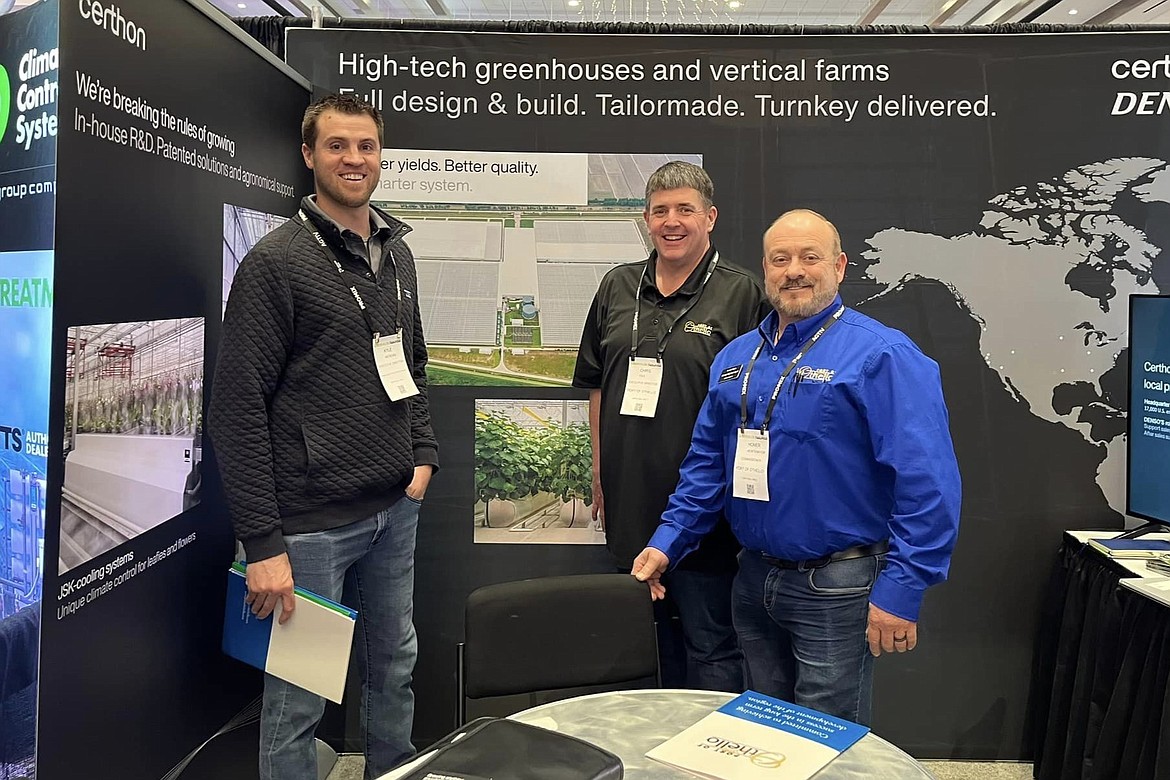
Adams County Development Council Executive Director Kyle Niehenke, Port of Othello Executive Director Chris Faix and Port of Othello Commissioner Homer Montemayor attend the 11th Annual Indoor Ag-Con March 11-12 at Las Vegas’s Caesars Forum, a tradeshow for the indoor and vertical farming industry.

A vertical farm such as the one pictured is another form of indoor farming that benefits from year-round growing in a temperature-controlled environment.
Gabriel Davis is a resident of Othello who enjoys the connections with his sources. Davis is a graduate of Northwest Nazarene University where he studied English and creative writing. During his free time, he enjoys reading, TV, movies and games – anything with a good story, though he has a preference for science fiction and crime. He covers the communities on the south end of Grant County and in Adams County. | April 16, 2024 5:32 PM
OTHELLO — Representatives of both the Port of Othello and the Adams County Development Council reflected on the viability of indoor or vertical farming greenhouses in Grant and Adams Counties after they attended the 11th Annual Indoor Ag-Con on March 11-12 in Las Vegas.
“What kind of spurred this is in Pasco, Local Bounti is the company, they are opening an indoor ag commercial greenhouse, which is kind of the first of its scale in Washington,” Niehenke said. “Hearing about them opening that was like, ‘OK, wait, that's a good fit for us,’ especially for the port here; we have a ton of water, we have a ton of electricity and we have a ton of land.”
Indoor agriculture utilizes automated and temperature-controlled systems to grow crops year-round. Faix said that the systems seem to be able to accommodate a wide range of different crops.
Niehenke said the benefits include increasing the availability of locally grown produce and decreasing the transportation costs, especially for crops grown outside the area and shipped in when they are out of season.
At the conference many people were surprised how little land and power costs were in Grant and Adams Counties, Niehenke said.
“I think we've definitely found out that our land is affordable,” Faix said. “We're not gouging anybody.”
Niehenke said he thinks indoor ag would likely be more successful in the Columbia Basin than in Western Washington, or even more successful than in areas like Spokane and the Tri-Cities. He said he believes there is a misconception that Washington is an expensive state because people look at Seattle and Western Washington but don’t look at Eastern Washington.
“This is where Grant County PUD rightfully shines as well,” Niehenke said. “We have cheap power, and the difference from (Adam’s County’s) Avista to Grant County PUD for these guys is a rounding error compared to what they're used to right now.”
Niehenke said the Port of Othello also has a large amount of water.
“We're only using a small percentage of what we're allotted every year,” Faix said. “So, water is definitely not the issue. (We have to) make sure we have enough power, natural gas, workers.”
According to Niehenke, the area has the infrastructure to support the workers, utilities and transportation needs of indoor farming.
“From Moses (Lake) to Othello here down to Pasco, this corridor, left, right, north and south is the bread basket, potato basket right now,” he said. “So why don't we complement it with more agriculture? We’ve got cash crops of potatoes, we’ve got cash crops of corn, onions. Yeah, onions … You’re not devoting a whole circle to (indoor agriculture); you have a pretty small footprint for a pretty good yield, which is why indoor ag has taken off.”
The climate works in the area’s favor as well.
“Even though we have winters, we don't have harsh winters,” he said, “so they're only spending money on heating for a shorter amount of time.”
Niehenke said indoor agriculture doesn’t harm other farms either.
“This doesn’t compete with our existing ag,” he said. “This directly complements what we have.”
The crops are protected from extreme weather in both the summer and winter. Consequently, the working conditions are also much better since the workers are also protected from the weather and would be working primarily with elevated beds and plants, decreasing the physical labor involved.
“I think the biggest hangup, when we talked to these guys, is that some of these commodities don't store well, so you have to have a contract, you have to have a buyer,” Niehenke said.
Port of Othello Commissioner Homer Montemayor, who also attended the conference, said Washington is lagging behind other states in the indoor farming industry, and he would like to see it implemented in Othello.
“We have the infrastructure, we have the resources, we have the trucks, we have everything,” he said.
Gabriel Davis may be reached at [email protected].
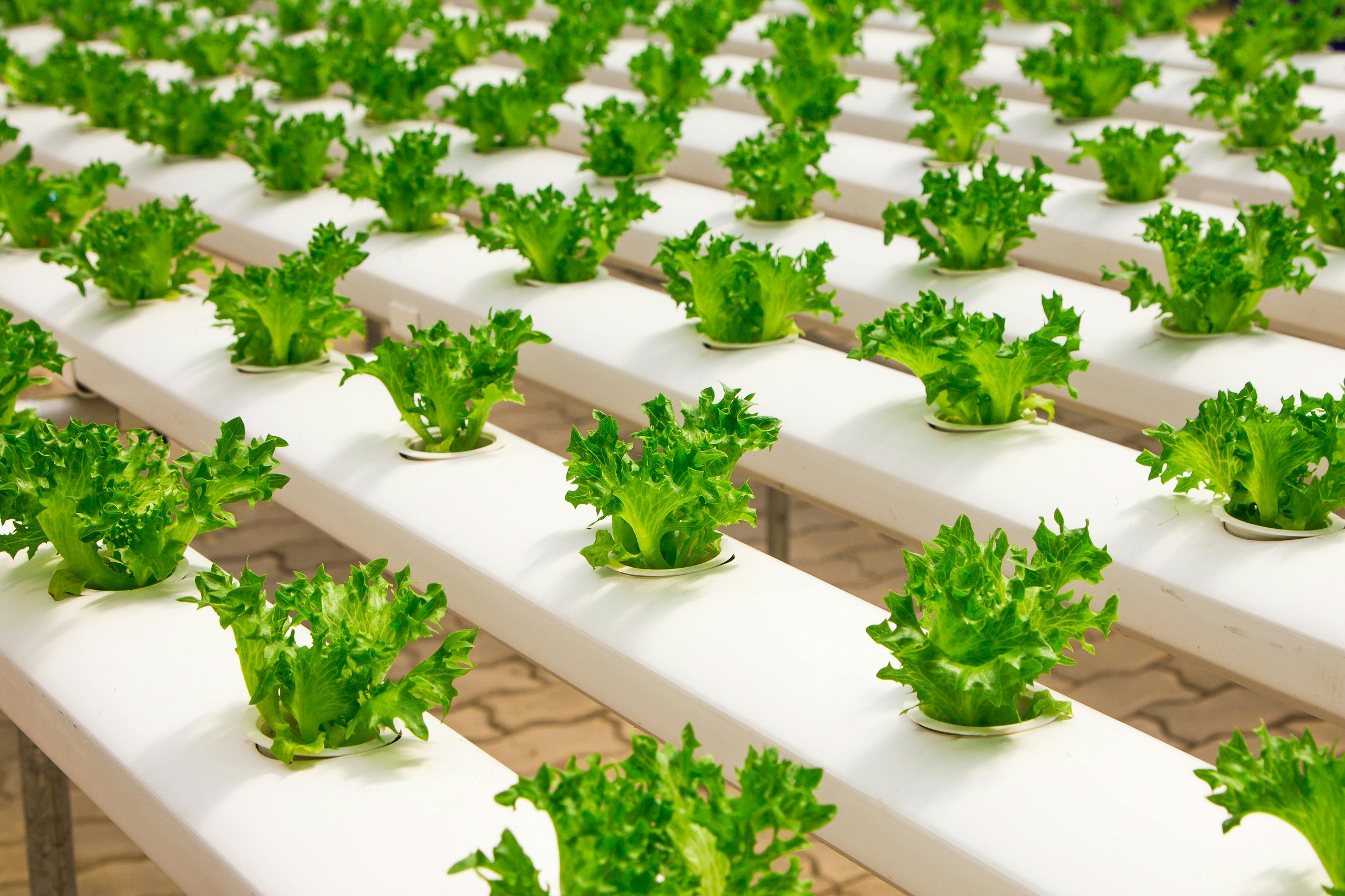 A greenhouse with a larger-scale production of leafy greens. The indoor farming industry has the potential to complement economic development in Grant and Adams Counties, according to representatives of the Port of Othello and Adams County Development Council.
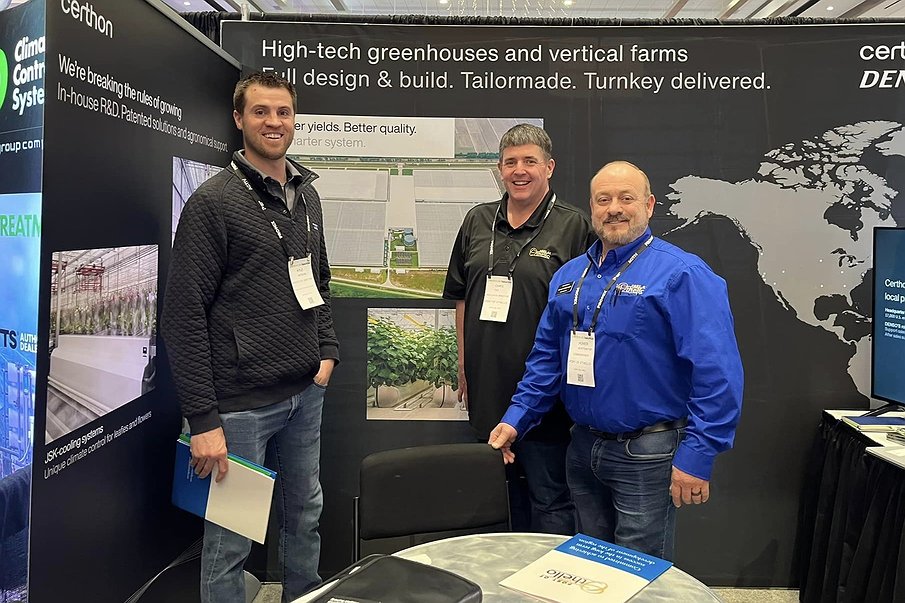 Adams County Development Council Executive Director Kyle Niehenke, Port of Othello Executive Director Chris Faix and Port of Othello Commissioner Homer Montemayor attend the 11th Annual Indoor Ag-Con March 11-12 at Las Vegas’s Caesars Forum, a tradeshow for the indoor and vertical farming industry.
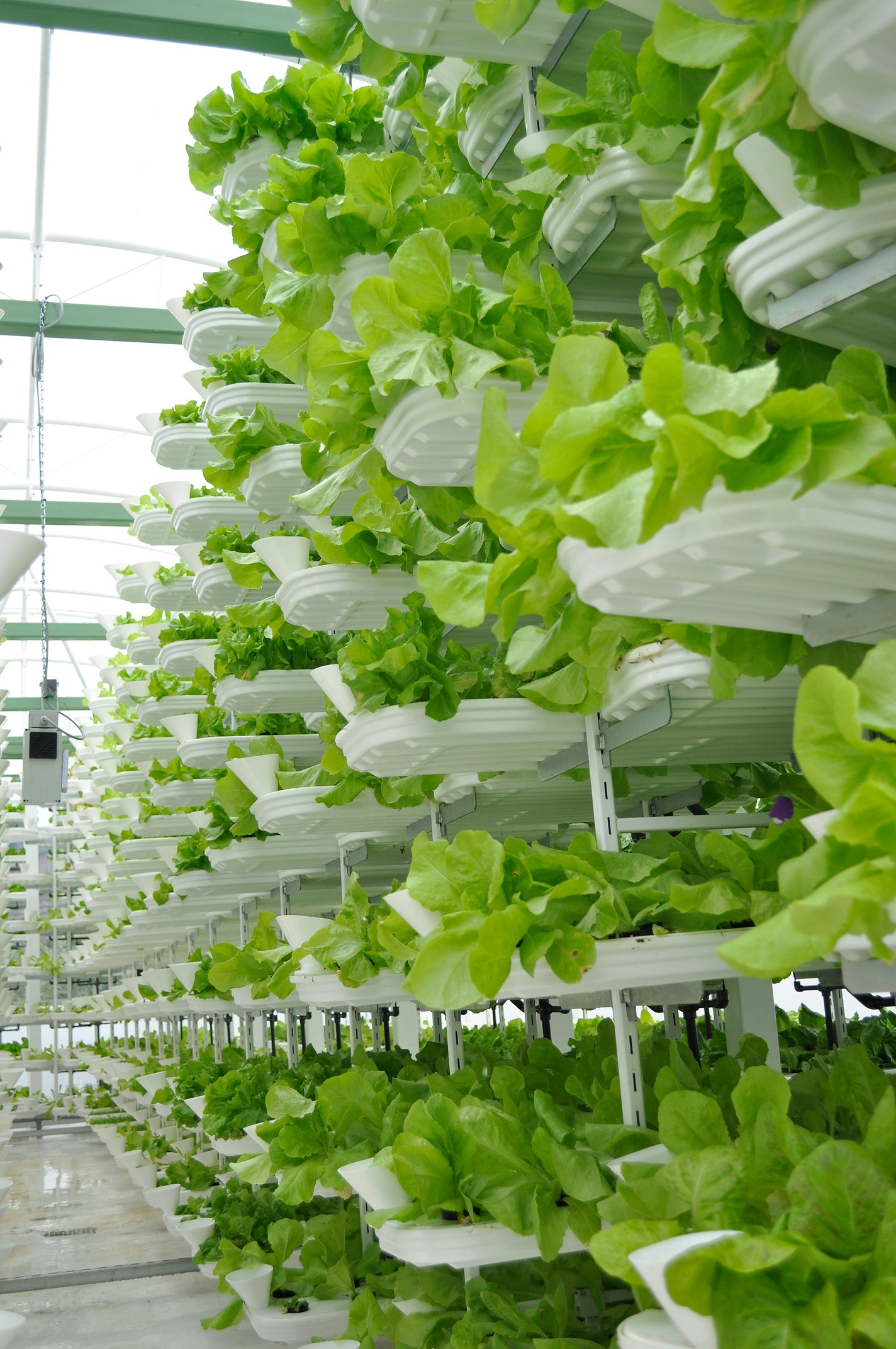 A vertical farm such as the one pictured is another form of indoor farming that benefits from year-round growing in a temperature-controlled environment.
ARTICLES BY GABRIEL DAVIS

Work-based learning lets students build their own futures
MOSES LAKE — Work-based learning provides education opportunities for the workforce to receive hands-on training and technical education and prepare themselves to enter various industries. Educators and workforce development professionals from Eastern Washington discussed some the training they offer and the benefits of their programs. Next Generation Zone, an affiliate of WorkSource based in Spokane, provides job training opportunities for youth and young adults ages 16 to 24. Program Coordinator Kate Martin said there are multiple benefits to the program. “One of them is a paid work experience, and that’s where we reach out to area employers who are willing to take a young person and train them,” she said. “This is a short-term learning experience, so it’s typically about 240 hours; sometimes it could be longer or shorter. We’re the actual employer; we cover all of their wages, taxes, the L&I, and the employer just agrees to give them the experience and train them in whatever field it is that they’re wanting to go into.”

Serving schools: ESD superintendents reflect on operations, priorities
MOSES LAKE — Educational service districts are government-mandated agencies put in place to provide services to school districts across the state. ESD Superintendents discussed what they do and their priorities in operating their districts. ESD 105, led by Superintendent Kevin Chase, serves four counties, including Kittitas, Yakima and portions of Klickitat and Grant counties and provides support for 25 school districts – including Royal School District and Wahluke School District – and more than 66,000 students. “We help them collaborate with each other as well or collaborate with other partners,” Chase said. “(It’s) a lot of advocacy work, either regionally or across the state, or even federally, working on different issues that impact our education. And we provide very specialized services in certain situations in order to meet the needs of our students in our region and of our school districts.”

Columbia Basin Project making headway through Odessa Groundwater program
CASHMERE — The Columbia Basin Project is making gradual progress toward completion with particularly significant accomplishments for the Odessa Groundwater Replacement Program in the last six months or so, according to Columbia Basin Development League Executive Director Sara Higgins. “When we’re dealing with a project of this size, advancement is kind of like watching paint dry, but yes, there have been (developments),” she said. “There are a lot of exciting things happening right now.” There are more than 300 miles of main canals, about 2,000 miles of lateral canals and 3,500 miles of drains and wasteways in the irrigation project, according to the U.S. Bureau of Reclamation website. The CBDL advocates for the operation of those waterways and for the project to continue “build-out.”