
WSU professor warns of fire blight antibiotic resistance
GABRIEL DAVIS | Hagadone News Network | UPDATED 1 year, 8 months AGO
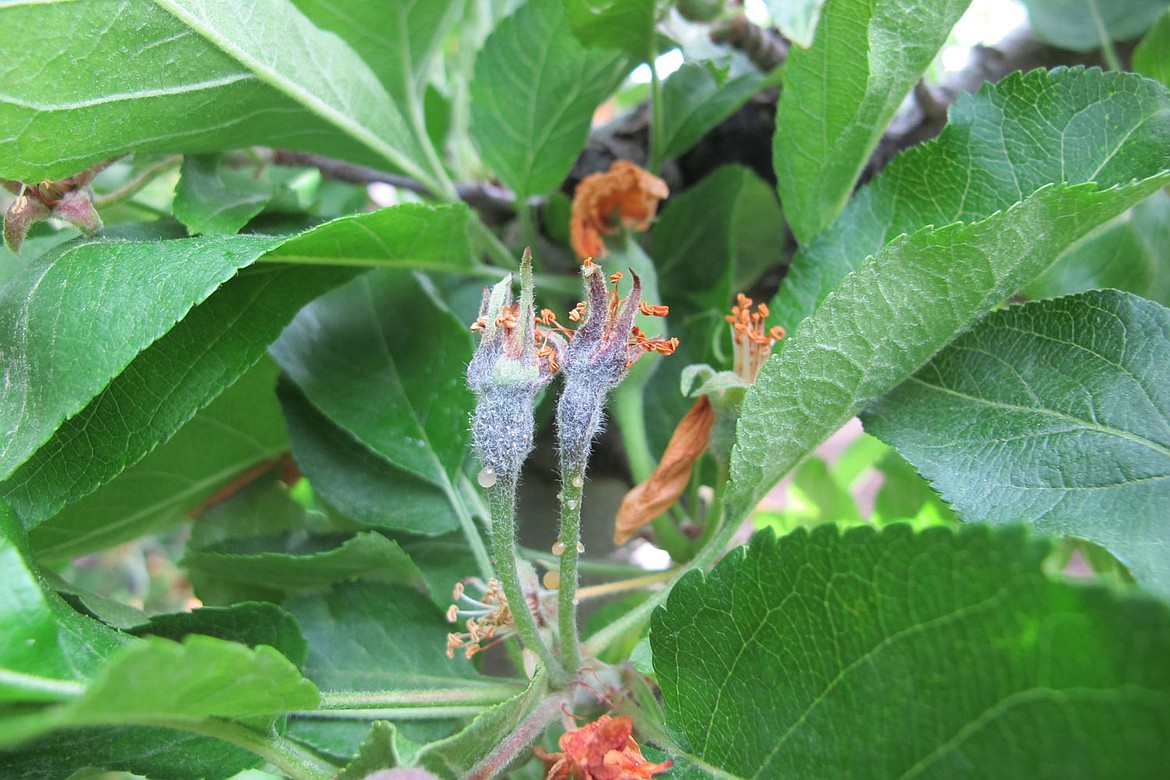
A blossom in an orchard affected by fire blight, a disease that infects apple and pear orchards across the globe.
COURTESY PHOTO/TIANNA DUPONT/WSU
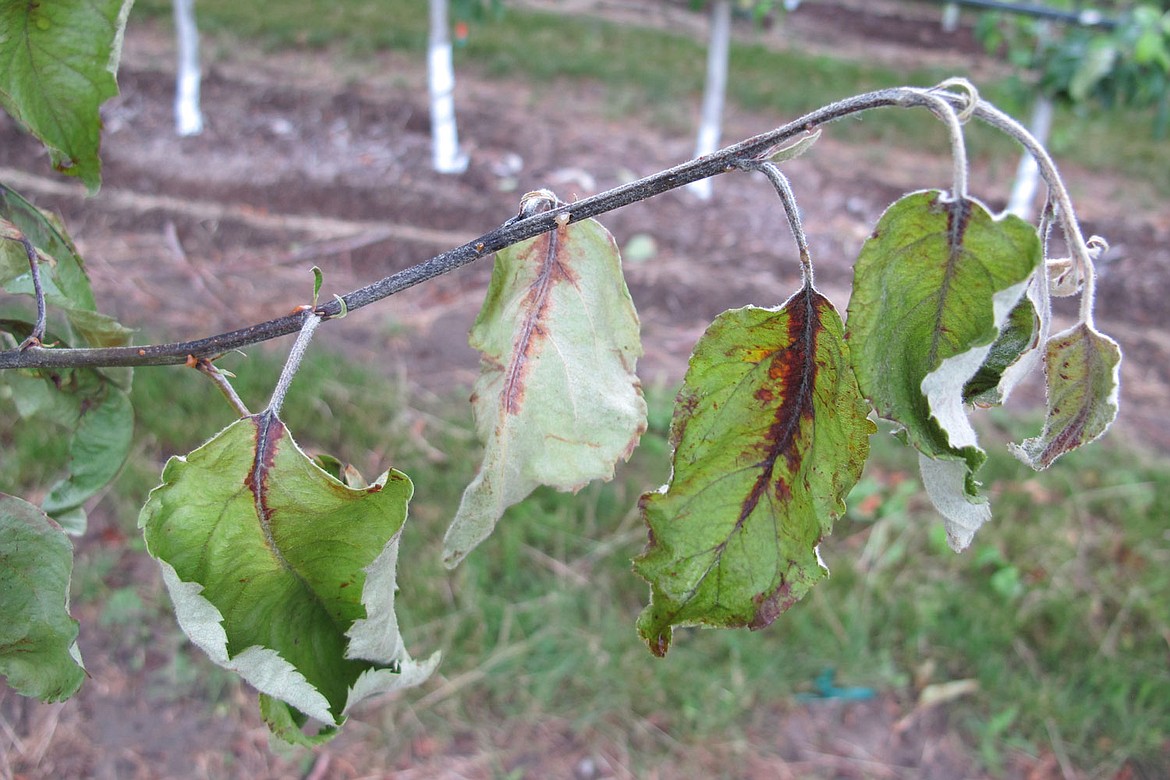
A branch of a tree infected with fire blight. The April 4 Fire Blight Webinar discusses new data and updates on antibiotic resistance in fire blight.

Frank Zhao, pictured, a professor of plant pathology at Washington State University, spoke at the April 4 Fire Blight Webinar hosted by Michigan State University, providing an update on current research and results of fire blight antibiotics and resistances at WSU.
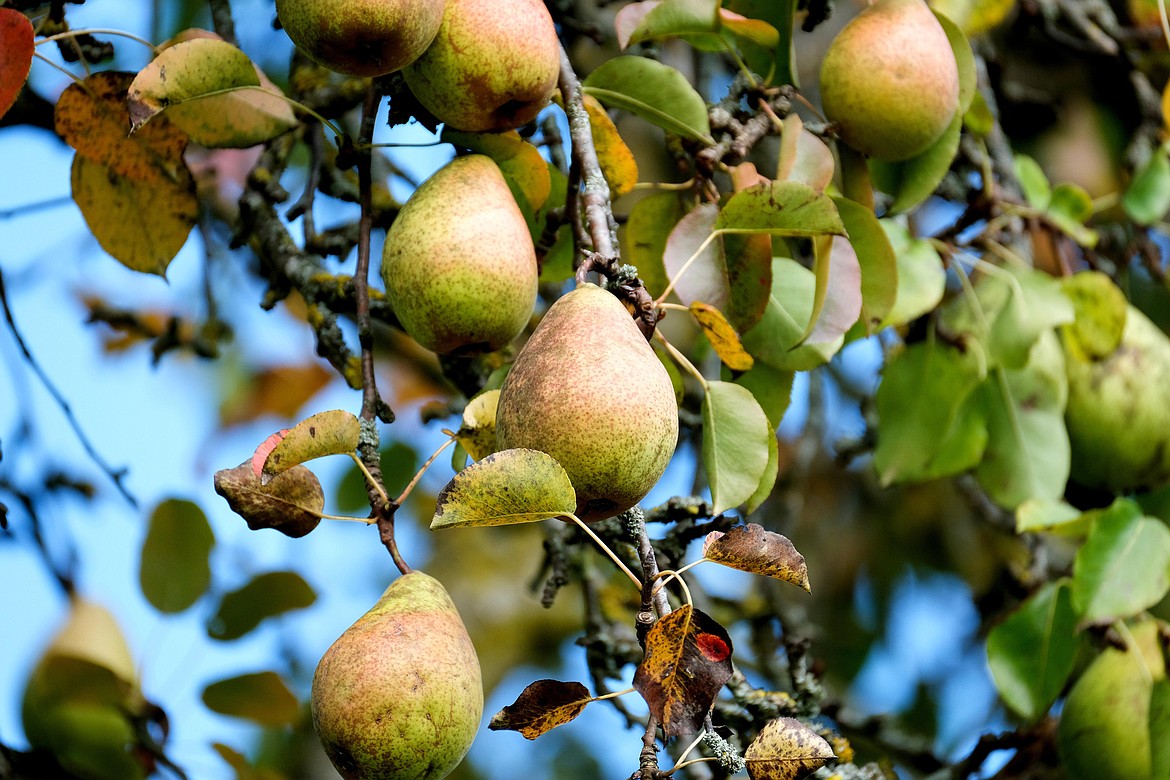
A pear tree in Washington. Pears and apples are susceptible to fire blight across the globe, but resistance to the common antibiotic streptomycin is particularly high in the Western United States, including Washington, Oregon, California and more, according to Frank Zhao, a professor of plant pathology at Washington State University.
Gabriel Davis is a resident of Othello who enjoys the connections with his sources. Davis is a graduate of Northwest Nazarene University where he studied English and creative writing. During his free time, he enjoys reading, TV, movies and games – anything with a good story, though he has a preference for science fiction and crime. He covers the communities on the south end of Grant County and in Adams County. | April 17, 2024 5:23 PM
MOSES LAKE — Frank Zhao, a professor of plant pathology at Washington State University, spoke at the April 4 Fire Blight Webinar hosted by Michigan State University, providing an update on current research and results of fire blight antibiotics and resistances at WSU.
According to WSU’s Tree Fruit website, fire blight is a disease affecting crops of pears and apples.
“Infections commonly occur during bloom or on late blooms during the three weeks following petal fall. Increased acreage of highly susceptible apple varieties on highly susceptible rootstocks has increased the danger that infected blocks will suffer significant damage. In Washington there have been minor outbreaks annually since 1991 and serious damage in about 5 to 10% of orchards in 1993, 1997, 1998, 2005, 2009, 2012, 2015, 2016, 2017 and 2018.”
Zhao discussed three common fire blight antibiotics during the webinar, including streptomycin, oxytetracycline and kasugamycin.
“So far, streptomycin remains the best tool we have to manage blossom blight,” Zhao said. “Unlike human pathogens or diseases, using antibodies to control fire blight is mostly for prevention, and not for a cure, because once it is infected, the delivered antibiotics will not kill the bacteria inside the plants.”
Bacteria can develop multiple mechanisms to become resistant to antibiotics, Zhao said.
“Most likely, in a lot of cases in our control fire blight, it is mainly due to bacteria producing some kind of enzyme that can degrade those antibodies, or (the bacteria) becomes mutated so that the antibiotics will not kill the bacteria, because the antibodies cannot actually bind into the gene,” he said.
Streptomycin resistance dates back at least 50 years.
“Streptomycin resistance was first reported in California in 1971, and also in Oregon and Washington in 1972,” Zhao said, “and later was found in the Eastern United States, including Michigan, as well as New York, and also found in other western states like Idaho, Utah, and in the Midwest, Missouri, and the other states as well.”
Zhao said that streptomycin resistance is much higher in the Western United States
“The mechanism for this resistance is a mutation of the target gene rpsL, and this gene is located in the chromosome, and this kind of mutation is mainly due to selective pressure, because we probably apply (streptomycin) several times and because we are using streptomycin for a long, long time.”
Zhao turned to new developments, outlining recent data of a pathogen in pear orchards in California
“(What) we recently found in California is alarming,” Zhao said. “This fire blight pathogen contained both streptomycin-resistant genes as well as oxytetracycline-resistant genes. And when we tested this resistant gene … in pears, we were then using oxytetracycline and streptomycin for control and you can see the efficacy of those antibiotics has been greatly reduced.”
The data from the last few years in Washington is much less clear regarding streptomycin, oxytetracycline and kasugamycin.
“In the past two years my lab … screened for those three antibiotics, and surprisingly, we didn't find any streptomycin or oxytetracycline resistant genes in both years in Washington.”
Zhao explained that since the lab can’t locate streptomycin-resistant genes in specific samples, the results don’t help discover why streptomycin resistance persists in Washington.
Zhao said that the lab did discover resistance to kasugamycin in 2023.
“We found 30-some isolates that show some kind of resistance or tolerance to kasugamycin,” Zhao said. “Among those isolates, 68% were from pears and 32% were isolated from apples.”
Zhao gave WSU’s recommendation for which antibiotic mixtures to use on crops in Washington.
“Now in Washington, we kind of recommend these two mixtures of antibiotics, including kasugamycin with oxytetracycline, both at full rates, or streptomycin with oxytetracycline, both at full rates,” Zhao said, “but for this mixture, in Washington, we only recommend them once per season.”
For more information on fire blight, visit bit.ly/WSUFireBlight.
Gabriel Davis may be reached at [email protected].
 A branch of a tree infected with fire blight. The April 4 Fire Blight Webinar discusses new data and updates on antibiotic resistance in fire blight.
 Frank Zhao, pictured, a professor of plant pathology at Washington State University, spoke at the April 4 Fire Blight Webinar hosted by Michigan State University, providing an update on current research and results of fire blight antibiotics and resistances at WSU.
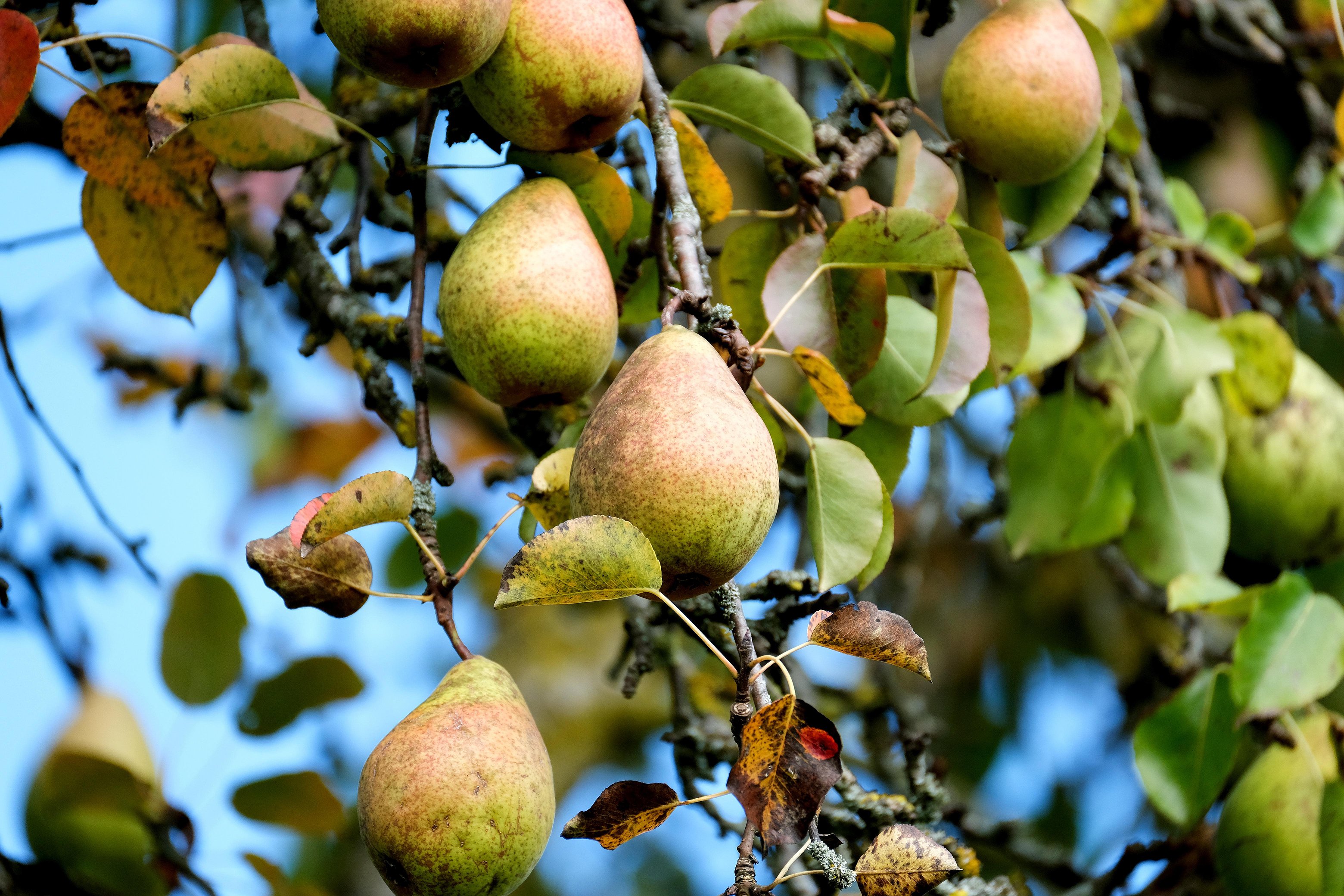 A pear tree in Washington. Pears and apples are susceptible to fire blight across the globe, but resistance to the common antibiotic streptomycin is particularly high in the Western United States, including Washington, Oregon, California and more, according to Frank Zhao, a professor of plant pathology at Washington State University.
ARTICLES BY GABRIEL DAVIS

Work-based learning lets students build their own futures
MOSES LAKE — Work-based learning provides education opportunities for the workforce to receive hands-on training and technical education and prepare themselves to enter various industries. Educators and workforce development professionals from Eastern Washington discussed some the training they offer and the benefits of their programs. Next Generation Zone, an affiliate of WorkSource based in Spokane, provides job training opportunities for youth and young adults ages 16 to 24. Program Coordinator Kate Martin said there are multiple benefits to the program. “One of them is a paid work experience, and that’s where we reach out to area employers who are willing to take a young person and train them,” she said. “This is a short-term learning experience, so it’s typically about 240 hours; sometimes it could be longer or shorter. We’re the actual employer; we cover all of their wages, taxes, the L&I, and the employer just agrees to give them the experience and train them in whatever field it is that they’re wanting to go into.”

Serving schools: ESD superintendents reflect on operations, priorities
MOSES LAKE — Educational service districts are government-mandated agencies put in place to provide services to school districts across the state. ESD Superintendents discussed what they do and their priorities in operating their districts. ESD 105, led by Superintendent Kevin Chase, serves four counties, including Kittitas, Yakima and portions of Klickitat and Grant counties and provides support for 25 school districts – including Royal School District and Wahluke School District – and more than 66,000 students. “We help them collaborate with each other as well or collaborate with other partners,” Chase said. “(It’s) a lot of advocacy work, either regionally or across the state, or even federally, working on different issues that impact our education. And we provide very specialized services in certain situations in order to meet the needs of our students in our region and of our school districts.”

Columbia Basin Project making headway through Odessa Groundwater program
CASHMERE — The Columbia Basin Project is making gradual progress toward completion with particularly significant accomplishments for the Odessa Groundwater Replacement Program in the last six months or so, according to Columbia Basin Development League Executive Director Sara Higgins. “When we’re dealing with a project of this size, advancement is kind of like watching paint dry, but yes, there have been (developments),” she said. “There are a lot of exciting things happening right now.” There are more than 300 miles of main canals, about 2,000 miles of lateral canals and 3,500 miles of drains and wasteways in the irrigation project, according to the U.S. Bureau of Reclamation website. The CBDL advocates for the operation of those waterways and for the project to continue “build-out.”