
A look at teff
JOEL MARTIN | Hagadone News Network | UPDATED 2 years, 5 months AGO
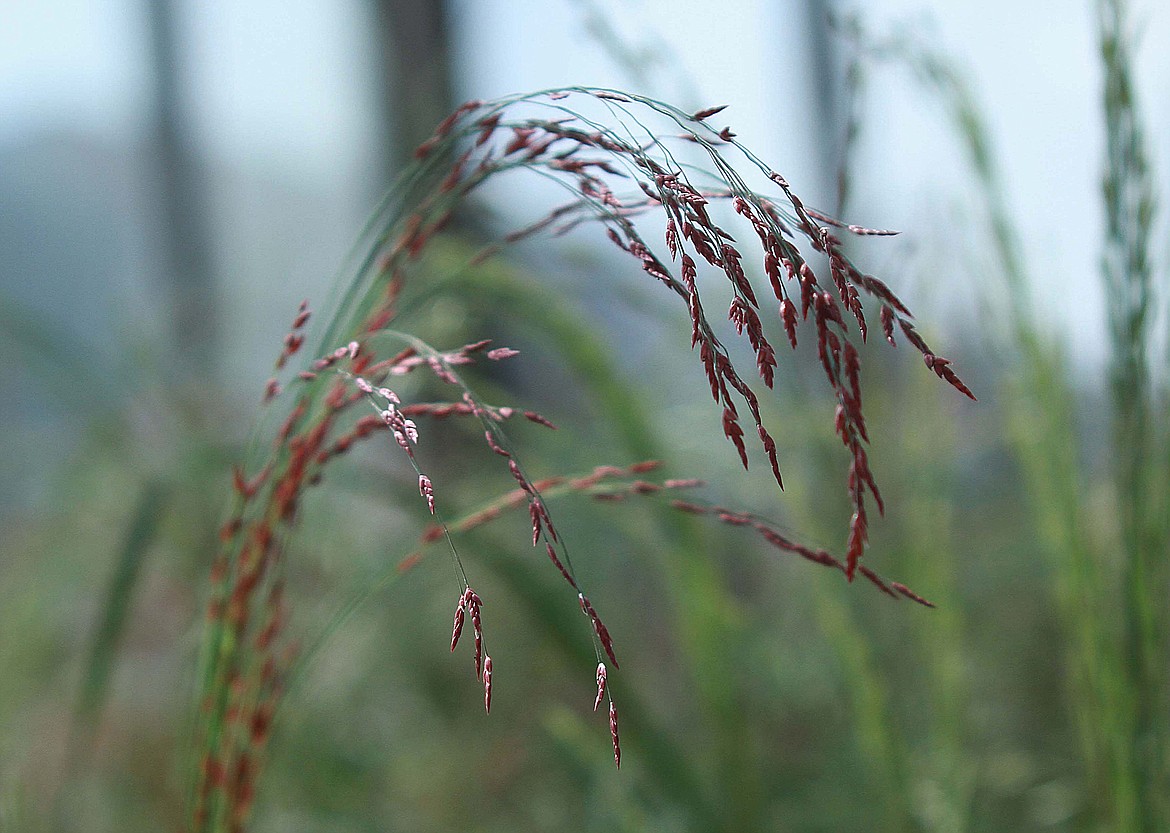
A teff crop grows in a greenhouse at Bishoftu Agricultural Research Institute in Ethiopia. Teff, which is an important staple in East Africa, is virtually unknown in the U.S. except in Ethiopian immigrant communities.
SOLAN GEMECHU/AFP/GETTY IMAGES/TNS
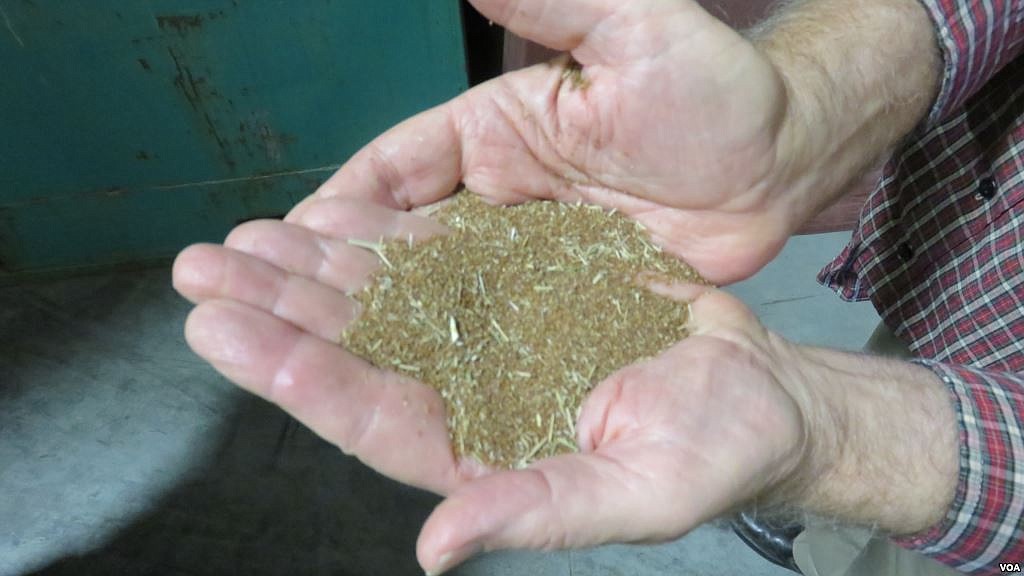
The Teff Company co-founder Wayne Carlson shows the tiny grains of teff before cleaning. There are 2,500 to 3,000 grains per gram.
Joel Martin has been with the Columbia Basin Herald for more than 25 years in a variety of roles and is the most-tenured employee in the building. Martin is a married father of eight and enjoys spending time with his children and his wife, Christina. He is passionate about the paper’s mission of informing the people of the Columbia Basin because he knows it is important to record the history of the communities the publication serves. | April 20, 2024 12:57 PM
MOSES LAKE — Teff may only be grown on a few farms in the Pacific Northwest, but it’s a grain a lot of people aren’t aware of yet, though it is beginning to find a market and is expected to rise in popularity as a crop and product.
“It's still pretty unknown,” said Royd Carlson, marketing manager of The Teff Company in Boise, which markets the grain. “It is kind of the staple of Ethiopian culture. In Ethiopia and Eritrea, they're eating teff pretty much every day.”
Carlson’s father, Teff Company co-founder Wayne Carlson, brought teff to the U.S. in the 1980s, Carlson said, after spending some time working in Ethiopia in public health care.
“He was really impressed by the whole Ethiopian agricultural system, which in the view of a lot of modern people is kind of antiquated, but, you know, it's actually quite sophisticated in their management of all their biological resources.”
Ethiopia in the 1970s and ’80s was plagued by political unrest and famine, which the international community addressed by sending grain.
“A lot of those (international aid) workers were actually quite dismissive of teff, because they thought this little tiny grain didn't produce much,” Carlson said. “And my dad thought, ‘Ethiopia has been (a civilization) for thousands of years; maybe they know something we don’t.’ So he kind of took it as his mission to introduce teff to the Americas (and) prove to people that it was an economically viable crop.”
Evidence points toward teff’s viability, though it does have some unique challenges.
Teff can be stored for many years without being damaged by common pests, according to a report from the Food and Agriculture Organization of the United Nations. It’s well suited for rotating with potatoes or sugar beets, Carlson said. It’s smaller than other grains, he said, which means making some adjustments.
“It does leak out of small holes,” he said. “So you need to make sure that all your holes are plugged and a lot of the farm equipment is not really designed for it … But you can seed it in a lot of different ways. People use seed drills or just broadcast it, and it's actually pretty easy to grow. Harvesting can be a little bit tricky, because ... you have to swath it and then combine it and because it's such a small seed the combining can be a little bit tricky. But once people figure out how, it's not overly difficult for them.”
Perhaps most importantly, teff has a quality that will endear it to an ever-widening consumer base: it’s gluten-free.
Nearly a third of Americans are either avoiding gluten altogether in their diets or trying to reduce it, according to the National Institute of Health. Gluten-free products vie for space in grocery stores and on restaurant menus, and many manufacturers that traditionally use wheat are looking to less common grains to fill that niche.
One such product is beer. Portland-based Groundbreaker Brewing Company, which specializes in gluten-free beers, last year rolled out a small batch of By the Sea gose – gose is a style of warm-fermented beer that originated in Germany – brewed using teff instead of the traditional glutenous mix of wheat and barley.
“Most of our beers are brewed with malted millet, malted buckwheat, malted rice, occasionally we use flaked quinoa,” said Groundbreaker Operations Manager Jesse Bufton. “And then just about a year and a half or so ago, a lot of folks in the gluten-free home brewing community were talking about using teff as a source of fermentables. So we kind of looked into it and we thought, ‘Hey, this could make a pretty good beer.’”
The small seeds meant using a specially-designed mash tun, the container where the grain is turned into fermentable sugar, Bufton said, and because the seeds were too small for the mill they did the first batch with whole grains, which he said was a bit of a disaster. For the second batch, they turned back the clock a little.
“We had an older mill that … was designed like 100 years ago for making cornmeal from corn on farms,” he said. “So we ran it through that and we were able to break it open a little bit. And then after doing that, it was still small but easier to get conversion out of it in the mash tun.”
The brewery is looking into the possibility of using teff again, this time in an American-style wheat beer, Bufton said.
The Teff Company provides seed to about 20 growers, who produce about as much as the company needs to supply its primary customer base, which is Ethiopian immigrant communities nationwide, Carlson said. They’re beginning to reach a point where it’s time to look into other markets though.
“There seems to be quite a bit of interest in the Spanish-speaking world like Mexico and in Brazil as well,” Carlson said. “We feel it will find its place according to how useful people find it, but our goal is to provide a useful alternative both to farmers and to consumers. You know, you’ve (heard) how most people’s calories come from five plants and two animals, or something like that. So we kind of feel that if we can just add one more crop, then we’re doing something good for a lot of people.”
Joel Martin may be reached via email at [email protected].
Teff facts:
• Leads all grains in calcium content with a cup of cooked teff offering 123 mg of calcium.
• Has a high content of resistant starch which can help blood sugar management, weight and colon health.
• Contains no gluten.
• Is a hardy grain that can grow in a variety of climates, including desert areas with little maintenance.
SOURCE: Whole Grains Council
 The Teff Company co-founder Wayne Carlson shows the tiny grains of teff before cleaning. There are 2,500 to 3,000 grains per gram.
ARTICLES BY JOEL MARTIN
Endless battle
Noxious Weed Control Board works to keep invasive plants under control
MOSES LAKE — Some of the nastiest plants in Grant County were the topic of a class led by Jay Johnson, a consultant with the Grant County Noxious Weed Control Board, Tuesday. The Noxious Weed Control Board, as its name would suggest, is tasked with keeping weeds under control in Grant County. That’s not a small job; the board’s website lists 129 species of noxious weeds that are found around Grant County. A noxious weed is defined as an invasive, non-native plant that threatens agricultural crops, local ecosystems or fish and wildlife habitat, according to the Noxious Weed Control Board. Washington state law requires that these weeds be identified and their spread kept to a minimum, if not completely eradicated. “We’re one of those agencies a lot of people don’t really understand,” Johnson said. “We’re a county office and … our funding is tax-based assessment. When you get your tax bill and you look down at all the expenses that you pay for, there we are.”
BASIN EVENTS: Oct. 16-24
COLUMBIA BASIN — Whether you feel like shopping, crafting, learning or seeing a show, there’s something happening for you this week in the Basin. Oct. 16 ‘My Family (Mi Familia)’ screening Spanning three generations, “My Family (Mi Familia)” is a heartfelt drama that follows the Sánchez family as they build their lives in East Los Angeles. Through love, hardship, triumph, and sacrifice, the film explores the immigrant experience, the strength of family bonds, and the traditions that connect one generation to the next. Lowrider show and taco truck before the screening. Sponsored by Columbia Basin Allied Arts, EDUBS C/S and the Moses Lake Creative District. $12 per person. Doors open at 6 p.m., film begins at 7 p.m. at the Moses Lake Civic Center Auditorium, 401 S. Balsam St. Tickets and info: www.cba-arts.org.
Moses Lake author encourages women to look beyond church culture norms
MOSES LAKE — A Moses Lake author’s book, “A Christian Woman Striving to Live Her Faith in a Man-Controlled World,” takes aim at the role to which many churches relegate the female half of their congregations. “It’s to encourage women in the faith,” Linda Curran said. “A lot of churches say, ‘Teach Sunday school, do this, do that, but don’t (evangelize.)’" In her book, Curran recounts a time when she moved to a new community and joined a church there. She was surprised to learn that, as a new female member, she had been automatically assigned church cleaning duties. When she questioned it, she wrote, she was met with condescension and her objections were brushed aside. In other churches, she said, women who were capable of teaching were relegated to “women’s ministry.”