
State to award Cd'A, Lakeland funds for vape detectors
DEVIN WEEKS | Hagadone News Network | UPDATED 1 year, 8 months AGO
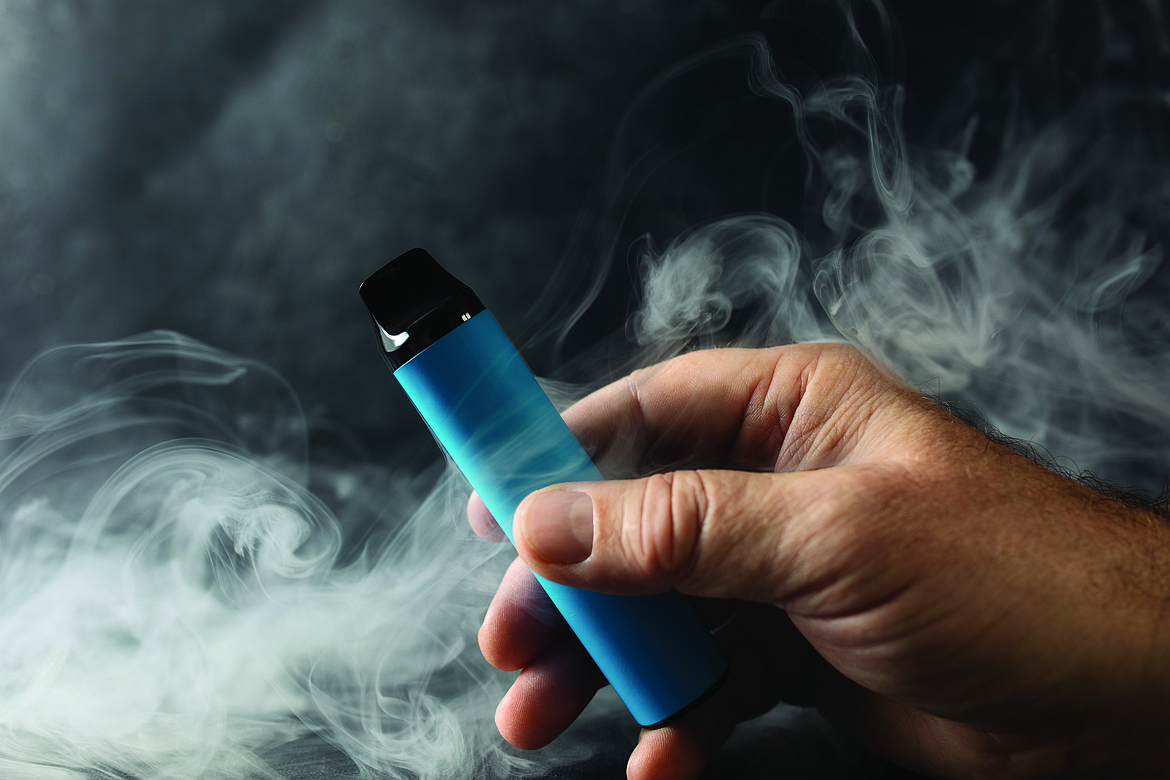
The Coeur d'Alene and Lakeland school districts will be awarded $90,000 and $36,000, respectively, by the Idaho Department of Education to install vape detectors in high school bathrooms and locker rooms to deter students from using e-cigarettes and vaping devices, such as the device in this photo.
Image via Shutterstock

Arnold

Gandy
Devin Weeks is a third-generation North Idaho resident. She holds an associate degree in journalism from North Idaho College and a bachelor's in communication arts from Lewis-Clark State College Coeur d'Alene. Devin embarked on her journalism career at the Coeur d'Alene Press in 2013. She worked weekends for several years, covering a wide variety of events and issues throughout Kootenai County. Devin now mainly covers K-12 education and the city of Post Falls. She enjoys delivering daily chuckles through the Ghastly Groaner and loves highlighting local people in the Fast Five segment that runs in CoeurVoice. Devin lives in Post Falls with her husband and their three eccentric and very needy cats. | April 25, 2024 1:09 AM
Vaping has become a common problem in schools, especially at the secondary level.
"It’s substantial," Lakeland Joint School District Superintendent Lisa Arnold said Wednesday. "Definitely on a daily basis, they are dealing with vape issues."
E-cigarettes and vaping devices are used to inhale vapor, or "vape," that contains nicotine or THC. Flavors range from menthol to cotton candy, and devices come in an assortment of easy-to-hide sizes and styles.
"Some of the vape pens, you’d never know that’s what they are because they look like a regular pen or a string from a hoodie," Arnold said.
Unlike cigarette smoke that is easy to detect with human senses, water vapor quickly dissipates, making it difficult to detect in a timely manner, said Thomas Gandy, safety and security coordinator for the Coeur d'Alene School District.
"This is especially true when the vape cartridge doesn't have, or uses a minimal amount of, artificial flavoring," he said.
Gandy said Coeur d'Alene has had incidents of students caught either vaping on campus or with vape products on their person on school grounds in middle school and high school.
"I have also heard reports of students with paraphernalia as young as fifth grade," he said.
School officials are working to combat underage vaping by installing vape detectors on school campuses. The Idaho Department of Education announced April 18 that Coeur d'Alene and Lakeland are among 31 school districts and charter schools to receive funding to install these detectors in high school bathrooms and locker rooms. They were selected from 59 applicants.
Coeur d'Alene will be awarded $90,000 through the Vape Detector Pilot grant. Lakeland's share will be $36,000.
"The use of vapes has become prevalent in schools for a variety of reasons," he said, and those include ease of access, social acceptance, a lack of the kind of stigmas attached to cigarettes, flavored products and other factors.
"Additionally with THC-infused vape devices — dab pens and such — we have seen an increase in students overdosing on THC at school," he said. "Vape sensors not only detect all manner of vapor in the air, the sensors we will be installing are capable of differentiating between vapes with and without THC."
Arnold said her district was awarded a small grant to install a few detectors last year.
"What we saw right away was the kids realized they were in there, so people started avoiding those bathrooms," Arnold said.
The newest grant will allow Lakeland to install vape detectors in all of the locker rooms and restrooms at its high schools.
"Now we're in the process pursuing grants for middle school," she said. "We are having issues there, too."
Coeur d'Alene also has installed vape sensors in a few secondary school bathrooms across the district and has seen a sharp drop in the number of students caught vaping in those bathrooms, Gandy said.
Similar in size and operation to smoke detectors, vape detectors cost anywhere from $1,500 to $3,500 per device, according to Idaho Department of Education public information officer Maggie Reynolds.
The Vape Detector Pilot grant is funded by an allocation from the Idaho Millennium Fund, established in 2000 to receive and distribute money received by the state under the Tobacco Master Settlement Agreement, which required tobacco manufacturers to pay Idaho $790 million over the first 25 years. The master multi-state settlement agreement was a class-action lawsuit to penalize tobacco companies for marketing to kids through popular culture. Millennium Fund money is used to help prevent underage tobacco use and to educate about the harms of tobacco.
Gandy said while $90,000 may seem like a large sum of money for one project, the district is underfunded for what it would ultimately like to do, which is install vape sensors in every high school and middle school campus.
"Our school administrators and campus safety staff have been pleading with us to increase the vape sensor coverage on their campuses," Gandy said. "We are grateful for grant-funded opportunities like this from the Idaho State Department of Education, as well as class-action lawsuits like the most recent one against Juul."
With these funds earmarked for anti-tobacco and anti-drug programs, schools are able to implement effective tools such as vape sensors to protect students who are trying to attend school without being exposed to vaping in their everyday school life as well as intervene with students who are already involved in drug and nicotine use, Gandy said.
 Arnold
 Gandy
GandyARTICLES BY DEVIN WEEKS

Daughters of the American Revolution honor Newby-ginnings founder
Daughters of the American Revolution honor Newby-ginnings founder
An unwavering dedication to the military community and the strength to turn personal tragedy into a beacon of hope for thousands has earned Theresa Hart the respect of countless individuals and organizations near and far. The ladies of the Daughters of the American Revolution Lt. George Farragut Chapter honored Hart for that dedication during a presentation Friday morning at the Hayden Lake Eagles.

Lake City High economics students have banner year for Give Back Project
Lake City High economics students have banner year for Give Back Project
Christmas shopping is always better with friends. When those friends are festively clad classmates with a common goal of shopping for families in need while keeping to a budget, it makes that shopping experience much merrier. “It’s really nice and I’m super happy that I can bring joy to people who can’t afford as much as they would like,” Lake City High School senior Aurora Johnson said Thursday morning. "It’s a really fun and great activity, and I love how passionate our class is for it.”

FAST FIVE Tammy Blackwell's ministry of movement
Meet Tammy Blackwell, a dedicated and passionate fitness instructor who has spent more than 20 years teaching seniors and encouraging active, healthy lifestyles.