
Kalispell to begin treating forever chemicals in contaminated wells
JACK UNDERHILL | Hagadone News Network | UPDATED 1 year, 7 months AGO
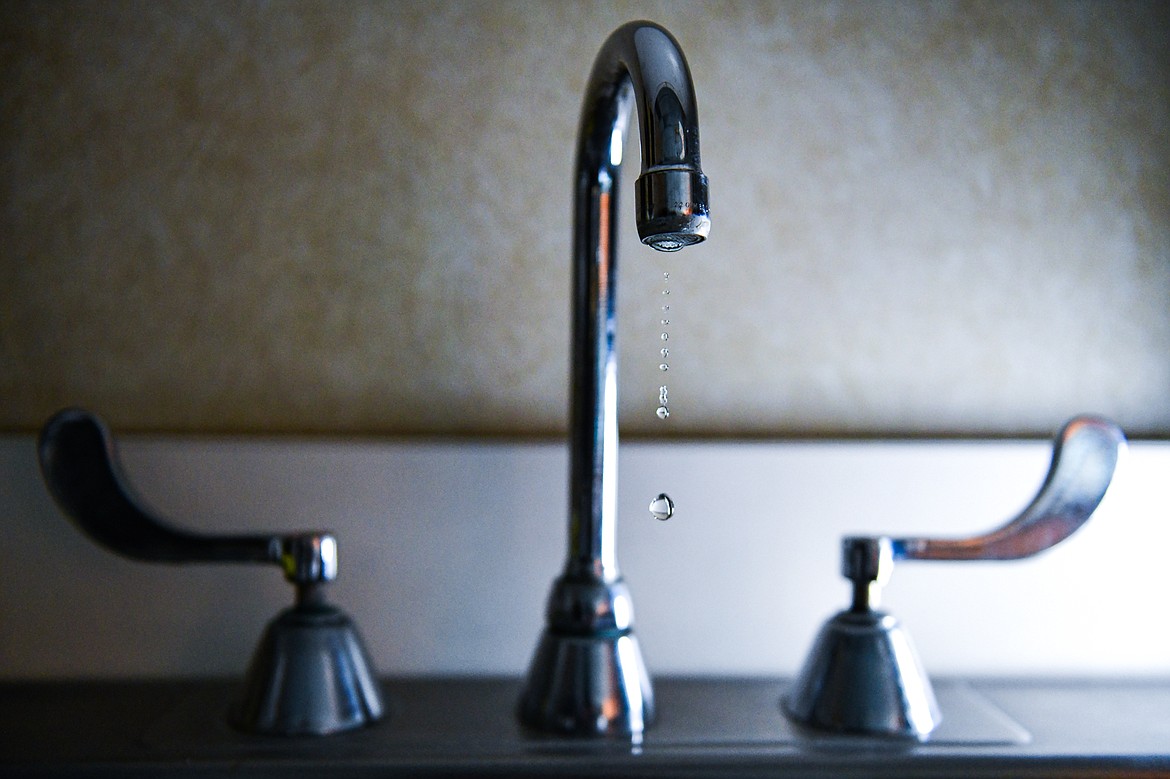
Water drips from a faucet on Wednesday, March 6. (Casey Kreider/Daily Inter Lake)
Casey Kreider
KALISPELL GOVERNMENT, HOUSING AND TRANSPORTATION REPORTER Jack Underhill covers Kalispell city government, housing and transportation for the Daily Inter Lake. His reporting focuses on how local policy decisions affect residents and the rapidly growing Flathead Valley. Underhill has reported on housing challenges, infrastructure issues and regional service providers across Montana. His work also includes accountability reporting on complex community issues and public institutions. Originally from Massachusetts, Underhill graduated from the University of Massachusetts, Amherst with a degree in Journalism before joining the Inter Lake. In his free time, Underhill enjoys mountain biking around the valley, skiing up on Big Mountain or exploring Glacier National Park. IMPACT: Jack’s work helps residents understand how growth, housing and infrastructure decisions affect the future of their community. | August 8, 2024 12:00 AM
Kalispell is purchasing equipment to treat forever chemicals detected at the Grandview Wells site.
The city is contracting with WaterSurplus, an Illinois-based water quality treatment service, to install a pressurized filtration system that binds and removes contaminants from the water. Kalispell Public Works Director Susie Turner said that system can treat up to 2,000 gallons per minute.
She described it as a short-term solution that will avoid shutting the wells down.
“We’re able to keep our wells online, provide that treatment and not jeopardize capacity,” Turner said.
In 2023, officials detected forever chemicals, also known as PFAS, at the two Grandview Wells located near the Flathead Valley Community College, a residential community and a park. Forever chemicals also were detected in the Armory and Old School wells, but the Grandview location contained levels above the Environmental Protection Agency’s established limit.
Kalispell is one of two communities in Montana to detect forever chemicals in the drinking water supply. The other is Hamilton.
Forever chemicals have been widely used since the 1940s and contain compounds that break down slowly, according to the EPA. The chemicals can be found in non-stick cookware, waterproof clothing, food packaging and other commercial and industrial use products.
Ingestion of forever chemicals has led to adverse effects to reproductive health, child development and increased risk to some cancers.
In April, the EPA set a limit on the concentration of PFAS present in drinking water at 4 parts per trillion.
Turner said that the discovery of the forever chemicals at the Grandview Wells site came as a surprise, but further sampling was needed to determine which well was the source.
Sampling was performed on each well in March. One well at the Grandview site held low PFAS levels while the second tested at more than three times the EPA limit at 13 parts per trillion.
In the latest round of sampling, conducted in July, the same well tested at about 8 parts per trillion.
In June, Kalispell City Council agreed to move ahead with short term efforts to treat the Grandview Wells site. In an update to residents earlier this week, officials said that they hoped to see equipment installed and operational by the end of the month.
WHILE THE most recent round of samples are set to be released in the coming days, Turner said the second well at the Grandview site tested at 6 or 8 parts per trillion.
Turner said the fluctuations in sample results could be from where the well water is being pulled.
“It’s kind of a conundrum,” she said. “I don’t know where it’s coming from or why it’s coming from an area that really doesn’t have any industrial, historic use.”
The Armory Well site also contains PFAS, but at levels below the EPA limit. Turner said that consistent levels of PFAS have been detected in that well since March 2022.
Turner speculated that the existence of the chemicals in the well could have originated from PFAS seeping into the ground from a now-defunct armory that sat nearby.
While Turner wants to eventually replace the wells, she projected it would take over two years.
Replacing the contaminated wells likely will involve a lengthy process of testing well sites, sampling water, drilling and construction. Extended wait times for equipment could also affect the timeline, she said.
Because of the demand for water, officials are unable to shut down the Grandview Wells, Turner said.
The Montana Department of Natural Resources and Conservation and Montana Department of Environmental Quality are providing grants funded by the federal government to the city, Tuner said.
A city memo stated that $95,000 in funding has been secured, but an additional $10.8 million is pending from the Small Systems Emerging Contaminant Grant and Emerging Contaminant SRF Forgiveness loan.
Jack Underhill can be reached at [email protected] and 758-4407.
ARTICLES BY JACK UNDERHILL

With Woodland Park pond’s skating future on thin ice, Council looks to recast its use
Skating on Woodland Park pond is becoming a memory of winters past.

Updated stormwater plan identifies system shortfalls in Kalispell
Public Works staff on Monday presented Kalispell City Council with new data they say will help upgrade the stormwater system to prevent flooding.

Kalispell City Council reviews updated stormwater plan
Kalispell City Council on Monday will review the city’s updated stormwater facility plan.