
‘We’re human too’
JOEL MARTIN | Hagadone News Network | UPDATED 2 years, 2 months AGO

Jonaeh Rojo, 9, has a little growing to do before she fits into the gear at the Moses Lake regional Tactical Response Team’s display at National Night Out in Quincy Monday.
JOEL MARTIN/COLUMBIA BASIN HERALD
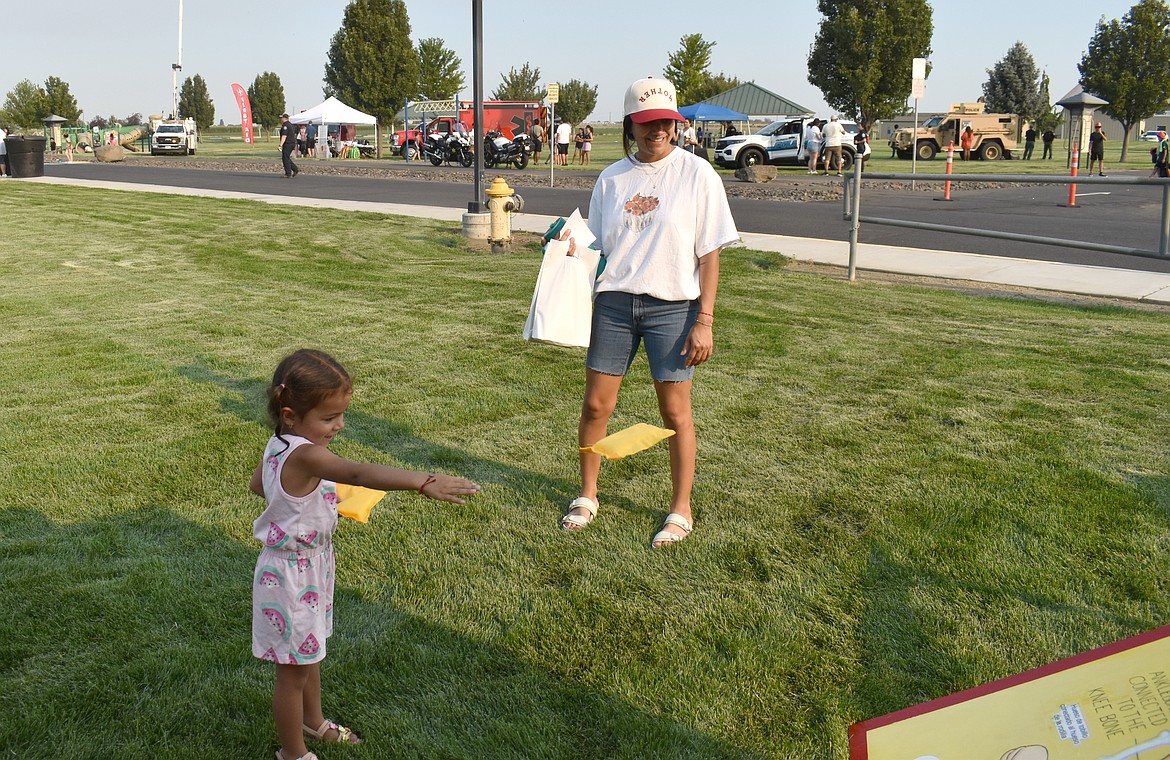
Three-year-old Haisley Villalpando lets fly a bean bag at National Night Out in Quincy Monday.
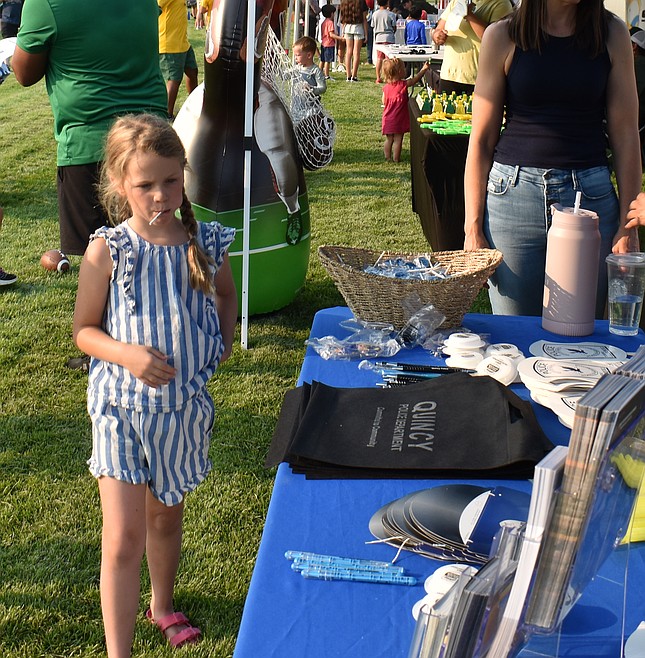
Greta Glatz, 7, checks out the swag at the Quincy Police Department’s booth at National Night Out Monday. The children love the giveaways, some exhibitors said, but that leads the adults with them into conversations with law enforcement and firefighters.
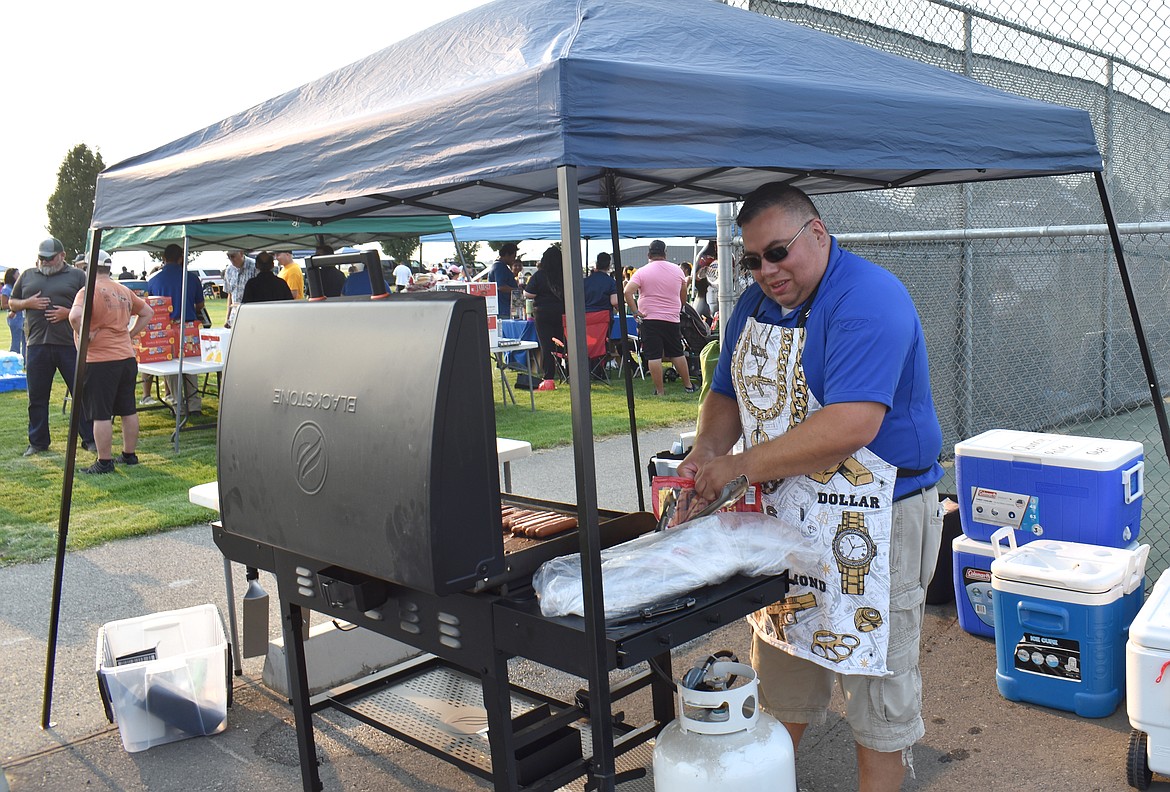
Quincy Police Officer Alan Talbot tries to grill enough hot dogs to keep up with the demand at National Night Out in Quincy Monday. About 500 people attended the event, which included free hot dogs and ice cream.
Joel Martin has been with the Columbia Basin Herald for more than 25 years in a variety of roles and is the most-tenured employee in the building. Martin is a married father of eight and enjoys spending time with his children and his wife, Christina. He is passionate about the paper’s mission of informing the people of the Columbia Basin because he knows it is important to record the history of the communities the publication serves. | August 8, 2024 3:00 AM
QUINCY — The kids who came to Lauzier Park Monday evening for National Night Out knew what they wanted.
“Mostly candy. They come up, they take the shots and run over for stuff,” said Tom Richardson, who was manning the Quincy Valley Medical Center booth. QVMC had set up a beanbag toss painted like a giant game of “Operation,” and youngsters who made a shot could take a treat. “They enjoy it. One year we had a kid who just kept looping through over and over just to keep playing.”
National Night Out is an annual event that lets first responders interact with the community when they’re not on a call. The Quincy Police Department hosted the event, but the Grant County Sheriff’s Office, the Moses Lake Regional Tactical Response Team, the Washington State Patrol, Grant County Fire District 3 and other agencies were all there with safety lessons and vehicles and equipment for children to check out. And, of course, loot.
“Ah, they’re just here for the giveaway,” said GCSO Chief Deputy of Emergency Operations Josh Sainsbury, whose booth had whistles, safety lights and puzzles. “The kids don’t ask a lot of questions but some of the adults ask questions.”
“(I’ve been to) New Hope, they advocate for domestic violence,” said Evelyn Rojas, who was at the event with her two children. She had also talked with the police department and drug prevention advocates, she said.
QPD Sgt. Joe Westby, who spearheaded this year’s event, estimated that about 500 people had come out to the park. This was Westby’s first time organizing National Night Out since about 2013. Sgt. Julie Fuller was in charge of the event in the interim, he said.
“Sgt. Fuller laid a good path,” he said. “I trimmed a little excess in some places and added excess in others.”
So many people’s experiences of law enforcement are during some of the worst times of their lives, said QPD Officer Joanna Navarro, that it’s really beneficial to be able to have contact under positive conditions.
“They get one-on-one communication,” Navarro said. “They don’t have to be intimidated. A lot of kids don’t really get this experience unless we go to their house for some sort of call. It (lets them see) we’re human too.”
Not far away, Officer Alan Talbot was grilling hot dogs to be given away to the crowd, a dozen or so at a time. He’d volunteered for grill duty, he said.
“We needed somebody to do it, and I was like, ‘You know what? I can get my food handler’s card and do this. It’s not a bad gig.”
The Moses Lake Regional Tactical Response Team’s armored vehicle was a popular draw with the younger set, and so was the riot gear that was out for kids to try on. It’s a lot heavier than it looks in video games, said GCSO Lt. Ric Char.
“It's not something they see every day, and it's good for them to go in there, touch it, and then get comfortable with it and us,” Char said. “These National Nights Out are good for community engagement.”
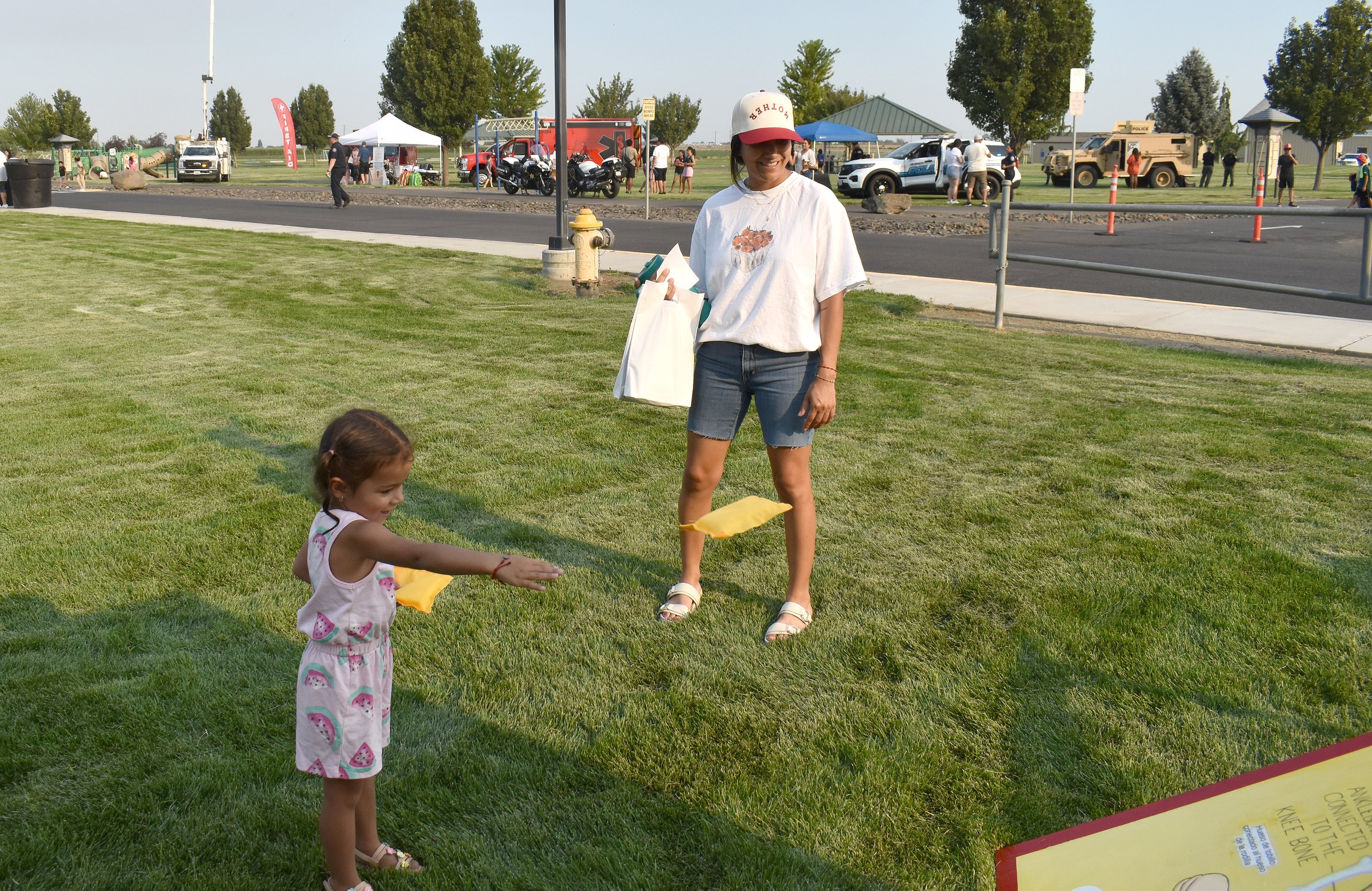 Three-year-old Haisley Villalpando lets fly a bean bag at National Night Out in Quincy Monday.
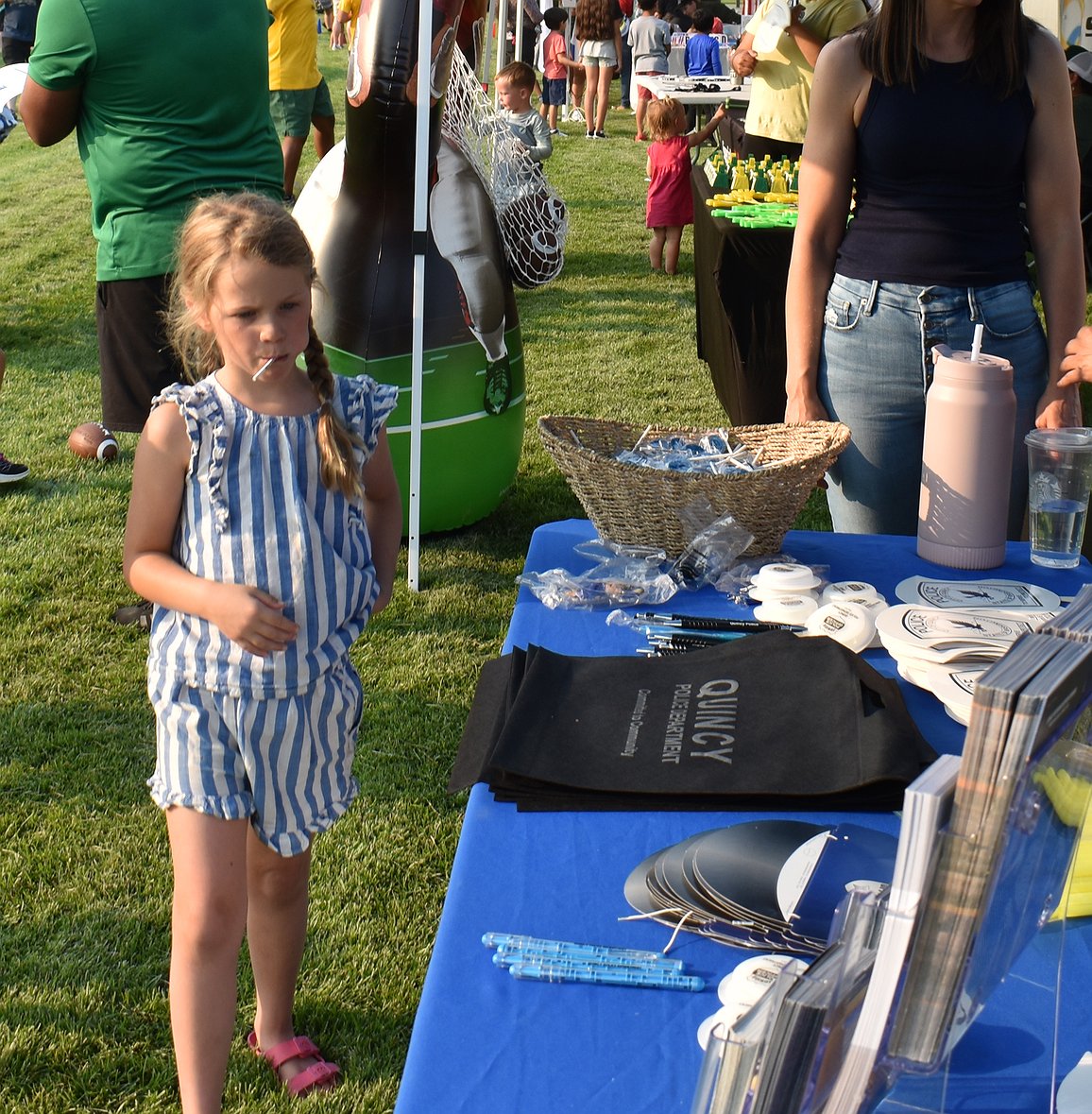 Greta Glatz, 7, checks out the swag at the Quincy Police Department’s booth at National Night Out Monday. The children love the giveaways, some exhibitors said, but that leads the adults with them into conversations with law enforcement and firefighters.
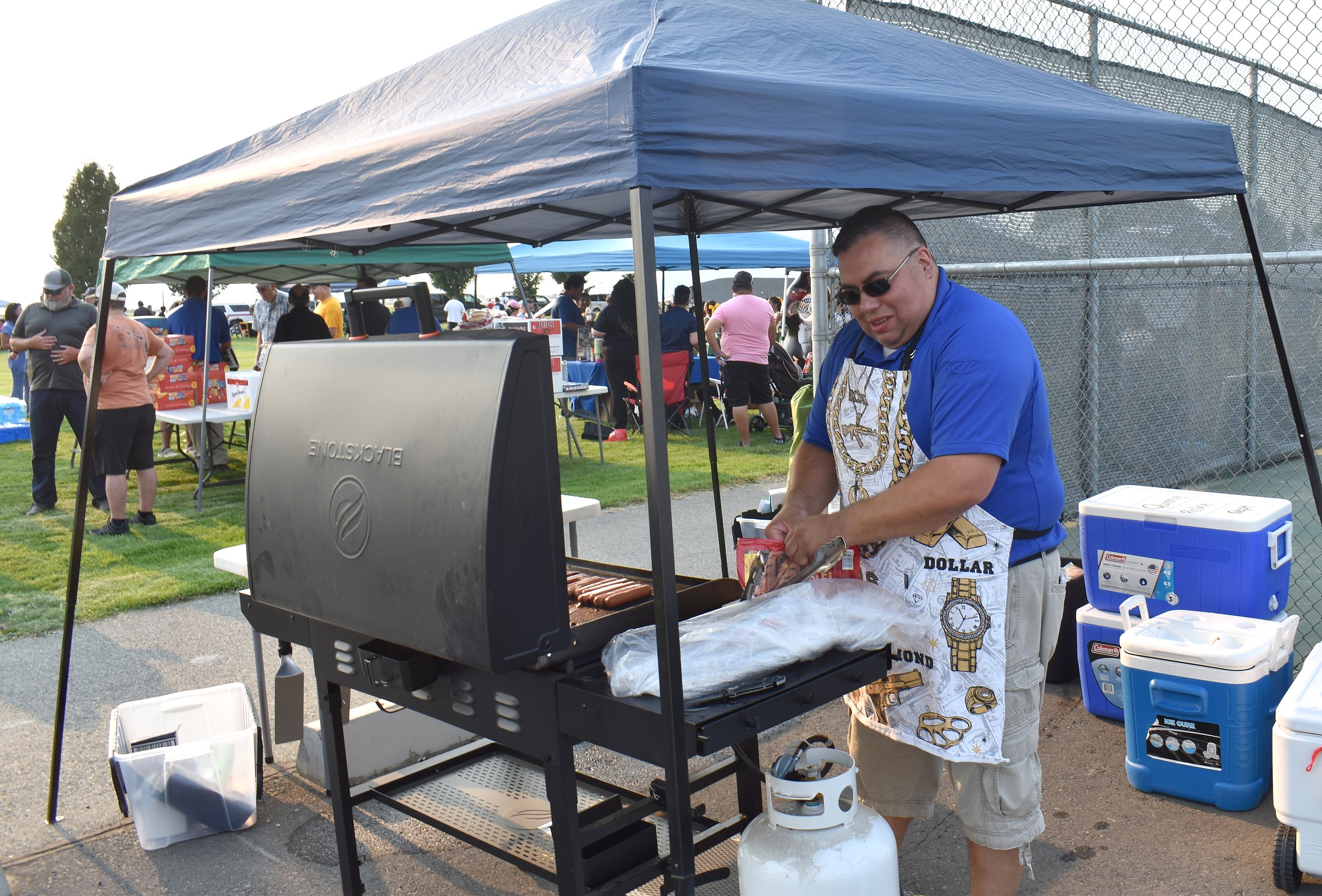 Quincy Police Officer Alan Talbot tries to grill enough hot dogs to keep up with the demand at National Night Out in Quincy Monday. About 500 people attended the event, which included free hot dogs and ice cream.
ARTICLES BY JOEL MARTIN

Endless battle
Noxious Weed Control Board works to keep invasive plants under control
MOSES LAKE — Some of the nastiest plants in Grant County were the topic of a class led by Jay Johnson, a consultant with the Grant County Noxious Weed Control Board, Tuesday. The Noxious Weed Control Board, as its name would suggest, is tasked with keeping weeds under control in Grant County. That’s not a small job; the board’s website lists 129 species of noxious weeds that are found around Grant County. A noxious weed is defined as an invasive, non-native plant that threatens agricultural crops, local ecosystems or fish and wildlife habitat, according to the Noxious Weed Control Board. Washington state law requires that these weeds be identified and their spread kept to a minimum, if not completely eradicated. “We’re one of those agencies a lot of people don’t really understand,” Johnson said. “We’re a county office and … our funding is tax-based assessment. When you get your tax bill and you look down at all the expenses that you pay for, there we are.”

BASIN EVENTS: Oct. 16-24
COLUMBIA BASIN — Whether you feel like shopping, crafting, learning or seeing a show, there’s something happening for you this week in the Basin. Oct. 16 ‘My Family (Mi Familia)’ screening Spanning three generations, “My Family (Mi Familia)” is a heartfelt drama that follows the Sánchez family as they build their lives in East Los Angeles. Through love, hardship, triumph, and sacrifice, the film explores the immigrant experience, the strength of family bonds, and the traditions that connect one generation to the next. Lowrider show and taco truck before the screening. Sponsored by Columbia Basin Allied Arts, EDUBS C/S and the Moses Lake Creative District. $12 per person. Doors open at 6 p.m., film begins at 7 p.m. at the Moses Lake Civic Center Auditorium, 401 S. Balsam St. Tickets and info: www.cba-arts.org.

Moses Lake author encourages women to look beyond church culture norms
MOSES LAKE — A Moses Lake author’s book, “A Christian Woman Striving to Live Her Faith in a Man-Controlled World,” takes aim at the role to which many churches relegate the female half of their congregations. “It’s to encourage women in the faith,” Linda Curran said. “A lot of churches say, ‘Teach Sunday school, do this, do that, but don’t (evangelize.)’" In her book, Curran recounts a time when she moved to a new community and joined a church there. She was surprised to learn that, as a new female member, she had been automatically assigned church cleaning duties. When she questioned it, she wrote, she was met with condescension and her objections were brushed aside. In other churches, she said, women who were capable of teaching were relegated to “women’s ministry.”