
Sandpoint building to be recognized as 'orchid'
ERIC WELCH | Hagadone News Network | UPDATED 1 year, 4 months AGO
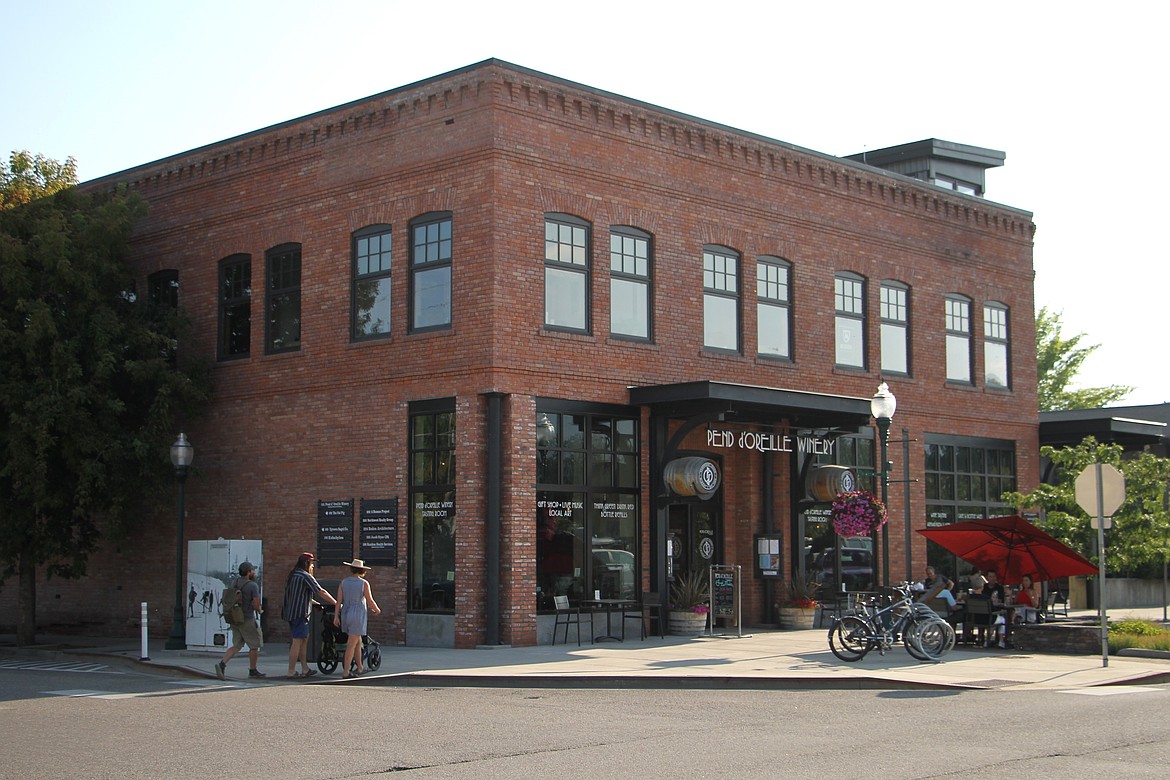
Belwood 301, a 117-year-old Sandpoint building at the corner of Third Avenue and Cedar Street, will be recognized with an Orchid Award on Saturday.
Photo by ERIC WELCH
SANDPOINT — Belwood 301, a downtown building, has been honored with an Orchid Award for its outstanding contribution to historic preservation.
The award will be presented by Preservation Idaho, a nonprofit organization aiming to protect places of significance, Saturday, Aug. 10, in Pocatello.
Over the last 40 years, nine Sandpoint buildings and organizations including Panida Theater, Sandpoint Federal Building, and the historic powerhouse have received an honor from the organization.
This year, the Sandpoint Arts, Culture, and Historic Preservation Commission along with community members Carrie Logan and Steve Garvan brought 117-year-old Belwood 301 to Preservation Idaho’s attention.
While residents may recognize the downtown building as the home of The Fat Pig restaurant and Pend d’Oreille Winery, the building has hosted a diverse array of tenants in its long life.
Beginning as a single-story mercantile shop, the 1908 addition of a second and third floor transformed the property into the St. James Hotel. The building later hosted a pharmacy, grocery shop, and furniture store, among other businesses.
The building's current owners, Julie and Steve Meyer, purchased the property in 2010 and renovated the building to preserve its historic character while integrating modern functionality.
Clever and artistic refurbishments included repurposing old red fir flooring as interior siding and transforming the building's original beams into light fixtures.
Restorers used a select non-abrasive process to reveal historic signage that had previously been painted over on the building's exterior.
Jeremy Grimm, Sandpoint Mayor and former city planning director, praised the owners for their dedication to the project.
“While planning director, I recall the countless hours they both spent with city staff poring over design plans and the numerous obstacles they overcame to achieve their goal,” Grimm said in a press release.
Heather Upton, the city’s arts and historic preservation planner, also lauded the effort of the restorers.
“That building, particularly the beautiful rehabilitation that was done on it, is a great example of what we're looking to continue to foster in our community,” said Upton.
According to Upton, preserving historic structures is critical because once they’re gone, they don’t come back.
Decades or centuries-old materials aren’t always available on today’s market; when they are, they’re often cost-prohibitive. Additionally, modern builders may not have the specialized skills needed to recreate antique designs.
“It's so important that people who have lived here their whole lives, and people who are new to the community, can visually understand our history,” Upton said.
“Historic structures are an anchor to the downtown core,” she added. “Not only are they telling the history, but they add important character, too.”
ARTICLES BY ERIC WELCH

City personnel, community members discuss options as James E. Russell Center costs exceed revenue
Community planning and development director Jason Welker, who oversees Sandpoint’s parks and recreation programs and facilities, suggested that the city could either maintain its current approach at the facility, shrink the center’s operating hours, install new modular playing surfaces for mixed sports use on some of the courts, or recruit a nonprofit organization to operate the facility.

‘Expressions’ courses fill non-school art void
Teens participating in Gentry’s class practiced printmaking, painting and design to create works including a pop art-inspired self-portrait. “My goal when I'm teaching the kids is to just show them lots of different ways that you can make really cool art. It doesn't have to be just traditional,” she said. “The kind of art they do with me, they get to just express themselves, and it doesn't have to be perfection.”

City of Sandpoint sheds light on sewage incident outcome
On the morning of Feb. 24, an electrical control system failure caused pumps to shut off unexpectedly at Sandpoint’s municipal wastewater treatment plant — a city-owned facility that removes contaminants from sewage before discharging it into the Pend Oreille River.